
This bread concludes my tour or Europe. I previously made this bread but this time I made some modifications to the method, and I am not sure it worked.
First, I cut the butter into the flour using a food processor. I use this method for scones so thought I would give it a try. The result seemed ok, but the rise wasn’t what I wanted.
Second, I used the “alternative” to buttermilk by mixing 1 tablespoon of lemon juice to 1 3/4 cups of milk Previously I cut the butter in by hand and used store bought buttermilk.
This loaf did not rise like the previous. Oh well, try, try again, I guess.
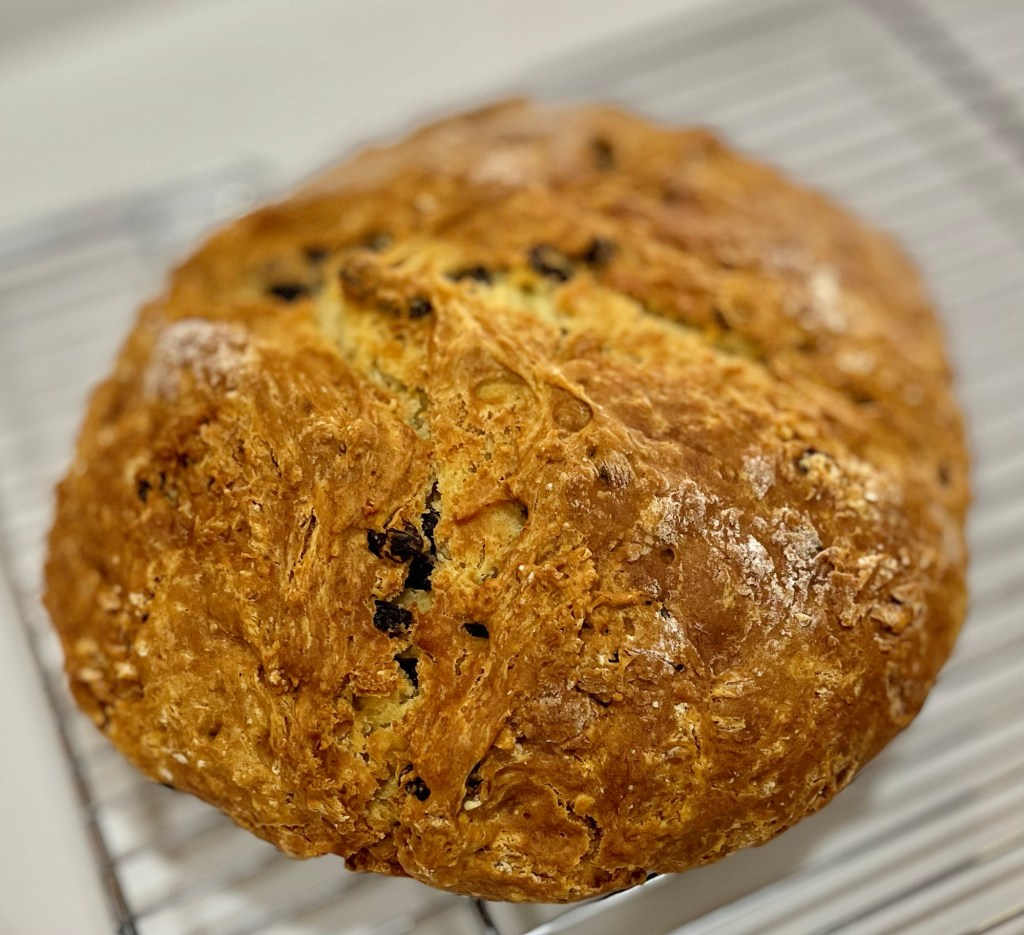

Irish Soda Bread
INGREDIENTS
• 1 and 3/4 cups (420ml) buttermilk*
• 1 large egg (optional, see note)
• 4 and 1/4 cups (531g) all-purpose flour (spooned & leveled),
• 3 Tablespoons (38g) granulated sugar
• 1 teaspoon baking soda
• 1 teaspoon salt
• 5 Tablespoons (71g) unsalted butter, cold and cubed*
• optional: 1 cup (150g) raisins
METHOD
- Preheat oven & pan options: Preheat oven to 400°F (204°C). Bake in a seasoned 10–12-inch cast iron skillet (no need to preheat the cast iron unless you want to).
- Whisk the buttermilk and egg together. Set aside.
- Whisk the flour, granulated sugar, baking soda, and salt together in a large bowl. Cut in the butter using a pastry cutter, a fork, or your fingers. Mixture is very heavy on the flour but do your best to cut in the butter until the butter is pea-sized crumbs.
- Stir in the raisins. Pour in the buttermilk/egg mixture. (*Adding all of the mixture yielded an overly wet dough. Try reserving ½ cup, adding more as necessary.) Gently fold the dough together until dough it is too stiff to stir.
- Pour crumbly dough onto a lightly floured work surface. With floured hands, work the dough into a ball as best you can, then knead for about 30 seconds or until all the flour is moistened. If the dough is too sticky, add a little more flour.
- Transfer the dough to the prepared skillet. Using a very sharp knife or bread lame, score the dough with a slash or X about 1/2 inch deep. (“Score” = shallow cut.)
- Bake until the bread is golden brown, and center appears cooked through, about 45-55 minutes. Loosely tent the bread with aluminum foil if you notice heavy browning on top. The bread is done when an instant read thermometer reads the center of the loaf as 195°F.
- Remove from the oven and allow bread to cool for 10 minutes, and then transfer to a wire rack. Serve warm, at room temperature, or toasted with desired toppings/spreads.
- Cover and store leftover bread at room temperature for up to 2 days or in the refrigerator for up to 1 week. We usually wrap it tightly in aluminum foil for storing.
NOTES - Freezing Instructions: Baked and cooled bread freezes well up to 3 months. Freeze the whole loaf or individual slices. Thaw in the refrigerator or at room temperature, then reheat as desired.
- Special Tools (affiliate links): Cast Iron Skillet, 9-Inch Round Cake Pan, 9-Inch Pie Dish, Dutch Oven, or Baking Sheet with Silicone Baking Mat or Parchment Paper | Glass Mixing Bowl | Whisk | Pastry Cutter | Instant Read Thermometer
- Baking Pan: There are options for the baking pan (see Special Tools Note above). You can use a lined large baking sheet (with or without a rim), a seasoned 10-12 inch cast iron skillet, or a greased or lined 9-10 inch cake pan or pie dish. I don’t recommend a loaf pan because the loaf may not bake evenly inside. This dough is best as a flatter loaf.
- Buttermilk: Using cold buttermilk is best. Buttermilk is key to the bread’s flavor, texture, and rise. The bread will not rise without it. If you don’t have any buttermilk on hand, you can make a homemade “DIY” version. Whole milk or 2% milk is best, though lower fat or nondairy milks work in a pinch. Add 1 Tablespoon of lemon juice or white vinegar to a liquid measuring cup. Add enough cold milk to make 1 and 3/4 cups. Whisk together, then let sit for 5 minutes before using in the recipe.
- Egg: 1 egg adds richness and density. Feel free to skip it to make a slightly lighter loaf. No other changes necessary, simply leave out the egg.
- Cold Butter: The colder the butter, the less sticky the dough will be. Make sure it’s very cold, even frozen cubed butter is great.
- Smaller Loaves: You can divide this dough up to make smaller loaves. The bake time will be shorter, depending how large the loaves are. An instant read thermometer will be especially helpful. Bake the loaves until an instant read thermometer reads the center of the loaf as 195°F (90°C).
 aBatteredOldSuitcase
Pingback: What’s Up in Dede’s Bakery? | aBatteredOldSuitcase
Pingback: Bread Soup Parings | aBatteredOldSuitcase
Hi Dave —. I do love Irish Soda Bread!! I usually only make it for St. Patrick’s Day!! I’m not much of a baker!! I even use Pillsbury roll-out crust from the refrigerator section of the grocery store when I make an apple pie!! (At least I use our Albright Farm’s apples!!😂😂). You’re a real pro!🥰 Liz
Sent from Yahoo Mail for iPad
We bought 20 lbs of apples last morning and I used 15 to make applesauce. I need to use the rest to make a pie and some pastry.