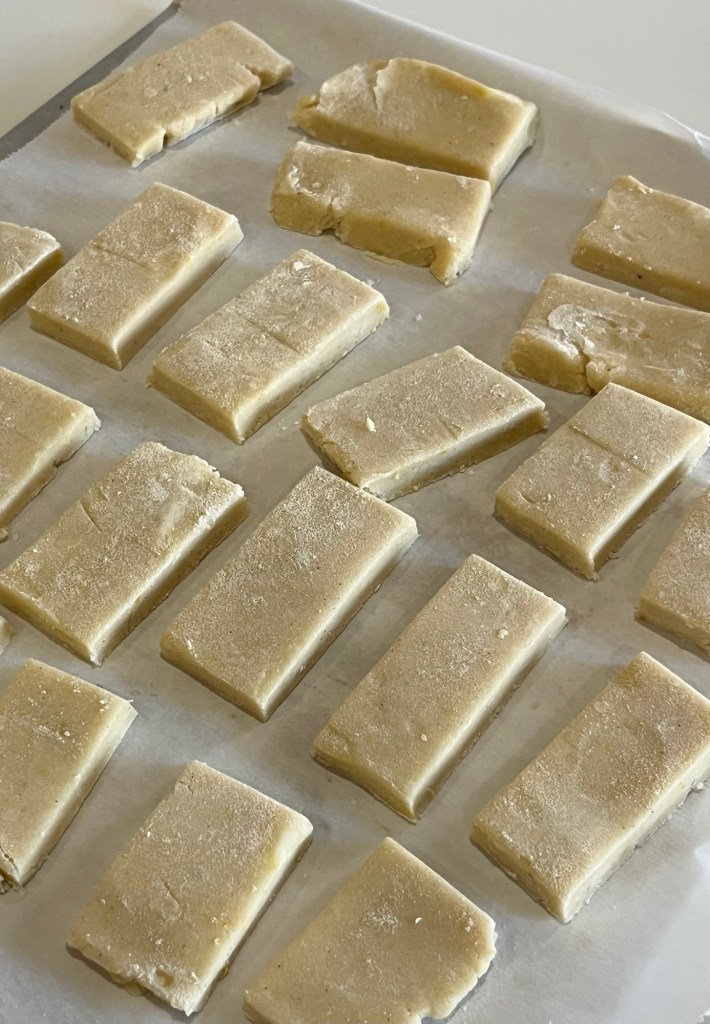
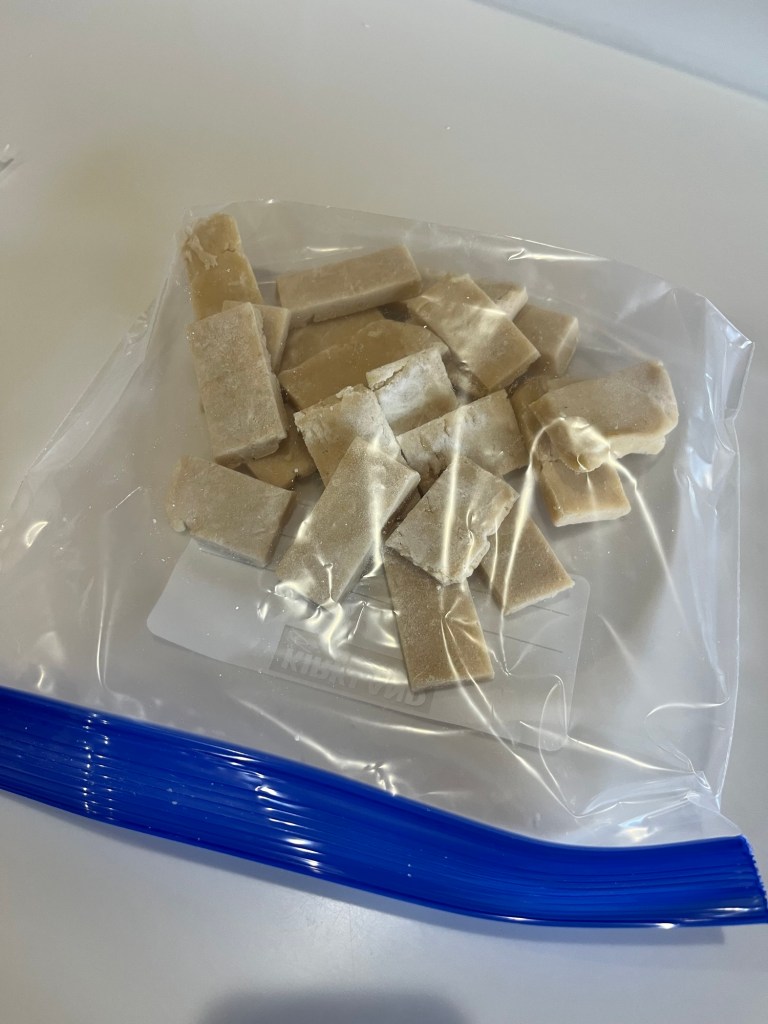
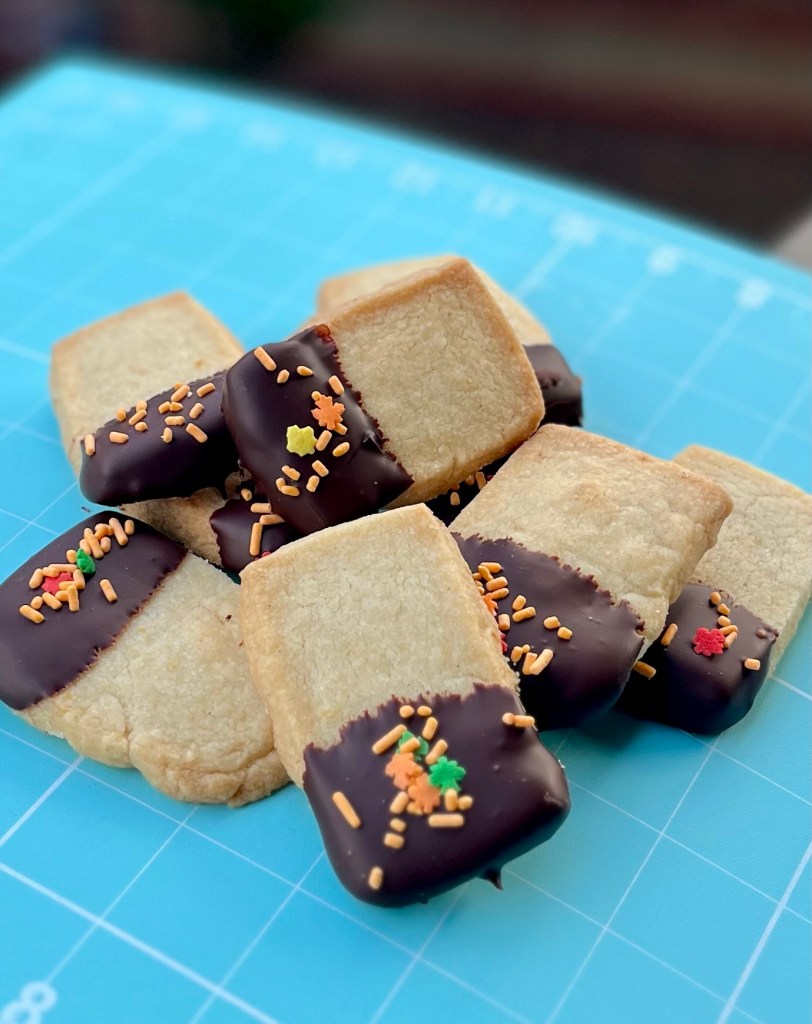
Sally’s Challenge for August 2026 is Homemade Graham Crackers.
July’s Sally Baking Challenge is complete.
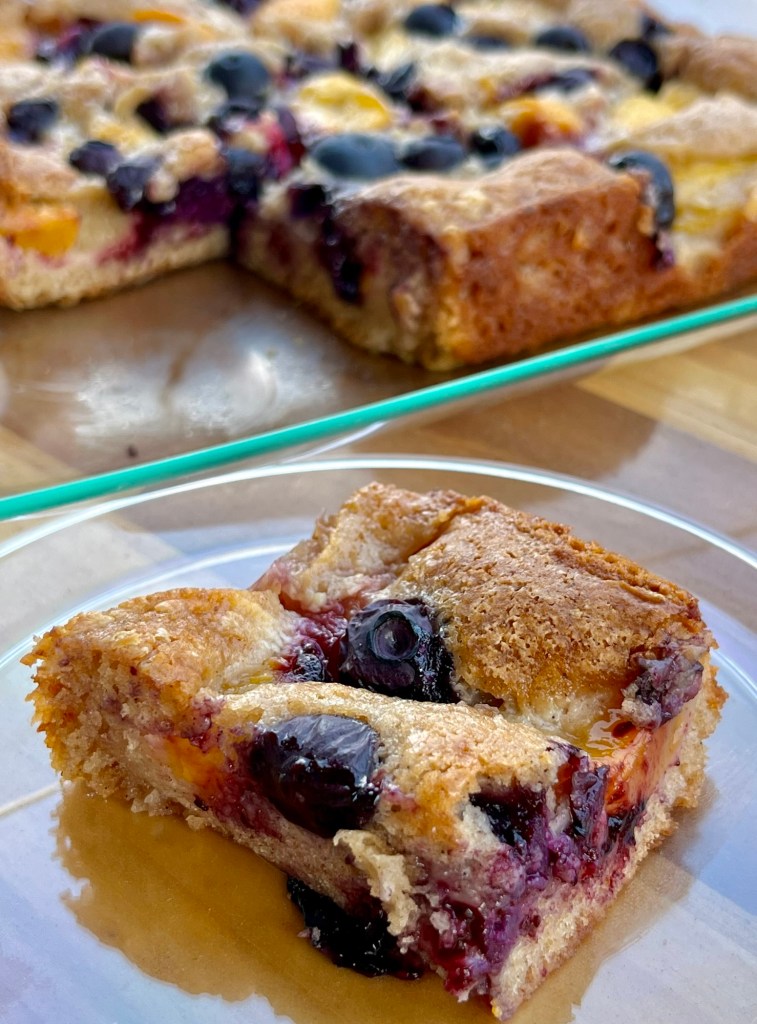
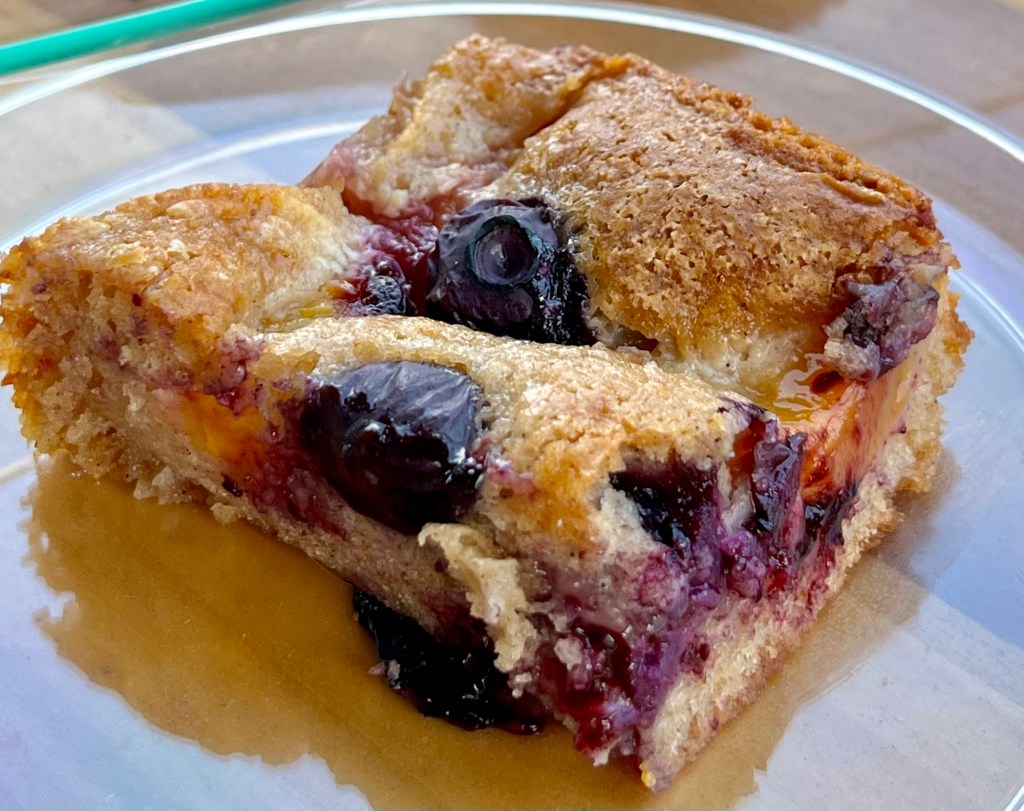
Peach season is here and I saw a Peach Cobbler and I baked my version of it this morning. It was well worth the minimal effort. The QC Cadre thought it was to die for. I wouldn’t go that far but close. My only complaint is it was too small. I upscaled it today so next time…
Can you image Chocolate Pan de Cristal? It’s real, still on my list and while I can’t wait, I must.
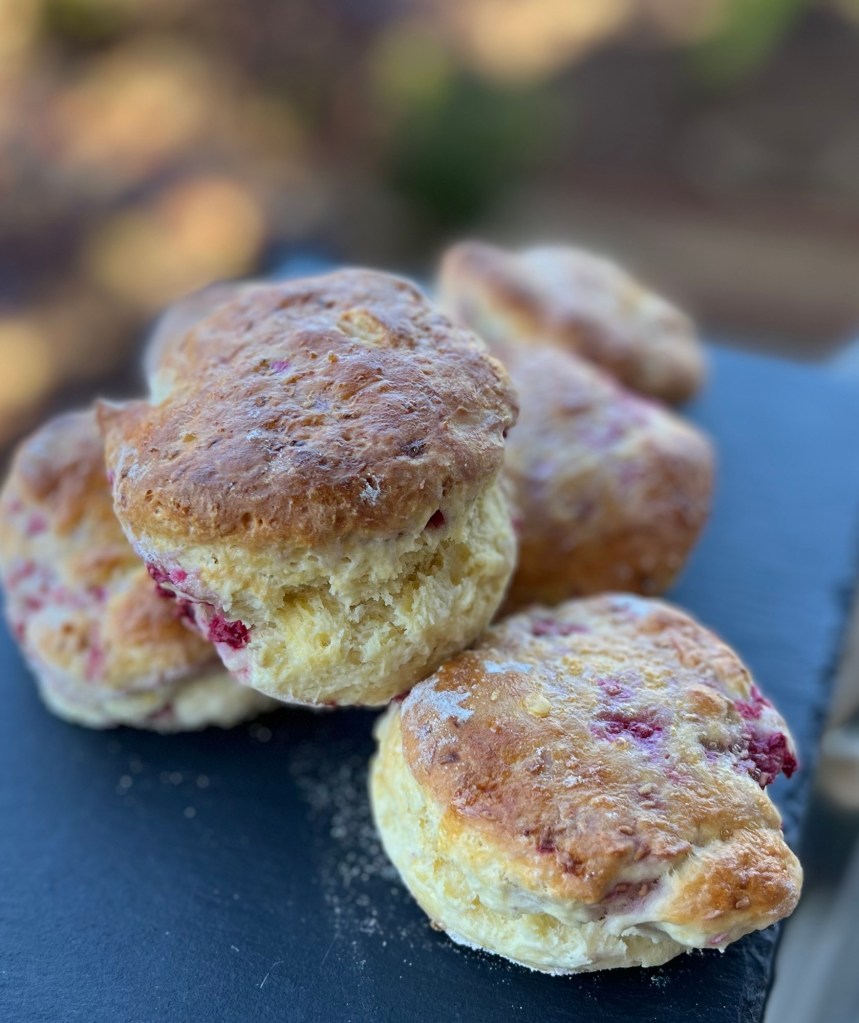
I normally make Drop Berry Scones as they are easy and quick. Recently I saw someone make some beautiful round scones but cutting them out of a flattened dough and thought, “Why not?”
I searched online for ideas and found several that seemed to fit the scone in my imagination. Combining ingredients and method from two or three of these ideas resulted in nicely browned, tender scones. For some reason the ingredients did not include salt and like a novice, believed what was said. They would have been better with some added salt, which I listed in the ingredients below.
The next time I will also modify the method of incorporating the berries. This dough was pretty stiff and the berries mashed up more than usual while incorporating them. The modification is explained in the Alternative Berry Addition in the METHOD below.
Berry Scones
INGREDIENTS • 500g Bread flour • 50g Unsalted butter • 80g Caster Sugar • 5tsp Baking Powder • 1 tsp salt (I added this to the recipe) • 2 medium eggs • 250ml Whole Milk
METHOD
Preheat oven to 400. Line a baking sheet with parchment paper.
Cut butter into small cubes.
Combine flour with butter using your hands to mix and flatten the butter chunks into flakes until the mixture resembles breadcrumbs. .
Mix in sugar and baking powder, then add and mix the eggs and whole milk (reserving a small amount to check consistency). The dough should be soft and slightly tacky.
Add additional cream by the tablespoon to help the dough come together
Alternative berry addition: divide the dough in half and form 2 equal rectangles. Spread a sparse layer of berries on each portion. Stack one on top of the other, berry side up, and roll starting with the small end. Once rolled, gently shape into a ball trying to manipulate the dough as little as possible. Flatten the ball to a ¾” rectangle and cut into 2 ½ “ circles. Combine the scraps into another rectangle and cut more circles.
OR
Original berry addition: Gently fold in the berries. (It’s fine if the raspberries or blackberries break up a little – it adds a nice pink stain to the dough.) The dough should just be moist, not wet, but also not crumbly or powdery looking. If it looks too dry, add a tablespoon of cold water.
Egg wash the tops of the scones and sprinkle some coarse sugar on the top
Bake for 16-20 minutes until the tops are a golden brown,
Sally published this recipe for Black Velvet Cupcakes in recognition of Chocolate Cupcake Day, plus an homage to Halloween, delicious and fun.
(I think the frosting recipe could be cut in half, unless, like me, you have a box of graham crackers in the cupboard not doing anything and you like chocolate frosting stuffed graham cracker cookies.)
Black Velvet Cupcakes
INGREDIENTS Cupcakes • 125 g (1 c) all-purpose flour (spooned & leveled) • 42g ( ½ c) black cocoa powder (a dark, Dutch-process cocoa) • ½ tsp baking powder • ½ tsp baking soda • ½ tsp salt • 200g (1 c) granulated sugar • 120g ( ½ c) buttermilk, at room temperature • 75G ( 1/3 c) vegetable oil • 1 large egg, at room temperature • 1 teaspoon pure vanilla extract • ½ tsp distilled white vinegar • 120g ( ½ c) hot coffee (decaf is fine) or hot water Frosting • 226g (1 c = 16 Tbl) unsalted butter, softened to room temperature • 420g (3 ½ c) confectioners’ sugar • 42g ( ½ c) black cocoa powder (a dark, Dutch-process cocoa) • 60 – 75g (4–5 Tbl) heavy cream or milk, at room temperature • 2 teaspoons pure vanilla extract • 1/8 teaspoon salt
METHOD
Make the cupcakes: Preheat the oven to 350°F (177°C). Line a 12-count muffin pan with cupcake liners. This recipe yields 14–15 cupcakes, so line a second muffin pan with 2 or 3 more liners (or bake in batches).
In a medium bowl, whisk together the flour, cocoa powder, baking powder, baking soda, and salt. Set aside.
In a large bowl, preferably with a pour spout, whisk together the sugar, buttermilk, oil, egg, vanilla, and vinegar until combined. Pour the dry ingredients into the wet ingredients, add the hot coffee, and whisk until the batter is completely combined. The batter will be thin.
Pour the batter into the liners, filling only 2/3 to 3/4 full to avoid overflowing and sinking.
Bake for 20–22 minutes, or until a toothpick inserted in the center comes out clean. Another way to test for doneness is to lightly press your finger into the surface of the warm cupcake. If the cupcake bounces back, they’re done. If your finger leaves an imprint, they need more bake time.
Allow cupcakes to cool in the pan for 10–20 minutes, and then transfer to a cooling rack to cool completely before frosting.
Make the frosting: With a handheld or stand mixer fitted with a paddle attachment, beat the butter on medium speed until creamy, about 2 minutes. Add confectioners’ sugar, cocoa powder, 1/4 cup (60g/ml) of the cream, vanilla, and salt. Beat on low speed for 30 seconds, then increase to high speed and beat for 1 full minute. If the frosting seems too thick, beat in another Tablespoon of cream.
Frost cooled cupcakes and top with sprinkles, if desired. You can swipe the frosting on with an icing knife or use a piping tip such as Ateco 826. For cat cupcakes, see recipe Note.
Store cupcakes at room temperature for up to 2 days or in the refrigerator for up to 4 days. I recommend a cupcake carrier for storing and transporting decorated cupcakes.
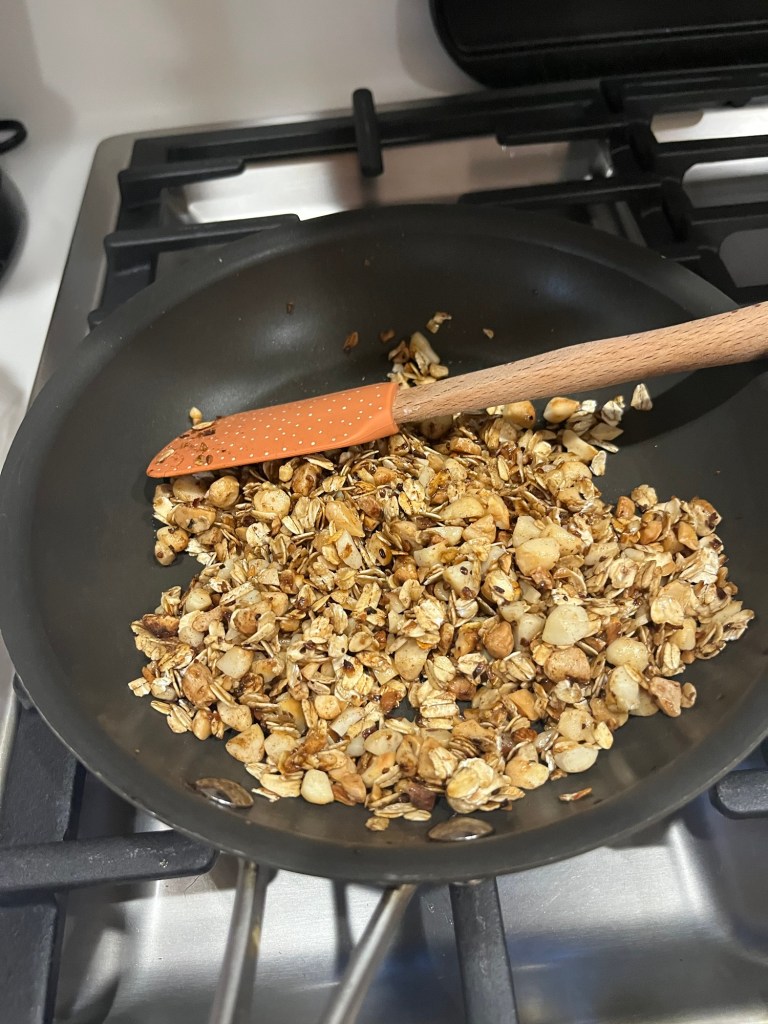
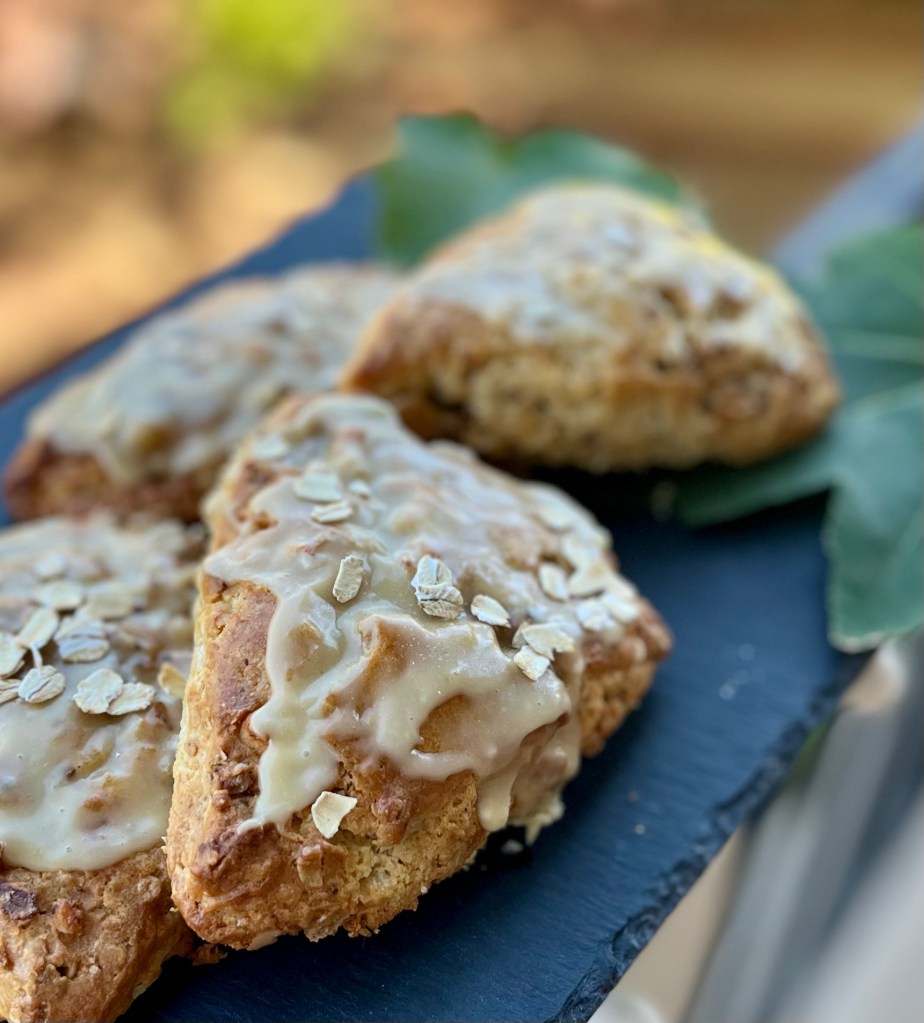
This month Sallys Challenge was Maple Oat Pecan Scones. I am not a fan of pecans so substituted macadamia nuts.
I am a little embarrassed by the look of these scones, but not by the flavor, they are wonderful. The nuts add a nice crunch and the maple syrup yields the perfect sweetness,
The first scone crumbled when I dipped it in the maple icing. Normally this isn’t a bad this for a short crust pastry, but I did have to spread the icing with mixed in deconstructed scone on the rest of them,
Despite chilling the scones prior to baking they spread during the first 10 minutes of baking. I straightened them up at the half way point of baking which helped, but a real scone pan would be best.
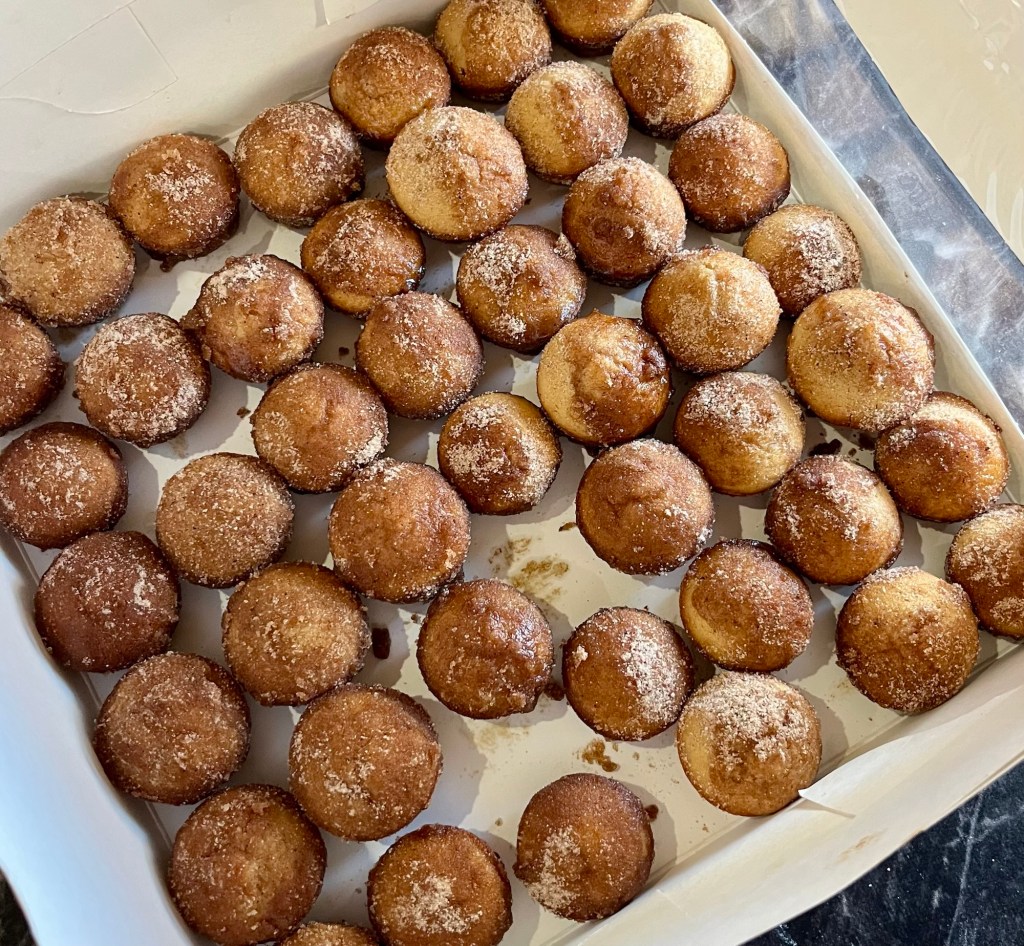
I volunteered to make something to sell at a charity bake sale and as luck would have it King Arthur Baking send me an email with this recipe, Apple Cider Doughnut Holes.
I made them pretty much as the recipe specified and decided next time I would omit the cardamom. Maybe there was too much, but it overpowered the sugar/cinnamon coating. Live and learn. (They were pretty darn good anyway.)
I reduced a half gallon of apple cider to make the boiled cider and mixed my own apple pie spice using the ratio of 4::2::1 cinnamon::nutmeg::allspice.
Apple Cider Donut Holes – KAB
INGREDIENTS Batter • 100g ( ½ c) granulated sugar • 71g ( ⅓ c ) light brown sugar or dark brown sugar, packed • 57g (4 Tbl) unsalted butter, softened • 50g ( ¼ c) vegetable oil • ¾ tsp table salt • 2 large eggs • 1 tsp vanilla extract • 320g (2 ⅔ c) AP Flour • 2 tsp apple pie spice (see below) • 1 ½ tsp baking powder • ¼ tsp baking soda • 227g (1 c) milk • 64g (3 Tbl) boiled cider (see below) Topping • 141g (10 Tbl) unsalted butter • 85g ( ¼ c) boiled cider (see below) • 248g (1 ¼ c) granulated sugar • 11g (4 ¼ tsp) apple pie spice (see below)
METHOD
Lightly grease a mini muffin pan.
In a large bowl, use a flexible spatula to vigorously mix the sugars, butter, oil, and salt until smooth.
Add the eggs, one at a time, stirring between each. Stir in the vanilla.
In a medium bowl, whisk together the flour, spice, baking powder, and baking soda.
In a liquid measuring cup, whisk to combine the milk and boiled cider.
Add one-third of the dry ingredients to the bowl with the butter mixture, mixing gently to combine. Gently mix in half the liquid. Stir in another third of the dry ingredients, then the remaining liquid. Stir in the remaining dry ingredients. Scrape the sides and bottom of the bowl, then gently mix until the batter is mostly smooth; a few small lumps are OK.
Portion the batter into the wells of the prepared pan, using a heaping tablespoon for each well (about 22 grams); a tablespoon scoop works well here. (You’ll use about half the batter to fill 24 wells of a mini muffin pan; set the remaining batter aside.)
Bake for 7 to 9 minutes, until just golden brown and a toothpick inserted into the center comes out clean. While the doughnut holes bake, prepare the topping.
To make the topping: In a microwave-safe bowl, combine the butter and boiled cider and heat in 30-second increments until the butter is melted, then whisk to fully combine.
In a medium bowl, whisk to combine the sugar and spice.
Remove the doughnut holes from the oven and, as soon as they’re cool enough to handle, turn them out of the pan. Working with one piece at a time, dip each doughnut hole into the butter-cider mixture, shake slightly over the bowl to remove any excess, and then immediately transfer to the sugar mixture; toss to coat.
Transfer the coated doughnut holes to a wire rack, and repeat baking and topping process with the remaining batter. Serve warm or at room temperature.
Leftovers can be stored in an airtight container at room temperature for up to 3 days; freezing is not recommended.
BOILED CIDER
Add ½ gallon of apple cider to a heavy duty 4-6 qt stock pot.
Heat cider to boiling and continue with occasional stirring until the cider has thickened to the consistency of maple syrup. There should be about 2 cups of boiled cider,
APPLE PIE SPICE • 4 parts cinnamon • 2 parts nutmeg • 1 part all spice
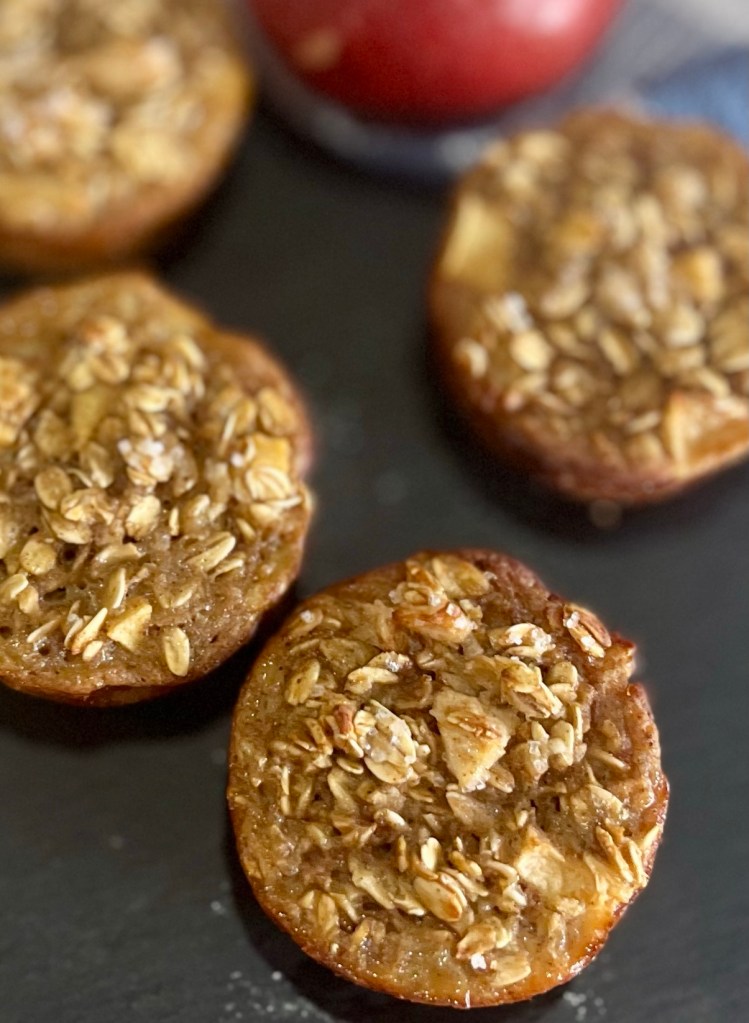
INGREDIENTS • 360g (1 ½ c) milk • 2 large eggs • 120g ( ½ c) pure maple syrup • 120g ( ½ c) unsweetened applesauce • 255g (3 c) old-fashioned whole rolled oats • 1 teaspoon baking powder • 1 ½ teaspoons ground cinnamon • ¼ teaspoon ground nutmeg • ½ teaspoon pure vanilla extract • ¼ teaspoon salt • 120g (1 heaping c) peeled chopped apple • Coarse sugar for topping
METHOD
Preheat oven to 350°F (177°C). Generously spray a 12-count muffin pan with nonstick spray. If using muffin liners, spray them with nonstick spray. The oatmeal cups stick to the liners a bit regardless, so I recommend skipping them.
In a large bowl, whisk all of the ingredients together, except for the apples (and nuts and coarse sugar). Using a spoon or silicone spatula, fold in the apples and nuts (if using). Batter will be a little liquidy. Spoon batter evenly into muffin cups, making sure both the oats/apples and liquid are in each. Fill all the way to the top. If desired, sprinkle the tops with coarse sugar.
Bake for 28-30 minutes or until the edges are lightly browned and top appears set. If the tops are browning very quickly, tent a piece of aluminum foil over the muffin pan.
Cool for 5-10 minutes before serving.
Cover leftover oatmeal cups tightly and refrigerate for up to 1 week.
Notes
Make Ahead & Freezing Instructions: Bake the oatmeal cups, cool completely, and store in the refrigerator all week for easy breakfasts. Reheat in the microwave or bake in a 350°F (177°C) oven for 5-6 minutes. To freeze, bake and cool oatmeal cups. Cover tightly and freeze for up to 3 months. Thaw in the refrigerator or at room temperature. Warm to your liking.
Eggs: Eggs bind the ingredients. If needed, you can replace the eggs with 1/3 cup unsweetened applesauce or mashed banana. I do find the oatmeal cups fall apart a little when replacing the eggs.
Sugar: I recommend pure maple syrup because the flavor is outstanding and the baked oatmeal cups are extra moist. Instead, you can use packed brown sugar, coconut sugar, or honey.
Oats: Whole oats give you the best texture. You can use quick oats instead, but they soak up more moisture so the centers won’t be as moist. If using steel-cut oats, soak the oats in the milk for 30 minutes, then stir in the rest of the ingredients. Add a few extra minutes to the bake time. The oatmeal cups are best with whole oats.
Apples: Use your favorite variety such as Granny Smith, Fuji, or Honeycrisp. You need about 1 medium apple.
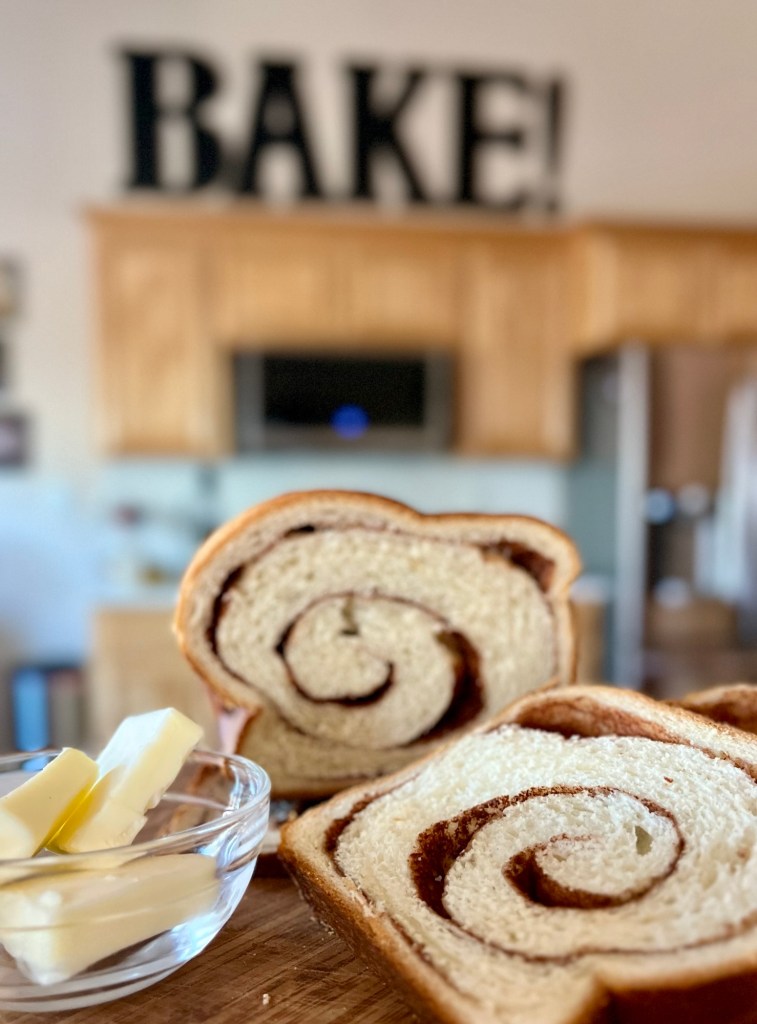
This months challenge(s) were apple fritters or Cinnamon Swirl Bread and I chose the latter. The initial critique was “If I wanted bread, I prefer your bread. If I wanted cinnamon buns, I prefer your KAB cinnamon buns.”
That is not to say there was anything wrong with this bake. It was tasty and easy to make, (despite several rookie brain-freeze mistakes, which I am too embarrassed to list here.)
Homemade Cinnamon Swirl Bread – Sally
INGREDIENTS • 120g ( ½ c) water, warmed to about 110°F (43°C) • 120g ( ½ c) whole milk, warmed to about 110°F (43°C) • 7g (2 ¼ tsp) instant or active dry yeast • 50g ( ¼ c) granulated sugar, divided • 56g (4 Tbl) unsalted butter, softened to room temperature and cut in 4 pieces • 390g (3 c) bread flour plus more as needed • 1 teaspoon salt For the Swirl & Topping • 1 egg white, beaten • 50g ( ¼ c) granulated sugar • 2 tsp ground cinnamon • 14g (1 Tbl) unsalted butter, melted
METHOD
Whisk the warm water, warm milk, yeast, and 2 Tablespoons of sugar together in the bowl of your stand mixer fitted with a dough hook attachment. Loosely cover and allow to sit for 5–10 minutes until foamy and frothy on top.
Add the remaining sugar, the butter, 1 cup flour (about 130g), and the salt. Beat on low speed for 30 seconds, scrape down the sides of the bowl with a silicone spatula, then add another cup of flour. Beat on medium speed until relatively incorporated (there may still be chunks of butter). Add the remaining flour and beat on medium speed until the dough comes together and pulls away from the sides of the bowl, about 2 minutes. If the dough seems too wet to a point where kneading (next step) would be impossible, beat in more flour 1 Tablespoon at a time until you have a workable dough. Dough should be soft and a little tacky, but still manageable to knead with lightly floured hands.
Keep the dough in the mixer and beat for an additional 8–10 full minutes, or knead by hand on a lightly floured surface for 8–10 full minutes. If the dough becomes too sticky during the kneading process, sprinkle 1 teaspoon of flour at a time on the dough or on the work surface/in the bowl to make a soft, slightly tacky dough. Do not add more flour than you need; you do not want a dry dough. After kneading, the dough should still feel a little soft. Poke it with your finger—if it slowly bounces back, your dough is ready to rise. You can also do a “windowpane test” to see if your dough has been kneaded long enough.
Lightly grease a large bowl with oil or nonstick spray. Place the dough in the bowl, turning it to coat all sides in the oil. Cover the bowl and allow the dough to rise in a relatively warm environment for 1 ½ -2 hours or until double in size. (I always let it rise on the counter. Takes about 2 hours.
Grease a 9×5-inch loaf pan.
In a small bowl, whisk ¼ cup (50g) sugar and the cinnamon together.
When the dough is ready, punch it down to release the air. Lightly flour a work surface, your hands, and a rolling pin. Roll the dough out into a large 8×20 inch rectangle. Using a pastry brush, brush the surface with beaten egg white, then sprinkle on the cinnamon-sugar, leaving a 1-inch border uncovered. Roll it up into an 8-inch log. Place the loaf, seam-side down, into the prepared loaf pan. If any cinnamon-sugar filling spilled out of the sides, don’t waste it! Sprinkle it on top of the bread in the loaf pan.
Cover the shaped loaf and allow to rise for 1 hour, or until it’s about 1 inch above the top of the loaf pan.
Adjust oven rack to a lower position and preheat oven to 350°F (177°C). (It’s best to bake the bread towards the bottom of the oven so the top doesn’t burn.)
After the dough rises, melt the remaining 1 Tablespoon of butter. Lightly brush the melted butter on top of the shaped loaf before baking. Bake for 35–45 minutes, or until golden brown. Check on the bread about halfway through baking—if the top of the loaf is browning too quickly, tent with aluminum foil. The bread is done when an instant-read thermometer inserted into the center of the loaf registers 195–200°F (90–93°C).
Remove from the oven and allow bread to cool for a few minutes in the pan on a cooling rack. Remove loaf from the pan and cool it directly on a cooling rack for at least 10 minutes before slicing. Feel free to let it cool completely before slicing, too.
Cover leftover bread tightly and store at room temperature for 6 days or in the refrigerator for up to 10 days.
NOTES
Overnight Instructions: Prepare the dough through most of step 4, allowing the dough to rise overnight in the refrigerator instead of in a warm environment. The slow rise gives the bread wonderful flavor! In the morning, let the dough sit on the counter until it comes to room temperature, then continue with step 5. I don’t recommend shaping the bread the night before as it will puff up too much overnight.
Freezing Instructions: Baked bread freezes wonderfully! Wrap the loaf in plastic wrap, then a layer of aluminum foil. Freeze for up to 3 months. Thaw overnight in the refrigerator or at room temperature, then warm to your liking. You can also freeze the bread dough. After punching down the dough in step 7, wrap the dough tightly in plastic wrap, then a layer of aluminum foil. Freeze for up to 3 months. Thaw overnight in the refrigerator, then bring to room temperature. Once at room temperature, punch the dough down again to release any air bubbles. Continue with the rest of step 7 (shaping the dough).
Sally posted a number of recipes lately and her Apple Turnovers caught my eye, plus it is apple season! I followed her recipes for the turnovers and caramel topping. (The topping should have been cooler but I was under a time limit.
I saw how to make (I think it was on a FB Reel) mini pie shells by folding disks of rolled pie dough over the back side of a muffin pan and I had some frozen pie dough that I needed to use so….
I used a half recipe of Sally’s Chocolate Mousse as the filling and some stabilized whipped cream for the topping.
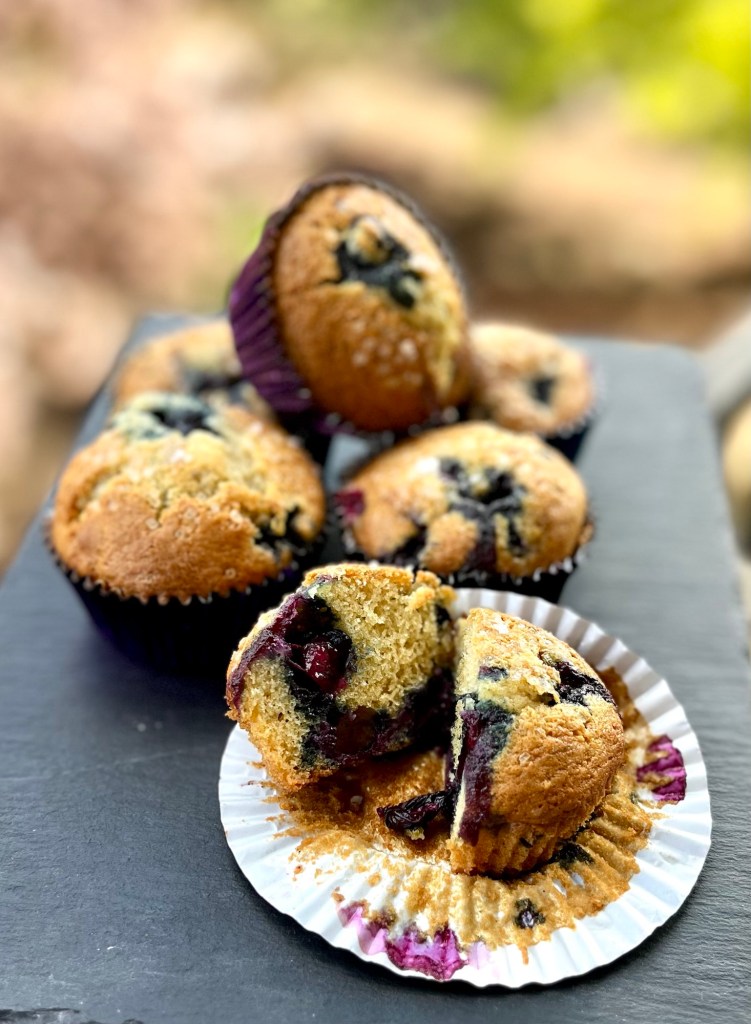
Sally’s post for these muffins looked sooooo good!
Blueberry Muffins – Sally
INGREDIENTS Streusel Topping • ½ cup (100g) packed light or dark brown sugar • 1 teaspoon ground cinnamon Muffins • 1¾ cups (220g) all-purpose flour • 1 teaspoon baking soda • 1 teaspoon baking powder • ½ teaspoon salt • ½ cup (115g) room temperature unsalted butter • ½ cup (100g) granulated sugar • ¼ cup (50g) packed light or dark brown sugar • 2 large room temperature eggs • ½ cup (120g) room temperature sour cream or plain/vanilla yogurt • 2 teaspoons pure vanilla extract • ¼ cup (60ml) room temperature milk • 1½ cups (250g) fresh or frozen blueberries METHOD
Preheat oven to 425°F (218°C). Spray a 12-count muffin pan with nonstick spray or use cupcake liners. Grease/line a second pan with 2 liners because this recipe yields about 14 muffins. Set aside.
Mix all of the streusel ingredients together. Set aside.
Whisk the flour, baking soda, baking powder, and salt together in a large bowl. Set aside.
Using a handheld or stand mixer fitted with a paddle or whisk attachment, beat the butter, granulated sugar, and brown sugar together on high speed until smooth and creamy, about 2 minutes. On medium speed, add the eggs one at a time, beating well after each addition. Beat in the sour cream and vanilla extract on medium speed until combined. By hand, add the dry ingredients and milk into the wet ingredients and stir gently, no more than 4 stirs. Gently, fold in the blueberries.(Optional: Transfer batter to a glass bowl, cover with plastic wrap and refrigerate overnight.)
Spray release spray on the muffin pan before putting cupcake papers in to reduce berries from sticking if they overflow the papers. Spoon the batter into liners, filling them all the way to the top. Top each with streusel, gently pressing it down into the surface so it sticks. Bake for 5 minutes at 425 then, keeping the muffins in the oven, reduce the oven temperature to 350°F (177°C). Bake for an additional 18-20 minutes or until the internal temperature reaches 205-210 °F or a toothpick inserted in the center comes out clean. The total time these muffins take in the oven is about 23-25 minutes, give or take. Allow the muffins to cool for 5 minutes in the muffin pan, then transfer to a wire rack to continue cooling.
Muffins stay fresh covered at room temperature for a few days or in the refrigerator for up to 1 week.
Notes:
This recipe made 7 muffins using tulip cups. Put the cups into something to help them stand. I used a 12 well entremet pan which was perfect.
Doubling this recipe should be fine and if each tulip cup was filled to the top should make 12 muffins
Baking time was extended to 45-55 minutes, checking the inside temperature every 5 minutes. I used my ThermoPro being sure to poke it all the way to the bottom, which cooks last, but be sure not to touch the metal of the entremet pan.
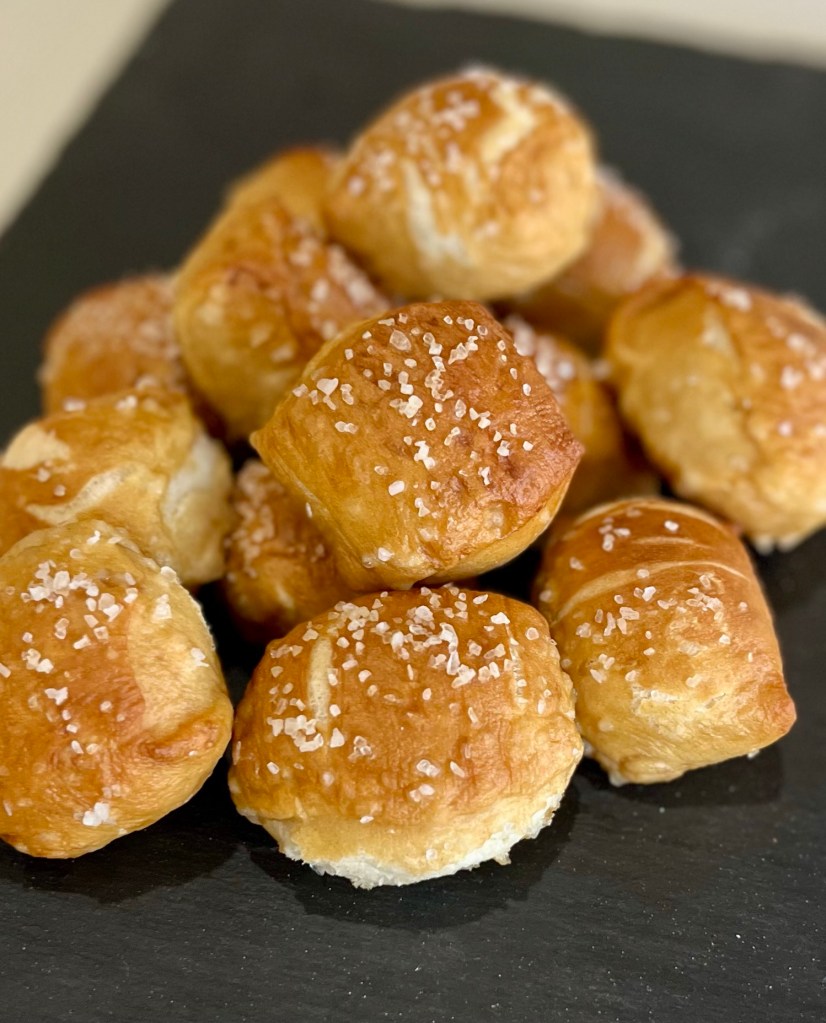
Sally posted a description of these pretzel bites and I was sold. I make pretzels fairly often and received warm reviews on their texture and flavor. These definitely do not disappoint. They are easy to make (no need to master the pretzel swirl.)
The only change I made to Sally’s recipe was to add the light malt powder. I have been using Breiss Dry Malt Golden Light from when I used to brew my own ale.
Soft Pretzel Bites – Sally
Yield: 5 dozen INGREDIENTS • 350g (1½ c) warm water (lukewarm; around 100°F is great) • 7g (2 ¼ tsp) instant or active dry yeast (1 packet) • 1 Tbl brown sugar or granulated sugar • 1 tsp salt • 14g (1 Tbl) unsalted butter, melted and slightly cooled • 470-500g (3 ¾- 4 c) all-purpose flour (divided) plus more for hands and work surface • Coarse sea salt Baking Soda Bath • 5 Tbl baked baking soda • 12 cups water • 2 Tbl light malt powder
METHOD
Whisk warm water, yeast, and sugar together in the bowl of your stand mixer fitted with a paddle or dough hook attachment. (If you do not have a stand mixer, just use a regular large mixing bowl and a wooden spoon or silicone spatula.) Cover yeast mixture and allow to sit for 5 minutes or until foamy on top. Add salt, melted butter, and 3 cups (375g) of flour. Beat on low speed for 1 minute, scrape down the sides of the bowl with a rubber spatula if needed, then add 3/4 cup (95g) of flour. Beat on low speed until the dough comes together and pulls away from the sides of the bowl, about 2 minutes. If dough is extremely sticky after 1 minute of mixing, add remaining 1/4 cup (30g) of flour and continue to beat for 1 more minute.
Keep the dough in the mixer (and switch to the dough hook if using the paddle) and beat for an additional 5 – 10 full minutes, or knead by hand on a lightly floured surface for 5 -10 full minutes. If the dough becomes too sticky during the kneading process, sprinkle 1 tsp of flour at a time on the dough or on the work surface/in the bowl to make a soft, slightly tacky dough. Do not add more flour than you need because you do not want a dry dough. After kneading, the dough should still feel a little soft. Poke it with your finger—if it slowly bounces back, your dough is ready to rise. If not, keep kneading until it passes the bounce back test.
Cover lightly with a towel and allow to rest for 10-30 minutes.
Preheat oven to 400°F. Line 1 large or 2 baking sheets with silicone baking mats. Set aside.
With a bench scraper, cut dough into 6 equal pieces. Sprinkle work surface very lightly with flour. Roll each piece of dough into a 20-inch rope. If the ropes keep shrinking and stretching the dough becomes difficult, stop what you’re doing, lightly cover all of the dough, and let it rest for 10 minutes so the gluten can relax. Then, return to rolling it into ropes. Cut each rope into 1½–2-inch pieces to make bites.
Mix water and baking soda and malt powder together in a large pot. Bring to a boil. Place 8–10 pretzel bites into the boiling water for a quick 10–15 seconds. Using a slotted spatula or spoon, lift the pretzel bites out of the water and allow excess water to drip off. Place bites onto prepared baking sheets. Sprinkle each with coarse sea salt while they are still wet, or leave plain if using cinnamon sugar topping listed in the notes. Repeat baking soda bath with remaining pretzel bites. If needed, you can cover and refrigerate the boiled/unbaked bites for up to 24 hours before baking.
Bake for 15 – 25 minutes or until golden brown. Remove from the oven and serve warm.
Cover and store leftover pretzel bites at room temperature for up to 3 days. They lose a little softness over time. To reheat, microwave for a few seconds or bake in a 350°F for 5 minutes.