Artisan “French” Bread

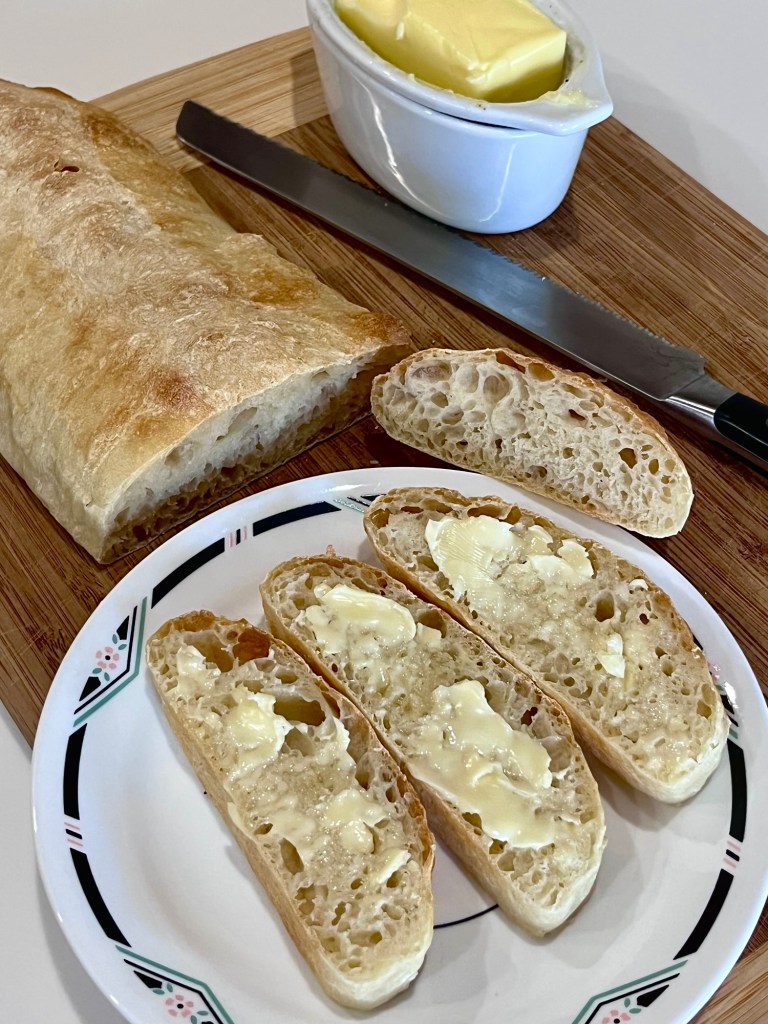
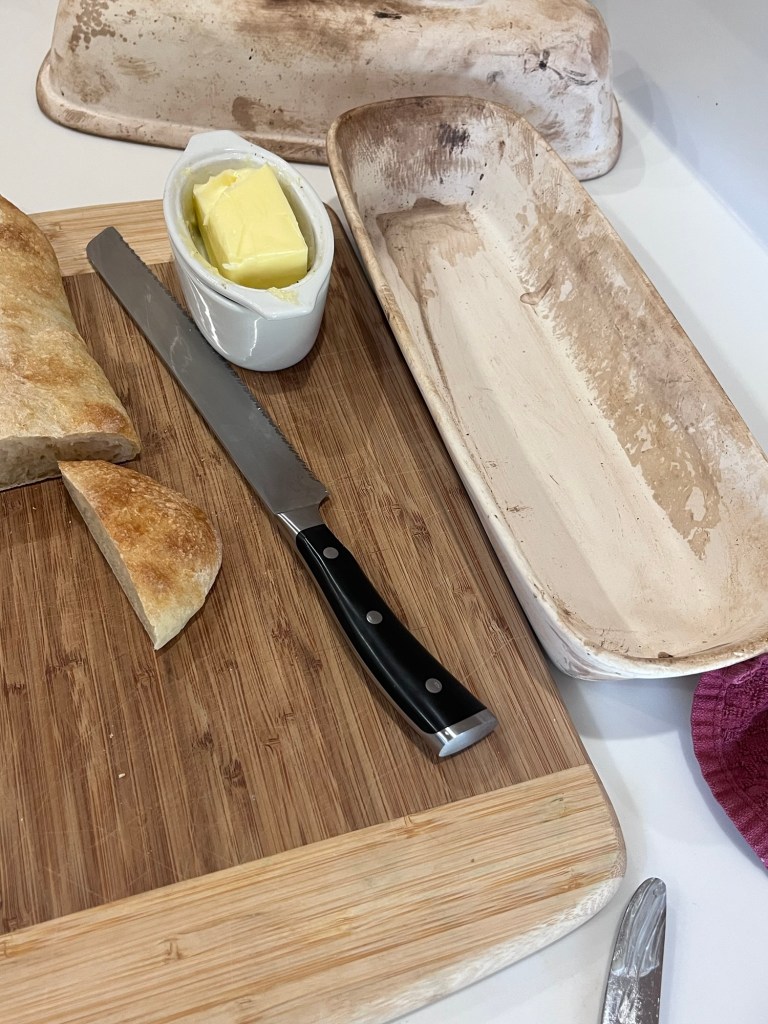
I made my usual artisan bread but with a twist today. To make more of a “French” loaf I added olive oil and sugar to the dough. I also baked it on a stone rather than a Dutch oven. Because it is fairly high hydration (80%) it spread a little too much (for me) in the french bread pan and on the baking stone. Next time I will put one loaf in a long narrow Dutch oven without the lid. This may keep the shape without imparting a strong crust.
Artisan Bread

INGREDIENTS

  • 450g (3 ¾ c) bread flour divided (For Italian Bread use AP flour))
  • 2 ¼ teaspoons instant yeast
  • 10g (1 ¾ tsp) kosher salt 
  • 360g (1 ½ c) warm water between 120°F and 130°F (360 grams)

For French Bread

  • 18g (1 ½ Tbl) sugar
  • 12g (1 Tbl) Olive Oil

As an alternate add 2 tsp sugar, mix the water, yeast and sugar in a bowl and let set 10 minutes. Thoroughly mix in the flour and salt, cover with a towel and let sit for ~1 hour until doubled in size. Bowl fold as in step #4 below. Shape the dough, place into a greased loaf pan, slash the top, and let rise an additional 30 min. Bake 30-35 minutes at 375°F until the top is a golden brown or internal temperature is 190°F.

METHOD

  1. In a large mixing bowl, add flour, yeast, and salt, (and sugar and oil if making French Bread) stirring with a dutch dough whisk to combine. Stir in water until the mixture is very sticky, and no lumps of flour remain, or use a stand mixer with paddle on low for 3 minutes.
    1. Cover and place in a warm, draft-free area until doubled in size, about 1 ½ to 2 hours.
    1. Alternatively, for an overnight rise: After mixing the dough, cover and refrigerate until doubled in size. This will take about 8 hours but will keep in the fridge up to 24 hours total.
  2. Preheat the oven to 450°F. Place a large dutch oven with a lid in the oven for at least 30 minutes. For French bread place baking stone on lower rack in the oven.
  3. If refrigerated, remove the dough from the refrigerator and let rest at room temperature for 30 minutes.
  4. Using wet hands, reach down one side of the dough to the bottom of the bowl, pull up, and stretch the edge of the dough over the center toward the opposite side. Turn the bowl 90 degrees and repeat the folding and turning, working in a circle around the dough until the dough starts to hold its shape, about 8 to 10 rotations.
  5. Turn out the dough onto a lightly floured surface, placing it seam side down. Shape into a boule or batard, depending on the intended use. Transfer the dough onto parchment paper or cloth lined banneton and sprinkle it with flour. (Alternatively, divide dough in half and form each into a small batard, place in a parchment paper lined French bread form)  Loosely cover with plastic wrap or a tea towel for 10 minutes while the oven heats to 450°F. Place a large dutch oven with a lid in the oven while it preheats.
  6. Using a sharp knife or bread lame, cut a slit about ¼-inch deep across the top of the dough. Very carefully place the dough with the parchment paper directly into the preheated Dutch oven. Cover with the lid.
  7. Bake covered for 12-15 minutes. (If making 2 smaller loaves shaped in french bread forms, slide the loaves from the bread form directly only the baking stone and bake for ~20 minutes, on an oven rack positioned in the upper third of the oven then check internal temperature.) Remove the lid and bake until deeply golden brown and the internal temperature is about 195°F (~11 to 12 minutes more.) Carefully remove the bread from the Dutch oven using the parchment paper to help, and place on a wire rack to cool for at least 20 minutes before slicing
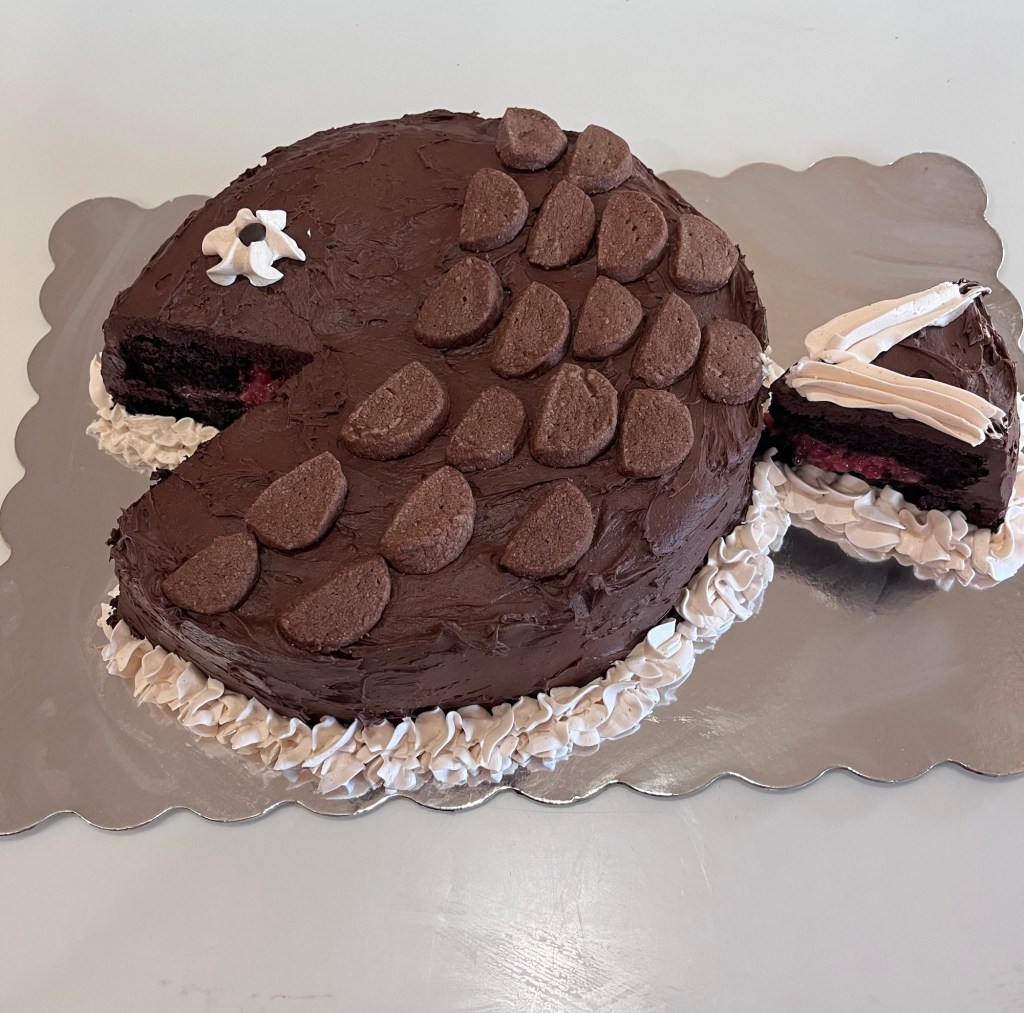


Fish Cake For Charity Donation

OK, I realize you can’t hit ‘em all out of da park, and I realize that accidents do happen when baking, but sometimes there is simply a “perfect storm” that is unavoidable.

I saw a picture of a cake shaped like a fish which was perfect for the Fish Fry fundraiser dinner last night.

In no particular order here are the mistakes I made with my “Fish Cake”

  • I chose the wrong cake recipe for my cake. It was too fragile for the required shaping. I needed a denser cake to hold everything together. I considered starting over with a firmer cake, but it was like I was in a baking contest and had a time limit. As it turned out I baked most of the day and finished with 15 minutes left. Whew!
  • The visual appeal was uninspiring for high value bids. While it may be a delicious cake, it must appeal to people to bid.
  • I didn’t check my supplies and ran out of cocoa powder before finishing. (However, the QC Cadre came through in many ways to help out!)
  • The chocolate shortbread cookie scales were almost perfect, but should have been lighter shade of brown than the frosting.

The cake ended up selling, but for much less than previous years entries. Note to self: Remember lessons learned this past week.

I used my standard Extreme Chocolate Cake and frosting. The flavor is outstanding. I used a new recipe for the chocolate shortbread cookies and they are delicious.

I filled the cake with a raspberry curd mixed with mashed fresh raspberries for the fresh berry tartness. ( It was so good I almost bought the cake so the QC Cadre and I could share it.)

Chocolate Shortbread Cookies

INGREDIENTS

  • 226g (1 c) butter (use salted butter, see note)
  • 113g (1 c) powdered sugar
  • 20g (¼ c) unsweetened cocoa powder
  • 1 teaspoon vanilla extract
  • 217g (1 ¾ c) all-purpose flour
  • ½ tsp salt

METHOD

  1. Cream butter and sugar in the bowl of a stand mixer (or in a very large bowl using a hand mixer), until fluffy and creamy, about 1 minute. Scrape the sides and bottom of the bowl.
  2. Mix in cocoa powder and vanilla, then again scrape the sides and bottom of the bowl.
  3. Add flour and mix until smooth, scraping the sides and bottom of the bowl (especially down in the bottom of the stand mixer bowl where things get caught) once during mixing.
  4. Lay out a piece of plastic wrap on a clean work surface. Scoop the dough onto the plastic and use your hands to form it into a log. Wrap up the log and roll to make into a uniform size. How long your roll is determines how many cookies you’ll get (or if you want small bite size cookies, make two rolls).
  5. Chill the rolls at least 1 hour, or until firm, before slicing and baking (or as long as overnight). To help the roll stay round, place it standing up in a tall drinking glass to chill in (this way it won’t flatten on one side).
  6. Preheat oven to 350°F. Line 2 cookie sheets with parchment paper or silicone baking mats.
  7. Slice log into ¼-inch thick slices and place 2-inches apart on cookie sheets. Bake for 14-17 minutes or until they just loose their glossy sheen. Cool completely before removing from cookie sheets.

Extreme Chocolate Frosting

Ingredients
• 168g ( ¾ c butter ½ c
• 125g (1 ½ c) unsweetened cocoa powder 1 c
• 624g (5 2/3 confectioners’ sugar 624g 3 ½ c
• 162g (⅔ c) milk .45 c
• 1 tsp vanilla extract

Directions

  1. Cream butter until light and fluffy.
  2. Stir in the cocoa and confectioners’ sugar alternately with the milk and vanilla.
  3. Beat to a spreading consistency.

Happy St. Patrick’s Day!

What is a great alternative for those of us who are not fans of corn beef and cabbage?

Irish Soda Bread!!

We love this bread, and it’s so easy to make. We like it with equal parts raisins and dried cranberries. Slathered with butter… what a treat.

Irish Soda Bread

INGREDIENTS

  • 420g (1 ¾ c) buttermilk*
  • 1 large egg (optional, see note)
  • 531 (4 ¼ c) all-purpose flour (spooned & leveled),
  • 38 g (3 Tbl) granulated sugar
  • 1 tsp baking soda
  • 1 tsp salt
  • 71 g (5 Tbl) unsalted butter, cold and cubed*
  • optional: 150g (1 c) raisins or craisins

METHOD

  1. Preheat oven to 400°F (204°C). Bake in a seasoned 10–12-inch cast iron skillet (no need to preheat the cast iron unless you want to).
  2. Whisk the buttermilk and egg together. Set aside.
  3. Whisk the flour, granulated sugar, baking soda, and salt together in a large bowl. Cut in the butter using a pastry cutter, a fork, or your fingers. Mixture is very heavy on the flour but do your best to cut in the butter until the butter is pea-sized crumbs.
  4. Stir in the raisins. Pour in the buttermilk/egg mixture. (*Adding all of the mixture yielded an overly wet dough. Try reserving ½ cup, adding more as necessary.) Gently fold the dough together until dough it is too stiff to stir.
  5. Pour crumbly dough onto a lightly floured work surface. With floured hands, work the dough into a ball as best you can, then knead for about 30 seconds or until all the flour is moistened. If the dough is too sticky, add a little more flour.
  6. Transfer the dough to the prepared skillet. Using a very sharp knife or bread lame, score the dough with a slash or X about 1/2 inch deep. (“Score” = shallow cut.)
  7. Bake until the bread is golden brown, and center appears cooked through, about 45-55 minutes. Loosely tent the bread with aluminum foil if you notice heavy browning on top. The bread is done when an instant read thermometer reads the center of the loaf as 195°F.
  8. Remove from the oven and allow bread to cool for 10 minutes, and then transfer to a wire rack. Serve warm, at room temperature, or toasted with desired toppings/spreads.
  9. Cover and store leftover bread at room temperature for up to 2 days or in the refrigerator for up to 1 week. We usually wrap it tightly in aluminum foil for storing.

NOTES

  1. Freezing Instructions: Baked and cooled bread freezes well up to 3 months. Freeze the whole loaf or individual slices. Thaw in the refrigerator or at room temperature, then reheat as desired.
  2. Baking Pan: There are options for the baking pan. You can use a lined large baking sheet (with or without a rim), a seasoned 10-12 inch cast iron skillet, or a greased or lined 9-10 inch cake pan or pie dish. I don’t recommend a loaf pan because the loaf may not bake evenly inside. This dough is best as a flatter loaf.
  3. Buttermilk: Using cold buttermilk is best. Buttermilk is key to the bread’s flavor, texture, and rise. The bread will not rise without it. If you don’t have any buttermilk on hand, you can make a homemade “DIY” version. Whole milk or 2% milk is best, though lower fat or nondairy milks work in a pinch. Add 1 Tablespoon of lemon juice or white vinegar to a liquid measuring cup. Add enough cold milk to make 1 and 3/4 cups. Whisk together, then let sit for 5 minutes before using in the recipe.
  4. Egg: 1 egg adds richness and density. Feel free to skip it to make a slightly lighter loaf. No other changes necessary, simply leave out the egg.
  5. Cold Butter: The colder the butter, the less sticky the dough will be. Make sure it’s very cold, even frozen cubed butter is great.
  6. Smaller Loaves: You can divide this dough up to make smaller loaves. The bake time will be shorter, depending how large the loaves are. An instant read thermometer will be especially helpful. Bake the loaves until an instant read thermometer reads the center of the loaf as 195°F (90°C).

Sally’s March Challenge – Fougasse

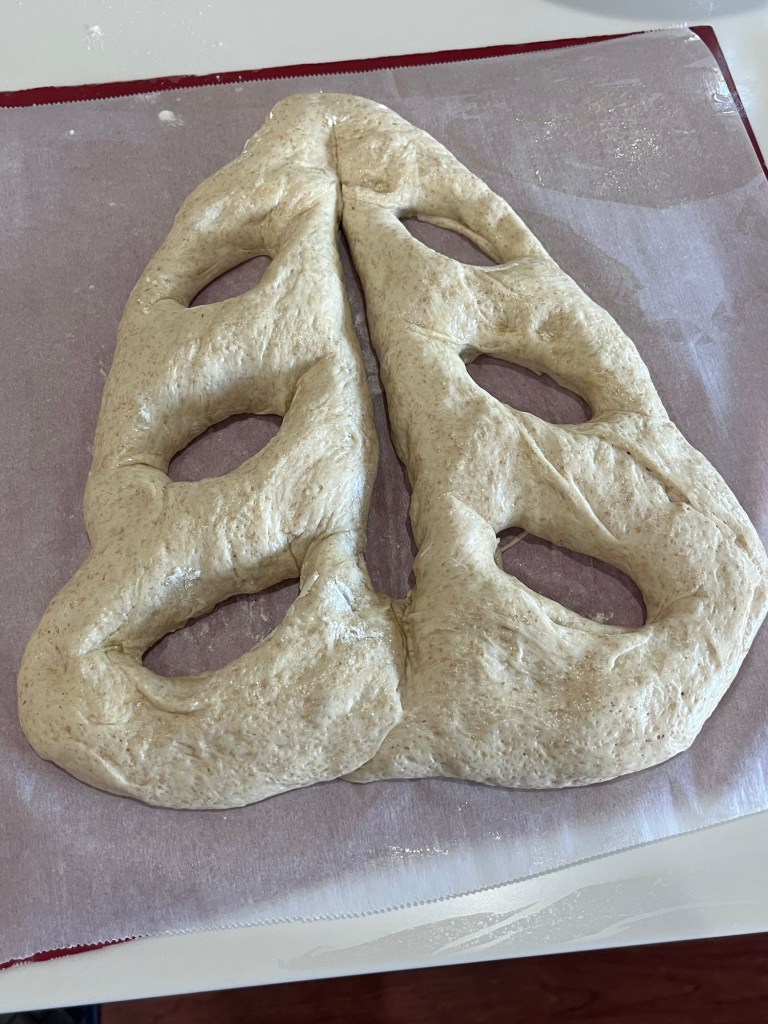
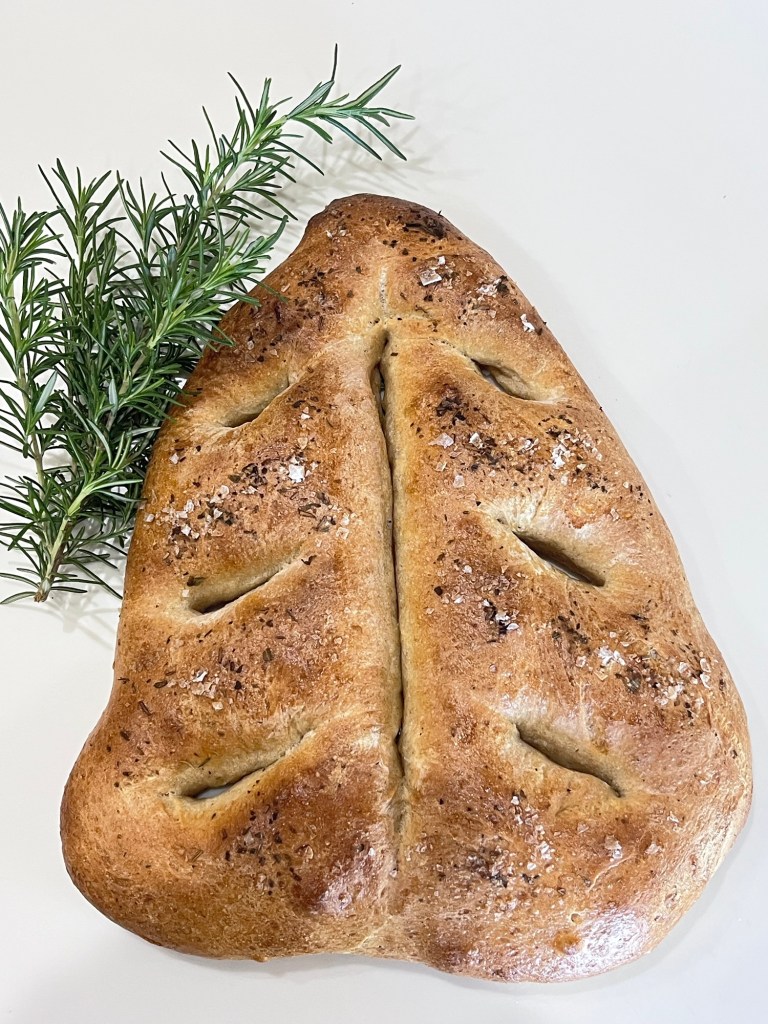
A new month, a new challenge, a new bread. I had not made Fougasse before this challenge, Fougasse is the french version of Italy’s focaccia bread. Its crust cracks when you bite it and the extra holes in the bread provide more crunchy crust.

Follow the recipe exactly and enjoy the result.

Homemade Fougasse – Sally

INGREDIENTS
Biga/Preferment
• 130g (1 c) bread flour
• 1/8 tsp instant or active-dry yeast
• 120g (½ c) room-temperature water (about 70°F)
For the Fougasse
• 195g (1½ c) bread flour
• 65g (½ c) whole wheat flour
• 3/4 tsp instant or active-dry yeast
• 1 tsp table salt
• 120g ( ½ c) RT water
• 28g (2 Tbl) extra-virgin olive oil, plus more as needed
• optional, for topping: flaky sea salt and herbs, such as rosemary, thyme, or Herbes de Provence

METHOD

  1. Day 1: Make the Biga/Preferment: In a medium bowl, whisk together the bread flour and yeast. Add the water and mix with a silicone spatula until combined. Cover the bowl tightly with plastic wrap and let rest at room temperature for 8–24 hours.
  2. Day 2: Make the Dough: In a large bowl or the bowl of a stand mixer fitted with a dough hook, whisk together the bread flour, whole wheat flour, yeast, and salt. Add the biga, water, and olive oil. Mix until a shaggy dough forms. If you do not have a stand mixer, mix the dough together by hand with a silicone spatula.
  3. If using a stand mixer, knead with the dough hook on medium-low speed for 3–5 minutes, until the dough is smooth and slightly tacky. If mixing by hand, turn the dough out (all the shaggy bits!) onto a lightly floured surface and knead for 3–5 minutes, until smooth. The dough should be sticky but workable. If it’s very sticky, lightly flour your hands or the dough as needed. Avoid adding too much extra flour; the dough should remain slightly tacky.
  4. Drizzle or brush a little olive oil around the inside of the mixing bowl you were using. Place the ball of dough in the bowl, turning it to coat all sides of the dough in the oil.
  5. 1st Dough Rest: Cover tightly and let the dough rest for 45 minutes, and up to 2 hours. (See make-ahead instructions if you want to extend this time.)
  6. Stretch and Fold (1 Round): Visualize a clock on top of your dough. You’ll be folding it at the 12 o’clock mark. With an olive oil-greased spatula or lightly oiled hands, lift up the dough at 12 o’clock and gently stretch it up and pull it toward the opposite side of the bowl (6 o’clock), folding it down over the dough. Turn the bowl 90 degrees and repeat. Do this until you’ve gone around the bowl once, for a total of 4 folds. Flip the dough over so it’s seam side down.
  7. 2nd Dough Rest: Cover tightly and let the dough rest for 45 minutes, and up to 2 hours.
  8. Shape the Dough: Turn the dough out onto a piece of parchment paper and use your fingers to press it into a rounded triangle or egg shape, (roughly) 12 inches long by 6 inches wide at the base.
  9. 3rd Dough Rest: Cover lightly and let rest for 30 minutes, and up to 2 hours.
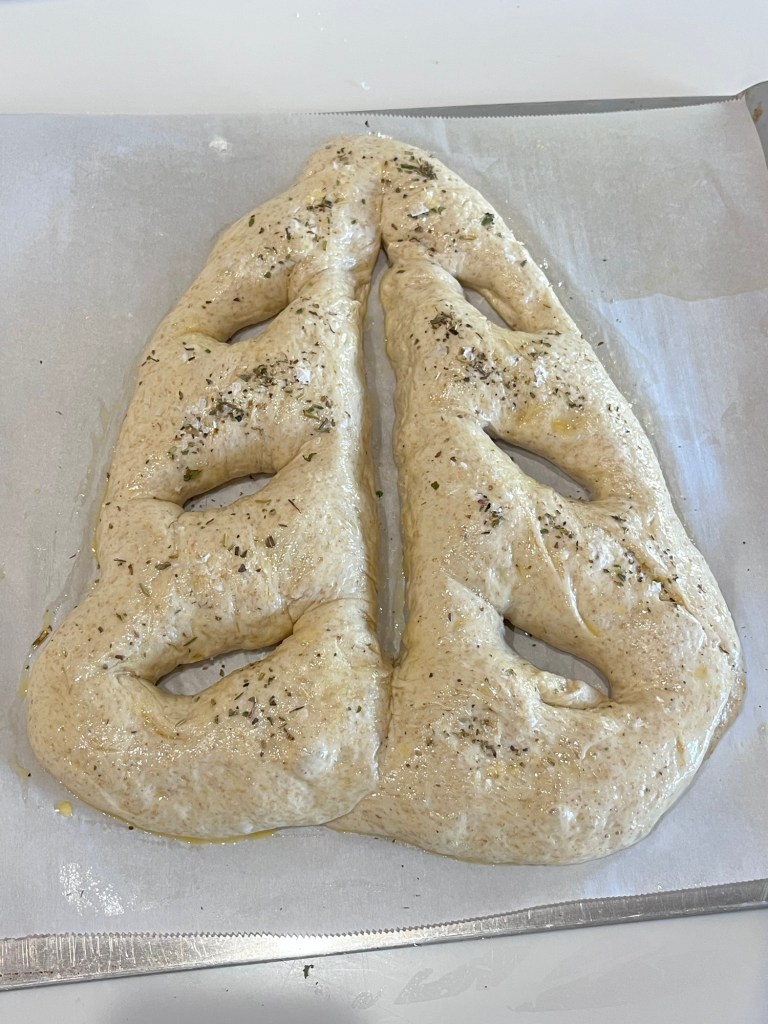
  10. Cut the dough: Using a sharp knife, pizza wheel, or kitchen shears, cut the dough lengthwise down the center, stopping about 1 inch from each end. Then make 3 or 4 diagonal cuts on each side of the center cut. To create a leaf-like appearance, use your fingers to gently stretch out each cut until the holes are about 2 inches wide.
  11. 4th Rest: Cover lightly and let rest for 30 minutes, and up to 1 hour. Meanwhile, preheat the oven to 450°F (232°C). If you have a baking stone, preheat it on the center rack. Otherwise, place a large flat baking sheet, or a rimmed baking sheet upside down, on the center rack to preheat.
  12. Brush the fougasse with olive oil, and sprinkle with herbs and/or sea salt, if using. Carefully slide the fougasse, along with the parchment paper, onto the preheated baking stone or baking sheet.
  13. Bake the fougasse until golden brown, about 20 minutes. If you give the top of the bread a tap, it should sound hollow. For a more accurate test, the bread is done when an instant-read thermometer reads the internal temperature as 190–200°F (88–93°C). I raised the oven temperature to 500°F for 3 minutes after the internal temperature reached 200°F to increase the browning.
  14. If desired, egg wash the warm bread. The egg wash will help adhere any herbs or salt to the bread. Serve warm with dipping oil and balsamic vinegar, alongside soup or salad, or as part of a cheese board.
  15. Fougasse is best the day it’s baked. Store leftovers covered at room temperature for up to 2 days. If desired, reheat in a 350°F (177°C) oven, uncovered, for 5–8 minutes to crisp back up.
    Notes
  16. Make-Ahead Instructions: There are a few ways to get ahead. First, the biga (step 1) can sit at room temperature for up to 24 hours before using. Second, after the first 45-minute dough rest in step 5 (before the stretch-and-fold), you can cover the bowl tightly and refrigerate the dough for up to 24 hours. When ready to continue, let the dough sit at room temperature for about 30–60 minutes before proceeding with the stretch-and-fold and shaping.
  17. Freezing Instructions: The best way to freeze this is to freeze the baked bread. Let it cool completely, then wrap tightly and freeze for up to 3 months. Thaw at room temperature and refresh in a 350°F (177°C) oven, uncovered, for 5–8 minutes to crisp it back up.
  18. Special Tools (affiliate links): Kitchen Scale | Glass Mixing Bowls | Stand Mixer | Silicone Spatula | Baking Sheet | Pastry Brush | Instant-Read Thermometer | Cooling Rack
  19. Flour: For absolute best flavor and chewy texture, I strongly recommend using bread flour. You can use a 1:1 substitution of all-purpose flour in a pinch with no other changes to the recipe; however, the dough may not be as strong, and may not hold shape as well.
  20. Whole Wheat Flour: This small amount adds depth of flavor and subtle nuttiness without making the bread dense. You can replace it with additional bread flour if needed; the texture will be slightly lighter and less hearty. I don’t recommend increasing the whole wheat flour beyond 1/2 cup, as too much can make the fougasse dry and dense.
  21. Yeast: You can use instant or active-dry yeast, but I highly recommend an instant (aka “rapid rise” or “quick rise”) yeast. If using active-dry yeast, there are no changes needed to the recipe. Reference my Baking with Yeast Guide for answers to common yeast FAQs.
  22. Optional Add-Ins: In step 2, when you mix the preferment with the dough ingredients, you can add up to 3/4 cup of chopped olives, sun-dried tomatoes, or shredded cheese. Avoid adding too much, which can weigh the bread down and affect shaping. You can also add 2 teaspoons chopped fresh herbs, or 1 teaspoon dried herbs.

QC Cadre Celebration

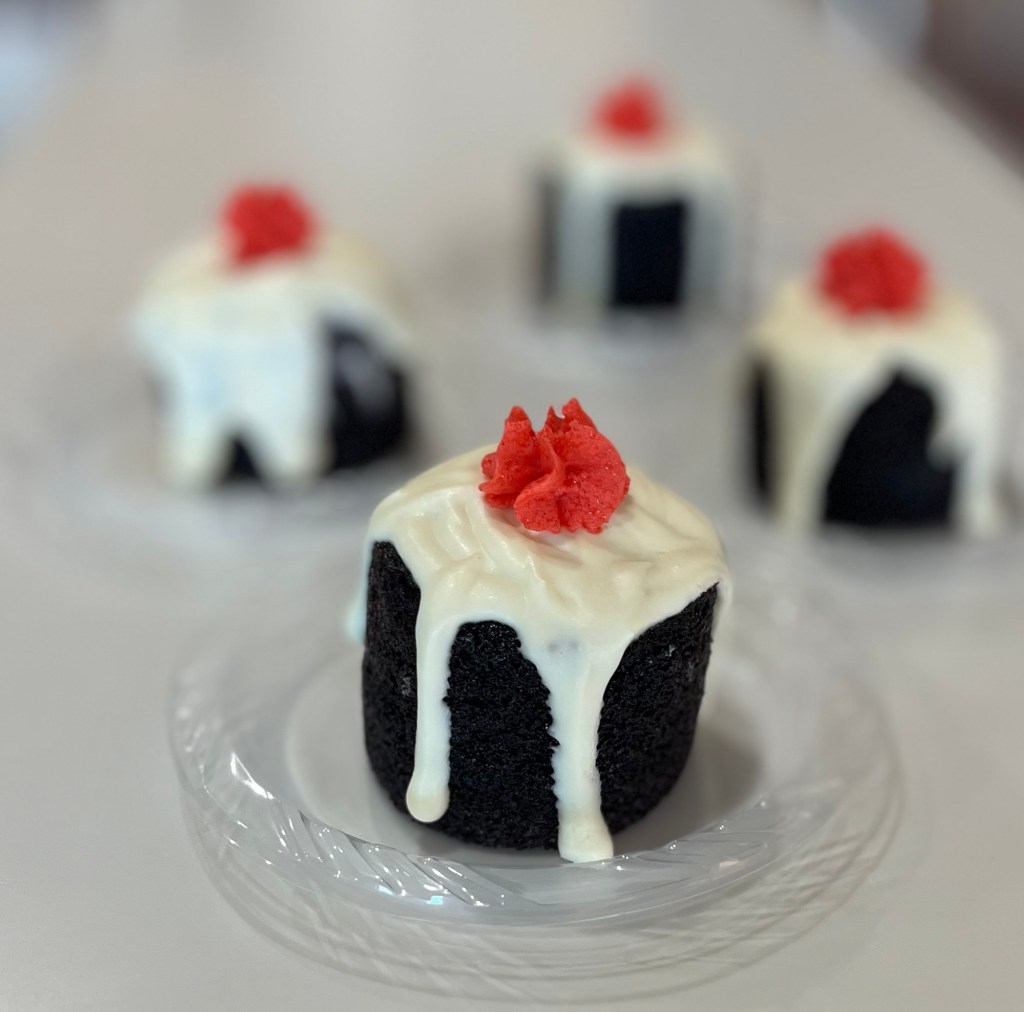
The only date that is also a command sentence (guesses anyone?) observed two birthdays of QC members AND the addition of two new members (we are up to 13 now!)

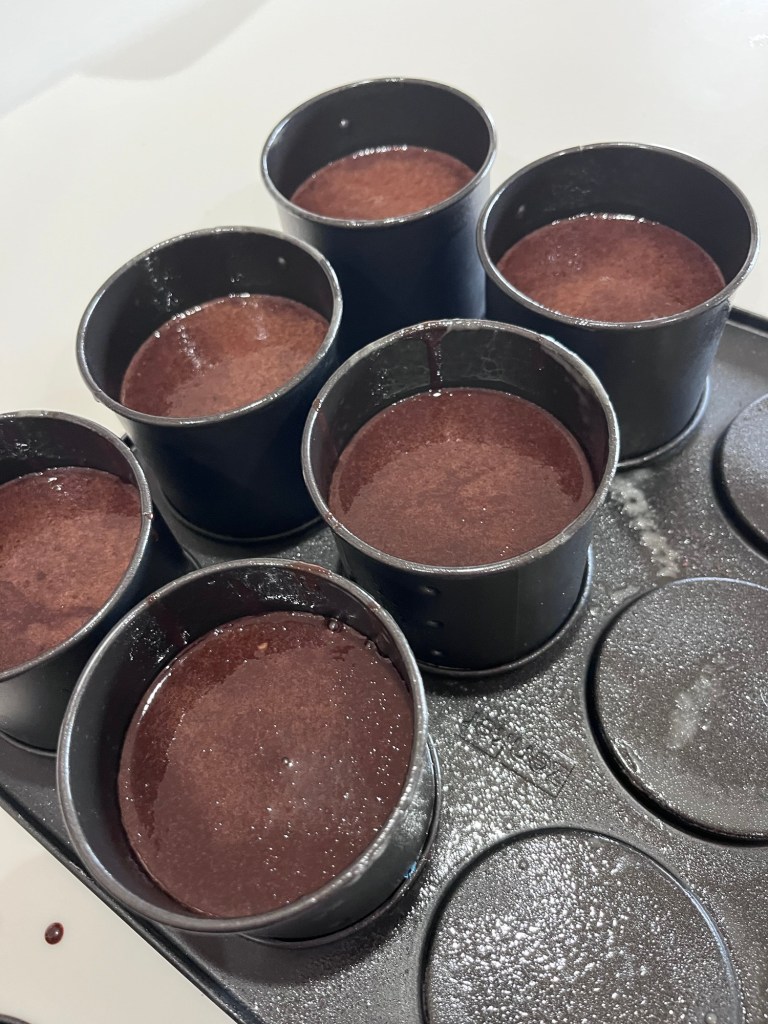
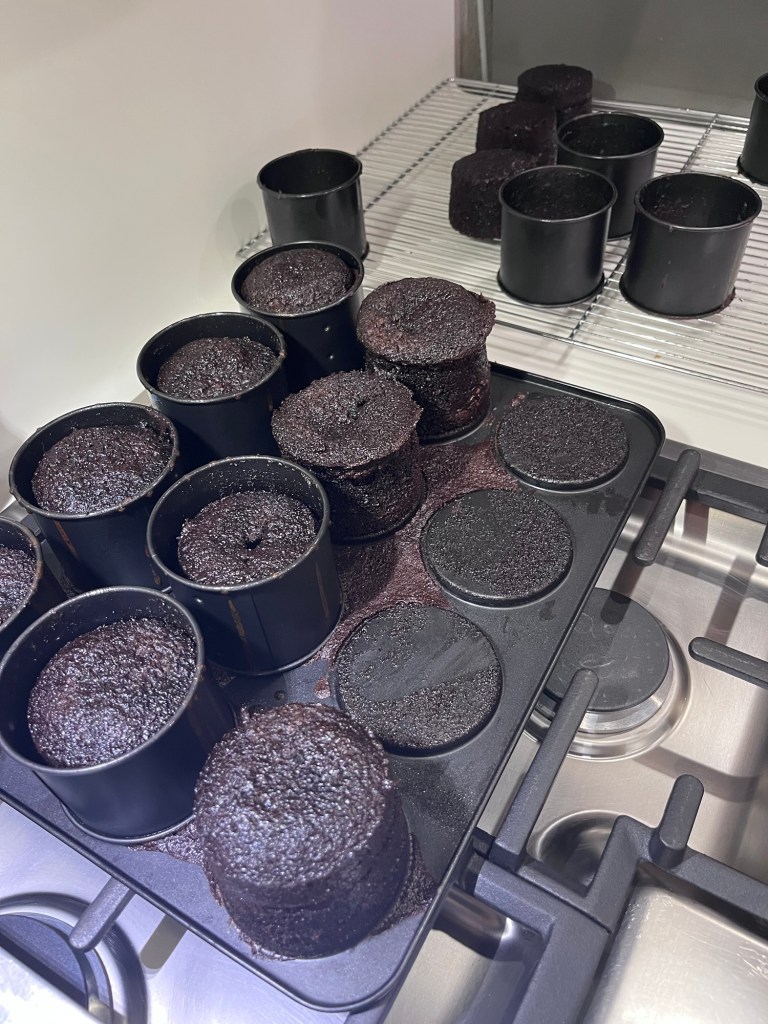
To celebrate, I made individual extreme chocolate cakes both dripped and filled with cream cheese/white chocolate ganache. To fill the cakes I used an apple corer to hollow out the cake, piped about a tablespoon of ganache into each cake and “plugged” the bottom with a piece of the removed cake-core. (Tip: don’t cut the cake all the way through.)

White Chocolate Cream Cheese Ganache

Makes 3 cups

INGREDIENTS
• 200 g white chocolate
• 200 g heavy cream
• 300 g cream cheese full fat, not skim or low fat

METHOD

  1. Finely chop the white chocolate and place it in a heatproof bowl.
  2. Heat the cream on the stovetop until just below boiling point, or heat in microwave (stirring between bursts) in 30 second then 15 second then 5 second bursts until the cream is scalding (not boiling) 170-180 deg
  3. Pour the hot cream over the chocolate.
  4. Use a hand whisk to mix until the chocolate has fully melted and the mixture is smooth.
  5. Cover the surface with cling wrap, ensuring it touches the surface, and refrigerate overnight or until completely chilled.
  6. In a new bowl, use a hand mixer to beat the cream cheese until smooth, light, and fluffy. Scrape the bowl occasionally to ensure even mixing.
  7. Add the whipped cream cheese to the chilled chocolate mixture. Mix until well combined, stiff, and thick. The ganache should have a smooth, silky texture.