Another Day, Another Bread

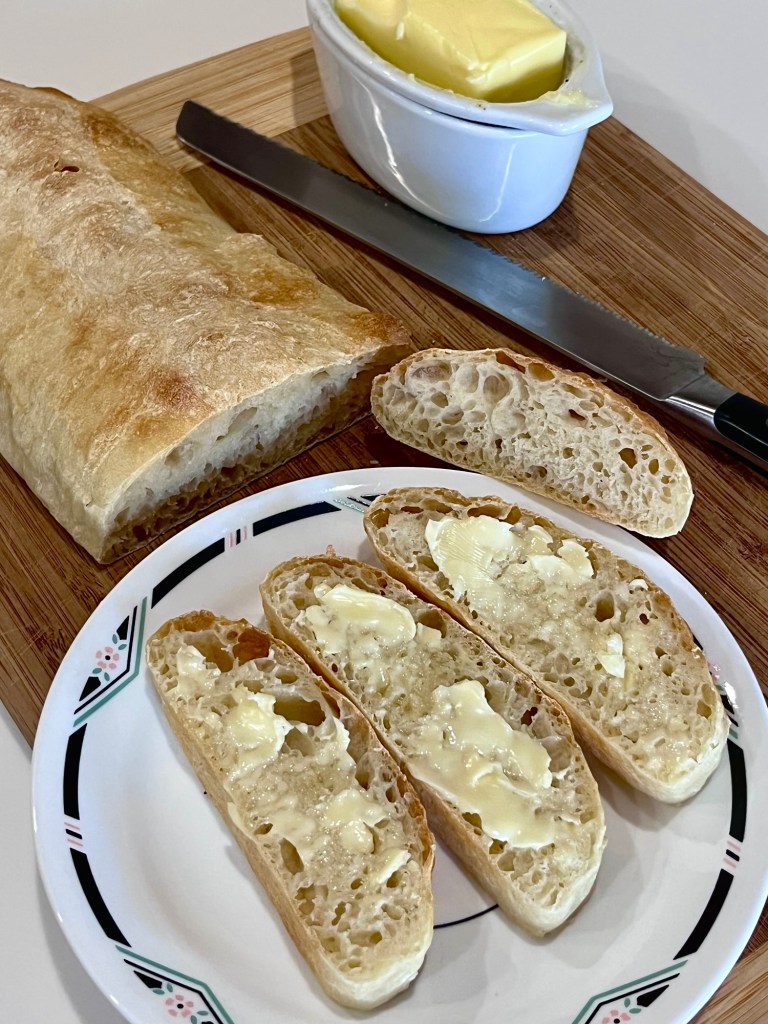
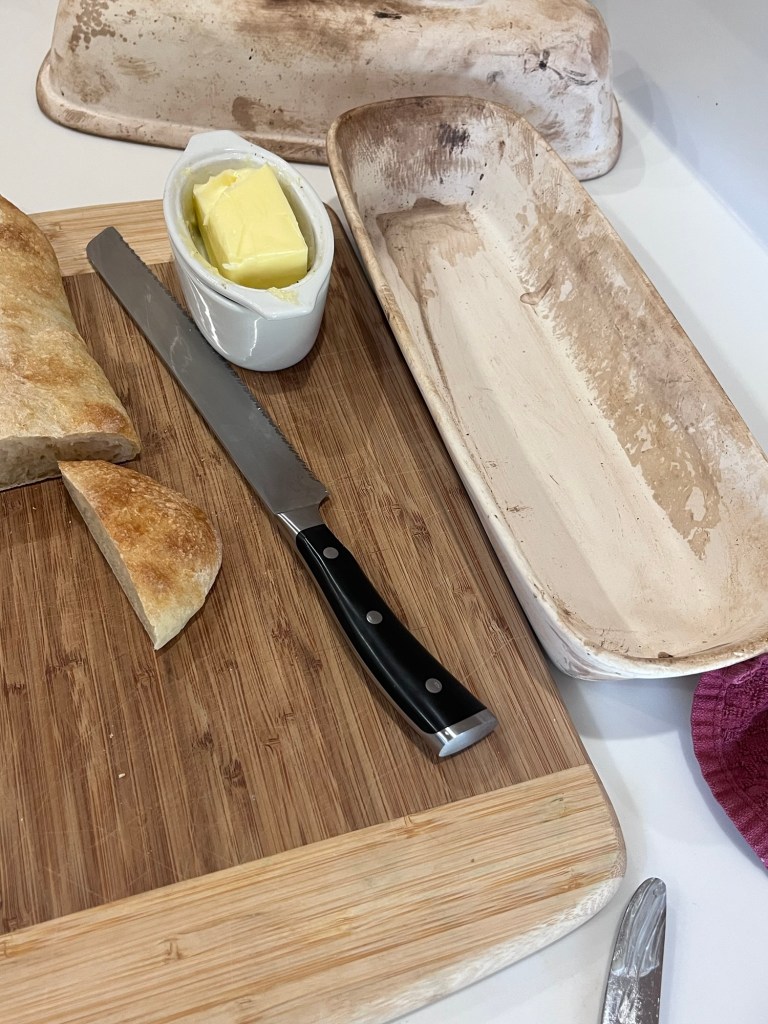
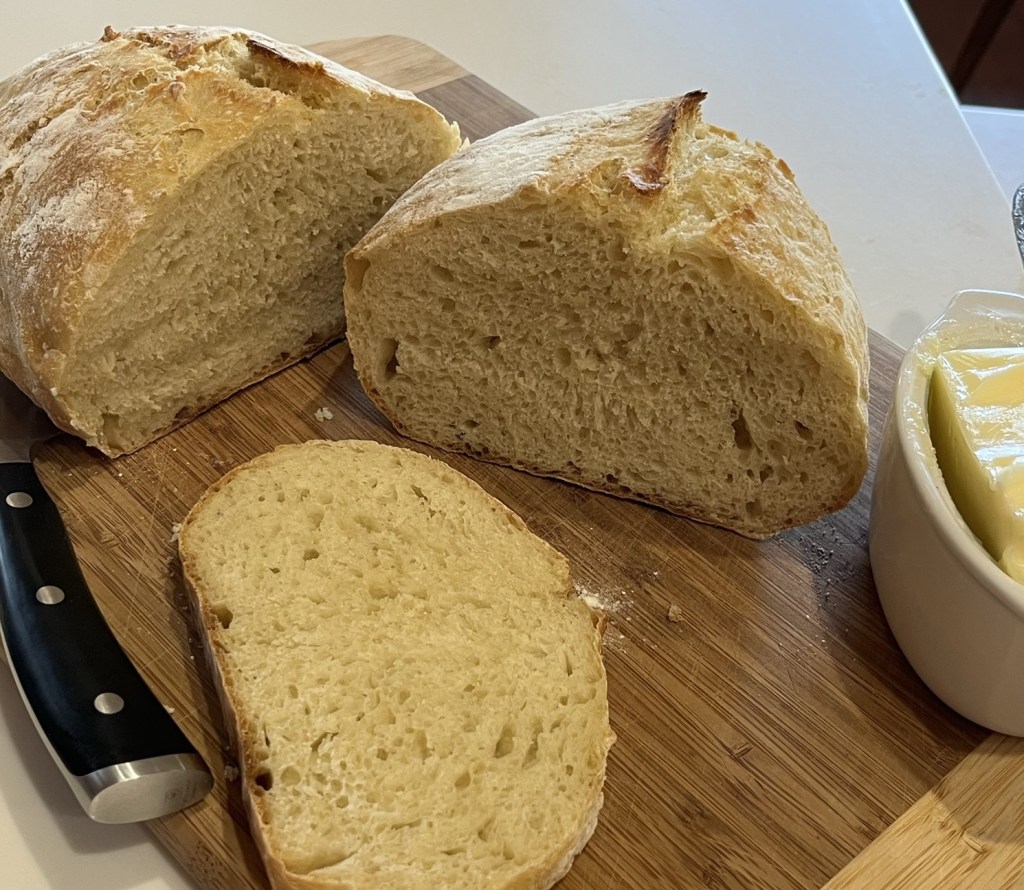
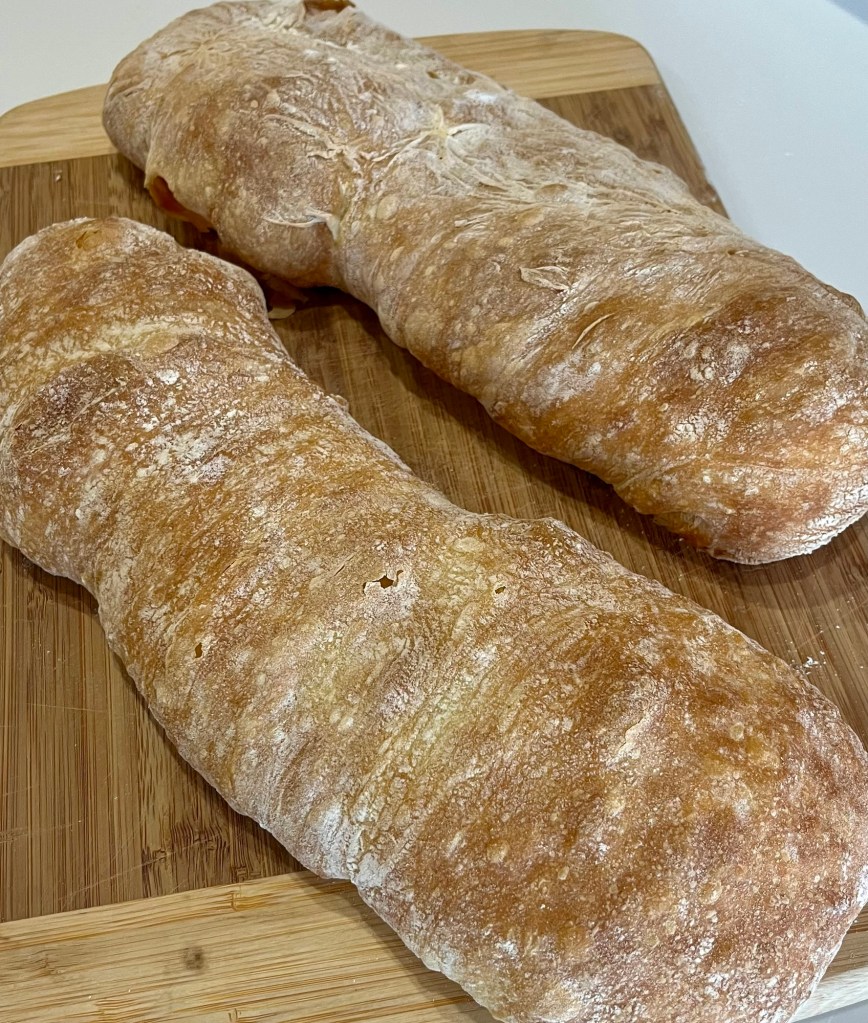
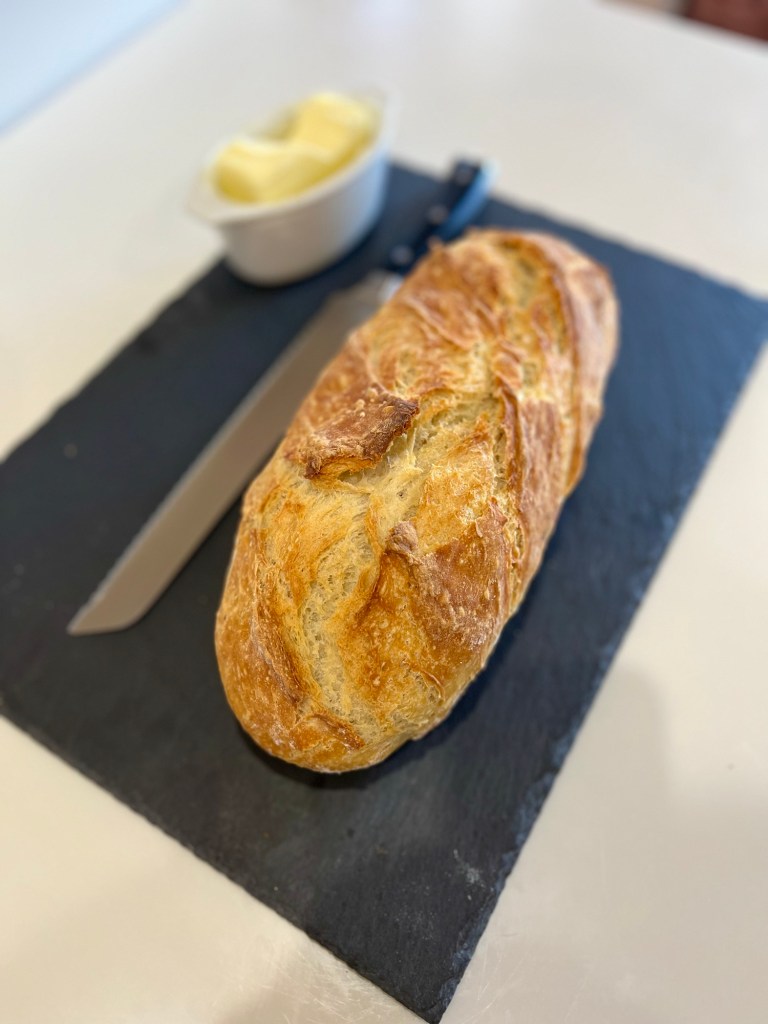
Every time I make this no-knead artisan bread I confirm it is the best loaf I ever made, and this mornings bake is no exception. There are only 4 ingredients and they come together, including weighing, in 10 minutes, then an hour ferment, followed by a stretch and fold and shape for 10 minutes and baked for 20 minutes. (10 minutes with Dutch Oven cover on and ~10 more minutes uncovered to brown and create a great crust) until internal temperature is 190-200F.

Chicken Salad Sandwich, with… with…

There is nothing exciting about a simple chicken salad sandwich, unless the bread was fresh from the oven and the lettuce was picked in the backyard minutes before eating, then it is exciting and special.

The bread is my standard artisan boule. I planted the lettuce in early September and it’s ready for harvest. Gotta love it.

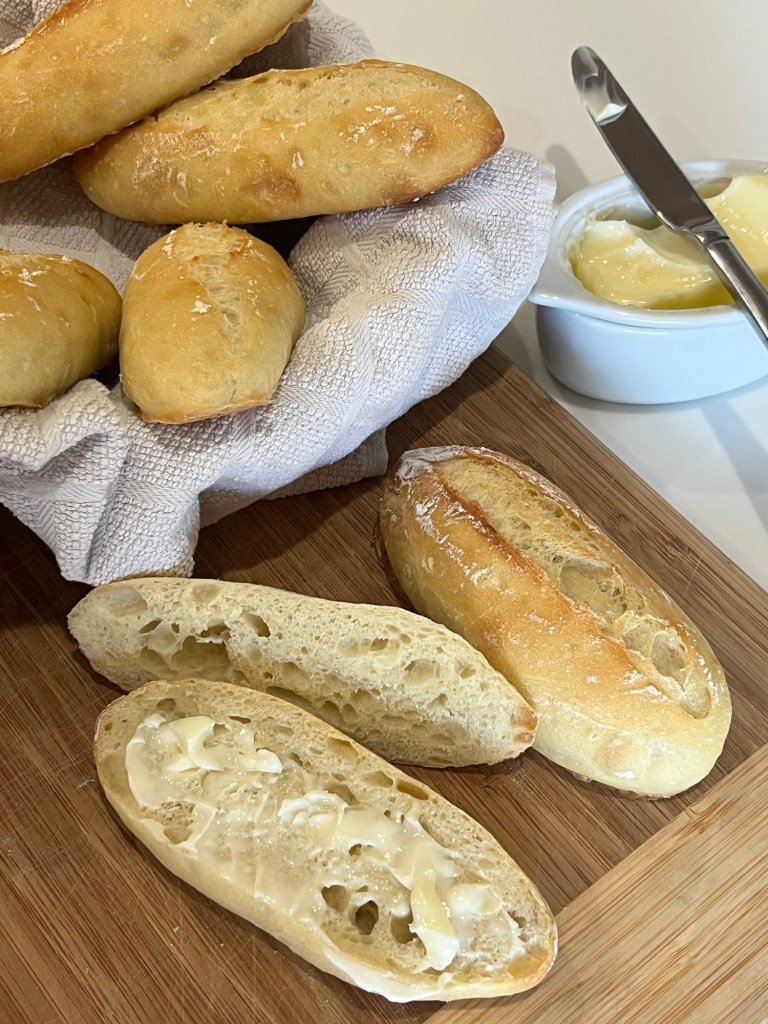
Quick Artisan Rolls

I saw this recipe on YouTube while listening to my favorite podcaster Sean Carroll, Homewood Professor of Natural Philosophy at Johns Hopkins, and theoretical physicist and cosmologist, which has nothing to do with this post!

This bread is lower hydration than I usually bake, but the video looked so good I couldn’t resist. The percent bread hydration determines the gluten development, higher hydration equals more gluten development which yields more open and airy crumb structure in the final product. My pain de cristal is 100% hydration (equal parts water and flour,) while my standard artisan bread is 80% (360g water divided by 450g flour) and this bread is 69%.

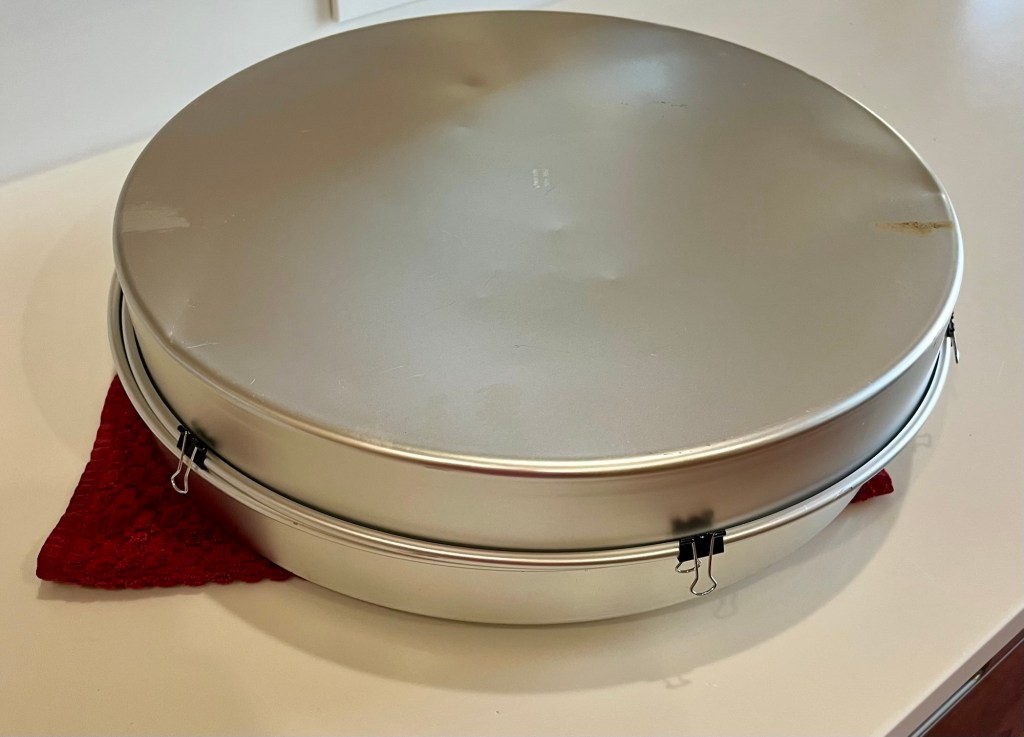
This recipe called for a large, lidded baking pan, which I don’t own. (I know thats hard to believe there is some baking equipment I don’t have.) I do have two 16” round cake pans and used one for the bottom and one for the top. I attached binder clips around the perimeter of the upper pan and used the clips to center and hold it in place on the lower. (I am quite proud of my Yankee ingenuity.)

These rolls, while delicious with a wonderful crunchy crust were a bit small for a hearty sandwich. I will probably scale the recipe up by 50% rather than only make 3 per bake. They are too good to only have 6 small rolls.

Quick Artisan Rolls

INGREDIENTS
• 220g (1c) water
• 2g (½ tsp) instant dry yeast
• 320g (2 ½ c) bread flour
• 6g ( 1 tsp) salt

METHOD

  1. Mix water and yeast, let rest 5 min.
  2. Add flour and salt and mix until there’s no more dry flour
  3. Cover and let rest for 30 minutes
  4. With a wet hand do 4 bowl folds then lift and slap the dough back into the bowl 6 times
  5. Cover and let rest for 30 minutes
  6. Repeat the bowl folds and lift and slaps
  7. Repeat the bowl folds but perform a gentler lift and slap. The dough is now much more elastic and smooth.
  8. Let the dough rise about 2 hours until it has doubled in size.
  9. Dust work surface and surface of the dough, (especially the perimeter) with flour
  10. Gently transfer the dough onto the floured work surface and fold it into a log then divide in 6 equal parts
  11. Brush off any excess flour, gently flatten and fold it tightly into a ball
  12. Pinch to seal then roll against work surface with cupped fingers to tighten the surface of the dough
  13. Let the balls rest for 10 minutes uncovered
  14. Roll the dough into a longer shape with your palm
  15. Place it on the baking pan
  16. Lightly sprinkle flour over the bread
  17. Smooth the flour with your hand
  18. Score the bread with a sharp blade or knife
  19. Sprinkle a little water around the bread to make steam
  20. Cover with another tray of the same size
  21. Bake at 430°F (220°C) for 20 minutes
  22. Remove the top tray
  23. Bake for 10 more minutes until the tops are a nice light brown and the internal temp is 195 F.

We Have A Winner, Winner, Chicken Dinner

Sorry, no chicken or dinner here,

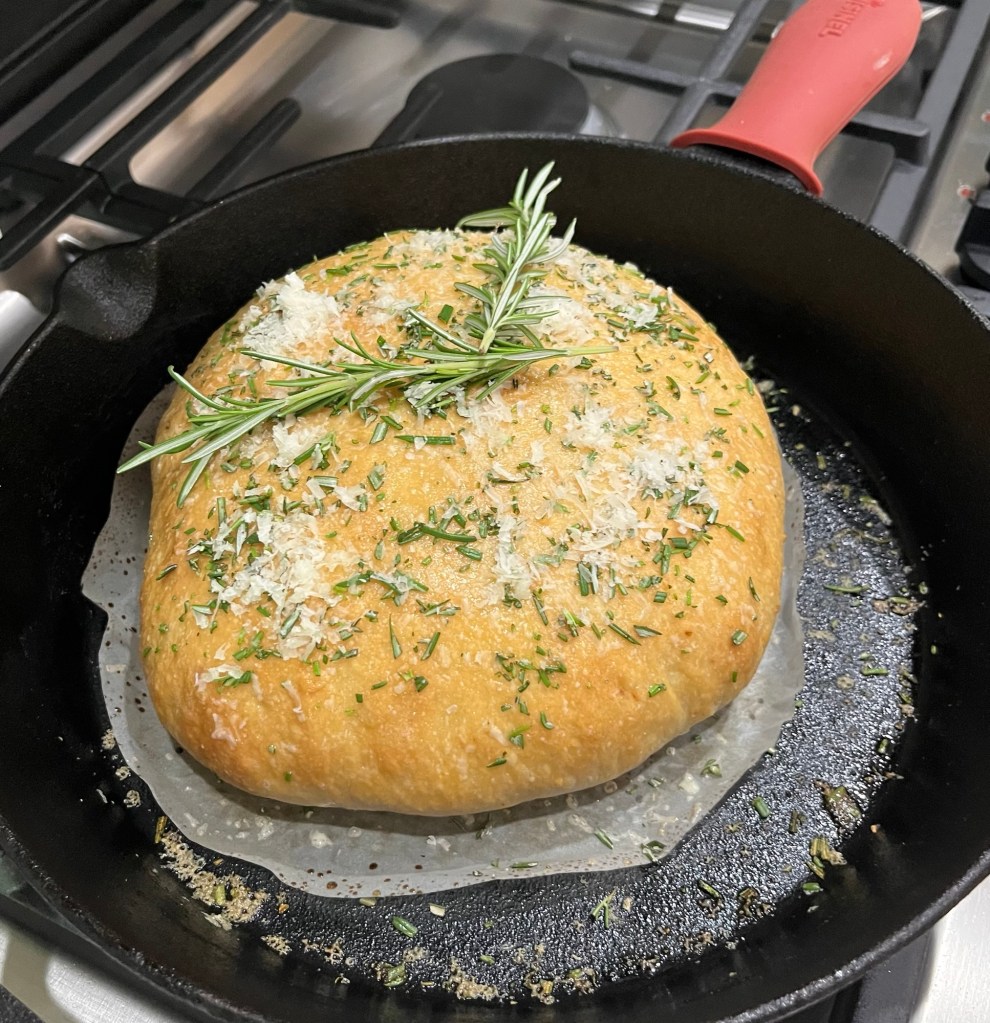
FB posted this Rustic No Knead Rosemary Garlic Bread by Jacques Pepin. I made a few changes to the method (as if I know more than M. Pepin.)

I followed the ingredients as published and the bread was fantastic, but next time I will increase the amount of garlic. All changes have been incorporated in the recipe below.

I did a stretch and fold before shaping the loaf, This is a 100% hydration bread and has little structure before baking, i.e it is very soft, wet, and hard to handle.. There was no reference to scoring the bread, but on reviewing the published photo realized it was scored with large cross cuts. (Next time, which will be very soon.)

My baking time was also much longer (nearly double) what was published. My modifications are incorporated below.)

Rustic No Knead Rosemary Garlic Bread – Jacques Pepin

INGREDIENTS
• 360g (3 c) AP flour
• 1 tsp salt
• 1 tsp active dry yeast
• 355g(1 ½ c) warm water (about 105-115⁰ F)
• 5 cloves garlic, minced
• 2 Tbl olive oil
• 1 Tbl chopped fresh rosemary
• ¼ c grated Parmesan cheese

METHOD

  1. In a large bowl, whisk together the flour, salt, and yeast.
  2. Add the warm water, minced garlic, and olive oil to the flour mixture. Stir with a wooden spoon until a shaggy dough forms.
  3. Cover the bowl with plastic wrap and let the dough rest at room temperature for 12-18 hours.
  4. Preheat oven and prepare dough: Preheat oven to 450⁰ F .
  5. Sprinkle a light coating of flour around the edge of the bread and use your fingers to lightly tuck the flour into the edge of the dough. With floured fingers (you may need to re-flour your fingers after each time you touch the bread) stretch and fold the bread, turning 90⁰ and repeat a total of 10-12 stretch and folds to make the dough firmer and easier to handle. Turn the dough out onto a lightly floured surface and gently shape it into a loaf.
  6. Lightly oil a 10-inch cast iron skillet or coat with nonstick spray, sprinkle with cornmeal. Score a large cross in the bread with a lame or sharp knife.
  7. Place the loaf in the skillet for 30-40 minutes, checking the internal temperature every 5 minutes after the first 20, or until golden brown and cooked through.
  8. While the bread is still warm, brush with melted butter and sprinkle with chopped rosemary and Parmesan cheese.
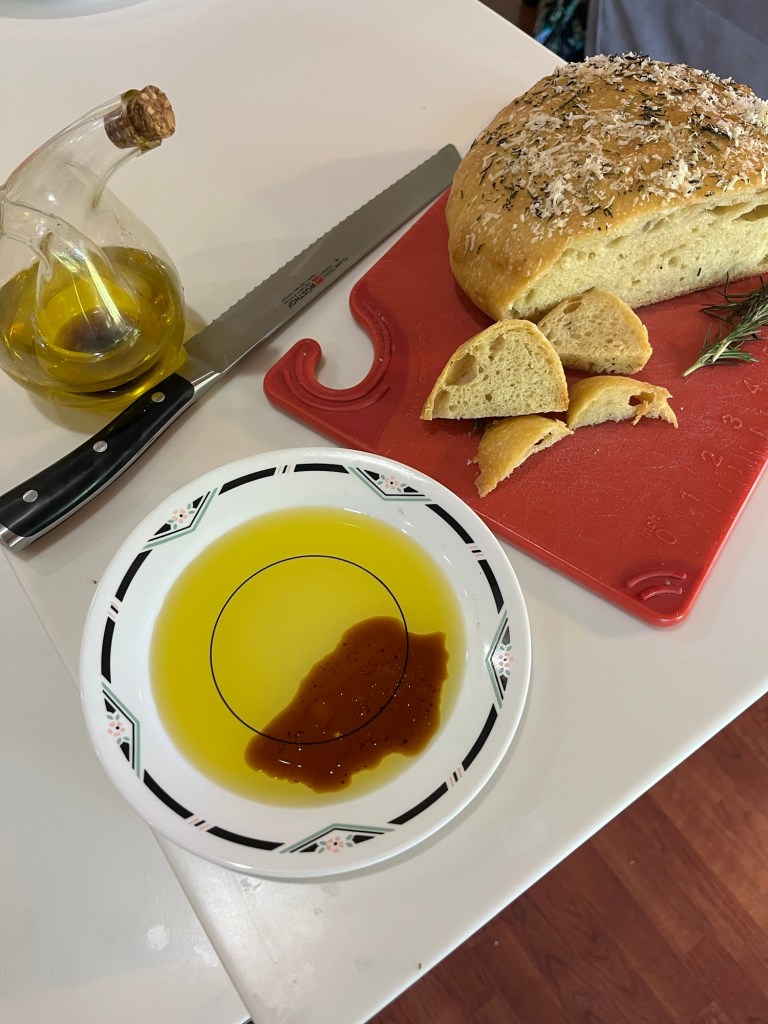
  9. Let the bread cool slightly before slicing and serving. Try this with an oil and vinegar dip.

Scottish Oatcakes and Tangzong Artisan Bread

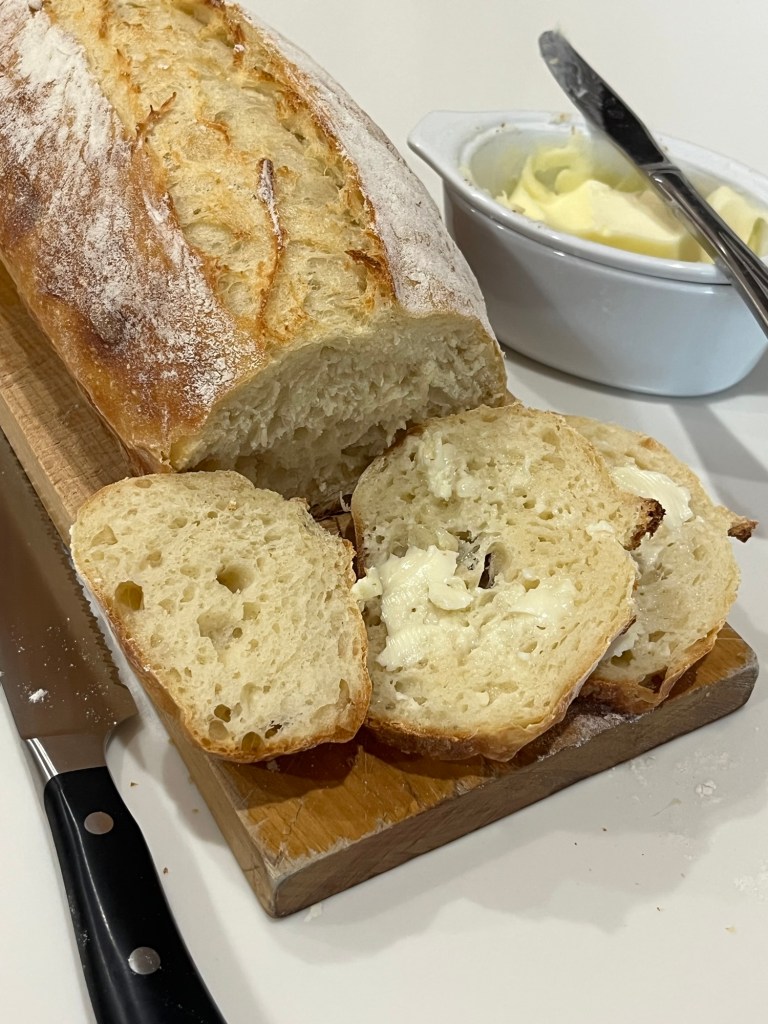
I wasn’t going to mention the artisan bread (as seen in the background) I made this morning, but I added a twist to the recipe. I use the Tangzong technique fairly often, but hadn’t used it on artisan bread. The standard method yields a bread that is 9.5 out of 10, so what is the point?

Tangzong pre-gelatinizes the starch in the flour, allowing it to absorb twice as much water than with cool water. Since there’s less free (unabsorbed) water in the dough, it’s less sticky and easier to knead plus it stays fresh longer, not that that is an issue here, over the past 2 weeks I made the artisan loaf every 2 or 3 days. For variety I did occasionally change from boule to batard.

I also made Scottish Oatcakes this morning. I read an article about them, which is all it ever takes for me. The bake resulted in 16 crisp “biscuits” (as cookies are called in the UK.) They be a nice change from all the cookies (but don’t worry, plenty of cookies coming up. I am doing another fund raiser in March and need to practice, practice, practice.)

Artisan Bread with Tangzong

INGREDIENTS

  • 450g (3 ¾ c) bread flour divided (For Italian Bread use AP flour))
  • 2 ¼ teaspoons instant yeast
  • 10g (1 ¾ tsp) kosher salt 
  • 360g (1 ½ c) warm water between 120°F and 130°F (360 grams)

METHOD

  1. In a large mixing bowl, whisk flour, yeast, and salt to combine.  Measure water into a small bowl
  2. Tangzong: Transfer 3 tablespoons of the measured flour and ½ cup of the measured milk or water into a saucepan and set over medium-high heat.
  3. Cook the mixture, whisking constantly until it thickens into a thick slurry (~1 minute.)
  4. Transfer the cooked mixture to a bowl until cool to lukewarm, then add remaining flour, milk (or water), and other dough ingredients combine with a dutch dough which until the mixture is very sticky, and no lumps of flour remain.
    1. Cover and place in a proofing oven until doubled in size, about 1 to 1 ½ hours.
  5. Preheat the oven to 450°F. Place a large dutch oven with a lid in the oven for at least 30 minutes.
  6. Using lightly floured hands, reach down one side of the dough to the bottom of the bowl, pull up, and stretch the edge of the dough over the center toward the opposite side. Turn the bowl 90 degrees and repeat the folding and turning, working in a circle around the dough until the dough starts to hold its shape, about 8 to 10 rotations. Pinch any seams together at the center of the dough ball.
  7. Turn out the dough onto a lightly floured surface, placing it seam side down. Shape into a boule or batard, depending on the intended use. Transfer the dough onto parchment paper lined banneton and sprinkle with flour. Loosely cover with plastic wrap or a tea towel for 10 minutes while the oven heats to 450°F. Place a large dutch oven with a lid in the oven while it preheats.
  8. Using a sharp knife or bread lame, cut a slit about ¼-inch deep across the top of the dough. Very carefully place the dough with the parchment paper directly into the preheated Dutch oven. Cover with the lid.
  9. Bake for 20 minutes. Remove the lid and bake until deeply golden brown and the internal temperature is about 195°F (~15 to 17 minutes more.) Carefully remove the bread from the Dutch oven using the parchment paper to help, and place on a wire rack to cool for at least 20 minutes before slicing
 

Tangzong

Tangzong pre-gelatinizes the starch in the flour, allowing it to absorb twice as much water than with cool water. Since there’s less free (unabsorbed) water in the dough, it’s less sticky and easier to knead

METHOD

  1. Measure out the total amount of flour and milk specified in the recipe.
  2. Transfer 3 tablespoons of the measured flour and ½ cup of the measured milk or water into a saucepan and set over medium-high heat.
  3. Cook the mixture, whisking constantly until it thickens into a thick slurry (~1 minute.)
  4. Transfer the cooked mixture to a bowl until cool to lukewarm, then add remaining flour, milk (or water), and other dough ingredients and proceed with the original recipe method.

Scottish Oatcakes

INGREDIENTS
• 226g quick-cooking oats (2 ½ c)
• 1 tsp kosher salt
• ¼ tsp baking soda
• 66g (6 Tbl) melted clarified butter
• ¾ c hot water, around 200ºF (93ºC)

METHOD

  1. In a medium bowl, stir oats, salt, and baking soda to combine. Add melted clarified butter or ghee to oat mixture and, using a flexible spatula, toss to evenly coat oats with fat. Add hot water and stir until mixture begins to thicken, 30 – 60 seconds. Let sit until oat mixture has hydrated and is slightly sticky, about 5 minutes.
  2. Using a flexible spatula, scrape oat mixture onto a 18×13” piece of parchment. Top with another 18×13” piece of parchment so oat mixture is sandwiched between and, using a rolling pin, roll oat mixture to ¼ “thick. Grab both ends of the parchment, set onto a 18×13” rimmed baking sheet, and freeze until mixture is firm but pliable, about 30 minutes. Line two 18×13” rimmed baking sheet with parchment; set aside.
  3. While the mixture is chilling adjust oven racks to second-from-top and second-from bottom positions and preheat to 350ºF (175ºC). 350ºF or 325ºF convection
  4. Set a clean piece of parchment on your kitchen counter. Remove oatcake mixture from freezer. Peel off top layer of parchment, then invert oatcake mixture onto prepared sheet of parchment. Using a 3-inch round cookie cutter, cut out 16 oatcakes. (Scraps can be rerolled, frozen, and punched out into additional oatcakes.) Transfer oatcakes to prepared baking sheets, spacing them about 1 inch apart, and bake until crispy and lightly browned, 30 to 35 minutes. Remove from oven and let cool completely before serving or storing.

Clarified Butter

INGREDIENTS
• 230g (2 sticks) unsalted butter, cubed

METHOD

  1. In a small saucepan, melt butter over medium-high heat.
  2. Continue to cook over medium-high heat; an even layer of white milk proteins will float to the surface.
  3. Bring to a boil; the milk proteins will become foamy.
  4. Lower heat to medium and continue to gently boil; the milk proteins will break apart.
  5. As butter gently boils, milk proteins will eventually sink to the bottom of the pot, and the boiling will begin to calm and then cease. Adjust heat as needed to continue boiling off water without scorching milk solids.
  6. Once boiling has stopped, pour butter through a cheesecloth-lined strainer or through a coffee filter into a heatproof container to remove browned milk solids.
  7. Let cool, then transfer to a sealed container and refrigerate until ready to use. Clarified butter should keep at least 6 months in the refrigerator.


Lunch Anyone?

This noon we are co-hosting a soup and bread lunch for a group of friends. I decided to make some of my favorite breads to share. They are all documented in this blog, so I am not including any recipes here.

Pan de Cristal, or ice bread, is one of my favorites. It’s an open structure and crisp crust bread, and so good.

Artisan bread rolls are easy to make and are always delicious. I simply formed my normal artisan bread into small rolls and baked for a shorter time.

The bi-colored star loaf is based on my dinner roll recipe that everyone loves.

Baguettes are always a favorite and don’t forget the breadsticks. I made both rosemary and caper and olive breadsticks (my favorite.)

Happy Thanksgiving to all who celebrate!

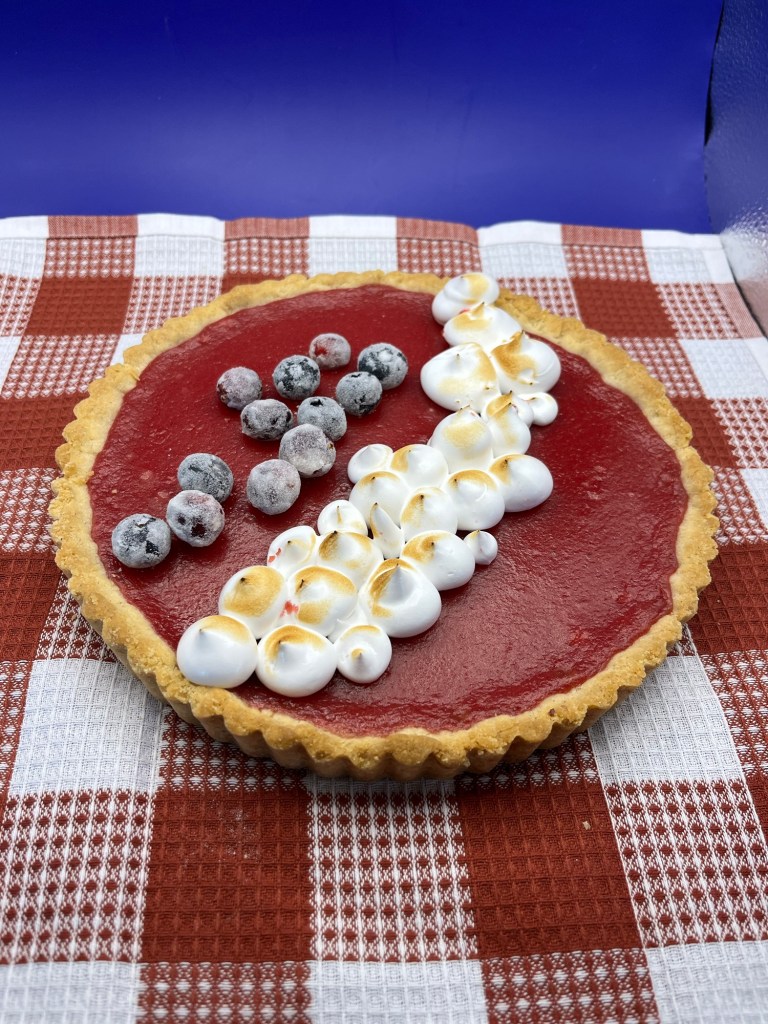
By special invitation is my almond-crust-cranberry-curd tart.

Today is Thanksgiving in the USA . Thanksgiving is a national holiday celebrating the harvest and other blessings of the past year. It is believed to be modeled on a 1621 harvest feast shared by the English colonists (Pilgrims) of Plymouth and the Wampanoag people.

For my whole life Thanksgiving centered around family and friends, old and new, sharing both a meal and each other. As a child Thanksgiving was held at our house and all our aunts, uncles and cousins would come for a huge mid-day meal. We had to finish early as our uncles had to go back to the farm to milk the cows. I had a lot of aunts and uncles and LOTS of cousins. Mostly I remember the pies, so many pies.

Since moving to California our son and daughter in law have hosted Thanksgiving and this year was no exception. There were over 20 people and enough food for 50.

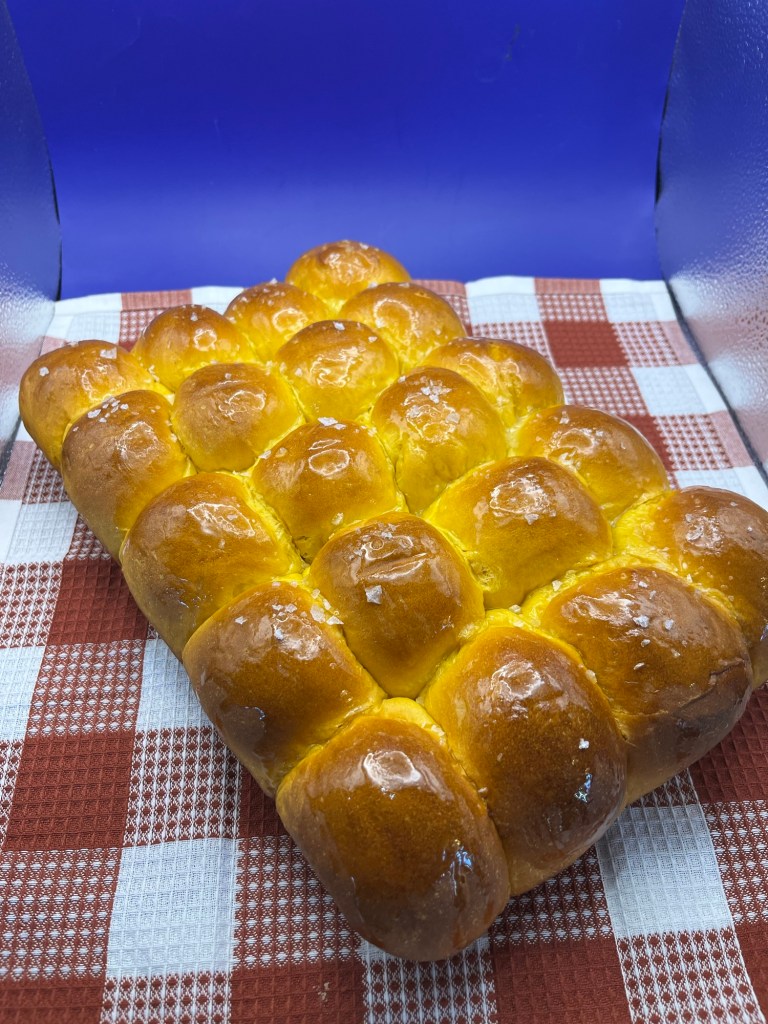
I made an apple pie, an almond-crust-cranberry-curd tart (see below) and sweet potato dinner rolls. There were also two pumpkin pies and very little left when we were done.

Cranberry Curd Tart Almond Crust

INGREDIENTS
For the crust
• 99g (½ c) granulated sugar
• 113g (8 Tbl) unsalted butter, softened
• ¼ tsp table salt
• 1 tsp King Arthur Pure Vanilla Extract
• ½ tsp almond extract
• 180g (1½ c) King Arthur Unbleached All-Purpose Flour
• 72g (¾ c) almond flour or finely ground sliced or slivered almonds

For the cranberry curd
• 12 ounces cranberries (fresh or frozen)
• juice of one orange (~ ¼ c)
• 250g (1 ¼ c) sugar
• 2 whole eggs
• 2 egg yolks
• 113g (½ c, 1 stick) unsalted butter
• 1 teaspoon vanilla extract
• 1 tablespoon orange liqueur, such as TripleSec or Grand Marnier (optional)

For the Italian meringue
• 2 egg whites
• 1/8 teaspoon cream of tartar
• 1/2 cup sugar
• 1/4 cup water

METHOD
Crust

  1. Mix butter with sugar then add salt then vanilla.
  2. Add egg and mix until incorporated. Stir in flour. Mix by hand like you are kneading bread until incorporated
  3. Cover with plastic and refrigerate for 30 min
  4. Pre-heat oven to 350⁰F
  5. Butter tartl pans, or use non-stick pans
  6. Dock (prick holes in) bottom and sides of formed dough then refrigerate for 20 minutes
  7. Line tart pan with crumpled then smoothed parchment paper and fill with pastry weights.
  8. Paint edges of the tartlet with the egg wash.
  9. Bake in preheated oven 350⁰ F (175⁰ C) for 15 min. Remove pastry weights 5 minutes before the end of the bake.
  10. Immediately remove from pans and cool on a wire rack

    Cranberry Curd
  11. Heat the cranberries and orange juice in a medium saucepan over medium-high heat until the cranberries split. Mix with an immersion blender then strain through a food mill or fine mesh sieve and discard the skins.
  12. Return the strained cranberry mixture to the saucepan and add the sugar, eggs, egg yolks, butter, vanilla, and orange liqueur (if using) to the pan and give everything a good stir. Heat gently over medium-low heat, stirring constantly, until the mixture thickens and registers 170°F on an instant read thermometer (this usually takes about 8-9 minutes). Immediately strain (again) through a fine mesh sieve into a large measuring bowl and then pour into the prepared crust. (The curd can be stored in an airtight container in the fridge for up to a week. You may need to bake it a few more minutes for the tart to set when baking from chilled)
  13. Bake (still at 350°F) until the curd is set (it should jiggle but not slosh), about 10 minutes. (Curd was jiggly after 20 more minutes baking.)
  14. Let cool at room temperature for about 1 hour, then transfer to the refrigerator to chill. You can serve this chilled or at room temperature.

    Italian meringue
  15. Add egg whites and cream of tartar to the bowl of a stand mixer fitted with a whisk attachment. Heat sugar and water in a small saucepan over medium high heat.
  16. When the sugar mixture registers about 220°F turn on the mixer and begin beating the egg whites on medium speed.
  17. When the sugar mixture registers 240°F remove from heat and carefully pour into the mixer over the egg whites. Increase the mixer speed to high and beat until the egg whites form stiff peaks.
  18. Transfer to a piping bag (or zip top bag) and pipe onto cooled tart as desired. If you want, torch the meringue with a kitchen torch. (But since it is cooked, this is totally optional).

As long as the oven was on and I had time to wait for doughs to chill etc, I also made a loaf of artisan bread.

Oh My Bread!

I know I post a lot of breads and I know I often say one bread is my favorite, but this is the first time I said “Oh My!” when I took the first bite, as this bread really is Oh My!

I have several artisan bread recipes and this may be my new favorite (until another comes along.)

Artisan bread refers to any properly prepared, fermented, and shaped hand-crafted bread. Fermenting the properly mixed ingredients to optimize the chemical reactions and then baking at the proper temperature for the correct time yields a crisp, nicely browned crust and great, chewy interior. Artisan bread contains carefully controlled amounts of flour, yeast, salt and water. That’s it (unless you want to add some flavorings or herbs or maybe even some olives, yumm.)

Artisan Bread by PreppyKitchen


https://preppykitchen.com/artisan-bread/

INGREDIENTS
• 3 ¾ cups bread flour divided (450 grams)
• 2 ¼ teaspoons instant yeast
• 1 ¾ teaspoons kosher salt (10 grams)
• 1 ½ cups warm water between 120°F and 130°F (360 grams)

METHOD

  1. In a large mixing bowl, whisk the flour, yeast, and salt to combine. Stir in water with a Dutch whisk until the mixture is very sticky, and no lumps of flour remain. Cover and place in a warm, draft-free area until doubled in size, about 1 ½ to 2 hours.
  2. Alternatively, for an overnight rise: After mixing the dough, cover and refrigerate until doubled in size. This will take about 8 hours but will keep in the fridge up to 24 hours total.
  3. Preheat the oven to 450°F. Place a large Dutch oven with a lid in the oven for at least 30 minutes.
  4. If refrigerated, remove the dough from the refrigerator and let rest at room temperature for 15 minutes.
  5. Instead of traditional kneading, use lightly floured hands, reach down one side of the dough to the bottom of the bowl, pull up, and stretch the edge of the dough over the center toward the opposite side. Turn the bowl 90 degrees and repeat the folding and turning, working in a circle around the dough until the dough starts to hold its shape, about 8 to 10 rotations. Pinch any seams together at the center of the dough ball.
  6. Turn out the dough onto a lightly floured surface, placing it seam side down. Shape into a round loaf or batard for a long loaf. Transfer the dough onto parchment paper and sprinkle it with flour. Loosely cover with plastic wrap or a tea towel for 10 minutes.
  7. Using a sharp knife or bread lame, cut a slit about ¼-inch deep across the top of the dough. Very carefully place the dough with the parchment paper directly into the preheated Dutch oven. Cover with the lid.
  8. Bake for 30 minutes. Remove the lid and bake until deeply golden brown, about 15 to 17 minutes more. Carefully remove the bread from the Dutch oven using the parchment paper to help, and place on a wire rack to cool for at least 20 minutes before slicing