Tilt-a-whirl Down on the South Beach Drag

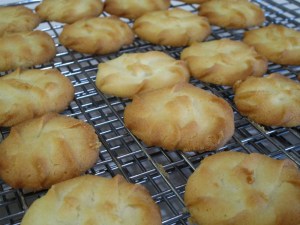
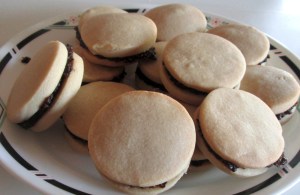
The other day, Fran watched Biscuit Week on the GBBO (I had fallen asleep on the couch) and decided Mary Berry’s Viennese Whirls might be a good next bake for me;  I made them this morning and will take them to Daniel and France’s house to day for our day-after Father’s Day dinner.

Baked Whirls

These resemble shortbread cookies/biscuits with raspberry jam and buttercream filling. The cookie should be firm enough to handle, but soft enough to melt in your mouth with each bite. The trick is to adjust the viscosity of the dough to allow it to be piped into 2″ diameter circles using a star tip. To accentuate the whirl shape and  texture, chill the piped biscuits in the refrigerator for 15 minutes before baking. (I didn’t do this and they lost some height and swirl detail.)


I was also making some raspberry jam, so I just sieved some to use for the cookies. I also added some meringue powder to help the buttercream harden a little to make the filling a little firmer without having to keep them refrigerated.


Completed Whirls

INGREDIENTS

For the jam

  • 200g (7oz) raspberries
  • 250g (9oz) jam sugar

For the biscuits

  • 250g (9oz) very soft unsalted butter
  • 50g (1¾oz) icing sugar
  • 225g (8oz) plain flour
  • 25g (1oz) cornstarch

For the filling

  • 100g (3½oz) unsalted butter, softened
  • 200g (7oz) icing sugar, plus extra for dusting
  • ½ tsp vanilla extract
  • 1 Tbl Meringue Powder

METHOD

For the jam,

  1. Put the washed raspberries in a small, deep-sided saucepan and crush them using a potato masher. Add the sugar and bring to boil over a low heat. When the sugar is melted, increase the heat and boil further for 4 minutes. Remove from the heat and carefully pour into a shallow container (pass it through a sieve if you’d rather not have seeds in your jam). Leave to cool and set.

For the biscuits,

  1. Preheat the oven to 375F. Line 3 baking sheets with non-stick baking parchment. Using a 2″ round cutter as a guide, draw circles on each sheet of paper, spaced well apart. Turn the paper over so the pencil marks are underneath.
  2. Measure the butter and icing sugar into a bowl and beat until pale and fluffy. Sift in the flour and cornstarch and beat well, until thoroughly mixed. Spoon the mixture into a piping bag fitted with a medium star nozzle. Pipe 24 swirled rounds (not rosettes), inside the circles on the baking sheets.
  3. Bake in the center of the oven for 13—15 minutes, until a pale golden-brown. Cool on the baking sheets for 5 minutes then carefully transfer to a wire rack to cool completely and harden.

For the filling,

  1. measure the butter into a bowl and sift the icing sugar on top.
  2. Add the vanilla extract and beat with a wooden spoon or an electric whisk until very light and smooth.
  3. Spoon into a piping bag fitted with a large star nozzle.

Spoon a little jam onto the flat side of 12 of the biscuits and place jam-side up on a cooling rack. Pipe the buttercream over the jam and sandwich with the remaining biscuits. Dust with icing sugar to finish.

Tips/Techniques

For this recipe you will need a piping bag, a medium star nozzle, a large star nozzle, 3 baking sheets. If your kitchen is warm and you have time you could try placing the whirls in the fridge for 15 minutes before baking. This will help them hold their shape while cooking.

WTF! (What The Fig!)

For Purim this year I made and donated 4 dozen hamantaschen to our California temple for their bake sale. I really, Really, REALLY liked the fig variety and knew there must be another place to use that fig purée.  I was considering homemade Fig Newtons®, but those cookies are available in those so-convenient two serving packages I thought, why try to copy perfection? I mean, artists copy Renoirs to hone their artistic skills, but only as an exercise… for practice… right? How could I chance trying to improve my baking skills and thereby perhaps plagiarize perfection?

I thought a fig-filled/short-bread cookie might Fig Shortbread Cookie 3be a good combination. The slight snap of this buttery cookie and the sweet/tartness of the fig pureé should pair well.  

I was right, but the first batch had a minor problem.  I tried to roll the shortbread dough thinner than usual for cookies, but it still ended up too thick. I rolled them directly on the parchment paper covered cookie sheet thinking they would be too fragile to move after cutting. I chickened out and still left them about 2x too thick, much like leaving your birdie putt short. (NEVER leave your birdie putt short!) By making the cookie thick, the buttery flavor of the cookie overpowered the fig flavor, so I added additional fig filling for each cookie. (What a shame.) When biting the cookie, the filling squeezes out the sides of the cookie and has to be licked off. (What a shame.)

Shortbread Cookie

INGREDIENTS

  • 1 cup butter or margarine, softened
  • ¾ cup powdered sugar
  • 1 teaspoon vanilla
  • 2 ½ cups Gold Medal™ all-purpose flour

METHOD

  1. Heat oven to 350°F. In large bowl, beat butter, powdered sugar and vanilla with spoon. Stir in flour. (If dough is crumbly, mix in 1 to 2 tablespoons butter or margarine, softened.)
  2. Roll dough ¼” (or less if you can) thick on a parchment paper lined cookie sheet. Cut into small shapes and remove the excess, combine and roll out again, and again.
  3. Bake 10 to 16 minutes (depending on thickness of the cookie) or until set and bottoms are light golden brown. Immediately remove from cookie sheet to wire rack. Cool completely, about 30 minutes. I like to slide the parchment paper off the cookie sheet with all the cookies still attached, let cool until cookies release from the paper and leave on the wire rack until cool.

Fig Filling

INGREDIENTS

  • 1 ½ scant cups chopped, stemmed, dried black figs (about 9 ounces)
  • 3/4 cup (177 ml) pomegranate juice
  • ⅓ cup (66 grams) sugar
  • Finely grated zest of 1 orange
  • 1 star anise, or ¼ tsp crushed fennel seeds
  • 1 cup water

METHOD

  1. In a saucepan, combine the figs, juice, sugar, zest, star anise (or fennel), and 1 cup of water and bring to a boil.
  2. Simmer over low heat until the figs are softened and the liquid is syrupy and is reduced to about ½ cup.
  3. Let the figs cool in their syrup, then puree in a food processor until smooth. [If you dislike the taste of star anise, you should remove it before pureeing, but if you do, leave it in.

Sorry, a Bit Groggy This Morning

Purim is almost here. This story is from the Book of Esther and is yet another tale of “they tried to kill us, they failed, let’s eat” and in this case, “let’s drink.” This batch of hamantaschen was practice for the 4 dozen I am making next weekend for Temple Or Rishon’s Purim celebration.  When the story is read aloud, every time Haman’s name is spoken a grager (pronounced grogger, hence the poor headline pun) is sounded.

Thanks to Tori Avery for an excellent recipe and instructions. I made a few additions, but it is hamentaschen99.9% pure Tori. I added another filling to Tori’s fig and caramel apple, when Fran found a cannoli-chocolate chip filling. Talk about a cultural melting pot!

HAMANTASCHEN

INGREDIENTS

  • 170g (¾ cup) unsalted butter, room temperature
  • 150g (⅔ cup) sugar
  • 55g (1 egg,) room temperature
  • 1 tsp vanilla
  • 4g (1 tsp) grated orange zest
  • 200g (2¼) cups flour
  • ¼ tsp salt
  • 1-5 tsp water (if needed)

METHOD

  1. Slice room temperature butter into small chunks and place in a large mixing bowl.
  2. Add sugar to the bowl. Use an electric mixer to cream the butter and sugar together for a few minutes till light and fluffy.
  3. Add the egg, vanilla, and orange zest to the bowl. Beat again till creamy and well mixed.
  4. Mix with the electric mixer on low speed till a crumbly dough forms.
  5. Begin to knead dough with hands till a smooth dough ball forms. Try not to overwork the dough, only knead till the dough is the right consistency. If the crumbles are too dry to form a smooth dough, add water slowly, 1 teaspoon at a time, using your hands to knead the liquid into the dough. Knead and add liquid until the dough is smooth and slightly tacky to the touch (not sticky), with a consistency that is right for rolling out. It can easily go from the right consistency to too wet/sticky, so add water very slowly. If the dough seems too wet, knead in a little flour till it reaches the right texture.
  6. Form the dough into a flat disk about 1” thick and wrap in plastic wrap. Place in the refrigerator to chill for 3 hours to overnight.
  7. Before you begin to assemble the hamantaschen, choose and make your filling and have it on hand to work with. Preheat oven to 350 degrees F. Lightly flour a smooth, clean surface. Unwrap the dough disk and place it on the floured surface. The dough will be very firm after chilling.
  8. Use a rolling pin to roll the dough out to ¼ inch thick. At the beginning, it will be tough to roll out– you may need to pound it a bit. A heavy rolling pin works best. As you roll, cracks may form on the edges of the dough. Repair any large cracks with your fingers and continue rolling.
  9. When the dough reaches ¼ inch thickness, scrape the dough up with a pastry scraper, lightly reflour the surface, and flip the dough over. Continue rolling the dough out very thin (less than 1/8 of an inch thick). The thinner you roll the dough, the more delicate and crisp the cookies will turn out– just make sure that the dough is still thick enough to hold the filling and its shape! If you prefer a thicker, more doughy texture to your cookies (less delicate), keep the dough closer to ¼ inch thick. Lightly flour the rolling pin occasionally to prevent sticking.
  10. Use a 3-inch cookie cutter (not smaller) or the 3-inch rim of a glass to cut circles out of the dough, cutting as many as you can from the dough.
  11. Gather the scraps and roll them out again. Cut circles. Repeat process again if needed until you’ve cut as many circles as you can from the dough. You should end up with around 35 circles (unless you’ve kept your dough on the thicker side, which will result in less cookies). (I ended up with 25 circles, less than ¼ of an inch thick.)
  12. Place a teaspoon of filling (whichever filling you choose) into the center of each circle. Do not use more than a teaspoon of filling, or you run the risk of your hamantaschen opening and filling spilling out during baking. Cover unused circles with a lightly damp towel to prevent them from drying out while you are filling.
  13. Assemble the hamantaschen in three steps. First, grasp the left side of the circle and fold it towards the center to make a flap that covers the left third of the circle.
  14. Grasp the right side of the circle and fold it towards the center, overlapping the upper part of the left side flap to create a triangular tip at the top of the circle. A small triangle of filling should still be visible in the center.
  15. Grasp the bottom part of the circle and fold it upward to create a third flap and complete the triangle. When you fold this flap up, be sure to tuck the left side of this new flap underneath the left side of the triangle, while letting the right side of this new flap overlap the right side of the triangle. This way, each side of your triangle has a corner that folds over and a corner that folds under– it creates a “pinwheel” effect. This method if folding is not only pretty– it will help to keep the cookies from opening while they bake.
  16. Pinch each corner of the triangle gently but firmly to secure the shape. If any cracks have formed at the places where the dough is creased, use the warmth of your fingers to smooth them out.
  17. Repeat this process for the remaining circles.
  18. After your hamantaschen are all filled, place them on a lightly greased baking sheet, evenly spaced.
  19. Place them in the oven and let them bake at 350 degrees for 20-25 minutes, till the cookies are cooked through and lightly golden.
  20. Cool the cookies on a wire rack. Store them in a tightly sealed plastic bag or Tupperware.

CARAMEL APPLE HAMANTASCHEN FILLING

INGREDIENTS

  • 1½ lbs. Granny Smith apples (about 4 medium apples)
  • 170g (¾ cup) sugar
  • ⅓ cup dulce de leche
  • Salt to taste

Dulce De Leche (makes 1¼ cups)

  • 1 can (14 oz.) sweetened condensed milk (not evaporated milk)
  • 1/8 tsp salt (or more to taste)

METHOD

  1. Preheat oven to 425 degrees F. Pour can of sweetened condensed milk into a ceramic pie plate or dish. Sprinkle the milk lightly with about 1/8 tsp of salt (for a more salted caramel flavor, use 1/4 tsp salt).
  2. Cover tightly with foil. Place the filled pie plate into a large roasting pan and fill the roasting pan with water till it reaches about halfway up the sides of the pie plate.
  3. Place the roasting pan into the oven. Let the mixture cook slowly for 75-90 minutes, check the water level every half hour to make sure it hasn’t dried out too much. Add water as needed.
  4. At 75 minutes, begin checking the color of the dulce de leche. When it reaches a rich light brown caramel color, you’ll know it’s ready. The longer you let it cook, the thicker and darker it will become.
  5. Take the pie plate and roasting pan out of the oven. Carefully remove the pie plate from the hot roasting pan. Take off the foil.
  6. Whisk the dulce de leche mixture. Use warm, or allow to cool to room temperature depending on your intended use.
  7. Store in the refrigerator. The sauce will keep for up to 4 weeks when refrigerated.
  8. Peel and core the apples. Shred them into fine shreds using a hand grater or food processor shredding attachment.
  9. In a medium saucepan, combine the sugar and 3/4 cup of water. Bring to a boil.
  10. Add the shredded apples to the boiling water and return to a boil.
  11. Reduce heat to medium and let the mixture simmer for 25-35 minutes, stirring occasionally, till most of the liquid evaporates and the mixture resembles a very thick applesauce. When the mixture is ready, it will start to sizzle lightly in the pan and clump together when you stir it. Don’t let the mixture burn, but do let it get quite thick.
  12. Stir in the dulce de leche; add salt to taste. The salt adds depth and gives the flavor of a salted caramel. It also offsets the sweetness a bit.
  13. Note that the filling is quite sweet on its own (it may initially taste “too sweet”), but it bakes to perfection when used for filling hamantaschen. Let the mixture cool.
  14. Refrigerate mixture for at least 1 hour before using it to fill hamantaschen; this will thicken it and make it easier to manage when filling.
  15. Use about 1 tsp of filling per cookie.

FIG HAMANTASCHEN FILLING

INGREDIENTS

  • 1 ½ scant cups chopped, stemmed, dried black figs (about 9 ounces)
  • 3/4 cup (177 ml) pomegranate juice
  • ⅓ cup (66 grams) sugar
  • Finely grated zest of 1 orange
  • 1 star anise, or ¼ tsp crushed fennel seeds
  • 1 cup water

METHOD

  1. In a saucepan, combine the figs, juice, sugar, zest, star anise (or fennel), and 1 cup of water and bring to a boil.
  2. Simmer over low heat until the figs are softened and the liquid is syrupy and is reduced to about 1/2 cup.
  3. Let the figs cool in their syrup, then puree in a food processor until smooth. [If you dislike the taste of star anise, you should remove it before pureeing, but if you do, leave it in.

CANNOLI FILLING:

  • ¼ cup ricotta cheese
  • 4 oz. cream cheese, softened
  • 1/4 cup confectioners’ sugar
  • ½ tsp cinnamon
  • ½ cup mini chocolate chips

METHOD

  1. Make the cannoli filling: In the bowl of a mixer, beat all ingredients except the chocolate chips till light and fluffy.
  2. Fold in the chocolate chips and refrigerate, covered, till needed.

Happy New Year!!

With Chinese New Year (year of the rooster) fast approaching, and as we are hosting a family dinner the same img_0003night I thought it appropriate to have some Chinese desserts. I saw both fortune cookies (ok not a dessert per se, but usually served after the meal) and black sesame macarons on the cooking shows we regularly watch.
I made “un-fortune” cookies the other day and the macarons today. For the uninformed, “un-fortune” cookies are fortune cookies without the little paper fortune tucked inside. I neglected to document the making of these cookies so will  omit them from img_0002this post, intending to document it the next time I make them. I found black sesame seeds at a specialty market near home and ground them to make a coarse powder. This gave the macaron a different texture than simply using fine almond powder.

The photos are bizarre. They are all color photos, but the gray coloring of the macarons and filling make everything monochrome.

Here is Stephanie Chen’s recipe with only three modifications. First, she didn’t indicate where to add the black sesame powder so I just mixed it in with the dry ingredients prior to img_0001adding the egg white. Second, she didn’t say when to add the black food coloring, so I added it after mixing the hot sugar mixture to the soft peak egg white and lastly I didn’t have any champagne so I just skipped it. The honey butter cream was awesome anyway.
INGREDIENTS

Macarons

  • 280 g ground almond meal, sifted at least twice
  • 240 g powdered sugar
  • 40g toasted ground black sesame powder
  • 100 g egg whites- for whipping, room temp
  • 100 g egg whites – for mixing into dry ingredients
  • Pinch of cream of tartar
  • 200 g granulated caster sugar
  • 80 g water
  • deep black americolor food coloring

Honey Champagne Buttercream

  • 56 g unsalted butter
  • 1 cup of powdered sugar
  • 2 tablespoons of clear clover honey
  • 2-3 tablespoons of good quality champagne (or more depending on consistency)

METHOD

Make the Black Sesame macarons:

  1. Prep 2 baking sheets with parchment paper with drawn circles. Separate your egg whites and clean all your appliances to ensure there are NO traces of yolk, oil, fat, etc.
  2. In separate bowls, sift the almond meal at least TWICE and sift the powdered sugar once. Whisk the two together and break up any lumps. Pour in half of the egg whites and fold them gently until the mixture is thick and paste like.
  3. In a stand mixer bowl fitted with a whisk attachment, add the other half of egg whites and leave it there.
  4. Start making the simple syrup. In a small saucepan, combine the granulated sugar and water together till they dissolve over a medium heat. Add candy thermometer.
  5. Start to mix the egg whites until they get to a soft peak. If they get there too soon before the sugar is ready then slow the mixer down. The egg whites will need some volume before adding the sugar.
  6. When the syrup hits 240 degrees F / 118 C, remove from heat and carefully pour into the side of the bowl while mixer is running. Make sure the mixture is being poured right where the egg and side of the bowl meet.
  7. Add food coloring to darken the mixture to a medium gray color.
  8. Whip on high until the bowl is cooled and glossy stiff peaks have formed.
  9. Add half of the meringue to the almond mixture and gently fold until combined and smooth. Then Add the rest of the meringue until batter is smooth and ribbons form. Do NOT over fold or mix.
  10. Preheat oven to 300 F / 148 C. Fill piping bag. Might want to secure the parchment paper down with a little of the macaron mixture.
  11. Pipe small rounds with the bag perpendicular to the baking sheet and make sure they’re the same size by counting how long you pipe them out. When you’re done, tap the trays on the table to get rid of the air bubbles.
  12. Add a few toasted black sesames to each of the cookies.
  13. Let the piped macs sit out until a shell is formed. Should be 20-30 minutes (maybe less).
  14. Bake one sheet at a time for 15-18 minutes. Rotate the tray after 7 minutes. Test the macs by wiggling the top of the shell back and forth. If the shell moves from the feet then they need another minute or two. Perfect macs should be a little wiggly but overall firm.
  15. When done, remove parchment paper from the sheet and let cool for 30 minutes on cooling rack. Gently peel the parchment paper off when they are cooled. (Be sure they are fully cooked. The cookie will pull apart when removing from the parchment paper if not.)

Honey Champagne Buttercream Filling

METHOD

  1. In a stand mixer bowl, beat the butter using a whisk attachment for 2 minutes until light and airy.
  2. Slowly add the powdered sugar and whisk until it’s all incorporated. Then add honey and champagne with the mixer on. Keep whisking for another minute until everything is incorporated.
  3. Add more champagne until the right consistency is met for a firm, pipeable filling.

In His Cap And Called it Macarons

I am sure I once posted making Macarons before, but if I did, I cannot find it. If anyone happens across it, please let me know. I hate to think of it wandering around the ethereal web, homeless, begging for a cup of sugar (confectioners of course.)

I am talking macarons, not macaroons. These are the almond flour confection with the “feet” not the shredded coconut cookie type. I made macarons-2these with two different fillings, buttercream for Amy and blackberry jam because I had some extra blackberries in the fridge and I like blackberries. Plus, we thought they would travel better than other pastries.

I use a modified version of the Food Network’s macaron recipe and technique.

INGREDIENTS

  • 1¾ cups confectioners’ sugar
  • 1 cup almond flour
  • 3 large egg whites, at room temperature
  • ¼ teaspoon cream of tartar
  • Pinch of salt
  • ¼ cup caster sugar
  • 2 to 3 drops gel food coloring (see below)
  • ½ teaspoon vanilla, almond or mint extract

METHOD

Cookie

  1. Preheat the oven to 300 degrees F using the convection setting. Line a large double-thick baking sheet with parchment paper that you drew 1¾” circles about ¾” apart and flipped clean side up. Measure the confectioners’ sugar and almond flour by spooning them into measuring cups and leveling with a knife. Transfer to a bowl; whisk to combine.
  2. Sift the sugar-almond flour mixture, a little at a time, through a fine-mesh sieve into a large bowl, pressing with a rubber spatula to pass through as much as possible. It will take a while, and up to 2 tablespoons of coarse almond flour may be left; just toss it. Sift a second time.
  3. Beat the egg whites, cream of tartar and salt with a mixer on medium speed until frothy. Increase the speed to medium high; gradually add the superfine sugar and beat until stiff and shiny, about 5 more minutes.
  4. Transfer the beaten egg whites to the bowl with the almond flour mixture. Draw a rubber spatula halfway through the mixture and fold using a figure 8 pattern until incorporated, giving the bowl a quarter turn with each fold. Be sure the spatula goes all the way to the bottom in incorporate all the dry mixture.
  5. Add any food coloring and/or extract. Continue folding and turning, scraping down the bowl, until the batter is smooth and falls off the spatula in a thin flat ribbon, 2 to 3 minutes.
  6. Transfer the batter to a pastry bag fitted with a ¼ -inch round tip. Holding the bag vertically and close to the baking sheet, pipe 1¾ -inch circles (24 per sheet). Firmly tap the baking sheets twice against the counter to release any air bubbles.
  7. Let the cookies sit at room temperature until the tops are no longer sticky to the touch, 15 minutes to 1 hour, depending on the humidity. Slip another baking sheet under the first batch (a double baking sheet protects the cookies from the heat).
  8. Bake until the cookies are shiny and rise 1/8 inch to form a “foot,” about 20 minutes. Bake time is everything, too long and they will discolor, too short and they will be soft inside.
  9. Transfer to a rack to cool completely.
  10. Peel the cookies off the mats and sandwich with a thin layer of filling.

Berry Filling

  1. Puree berries in a food processor
  2. Sieve puree to remove seeds and solids
  3. Equal amounts (weight) of sieved berry puree and granulated sugar.
  4. Boil in a small saucepan until mixture reaches 225 F, stirring frequently to keep from burning.
  5. Cool jam until it is thick enough to pipe, or spread but not flow.

Sugar Cookies with Sugar Icing, I can’t stop shaking!!!

As if plain sugar cookies aren’t enough to start heart palpitations and have you bouncingsugar-cookies-chanukah_0005 off the walls with a sugar high, let’s coat them with sugar icing! There is no thought of balancing flavors or textures here, just sweet and crunch. I saw a hint somewhere of using squeeze bottles with medium fine tips rather than traditional piping bags to decorate cookies. At about $1 each, what go wrong? As it turned out, they worked great and provided squeexe-bottlemore fine motor control than piping.
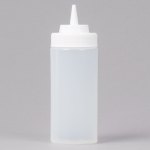
I “piped” the edges of the cookies with a fairly thick batch of colored, or not, icing to make a damn dam. Be careful not to try to sugar-cookies-christmas_0005pipe thick icing. #1, it plugs the tip and “b” it takes a lot force (read: tired and cramping fingers and hands here). Once the damn dam is dried flood the inside with thinner frosting. Poke any holes with a toothpick. Let dry, probably overnight.

INGREDIENTS

COOKIES

  • 2 cups all-purpose flour, plus more for rolling
  • 1/2 teaspoon baking powder
  • 1/4 teaspoon salt
  • 1/2 cup (1 stick) unsalted butter, room temperature
  • 1 cup granulated sugar
  • 1 large egg
  • 1 teaspoon vanilla extract

ICING

  • 1 1/2 cup confectioners’ sugar
  • 3-4 tablespoons water
  • 1-2 tsp lemon juice

Method

  1. In large bowl, whisk flour, baking powder, and salt. With an electric mixer, cream butter and sugar until light and fluffy. Beat in egg and vanilla. With mixer on low, gradually add flour mixture; beat until combined. Divide dough in half; flatten into disks. Wrap each in plastic; freeze until firm, at least 20 minutes, or place in a resealable plastic bag, and freeze up to 3 months (thaw in refrigerator overnight).
  2. Preheat oven to 325 degrees. Line baking sheets with parchment. Remove one dough disk; let stand 5 to 10 minutes. Roll out 1/8 inch thick between two sheets of floured parchment, dusting dough with flour as needed. Cut shapes with cookie cutters. Using a spatula, transfer to prepared baking sheets. (If dough gets soft, chill 10 minutes.) Reroll scraps; cut shapes. Repeat with remaining dough.
  3. Bake, rotating halfway through, until edges are golden, 10 to 18 minutes (depending on size). Cool completely on wire racks. To ice cookies, spread with the back of a spoon. Let the icing harden, about 20 minutes. Decorate as desired.
  4. For the icing, sift confectioners’ sugar into a small bowl. Mix water and lemon juice. Whisk in water/lemon juice mixture, 1 tablespoon at a time, until smooth and thick enough to coat the back of a spoon. If too thin, whisk in more sugar; if too thick, add more liquid. Spread over cookies with back of a spoon. Add other decorations, if desired. Let the icing harden, about 20 minutes.

NOTES

Use flour on utensils to keep dough from sticking: Dip the cookie cutters, and dust the spatula before transferring uncooked dough to a sheet. You can store cookies in airtight containers at room temperature, up to 1 week.

Ivory and Ebony

black-and-white-cookies-1 black-and-white-cookies-finalI love black and white cookies and I wish I could make them, oh wait, I did make them. I like to eat the white side first and save the chocolate side for dessert dessert.

They are pretty easy to make and very easy to eat (see procedure above.) I substituted keylime juice for lemon, as that is all I had on hand. I might also try confectioners sugar rather than caster’s sugar. The white was a bit grainy. Also, I read somewhere to use milk rather than water for the frosting. They white frosting was slightly translucent and milk should make it opaque.

Ingredients

  • ⅓ cup unsalted softened butter
  • ½ cup white sugar
  • 1 egg
  • 1 teaspoon lemon juice
  • 1¼ cups all-purpose flour
  • 1½ teaspoons baking soda
  • ½ teaspoon salt
  • ⅓ cup well shaken buttermilk
  • ½ teaspoon vanilla extract
  • 1½ cups bakers or casting or confectioners sugar
  • ⅓ cup boiling water, or maybe very hot milk
  • 1 teaspoon light corn syrup (Note: 1 teaspoon corn syrup weighs 20 grams. I find it easier to weigh viscous liquids then pour and measure.)
  • ¼ cup dark cocoa powder

Directions

  1. Preheat oven to 350 degrees F (176 degrees C). Draw 2” diameter circles about 3” apart on parchment paper and place drawn side down on a baking sheet.
  2. In a medium bowl, cream together butter and sugar until smooth. Beat in the egg then stir in lemon juice. Combine the buttermilk and vanilla. Combine all-purpose flour, baking powder, and salt; gradually add to the blended mixture alternating with the milk/vanilla solution stirring well after each addition. Start and end with the dry ingredients.
  3. Pipe 2” diameter disks of the dough on prepared baking sheets.
  4. Bake until edges begin to brown, about 20 to 30 minutes. Cool completely on a wire rack.
  5. Boil a cup or so of water in a small sauce pan. Place casting sugar in small, heat-safe mixing bowl. Gradually stir corn syrup and in enough boiling water to the sugar to make a thick, spreadable mixture. Err on the side of caution because a too-thin frosting is hard to undo. Leave remaining boiling water on the stove.
  6. With a small angled spatula, coat half the cookie with the white frosting. Try to divide the middle of the cookie with a straight line. Set the half-frosted cookie on a wire rack placed over waxed paper to catch any dripped frosting.
  7. Put the bowl over a small pan containing barely boiling water (double boiler style.) Stir in the chocolate. Warm mixture, stirring frequently, until the chocolate melts. Remove from heat. (Return to heat if frosting thickens too much to spread.)
  8. While preparing the chocolate frosting the white frosted cookies should cooled and set enough to allow you to pick them up without the white frosting running. Coat the other half of the cookie with chocolate and set back on the wire rack.