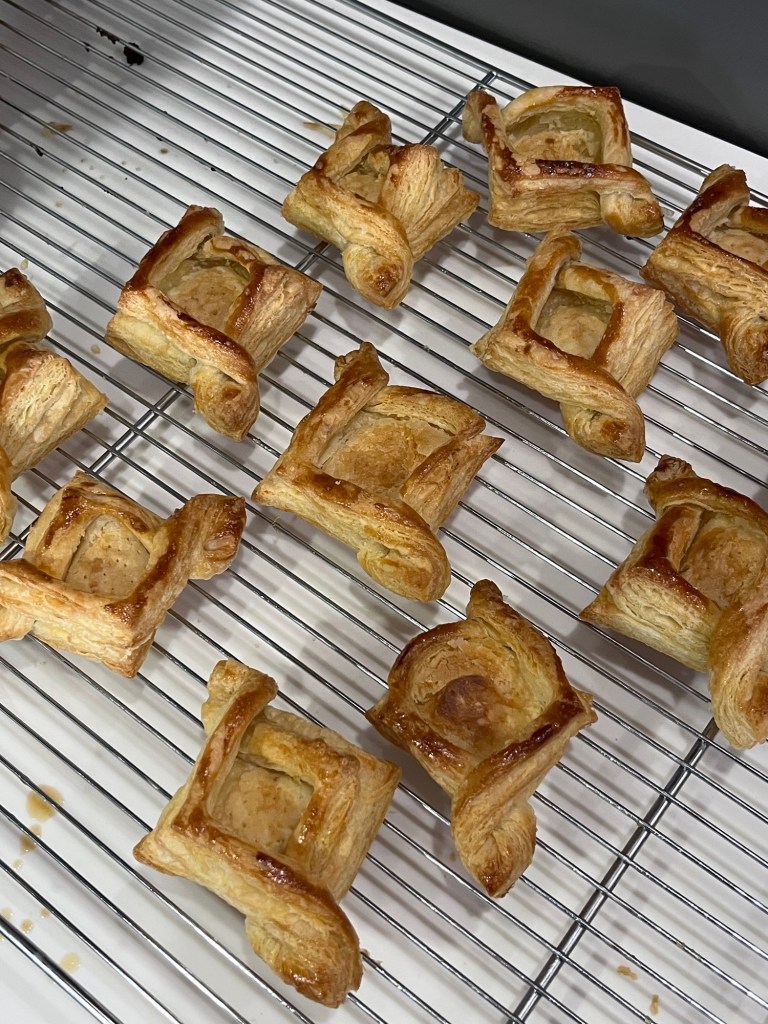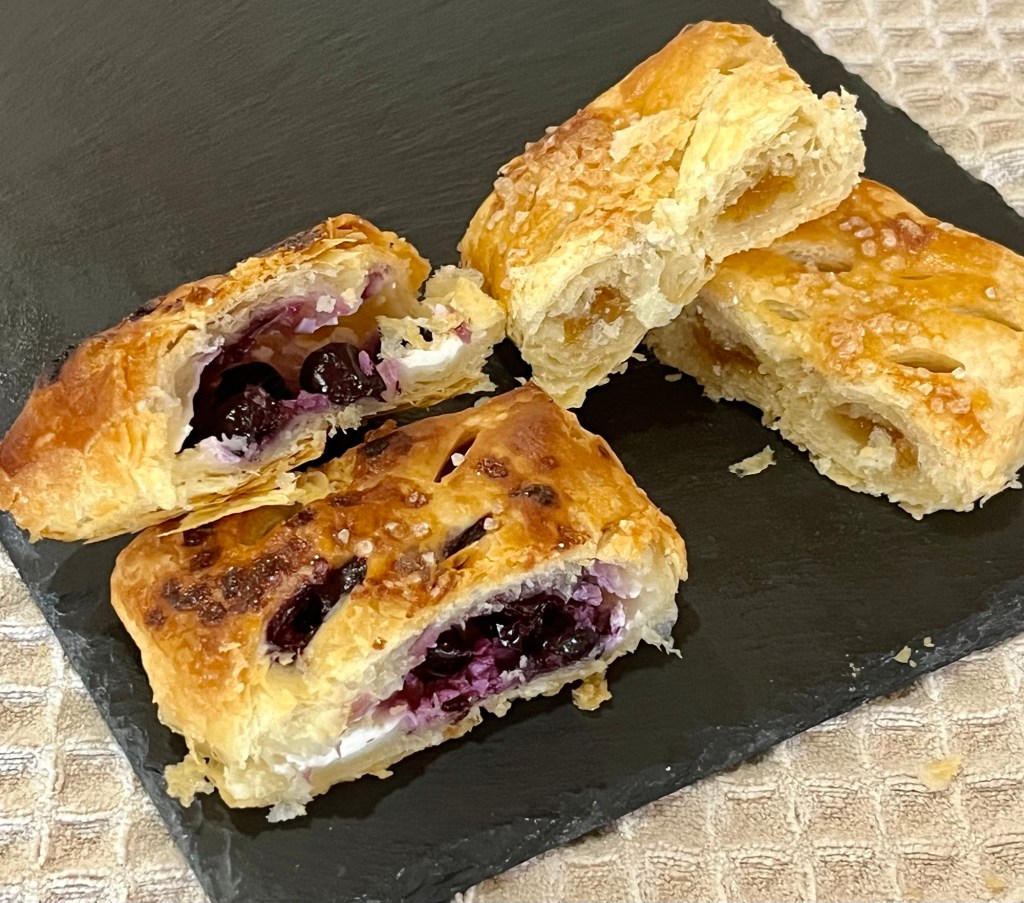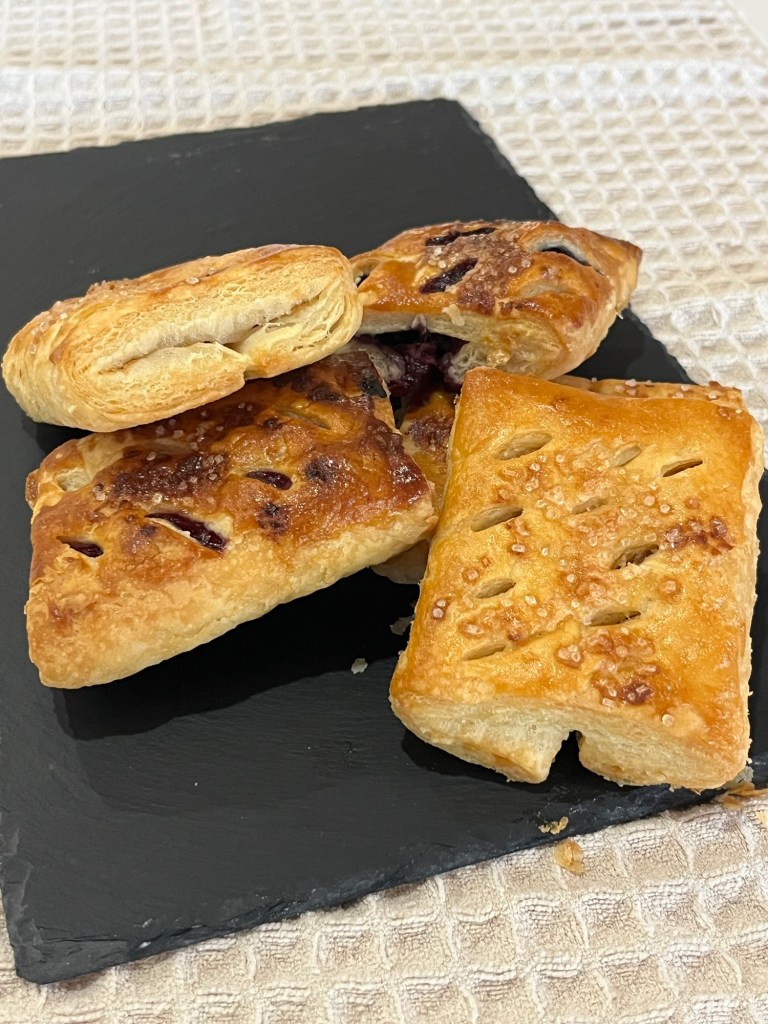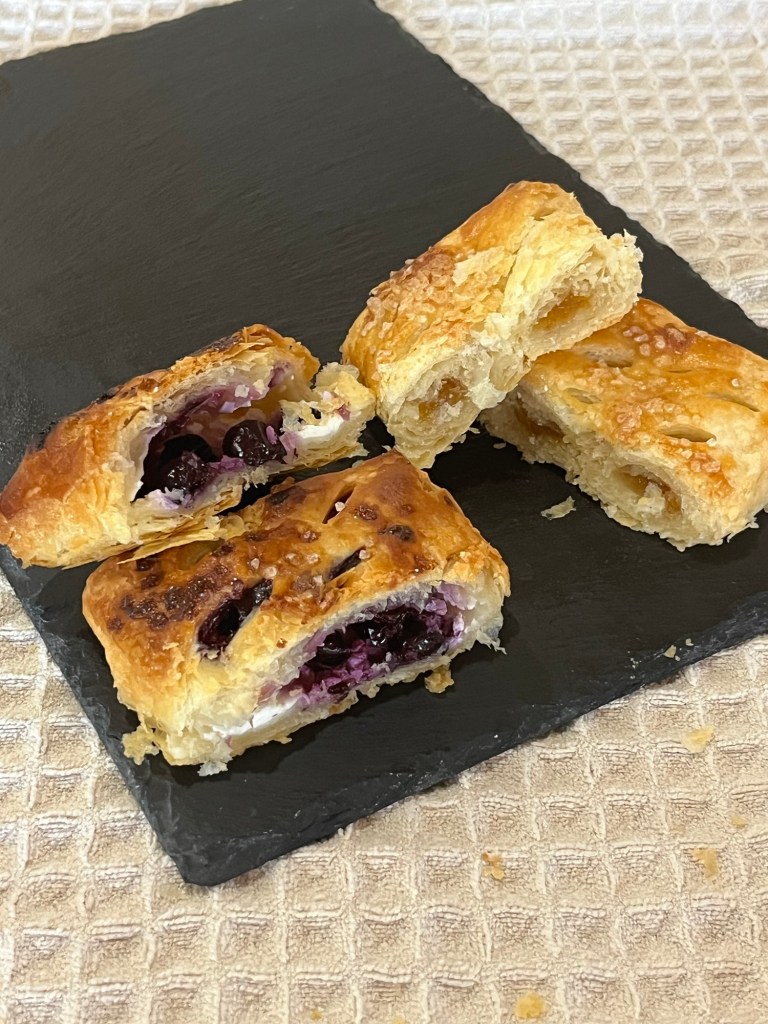
Blueberry-Cream Cheese or Fig Puff Pastry

Sally’s Rough Puff Pastry is near perfect (my only changes are to tweak it for my baking style. Sally is catering to a larger, international audience while I am catering to myself and my QC Cadre neighbors.)

This bake required a little planning and forethought for me to make/create these pastries, (i.e. where to put the cream cheese or fig, where to place the berries and where/when to slit the dough.) I actually made a life size paper model.

The proof is in the pudding, err… pastry. The Cadre returned a unanimous decision: “Delicious”, “Flakey and Good”, “Wow. Very delicious!! They leave a lingering taste of warm sweetness ! Good job!”

Blueberry-Cream Cheese or Fig Puff Pastry

INGREDIENTS
• Puff Pastry (either store bought or recommended rough puff from recipe below)
• 1 Tbl Sugar
• ~ ½ c. Blueberries (~9 blueberries/pastry)
• Cream Cheese (It’s easiest to use spreadable cream cheese)
• (For fig pastry replace sugar, blueberries and cream cheese with fig preserves)

METHOD

  1. Wash blueberries and toss with a tablespoon of sugar.
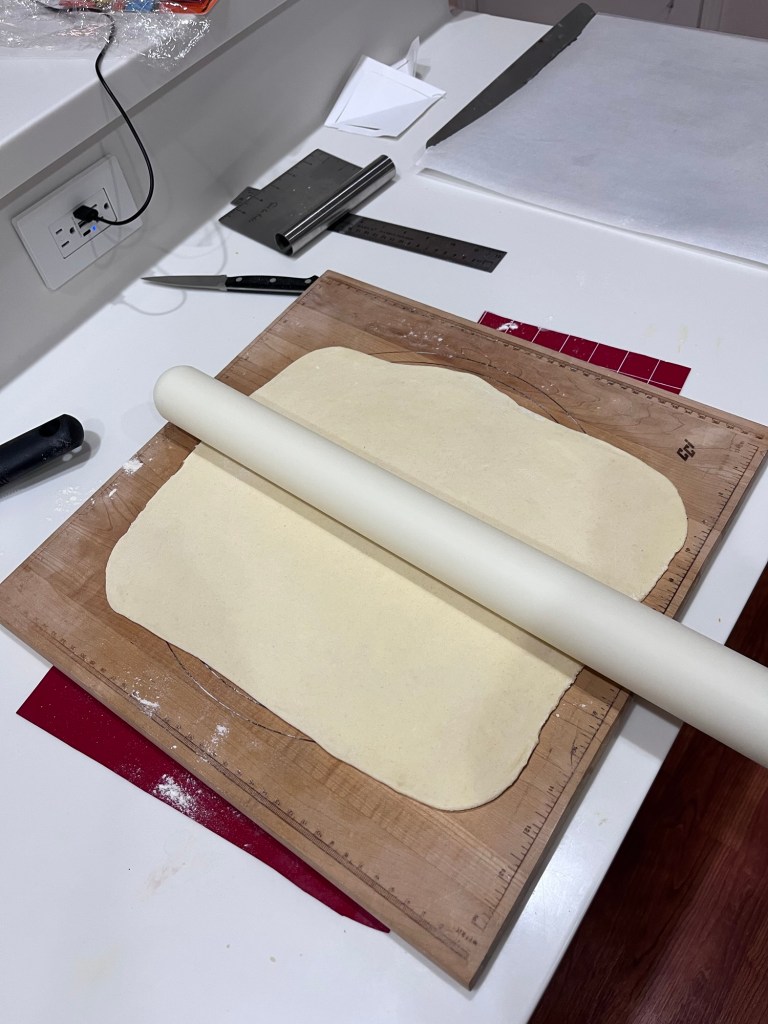
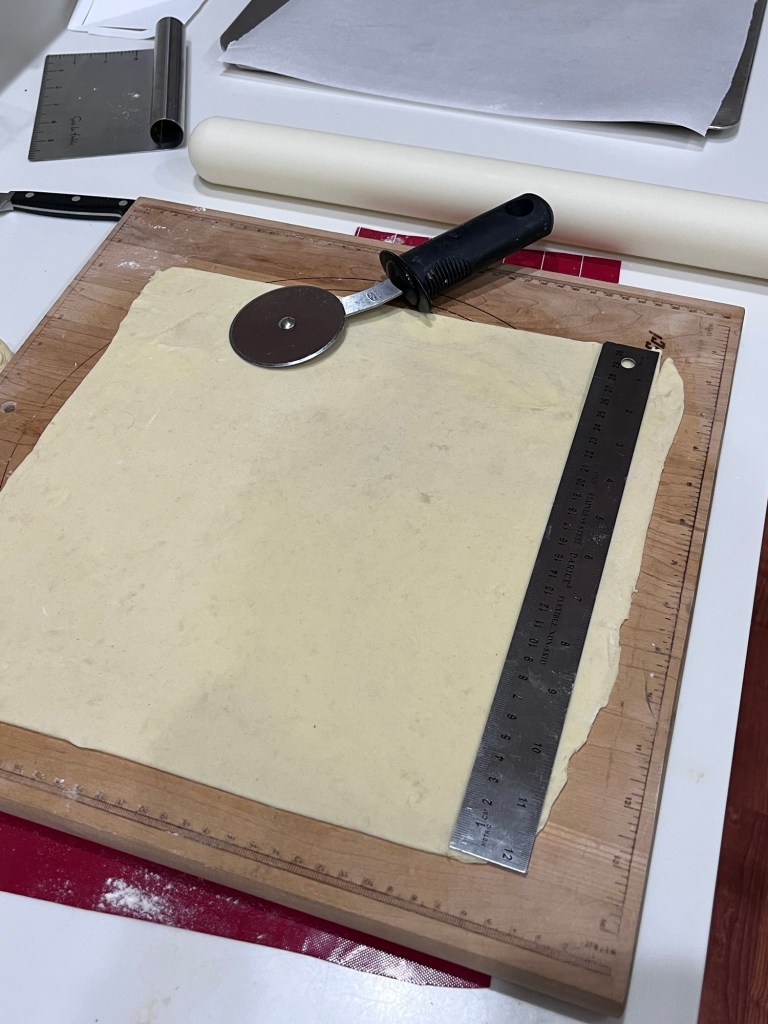
  2. Roll puff (or rough puff) pastry out to a 13”x13” square.
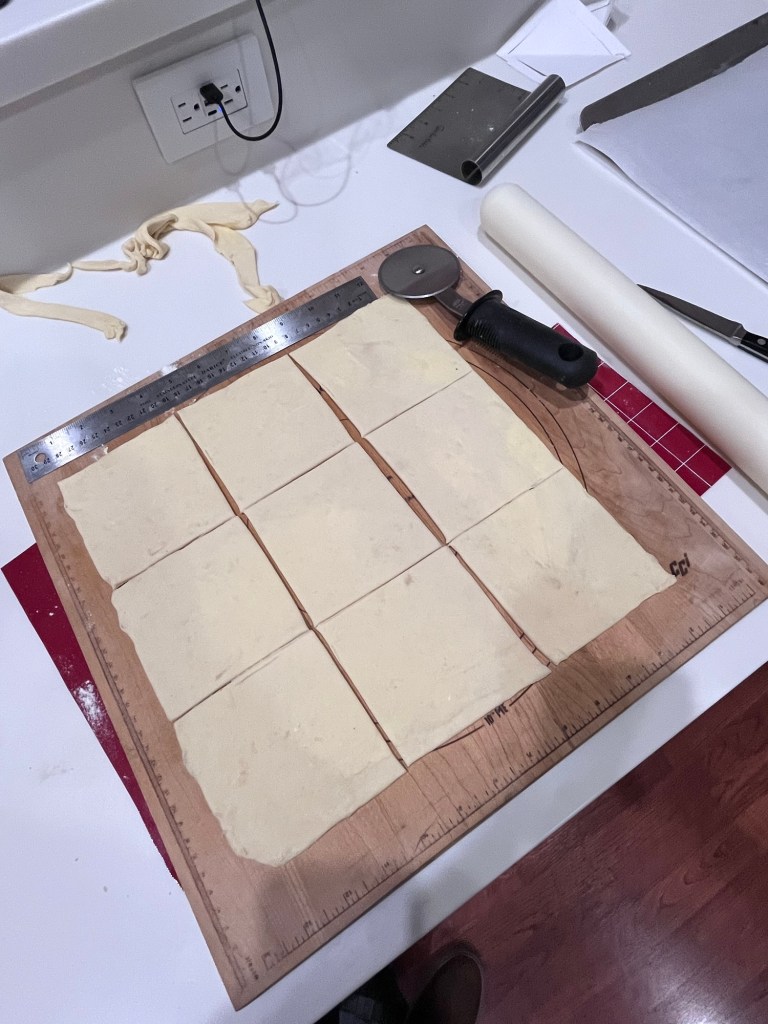
  3. Measure and cut with a pizza cutter six 4”x6” rectangles and position horizontally. (There will be some left over after squaring up the sides.)
  4. Cut staggered diagonal slits on middle 3” of the rectangle
  5. Spread cream cheese on 1½” x 4” edge of the rectangle, being careful not to coat the edges of the pastry.
  6. Place blueberries on the center of the pastry (over the slits). I used ~ 12 blueberries per pastry.
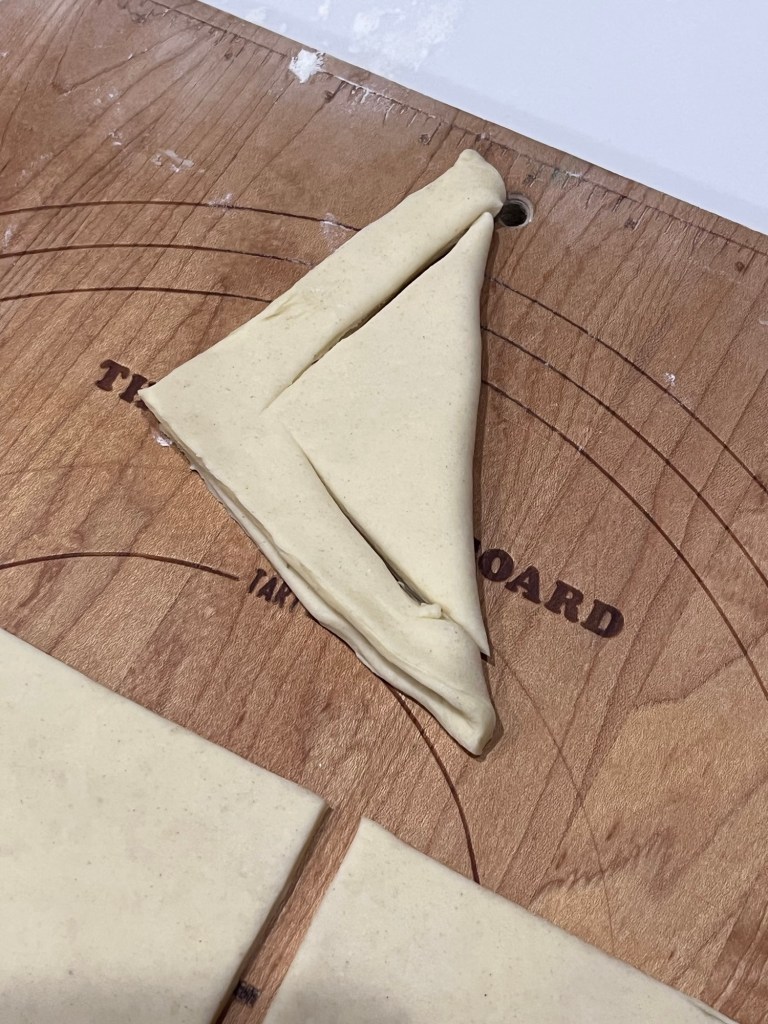
  7. Use your finger to wet the outer 4” edge of the pastry and fold over to the center of the pastry. Repeat with the other cream cheese coated edge, butting the end up against the first fold. Press gently to seal.
  8. Use your fingers, with a little flour if the dough is sticky, to seal the ends. Turn over and place on a parchment paper line baking sheet.
  9. Bake at 400 F for 25-30 minutes, rotating the pans midway.

Rough Puff Pastry


INGREDIENTS
• 166 g (1⅓ c) all-purpose flour, plus more for flouring hands, surface, and dough
• 1 tsp granulated sugar
• ½ tsp salt
• 170 g (¾ c or 1½ sticks) unsalted Kerry Gold butter, very cold and cubed
• 6–8 Tbl ice cold water

METHOD

  1. Cut the butter into ~1/4” cubes then return to the fridge to chill for 30 minutes.
  2. Whisk the flour, sugar, and salt together in a large bowl. Place the cold and cubed butter on top. Gently toss the flour and butter together with your hands, and then briefly rub the butter into the flour to begin combining. Do not break down the butter too much in this step. This step is only possible if the butter is very cold.
  3. Begin adding the ice cold water 1 Tablespoon at a time until dough forms 1 large shaggy clump with big chunks of butter in your bowl. Use your hands to toss the mixture together after you add each Tablespoon. (Start with 2 Tablespoons of water before tossing together.) As the dough begins to hydrate after about 4 Tablespoons of water, you can start lightly squeezing or clumping the dough together with your hands to help bring it together. Mixture will still be very shaggy. If your dough feels sticky and wet before adding 6 Tablespoons of water, your butter was likely too warm– you can continue with the recipe, but the dough will not be as flaky.
  4. Pour the shaggy clump of dough out onto a lightly floured work surface. There will still be large chunks of butter at this point and that’s a good thing. Begin patting the dough down with lightly floured hands until it’s ¾ – 1” thick, about a 5×8” rectangle. Fold the dough into thirds as if you were folding a business letter. Use your hands to gently flatten and smooth out any cracks in your dough. Wrap it up tightly in plastic wrap.
  5. 1st refrigeration: Refrigerate dough for at least 2 hours and up to 24 hours.
  6. Roll & Fold: Take the dough out of the refrigerator to begin the “rolling and folding” process. If the dough chilled for longer than about 3 hours, it’s likely very stiff so let it rest for about 5 minutes before you begin rolling. Lightly flour a work surface. The dough gets sticky, so make sure you have more flour nearby as you roll and fold. Use your hands to gently flatten the dough into a small square. Using a rolling pin, roll the dough into a 6”×12”x ½” thick. The exact dimensions are not important, but the thickness is. As you roll, it’s best to flip the dough over once or twice to make sure it’s not sticking to your work surface. Lightly flour your work surface as needed. Fold the rectangle into thirds as if it were a business letter. Turn it clockwise or counter clockwise and roll it out into a 6”×12”x ½” thick rectangle again. Then, fold into thirds again. Turn it clockwise or counter clockwise. You’ll repeat rolling and folding 4 more times for a total of 6 times.
  7. 2nd Refrigeration: Wrap up/seal tightly and refrigerate for at least 15 minutes and up to 24 hours before using in your recipe. You can also freeze the dough at this point. See freezing instructions.
  8. Use wherever you would use frozen store-bought puff pastry. To bake plain, roll pastry dough into a 10×16” rectangle and cut into desired portions. Fill if desired, and paint with an egg wash (1 egg beaten with 1 Tbl water.)
  9. Bake 400°F until golden brown and puffy, about 25-28 minutes.

NOTES

  1. Make Ahead & Freezing Instructions: Prepare as instructed in steps 1-3. At this point the dough can be refrigerated up to 24 hours (see step 4). You can also prepare the dough through step 5. At this point the dough can be refrigerated for up to another 24 hours (see step 6).
  2. During or after this second chilling time, you could also freeze the dough for up to 1 month. (I don’t recommend freezing the dough before the rolling and folding step.) Thaw overnight in the refrigerator before using in a recipe that calls for 1 lb puff pastry dough (or 1 store-bought package with 2 sheets puff pastry).

Can’t Get Enough of Sally’s Rough Puff!

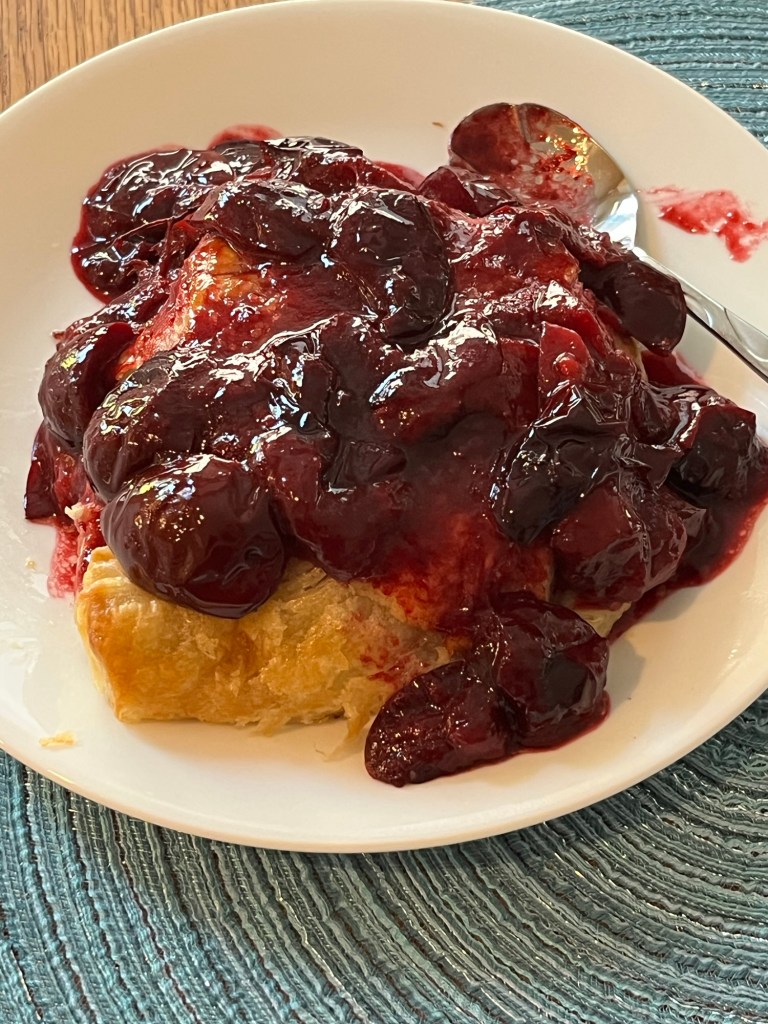
I made Sally’s rough puff pastry for the first time about three weeks ago. It was delicious, and while a little time consuming, totally worth it. My first attempt was a puff pastry wrapped Brie cheese, topped with fig jam and covered with roasted plum compote. EVERYONE including those who professed to not like plum, and/or Brie loved it.

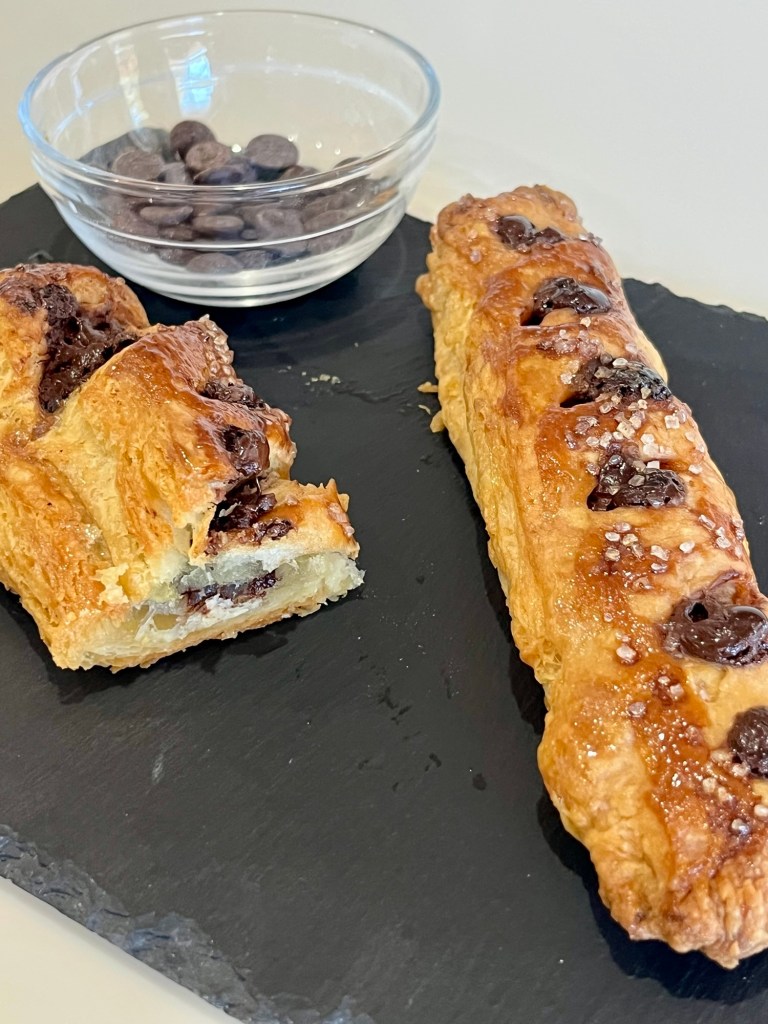
I used Sally’s recipe again to make some “cover versions” of a blueberry/cream cheese pastry and a Feuillete au Chocolat (puff pastry and chocolate.)

Today, I used yet another third batch of her pastry to make my own version of the blueberry/cream cheese pastry and a fig filled (figs are ripe in my backyard) pastry.

Over the course of these bakes I mildly modified Sally’s recipe. In the first two trials I used high fat content (and expensive) Kerrygold butter. Today I used my standard Costco unsalted butter. I could not discern and difference in baking, taste of flake.

I also cut the butter into 1/4” cubes, then return it to the refrigerator for 30 minutes to really firm up and chill the butter. (It’s worth it.)

I try to turn, roll and fold the dough 6-8 times, I really do, but usually lose count and simple repeat until it feels right. I chilled it overnight and I chilled it for 3 hours, other than it’s being hard to roll, no difference. I also froze one batch for 3 days and when thawed could not tell the difference between it and the unthawed batch.

Since I do all the measuring I can in grams, my version lists weights before volumes, but other than that, I follow her recipe to the letter.

Rough Puff Pastry – Sally


INGREDIENTS
• 166 g (1⅓ c) all-purpose flour, plus more for flouring hands, surface, and dough
• 1 tsp granulated sugar
• ½ tsp salt
• 170 g (¾ c or 1½ sticks) unsalted Kerrygold butter, very cold and cubed
• 6–8 Tbl ice cold water

METHOD

  1. Cut the butter into ~1/4” cubes return to the fridge to chill.
  2. Whisk the flour, sugar, and salt together in a large bowl. Place the cold and cubed butter on top. Gently toss the flour and butter together with your hands, and then briefly rub the butter into the flour to begin combining. Do not break down the butter too much in this step. This step is only possible if the butter is very cold.
  3. Begin adding the ice cold water 1 Tablespoon at a time until dough forms 1 large shaggy clump with big chunks of butter in your bowl. Use your hands to toss the mixture together after you add each Tablespoon. (Start with 2 Tablespoons of water before tossing together.) As the dough begins to hydrate after about 4 Tablespoons of water, you can start lightly squeezing or clumping the dough together with your hands to help bring it together. Mixture will still be very shaggy. If your dough feels sticky and wet before adding 6 Tablespoons of water, your butter was likely too warm– you can continue with the recipe, but the dough will not be as flaky.
  4. Pour the shaggy clump of dough out onto a lightly floured work surface. There will still be large chunks of butter at this point and that’s a good thing. Begin patting the dough down with lightly floured hands until it’s ¾ – 1” thick, about a 5×8” rectangle. Fold the dough into thirds as if you were folding a business letter. Use your hands to gently flatten and smooth out any cracks in your dough. Wrap it up tightly in plastic wrap.
  5. 1st refrigeration: Refrigerate dough for at least 2 hours and up to 24 hours.
  6. Roll & Fold: Take the dough out of the refrigerator to begin the “rolling and folding” process. If the dough chilled for longer than about 3 hours, it’s likely very stiff so let it rest for about 5 minutes before you begin rolling. Lightly flour a work surface. The dough gets sticky, so make sure you have more flour nearby as you roll and fold. Use your hands to gently flatten the dough into a small square. Using a rolling pin, roll the dough into a 6”×12”x ½” thick. The exact dimensions are not important, but the thickness is. As you roll, it’s best to flip the dough over once or twice to make sure it’s not sticking to your work surface. Lightly flour your work surface as needed. Fold the rectangle into thirds as if it were a business letter. Turn it clockwise or counter clockwise and roll it out into a 6”×12”x ½” thick rectangle again. Then, fold into thirds again. Turn it clockwise or counter clockwise. You’ll repeat rolling and folding 4 more times for a total of 6 times.
  7. 2nd Refrigeration: Wrap up/seal tightly and refrigerate for at least 15 minutes and up to 24 hours before using in your recipe. You can also freeze the dough at this point. See freezing instructions.
  8. Use wherever you would use frozen store-bought puff pastry. To bake plain, roll pastry dough into a 10×16” rectangle and cut into desired portions. Fill if desired, and paint with an egg wash (1 egg beaten with 1 Tbl water.)
  9. Bake 400°F until golden brown and puffy, about 25-28 minutes.

NOTES

  1. Make Ahead & Freezing Instructions: Prepare as instructed in steps 1-3. At this point the dough can be refrigerated up to 24 hours (see step 4). You can also prepare the dough through step 5. At this point the dough can be refrigerated for up to another 24 hours (see step 6).
  2. During or after this second chilling time, you could also freeze the dough for up to 1 month. (I don’t recommend freezing the dough before the rolling and folding step.) Thaw overnight in the refrigerator before using in a recipe that calls for 1 lb puff pastry dough (or 1 store-bought package with 2 sheets puff pastry).

SallysBakingAddiction Rough Puff Pastry

I keep referring to Sally’s Rough Puff Pasty but I made a few changes to reflect my personal quirks and how I use the recipe. Here is my version, which is, of course Sally’s.

Rough Puff Pastry – Sally


INGREDIENTS
• 166 g (1⅓ c) all-purpose flour, plus more for flouring hands, surface, and dough
• 1 tsp granulated sugar
• ½ tsp salt
• 170 g (¾ c or 1½ sticks) unsalted Kerry Gold butter, very cold and cubed
• 6–8 Tbl ice cold water

METHOD

  1. Cut the butter into ~1/4” cubes return to the fridge to chill.
  2. Whisk the flour, sugar, and salt together in a large bowl. Place the cold and cubed butter on top. Gently toss the flour and butter together with your hands, and then briefly rub the butter into the flour to begin combining. Do not break down the butter too much in this step. This step is only possible if the butter is very cold.
  3. Begin adding the ice cold water 1 Tablespoon at a time until dough forms 1 large shaggy clump with big chunks of butter in your bowl. Use your hands to toss the mixture together after you add each Tablespoon. (Start with 2 Tablespoons of water before tossing together.) As the dough begins to hydrate after about 4 Tablespoons of water, you can start lightly squeezing or clumping the dough together with your hands to help bring it together. Mixture will still be very shaggy. If your dough feels sticky and wet before adding 6 Tablespoons of water, your butter was likely too warm– you can continue with the recipe, but the dough will not be as flaky.
  4. Pour the shaggy clump of dough out onto a lightly floured work surface. There will still be large chunks of butter at this point and that’s a good thing. Begin patting the dough down with lightly floured hands until it’s ¾ – 1” thick, about a 5×8” rectangle. Fold the dough into thirds as if you were folding a business letter. Use your hands to gently flatten and smooth out any cracks in your dough. Wrap it up tightly in plastic wrap.
  5. 1st refrigeration: Refrigerate dough for at least 2 hours and up to 24 hours.
  6. Roll & Fold: Take the dough out of the refrigerator to begin the “rolling and folding” process. If the dough chilled for longer than about 3 hours, it’s likely very stiff so let it rest for about 5 minutes before you begin rolling. Lightly flour a work surface. The dough gets sticky, so make sure you have more flour nearby as you roll and fold. Use your hands to gently flatten the dough into a small square. Using a rolling pin, roll the dough into a 6”×12”x ½” thick. The exact dimensions are not important, but the thickness is. As you roll, it’s best to flip the dough over once or twice to make sure it’s not sticking to your work surface. Lightly flour your work surface as needed. Fold the rectangle into thirds as if it were a business letter. Turn it clockwise or counter clockwise and roll it out into a 6”×12”x ½” thick rectangle again. Then, fold into thirds again. Turn it clockwise or counter clockwise. You’ll repeat rolling and folding 4 more times for a total of 6 times.
  7. 2nd Refrigeration: Wrap up/seal tightly and refrigerate for at least 15 minutes and up to 24 hours before using in your recipe. You can also freeze the dough at this point. See freezing instructions.
  8. Use wherever you would use frozen store-bought puff pastry. To bake plain, roll pastry dough into a 10×16” rectangle and cut into desired portions. Fill if desired, and paint with an egg wash (1 egg beaten with 1 Tbl water.)
  9. Bake 400°F until golden brown and puffy, about 25-28 minutes.

NOTES

  1. Make Ahead & Freezing Instructions: Prepare as instructed in steps 1-3. At this point the dough can be refrigerated up to 24 hours (see step 4). You can also prepare the dough through step 5. At this point the dough can be refrigerated for up to another 24 hours (see step 6).
  2. During or after this second chilling time, you could also freeze the dough for up to 1 month. (I don’t recommend freezing the dough before the rolling and folding step.) Thaw overnight in the refrigerator before using in a recipe that calls for 1 lb puff pastry dough (or 1 store-bought package with 2 sheets puff pastry).

Homemade Rough Puff Pastry

I really think every pastry baker needs to know how to make puff pastry. The easiest version is rough puff, which I made a couple of days ago. It is as easy, delicious, flakey and buttery as the Daring Gourmet claims ( find her recipe here: daringgourmet.com).

I had some issues turning and rolling to develop a smooth pastry, but after 8 turns it looked pretty good. Kept in the fridge for a couple of days and rolled out to about 1/8th inch thick this morning it looked great. I cut 3” circles, filled them with a cream cheese, sugar, white chocolate chip mixture and topped with a small raspberry. The edges were egg washed, folded and crimped with a fork before coating the top with more egg wash and sparkling sugar.

Actually, I both over-filled and under-sealed them so they are a mess. (See step #5 regarding my disregard of my own advice.) That in no way affects their taste. Using a 4” cutter might help. As advertised the puff pastry was excellent, the filling (my recipe) was likewise excellent, but then, the combination of chocolate and raspberries is hard to beat.

Ignore the artisan bread in the background. I had to heat up the oven anyway so why not?

Berry Hand Pie

INGREDIENTS
• 1 egg
• 1 tablespoon water
• 2 tablespoons all-purpose flour
• 1 sheet puff pastry, thawed but cool.
• 2 ounces cream cheese, softened
• 1 tablespoons granulated sugar or decorating sugar
• ¼ cup white chocolate chips
• 3 ounces berries
• 2 tablespoons coarse white sugar or decorating sugar

METHOD

  1. Heat the oven to 400°F. Beat the egg and water in a small bowl with a fork.
  2. Stir the cream cheese and granulated sugar in a medium bowl until the mixture is smooth. Stir in the white chocolate chips.
  3. Cut large berries in half.
  4. Sprinkle the flour on the work surface. Unfold the pastry sheet on the work surface. Roll the pastry sheet into a ~12-inch square. Using a round cutter, cut into as many 3 -inch circles as you can. (Try a 4” cutter and settle for fewer, better looking pastries.)
  5. Brush the edges of the pastry circles with the egg mixture. Place about ½ tablespoon cream cheese mixture in the center of each. (Don’t overfill.) Top each with about one small or two halves of a large berry. Fold the circles in half, pinching the edges together. Crimp both edges with a fork. If you don’t seal them adequately or have to much filling it will leak out of the sides of the finished pastry.
  6. Brush the pastries with the egg mixture and sprinkle with the coarse sugar. Using a sharp knife cut small slits in the tops of the filled pastries. Place the pastries onto a silicone or parchment paper lined baking sheet.
  7. Bake for 20 minutes or until the pastries are golden brown. Remove the pastries from the baking sheets and let cool on wire racks for 10 minutes.