Unknown's avatar

About Dave Oney

Dave Oney was born mid last century in Middlebury, Vermont. He received his BS in Chemistry and worked as a polymer chemist in Massachusetts and New Jersey. He became a microscopist (someone who studies little bitty things using a microscope) and photomicrographer (someone who photographs little bitty things) before settling into a 35-year career in technical sales of scientific imaging equipment (the science of digitally recording itty bitty things, sending the image to a computer for analysis.) He designed and created a number of products contributing to this field. He is (was) proficient in several computer languages and is currently working on mastering English. After making a few more paradigm shift career changes Dave and his wife, Fran, retired and moved closer to their children and granddaughters and now live in the foothills of the Sierra Nevadas.

WTF! (What The Fig!)

For Purim this year I made and donated 4 dozen hamantaschen to our California temple for their bake sale. I really, Really, REALLY liked the fig variety and knew there must be another place to use that fig purée.  I was considering homemade Fig Newtons®, but those cookies are available in those so-convenient two serving packages I thought, why try to copy perfection? I mean, artists copy Renoirs to hone their artistic skills, but only as an exercise… for practice… right? How could I chance trying to improve my baking skills and thereby perhaps plagiarize perfection?

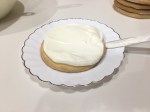
I thought a fig-filled/short-bread cookie might Fig Shortbread Cookie 3be a good combination. The slight snap of this buttery cookie and the sweet/tartness of the fig pureé should pair well.  

I was right, but the first batch had a minor problem.  I tried to roll the shortbread dough thinner than usual for cookies, but it still ended up too thick. I rolled them directly on the parchment paper covered cookie sheet thinking they would be too fragile to move after cutting. I chickened out and still left them about 2x too thick, much like leaving your birdie putt short. (NEVER leave your birdie putt short!) By making the cookie thick, the buttery flavor of the cookie overpowered the fig flavor, so I added additional fig filling for each cookie. (What a shame.) When biting the cookie, the filling squeezes out the sides of the cookie and has to be licked off. (What a shame.)

Shortbread Cookie

INGREDIENTS

  • 1 cup butter or margarine, softened
  • ¾ cup powdered sugar
  • 1 teaspoon vanilla
  • 2 ½ cups Gold Medal™ all-purpose flour

METHOD

  1. Heat oven to 350°F. In large bowl, beat butter, powdered sugar and vanilla with spoon. Stir in flour. (If dough is crumbly, mix in 1 to 2 tablespoons butter or margarine, softened.)
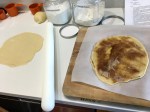
  2. Roll dough ¼” (or less if you can) thick on a parchment paper lined cookie sheet. Cut into small shapes and remove the excess, combine and roll out again, and again.
  3. Bake 10 to 16 minutes (depending on thickness of the cookie) or until set and bottoms are light golden brown. Immediately remove from cookie sheet to wire rack. Cool completely, about 30 minutes. I like to slide the parchment paper off the cookie sheet with all the cookies still attached, let cool until cookies release from the paper and leave on the wire rack until cool.

Fig Filling

INGREDIENTS

  • 1 ½ scant cups chopped, stemmed, dried black figs (about 9 ounces)
  • 3/4 cup (177 ml) pomegranate juice
  • ⅓ cup (66 grams) sugar
  • Finely grated zest of 1 orange
  • 1 star anise, or ¼ tsp crushed fennel seeds
  • 1 cup water

METHOD

  1. In a saucepan, combine the figs, juice, sugar, zest, star anise (or fennel), and 1 cup of water and bring to a boil.
  2. Simmer over low heat until the figs are softened and the liquid is syrupy and is reduced to about ½ cup.
  3. Let the figs cool in their syrup, then puree in a food processor until smooth. [If you dislike the taste of star anise, you should remove it before pureeing, but if you do, leave it in.

He Said With a Rye Smile

When I retired, I realized I needed a new hobby, beyond brewing beer, (I have a batch of English Bitter about to be bottled) so I decided to start baking seriously, expanding my skills and experimenting with new recipes and techniques.  Now,  having nearly mastered the concept of retirement, I bake a lot of bread. I also bake a lot of pastries, cakes, cookies, biscuits, crackers, pizza, bagels and pretzels. (I’ve gotta get another hobby!)Hubble Deep Field Image

One of the holy grails of baking is to produce a good New York Jewish Rye Bread. This bread has a tangy rye flavor, chewy crumb and glazed, blistered crust. There are as many recipes and techniques to make this bread as there are galaxies in Hubble’s Deep Field image.

The recipe/method I chose was from Chef John V., A Good Cooking Recipe! This is not the easiest recipe, nor does it use the most common ingredients, however, his historical introduction rang with an authenticity that hooked me. His grandfather owned a dairy farm, as did mine. He was from Hudson NY, whereas mine was from Salisbury Vermont. He sold the farm and became a baker, whereas mine was a farmer to the end of his life. His other grandfather would work at the bakery whenever they needed help, whereas mine, did not. I didn’t say we had parallel experience, just that his sounded authentic.

Chef John V. uses some unusual, or at least uncommon (to me) ingredients that I found intriguing. Potato water: I have recipes that use small amounts of potato flour, but never potato “water”. First Clear Flour: milled from spring wheat and has a very high gluten and protein content which gives this rye its chewiness. White Rye Flour: milled from whole rye berries after the bran and germ are removed. I made the potato water and purchased the unusual flours from King Arthur (another Vermont connection.) He also uses a sour starter which requires 3 days of room temperature fermentation. When ready, the starter has a very yeasty, sour aroma – delicious.

The result of this first try was three small loaves of flavorful, aromatic, chewy crust and crumb rye bread, well worth the effort and will certainly be repeated. It might be fun to try an “easy” rye bread recipe to contrast the effort/reward of the two techniques. I think two medium sized loaves (think bigger sandwiches) would be appropropriate for this recipe.

New York Style Jewish Rye

Recipe by: Chef John V., A Good Cooking Recipe!

This recipe is as close to the original as can be. The only difference is they baked it in ovens that could inject steam during the first 10 minutes, which gave the crust its blistered look and chewy texture.

Note: This is a must have proper ingredient recipe! You can’t substitute medium rye flour without a change in texture. Light Rye or White Rye flour is a must is as 1st Clear Flour. Also note that flour has a different moisture content during the winter as in the summer, so in the winter you may need to add a bit more water and in the summer a little less. No more than a few tablespoons should do—this is a stiff dough! For your success please remember to measure exactly as baking is a science.

Serving size: 3 – 1½ pound oblong rye loaves (Note: next time 2 medium sized loaves)

Preparation time: Start to finish is 3 days including a sour starter

 INGREDIENTS:

  • Sour Starter—
    • 1 cup warm potato water*
    • 1 cup light rye flour—see footnote
    • 1 Tbsp. yeast, dry active or 1 fresh yeast cake
    • Stir to blend well, then cover with plastic wrap and let sit for 3 days at room temperature 65-70o F

* Potato water—Peel and quarter 2 pounds of regular potatoes, cover with water and season with salt. Cook like you would for boiled or mashed potatoes, drain—saving the water the potatoes were cooked in. This is potato water, it gives bread a moist and compact texture. Save or eat the potatoes as you like.

  • Dough for the bread—
    • 2 cups warm water, about 120o
    • 1 Tbsp. sugar
    • 1 Tbsp. yeast
    • Add—starter from above
    • 2 cups light rye flour
    • 2 Tbsp. kosher salt
    • 2 Tbsp. caraway seeds
    • 4 ¾ cups first clear flour—see footnote
  • Glaze—1 cup water
    • 3 Tbsp. cornstarch mixed with ¼ cup cold water—no lumps

 METHOD:

  1. In a mixer or by hand combine 2 cups warm water with sugar and yeast, mix and let sit for 10 minutes.
  2. Add the sour starter and the remaining ingredients. Mix on low speed for 2-3 minutes with a dough hook, then increase to medium speed and mix 6 minutes longer, be sure all the flour is absorbed into the dough by raising and lowering the bowl from time to time.
  3. Remove from the machine and cover with plastic wrap. Let rise 2 hours @ 70o or until doubled in size.
  4. Portion into 3 – 1½ pound pieces of dough and shape into oblong loaves, place on baking pans that have been sprinkled with semolina flour or fine cornmeal. Cover with a damp but not wet cloth and let rise for 40 minutes at @ 75-80o (on top of the stove is fine).
  5. Carefully remove the damp cloth, then slash the dough 3 times across the top with a very sharp knife or razor blade about ¾ of an inch deep. Immediately place in a pre-heated 375o oven, and place a pan of boiling water on the oven’s bottom. Remove the pan after 10 minutes, this will create steam and help with crust development. Continue to bake for 30 minutes or until center is 180 degrees F.
  6. For the glaze: boil 1 cup of water, mix the cornstarch with ¼ cup cold water, then combine with boiled water and stir continually until thickened. Cover with plastic wrap.
  7. Remove the bread and with a pastry brush, brush with the cooked cornstarch. A small amount of this glaze is enough, it’s used to create a shiny surface. Cool the bread on wire racks for at least 1 hour before slicing.

Footnote:

White Rye Flour is milled from whole rye berries which has the bran and germ removed and is unbleached. Medium rye is the next grade with is darker in color and if it were to be used in this bread it would make a darker loaf but not as dark as pumpernickel.

First Clear Flour is milled from spring wheat and has a very high gluten and protein content which gives this rye its chewiness.

Retirement is Loafing… NOT!

I admit it. I have a bread machine. I was consistently underwhelmed by the results from Whitebread1this device. Currently, it is in storage in the garage. I also have a KitchenAide mixer with a dough hook and am very pleased with the consistently good results from this device. It both mixes the ingredients and does 90% of the kneading. It would probably do all the kneading but there is something satisfying about having your hand on, and in the dough, feeling it develop the gluten into a soft, resilient ball.

Here is a tip: if, while using your stand mixer to IMG_0029knead bread, it walks across the table, put a silicone baking liner under the mixer. I buy a Cooks Essentials 24″ x 72″ roll every year or so.

After a long search (and many test bakes) for a “go to” white sandwich bread recipe I found one on, of all places, the back of a bag of  Gold Medal flour, duh! I have changed the Method a little, but held pretty close to the Ingredients. I did try substituting butter for the shortening, no big difference, but don’t leave it out. I tried both bread and AP flour, and prefer bread. (I am making bread… why would I not use bread flour?)


INGREDIENTS

  • 6 to 7 cups Gold Medal™ all-purpose flour* or Better for Bread® bread flour
  • 3 Tbl sugar
  • 1 Tbl salt
  • 2 Tbl shortening – NOTE: 1 Tbl shortening weighs 13g, easier to weigh than spoon
  • 4 1/2 tsp quick active dry yeast (2 packages regular)
  • 2 ¼ cups very warm water (120° to 130°F)
  • 2 Tbl butter or margarine, melted, if desired

METHOD

  1. In large bowl, with the dough hook, stir 3 1/2 cups of the flour, the sugar, salt, shortening and yeast until well mixed. Add warm water. Beat  on low speed 1 minute, scraping bowl frequently. Beat on medium speed 1 minute, scraping bowl frequently. Stir in enough remaining flour, 1/2 cup at a time, to make dough easy to handle, not very sticky.
  2. Increase the speed to medium, KitchenAide (4 or 5) and knead for 7 minutes.
  3. Place dough on lightly floured surface. Knead until dough is smooth and springy.
  4. Spray large bowl (I use a dough rising bucket with snap on top) with canola, or other sprayable oil. Place dough in bowl, turning dough to grease all sides. Cover bowl loosely with plastic wrap (if using the bucket, spray the lid also) and let rise in warm place 40 to 60 minutes or until dough has doubled in size. (I use the proofing setting on my oven. This is a little higher temperature than recommended but the results justify the process.) Dough is ready if indentation remains when touched.
  5. Spray the bottoms and sides of two 8×4-inch or 9×5-inch loaf pans with cooking spray.
  6. Gently push fist into dough to deflate. Divide dough in half. (I find I end up with two 750g dough. Gently flatten each half with shaping into a 18×9-inch rectangle on lightly floured surface. (I used to use a rolling pin, but I prefer the texture by treating the dough more gently and not deflating too much.) Roll dough up, beginning at 9-inch side. Press with thumbs to seal after each turn. Pinch edge of dough into roll to seal and form a tight seal. Pinch each end of roll to seal. Fold ends under loaf. Place seam side down in pan. Here is another point of option. You can either brush loaves lightly with butter a this point, or for a crustier crust, don’t. Cover loosely with plastic wrap and let rise in warm place 35 to 50 minutes or until dough has doubled in size.
  7. Move oven rack to low position so that tops of pans will be in center of oven. Heat oven to 425°F.
  8. Bake 25 to 30 minutes or until loaves are deep golden brown and sound hollow when tapped. For the crusty crust, add a baking pan below the bread and pour a cup of water into the hot pan when you put the bread in to bake. Remove the pan and water after 10 minutes and let the bread continue to bake.
  9. Remove from pans to wire rack. For a softer, but still chewy crust brush loaves with butter, otherwise leave them dry; cool.


Somewhere, Under the Rainbow

Frances sent me a picture of these cupcakes thinking I might like the design and might make them. She was right, I did and I did. Sadly, she is not eating any added sugar at the moment… sigh. I also had a new white cake recipe I wanted to try and the confluence of these two irresistible forces resulted in an almost perfect cupcake. However, my unpaid, full time, in-house taste tester felt the cupcake was sweet and adding the buttercream frosting just put her over the edge. You know, the typical shakes, cold sweats and hyperactivity of a pure sugar high. The white cake recipe is a keeper though. Maybe a cream cheese frosting…

Land o’Lakes published the rainbow piping concept. I read it but then I did it my way

Yes, there were times, I’m sure you knew
When I bit off more than I could chew (get it?)
But through it all, when there was doubt
I ate it up and spit it out (never!)
I faced it all and I stood tall
And did it my way

Buttercream Frosting

Previously if I wanted multi-colored piping I will fill small piping bags with different colored frosting, snip the ends off and cram them into a large bag. This worked fair at best. This technique is far superior, and maybe even easier. I use Wiltons Icing Colors. They are concentrated and you don’t need much for very vibrant colors.

Once the colored frosting is piped into rows on a piece of food wrap, roll the wrap up and snip off the end. Put the rolled frosting into a large piping bag with a large star end.

Run a little of the frosting out until the mixture comes out evenly distributed, then pipe the rainbows, surrounding the marshmallow clouds.

Thank you Land o’Lakes, this was a great technique.

THE BEST BUTTERCREAM FROSTING

INGREDIENTS

  • 4 cups of powdered sugar (or 1 box)
  • 1 Cup (2 sticks) of softened butter
  • 2-3 teaspoons of vanilla
  • 1-2 tablespoons of milk
  • Violet food coloring

METHOD

  1. Add powdered sugar to mixing bowl.
  2. Add softened sticks of butter
  3. Add vanilla. If you want white buttercream use clear imitation vanilla. Also, adding a little violet food coloring (like the end of a toothpicks worth) will help lighten the yellowish color due to the butter.
  4. Add 1 tbsp of milk.
  5. Beat on low until powdered sugar is incorporated. Then move mixer up to medium-high speed. Scrape sides and bottom of bowl often. When completely mixed the frosting may appear dry.
  6. Add more milk, a little bit at a time until frosting is the proper consistency.

White Cup Cakes –

I don’t remember where I saw this recipe but it is a basic white cake with whipped egg whites (meringue) gently folded into the batter. I made a half recipe just to try it. This made 15 medium sized cupcakes. Either follow the instructions and make cakes, or do what I did, or both, and make a lot of cupcakes!

INGREDIENTS

  • 1 cup milk
  • 1 ½ teaspoons vanilla extract
  • 1 cup butter, softened
  • 2 cups sugar
  • 3 cups cake flour
  • 1 tablespoon baking powder
  • 5 egg whites

METHOD

  1. Preheat oven to 350°. Grease 3 (8-inch) round cake pans; line bottoms with parchment paper, and grease and flour paper.
  2. Stir together milk and vanilla.
  3. Beat butter at medium speed with a heavy-duty electric stand mixer until creamy; gradually add sugar, beating until light and fluffy. Sift together flour and baking powder; add to butter mixture alternately with milk mixture, beginning and ending with flour mixture. Beat at low speed just until blended after each addition.
  4. Beat egg whites at medium speed until stiff peaks form; gently fold into batter. Pour batter into prepared pans.
  5. Bake at 350° for 20 to 23 minutes or until a wooden pick inserted in center comes out clean. Cool in pans on wire racks 10 minutes. Remove from pans to wire racks; discard parchment paper. Cool completely (about 40 minutes).
  6. Spread Vanilla Buttercream Frosting between layers (about 1 cup per layer) and on top and sides of cake.

Sorry, a Bit Groggy This Morning

Purim is almost here. This story is from the Book of Esther and is yet another tale of “they tried to kill us, they failed, let’s eat” and in this case, “let’s drink.” This batch of hamantaschen was practice for the 4 dozen I am making next weekend for Temple Or Rishon’s Purim celebration.  When the story is read aloud, every time Haman’s name is spoken a grager (pronounced grogger, hence the poor headline pun) is sounded.

Thanks to Tori Avery for an excellent recipe and instructions. I made a few additions, but it is hamentaschen99.9% pure Tori. I added another filling to Tori’s fig and caramel apple, when Fran found a cannoli-chocolate chip filling. Talk about a cultural melting pot!

HAMANTASCHEN

INGREDIENTS

  • 170g (¾ cup) unsalted butter, room temperature
  • 150g (⅔ cup) sugar
  • 55g (1 egg,) room temperature
  • 1 tsp vanilla
  • 4g (1 tsp) grated orange zest
  • 200g (2¼) cups flour
  • ¼ tsp salt
  • 1-5 tsp water (if needed)

METHOD

  1. Slice room temperature butter into small chunks and place in a large mixing bowl.
  2. Add sugar to the bowl. Use an electric mixer to cream the butter and sugar together for a few minutes till light and fluffy.
  3. Add the egg, vanilla, and orange zest to the bowl. Beat again till creamy and well mixed.
  4. Mix with the electric mixer on low speed till a crumbly dough forms.
  5. Begin to knead dough with hands till a smooth dough ball forms. Try not to overwork the dough, only knead till the dough is the right consistency. If the crumbles are too dry to form a smooth dough, add water slowly, 1 teaspoon at a time, using your hands to knead the liquid into the dough. Knead and add liquid until the dough is smooth and slightly tacky to the touch (not sticky), with a consistency that is right for rolling out. It can easily go from the right consistency to too wet/sticky, so add water very slowly. If the dough seems too wet, knead in a little flour till it reaches the right texture.
  6. Form the dough into a flat disk about 1” thick and wrap in plastic wrap. Place in the refrigerator to chill for 3 hours to overnight.
  7. Before you begin to assemble the hamantaschen, choose and make your filling and have it on hand to work with. Preheat oven to 350 degrees F. Lightly flour a smooth, clean surface. Unwrap the dough disk and place it on the floured surface. The dough will be very firm after chilling.
  8. Use a rolling pin to roll the dough out to ¼ inch thick. At the beginning, it will be tough to roll out– you may need to pound it a bit. A heavy rolling pin works best. As you roll, cracks may form on the edges of the dough. Repair any large cracks with your fingers and continue rolling.
  9. When the dough reaches ¼ inch thickness, scrape the dough up with a pastry scraper, lightly reflour the surface, and flip the dough over. Continue rolling the dough out very thin (less than 1/8 of an inch thick). The thinner you roll the dough, the more delicate and crisp the cookies will turn out– just make sure that the dough is still thick enough to hold the filling and its shape! If you prefer a thicker, more doughy texture to your cookies (less delicate), keep the dough closer to ¼ inch thick. Lightly flour the rolling pin occasionally to prevent sticking.
  10. Use a 3-inch cookie cutter (not smaller) or the 3-inch rim of a glass to cut circles out of the dough, cutting as many as you can from the dough.
  11. Gather the scraps and roll them out again. Cut circles. Repeat process again if needed until you’ve cut as many circles as you can from the dough. You should end up with around 35 circles (unless you’ve kept your dough on the thicker side, which will result in less cookies). (I ended up with 25 circles, less than ¼ of an inch thick.)
  12. Place a teaspoon of filling (whichever filling you choose) into the center of each circle. Do not use more than a teaspoon of filling, or you run the risk of your hamantaschen opening and filling spilling out during baking. Cover unused circles with a lightly damp towel to prevent them from drying out while you are filling.
  13. Assemble the hamantaschen in three steps. First, grasp the left side of the circle and fold it towards the center to make a flap that covers the left third of the circle.
  14. Grasp the right side of the circle and fold it towards the center, overlapping the upper part of the left side flap to create a triangular tip at the top of the circle. A small triangle of filling should still be visible in the center.
  15. Grasp the bottom part of the circle and fold it upward to create a third flap and complete the triangle. When you fold this flap up, be sure to tuck the left side of this new flap underneath the left side of the triangle, while letting the right side of this new flap overlap the right side of the triangle. This way, each side of your triangle has a corner that folds over and a corner that folds under– it creates a “pinwheel” effect. This method if folding is not only pretty– it will help to keep the cookies from opening while they bake.
  16. Pinch each corner of the triangle gently but firmly to secure the shape. If any cracks have formed at the places where the dough is creased, use the warmth of your fingers to smooth them out.
  17. Repeat this process for the remaining circles.
  18. After your hamantaschen are all filled, place them on a lightly greased baking sheet, evenly spaced.
  19. Place them in the oven and let them bake at 350 degrees for 20-25 minutes, till the cookies are cooked through and lightly golden.
  20. Cool the cookies on a wire rack. Store them in a tightly sealed plastic bag or Tupperware.

CARAMEL APPLE HAMANTASCHEN FILLING

INGREDIENTS

  • 1½ lbs. Granny Smith apples (about 4 medium apples)
  • 170g (¾ cup) sugar
  • ⅓ cup dulce de leche
  • Salt to taste

Dulce De Leche (makes 1¼ cups)

  • 1 can (14 oz.) sweetened condensed milk (not evaporated milk)
  • 1/8 tsp salt (or more to taste)

METHOD

  1. Preheat oven to 425 degrees F. Pour can of sweetened condensed milk into a ceramic pie plate or dish. Sprinkle the milk lightly with about 1/8 tsp of salt (for a more salted caramel flavor, use 1/4 tsp salt).
  2. Cover tightly with foil. Place the filled pie plate into a large roasting pan and fill the roasting pan with water till it reaches about halfway up the sides of the pie plate.
  3. Place the roasting pan into the oven. Let the mixture cook slowly for 75-90 minutes, check the water level every half hour to make sure it hasn’t dried out too much. Add water as needed.
  4. At 75 minutes, begin checking the color of the dulce de leche. When it reaches a rich light brown caramel color, you’ll know it’s ready. The longer you let it cook, the thicker and darker it will become.
  5. Take the pie plate and roasting pan out of the oven. Carefully remove the pie plate from the hot roasting pan. Take off the foil.
  6. Whisk the dulce de leche mixture. Use warm, or allow to cool to room temperature depending on your intended use.
  7. Store in the refrigerator. The sauce will keep for up to 4 weeks when refrigerated.
  8. Peel and core the apples. Shred them into fine shreds using a hand grater or food processor shredding attachment.
  9. In a medium saucepan, combine the sugar and 3/4 cup of water. Bring to a boil.
  10. Add the shredded apples to the boiling water and return to a boil.
  11. Reduce heat to medium and let the mixture simmer for 25-35 minutes, stirring occasionally, till most of the liquid evaporates and the mixture resembles a very thick applesauce. When the mixture is ready, it will start to sizzle lightly in the pan and clump together when you stir it. Don’t let the mixture burn, but do let it get quite thick.
  12. Stir in the dulce de leche; add salt to taste. The salt adds depth and gives the flavor of a salted caramel. It also offsets the sweetness a bit.
  13. Note that the filling is quite sweet on its own (it may initially taste “too sweet”), but it bakes to perfection when used for filling hamantaschen. Let the mixture cool.
  14. Refrigerate mixture for at least 1 hour before using it to fill hamantaschen; this will thicken it and make it easier to manage when filling.
  15. Use about 1 tsp of filling per cookie.

FIG HAMANTASCHEN FILLING

INGREDIENTS

  • 1 ½ scant cups chopped, stemmed, dried black figs (about 9 ounces)
  • 3/4 cup (177 ml) pomegranate juice
  • ⅓ cup (66 grams) sugar
  • Finely grated zest of 1 orange
  • 1 star anise, or ¼ tsp crushed fennel seeds
  • 1 cup water

METHOD

  1. In a saucepan, combine the figs, juice, sugar, zest, star anise (or fennel), and 1 cup of water and bring to a boil.
  2. Simmer over low heat until the figs are softened and the liquid is syrupy and is reduced to about 1/2 cup.
  3. Let the figs cool in their syrup, then puree in a food processor until smooth. [If you dislike the taste of star anise, you should remove it before pureeing, but if you do, leave it in.

CANNOLI FILLING:

  • ¼ cup ricotta cheese
  • 4 oz. cream cheese, softened
  • 1/4 cup confectioners’ sugar
  • ½ tsp cinnamon
  • ½ cup mini chocolate chips

METHOD

  1. Make the cannoli filling: In the bowl of a mixer, beat all ingredients except the chocolate chips till light and fluffy.
  2. Fold in the chocolate chips and refrigerate, covered, till needed.

It’s Good To Be King Cake,

If Just For A While.

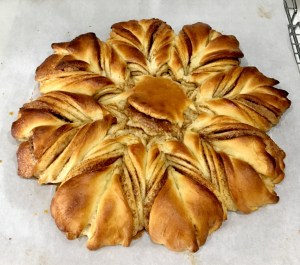
For the end of Mardi Gras I thought it appropriate to make a more or less “traditional King Cake.” I say more or less as I have never had a King Cake and am unsure of the “traditional” texture and flavor. When cut, this cake resembled a cinnamon roll, which is no surprise as it is a yeast dough, twice risen and rolled with cinnamon and sugar. It actually tasted more like a cinnamon roll than a “cake”. Next year, I may try a more cakey recipe.

I thought the glaze was a little too acidic. Maybe I should have used a cream cheese based glaze, or just cut the citrus juice in half. To help the colored sugar adhere I would also give a very light spray of water over the glazed cake prior to dusting. Too much water may melt the colored sugar.

INGREDIENTS

  • 8 oz sour cream
  • 2½ Tbsp sugar
  • 2 Tbsp butter
  • ½ tsp salt
  • 2 tsp active dry yeast
  • ¼ cup warm water (100 – 110 F)
  • ½ Tbsp sugar
  • 1 large egg, slightly beaten
  • 3 to 3½ cups bread flour
  • Purple, green and gold tinted sparkling sugar sprinkles

 CINNAMON FILLING

  • 2½ Tbsp butter, softened
  • ¼ cup sugar
  • 1 tsp ground cinnamon

CREAMY GLAZE

  • 1 ½ Tbsp butter, melted
  • 1 Tbsp fresh lemon juice
  • ¼ tsp vanilla extract
  • 1 to 2 Tbsp milk
  • ¼ cup warm water (100 – 110 F)
  • ½ Tbsp sugar

METHOD

  1. Cook first 4 ingredients in a medium saucepan over low heat, stirring often, until butter melts. Set aside and cool mixture to 100 to 110 F
  2. Stir together yeast, ¼ cup warm water, and ½ Tblsp sugar in a 1 cup glass measuring cup; let stand 5 minutes
  3. Beat sour cream mixture, yeast mixture, eggs and 1 cup flour at medium speed until smooth.
  4. Reduce speed to low, changed to dough hook and gradually add enough remaining flour 2 – 2 ½ cups until a smooth dough forms
  5. Knead with dough hook until smooth and elastic (about 12 min)
  6. Place in an oiled bowl and flip to grease top
  7. Cover and let rise in a warm place for 1 hour or until doubled
  8. Punch down dough, divide in half
  9. Roll into a 22”x12” rectangle
  10. Spread 2 Tbsp softened butter evenly on each rectangle, leaving a 1” border.
  11. Stir together ¼ cup sugar and cinnamon, and sprinkle evenly on each rectangle
  12. Roll up each rectangle, jelly roll style, starting with the long edge.
  13. Place seam side down on lightly greased baking sheet.
  14. Bring ends together to form an oval ring moistening and pinching edges together to seal

METHOD – GLAZE

  1. Stir together first 4 ingredients
  2. Stir in 2 Tbsp milk, adding additional milk 1 tsp at a time until spreading consistency

PREPARATION AND ASSEMBLE

  1. Cover and let rise in a warm place 20 – 30 min until doubled
  2. Bake at 375 F for 14 – 16 min or until golden
  3. Slightly cool cake in pan on wire rack (about 10 min.)
  4. Drizzle creamy glaze evenly over warm cake, sprinkle with colored sugar, alternating colors
finished-cake

Finished King Cake

OPTION: Cream Cheese-filled King Cake

  1. Prepare 22×12” dough rectangle as directed
  2. Omit 2 Tblsp butter and cinnamon. Increase ¼ cup sugar to ⅓ cup
  3. Beat 1/3 cup sugar with 8 oz softened cream cheese, ½ large egg and 2 tsp vanilla extract at medium
  4. Spread mixture evenly on dough rectangle, leaving 1 inch border

Yeah I’ll be king when dogs get wings
Can I help it if I still dream time to time

What the Focaccia Are You Talking About?

Or, you say tomato and I say potato.

I was flipping through Paul Hollywood’s bread book and saw his focaccia bread, both the Focaccia Pugliese with Tomatoes and Garlic and Potato Focaccia Pugliese. I never made focaccia before and felt these two might be a good beginning. Plus, I craftily asked Fran to put an extra potato in the shopping cart yesterday.

Pugliese is very similar to ciabatta with large holes in the crumb and a very chewy texture. It was interesting that some recipes called for no, or at least minimal kneading, others require typical 7-10 minutes of kneading and still others want extensive kneading, even during the rise to develop even more gluten for a chewier texture.  I chose minimal and it developed an excellent, chewy loaf with a good crunchy crust. The stand mixer really does not care how long you knead.focaccia

My strategy was to make one recipe of bread dough, divide it in half and use one for the tomato and the other for the potato.

img_0023I also made 2 dozen chocolate dipped short bread cookies, but they were not part of this post. Just a picture for proof.

BREAD INGREDIENTS

  • 4 cups bread flour
  • 1 tbl salt
  • 2 tsp fast acting yeast
  • 1 1/4 cup water

TOMATO TOPPING INGREDIENTS

  • Thin slices of tomato (I used about 1/2 tomato)
  • 1 tsp crushed garlic
  • Sea Salt – as needed
  • Parmesan Cheese – as needed
  • Olive oil – as needed

POTATO TOPPING

  • Thin slices of potato (I used about 1/3 a potato, new potatoes would be better if you had them.)
  • 3-4 sprigs of rosemary from your backyard garden, which you still have to cover every
    night to protect from the frost.
  • Sea Salt – as needed
  • Olive oil – as needed

METHOD

  1. Add all the bread ingredients to a stand mixer equipped with the bread hook. Mix to form a good dough. If you were going to knead the dough keep the mixer running at speed 4 for 7-8 minutes until the dough becomes smooth and elastic.
  2. Cover the mixer bowl and place in the proofing drawer of your beautiful double wall oven. It’s nice having two ovens. I used the top oven to bake the 3 baguettes I made first while proofing the focaccia, (focaccias, focaccii?) the lower.
  3. After and hour of proofing and the dough has at least doubled in size, remove from
    the oven and gently tip onto a lightly floured surface.
  4. Cut the dough in half and place each half on a parchment paper covered large baking sheet, or two smaller sheets.
  5. Gently, using your fingers form each piece of dough into a rough circle about 1/2″ thick.
  6. Punch your fingers into the dough making a rough wavy surface.
  7. Arrange the potato slices, rosemary and sea salt on one and sprinkle and rub
    with olive oil.
  8. Arrange the tomato slices on the other piece of dough and sprinkle with sea salt, garlic, olive oil and cheese.
  9. Push the tomato and potato sliced down inside the dough as much as possible so the dough will rise up around, engulfing the slices.
  10. Place the doughs back in the proofing oven for another hour, or until at least doubled.
  11. Preheat the oven to 425 F convection and bake for 20-25 min until golden brown.
  12. Best eaten warm, but damn, not bad after it has cooled either.

Orange Chocolate Tart

Once again I was watching GBBO and was inspired. Of course my neighbor’s orange tree, file-feb-17-10-17-08-amconveniently planted near our fence such that some of it’s fruit hung over my side, helped me decide to try this new pastry. I hadn’t made a sweet tart where the filling, not just the pastry crust, was baked. This tart had a clean, fresh, sweet taste and excellent texture.

CHOCOLATE ORANGE TART

INGREDIENTS

  • For the chocolate filling
    • 75g butter
    • 115g dark chocolate (no more than 60% cocoa solids), finely chopped
    • 115g caster sugar
    • 55g AP flour
    • 4 medium eggs
  • For the orange filling
    • 25g butter
    • 50g white chocolate
    • 1 orange, finely grated zest only
    • 35g caster sugar
    • 25g AP flour
    • 2 medium egg yolks

METHOD

  1. Grease a 9in fluted tart tin with butter.
  2. For the pastry, measure the flour, icing sugar and butter into the bowl of a food processor and pulse until the mixture resembles fine breadcrumbs. Add the egg yolk and a tablespoon of cold water and mix until it comes together to form a soft dough.
  3. Wrap the dough in cling film and leave to rest in the fridge for about 30 minutes.
  4. Preheat the oven to 200C/400F.
  5. Dust the work surface with flour then roll out the pastry as thinly as you can to a circle about 2in larger than your flan tin.
  6. Line the tin with the pastry. Don’t worry if the pastry breaks a little, it is easy to patch up. Chill for 15 minutes.
  7. Prick the base of the pastry with a fork, line the pastry case with baking paper or foil and fill with baking beans. Bake the pastry blind for 10 minutes, or until just lightly golden-brown. Remove the paper and beans and return the tart to the oven to cook for a further 5-7 minutes, or until pale golden-brown and the base is cooked.
  8. To make the chocolate filling, melt the butter and chocolate in a heatproof bowl set over a pan of gently simmering water until melted and smooth. Remove from the heat and stir in the sugar and flour. Beat in the eggs, one at a time, and leave to stand.
  9. To make the orange filling, melt the butter and white chocolate in a heatproof bowl set over a pan of gently simmering water until melted and smooth. Remove from the heat and stir in the orange zest, sugar and flour. Beat in the egg yolks, one at a time and pour the mixture into a jug.
  10. Place the pastry case on a baking tray. Pour the chocolate mixture into the pastry case. Drizzle or pipe the orange filling over the chocolate filling to create a swirl effect. Draw a tooth stick through the filling to create a marbled effect.
  11. Bake for 10-12 minutes, or until just set around the edges, but still slightly wobbly in the centre.
  12. Remove from the oven and allow to cool slightly, until warm but not piping hot, then serve. It is actually very good cold also.

Blame It On Rio, or Richard Cadbury

Salted Chocolate Covered Caramels

It wasn’t until 1861, when his light bulb turned on (notice the anachronism?) and he decided there was an untapped marketing opportunity selling his chocolates in heart shaped boxes for Valentine’s Day. He didn’t know it, but modern science has linked the chemical phenylethylamine in chocolate to feelings of excitement, attraction and even pleasure. heart-pastry

Last year, I went pure pastry, making heart shaped Mille-feuille.

This year, having learned how to temper chocolate for my Hot Chocolate Cake, and decided to make these candies. I found and followed an online recipe, but found it lacking. The caramel was a little too soft and the chocolate did not completely set. The tempering instructions were a little vague without specifying the suggested heating and cooling temperatures. I made adjustments based on what I learned from previous temperingimg_0004 and also increased the temperature of the caramel to slightly increase the hardness of the caramel.

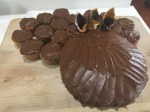
The result was these soft, chewy, melt in your mouth chocolate caramels. Complementing the candies were 2 dozen chocolateimg_0005 dipped, heart shaped, shortbread cookies.

Michaels had some pink gift boxes for St. Valentine’s Day (10 boxes for $3.90 with img_0009coupon) for a nice presentation.

Helpful note: you will be busy while making this, therefore, have all equipment ready and ingredients measured
out prior to starting.

Makes approximately 24 heart shaped caramels.

INGREDIENTS

  • CARAMELS

    • 113g unsalted butter (1 stick)
    • 120 ml heavy cream or heavy whipping cream (36-40% butterfat content)
    • 3 tablespoons water
    • 85g (¼C) light corn syrup
    • 200g sugar
  • CHOCOLATE COATING

    • 225g high quality chocolate, milk, dark, or white
    • course sea salt as needed

METHOD

PREPARE PAN AND INGREDIENTSred-heart-shaped-silicone-mold

  1. Lightly grease a heart shaped silicone mold. I tried the first time with a spray but the caramels came out greasy. I then changed to a light coating of vegetable shortening with better results.
  2. Cut butter into 8 pieces then combine with heavy cream in a small microwave-safe bowl. Heat in the microwave 30 second bursts until hot and butter has melted.
  3. Set aside.

MAKE CARAMEL

  1. In a small saucepan combine the water and corn syrup.
  2. Carefully add the sugar so you don’t splatter the sugar up the sides of the pan. Gently stir the sugar into the water and corn syrup, just moistening the sugar.
  3. Heat on medium until the sugar has come to a boil.
  4. Cover with a lid for 1 minute to melt any sugar adhering to the side of the pan. Any sugar on the side of the pan will cause the caramel to crystalize and be grainy.
  5. Continue cooking until the sugar reaches a temperature of 320o F and the sugar turns a light amber color around the edges of the pan.
  6. When the sugar reaches 320o F, slowly pour about ¼ of the butter and cream mixture then stir, using a small silicone spatula to incorporate it. Be careful, the sugar mixture will boil violently as you add the butter. Repeat with the remaining cream and butter, about ¼ at a time. Add the sugar mixture slowly and carefully to keep the mixture from bubbling over the sides of the saucepan.
  7. The temperature will drop when you add the cream and butter. Continue cooking for another 5 to 10 minutes, until the caramel reaches a temperature of 245o
  8. The moment the caramel reaches your desired temperature, pour into the greased mold. I poured the hot caramel into a heat proof 2 cup measuring cup, then into the mold. It was easier to control than straight from the sauce pan
  9. Cool until firm. (I refrigerated the caramel hearts.)

TEMPERING CHOCOLATE

  1. Finely chop 225g of good quality semi-sweet chocolate. (I prefer dark chocolate.) The smaller amount of chocolate, the more difficult it is to control the temperature changes, but this amount was enough to coat the caramels.
  2. Place about 150g of the chocolate in a double boiler or metal bowl set over a saucepan of simmering water. Make sure the bottom of the bowl does not touch the water. Place a candy thermometer or digital thermometer in the chocolate and stir frequently with a rubber spatula.
  3. Do not let the temperature of the chocolate exceed 120°F for dark chocolate or 105°F for milk or white chocolate. When the chocolate has fully melted, remove the bowl from heat. Wipe the bottom of the bowl to get rid of any condensation as any water in the molten chocolate will cause it to seize.
  4. Stir in the remaining chocolate a little at a time. Let it melt before adding more.
  5. Let the chocolate cool to about 82°F. If it is warmer, keep stirring and let it cool some more. If it is cooler, begin reheating in the next step.
  6. Once the chocolate is 82°F, place it back over simmering water. For dark chocolate, reheat to 88°F to 91°F. For milk and white chocolate, reheat to 85°F to 87°F. Remove the bowl from heat once you have reached the right temperature.
  7. Spread a small spoonful of chocolate on a piece of wax paper. If it looks dull or streaky, re-temper the chocolate, starting with step 2. If it dries quickly with a glossy finish and no streaks, the chocolate is in temper.
  8. Keeping chocolate in temper
    1. Once melted chocolate has been tempered, it must be used before it cools and sets. If it cools to about 84°F to 86°F and is still fairly liquid, it can be reheated to a liquid consistency.
    2. If it has completely cooled and solidified, it should be re-tempered. Heat it for 5 to 10 seconds at a time, stirring and checking the temperature before reheating. For dark chocolate, reheat to 88°F to 91°F. For milk and white chocolate, reheat to 87°F to 88°F. If you keep your chocolate within these temperature ranges, it will stay in temper and be liquid enough to use.

COATING CARAMELS WITH CHOCOLATE

  1. One at a time drop the cool caramel into the tempered chocolate
  2. Use one fork to flip the caramel assuring both sides and the edges are coated.
  3. Use the second fork to lift the coated caramel out of the chocolate and flip onto the other fork to drain some of the chocolate off the heart.
  4. Carefully place the chocolate on a piece of waxed paper and sprinkle with coarse sea salt.
  5. Cool and eat.


Savor the Moment

I like sweets and I love chocolate. I prefer foods where the ingredients list includes sugar, in large quantities. However, sometimes the moment requires other ingredients. Sometimes the bounty of the garden needs to be included in foods, savory foods and you know… they aren’t bad, not bad at all. I made a variety of test veggie savory pastries for our upcoming party. (Sadly, this time of year, very little came from my garden.)

I used, in various combinations, olives, roasted red peppers, asparagus, tomato, several herbs and gorgonzola,  cream, and parmesan cheeses. For these tart shells I used my standard tart recipe formed using small deep tart molds. Once the pastries were assembled I broiled them just long enough to melt, or at least soften the cheese. I apologize for not having a photo of the finished pastries. They… disappeared somehow after they were removed from the oven. Odd.

Asparagus and cream cheese pastry: Steamed asparagus was marinated in a mixture of balsamic vinegar, chives, parsley and tarragon then drained and patted dry.  Softened cream cheese coated the bottom of the shell, about 1/4″ thick, salt and pepper to taste and cut spears of asparagus laid across the top.

Olive and roasted red pepper pastry: A layer of crumbed gorgonzola cheese covered the bottom of the shell. A large olive was placed in the middle of the shell, on top of the cheese. A roasted red pepper was sliced lengthwise to about 1/2″ wide and wrapped around the olive.

Tomato and cheese pastry: Fill the bottom of the shell with a 1/4″ thick layer of shredded parmesan cheese. Place a thin slice of cherry tomato on top of the cheese, coat with a little more parmesan cheese and top with a piece of fresh basil. (From my garden 🙂 )