The Scarlet Pumpernickel

Well maybe not scarlet, but not dark brown either. I slowly bought all the ingredients (or so I thought) to make a pumpernickel boule. KAF had a recipe I liked and ordered all the odd ingredients (or so I thought) to make it on my Wednesday “me day.” Somehow I missed it was supposed to be “White Whole Wheat Flour,” well, I had normal off-white whole wheat flour and it would have to do. I did buy the Deli Rye Flavor and the “Vital Wheat Gluten.” I forgot the Pumpernickel Artisan Bread Flavor is currently out of stock at KAF and is only on my wish list. With inspir/desperation, I removed 1//2 cup of the specified flours, added 1/2 cup pumpernickel flour, crossed my fingers and hoped for the best. According to comments on the KAF recipe omitting the Pumpernickel Artisan Bread Flavor will cause the bread to be a lighter color than the expected (and desired) chocolate/coffee/pumpernickel brown. It is, in fact, a good rye bread color. Actually, the taste was pretty darned ok also.pumpernickel boule 1

PUMPERNICKEL BOULE

INGREDIENTS

  • 4 cups King Arthur Unbleached All-Purpose Flour
  • 1 cup King Arthur Unbleached White Whole Wheat Flour
  • 1/2 cup Pumpernickel Artisan Bread Flavor
  • 2 tablespoons vital wheat gluten, recommended to prevent a collapsed loaf
  • 1/2 teaspoon Deli Rye Flavor, optional, for more assertive rye flavor
  • 2 1/4 teaspoons salt
  • 2 teaspoons instant yeast
  • 2 cups lukewarm water

METHOD

  1. Combine all of the ingredients and mix and knead — by hand, mixer, or bread machine — until the dough is elastic and slightly sticky.
  2. Let the dough rise in a lightly greased, covered bowl for 1 to 2 hours; it should become puffy.
  3. Transfer the dough to a lightly oiled surface. Gently deflate it, and shape it into a ball.
  4. Place the shaped loaf into a round brotform covered with a flour dusted liner.
  5. Let the loaf rise for 60 to 90 minutes, until it’s almost doubled in size.
  6. Preheat the oven to 425°F with the stoneware baker (e.g., Emile Henry) inside to pre-heat it.
  7. Spray the bottom of the stoneware baker with olive oil and carefully tip the loaf into it.  The loaf will deflate slightly, so be careful.
  8. Slash the loaf diagonally in several places, and cover with the lid. .
  9. Bake the loaf for 30 to 40 minutes, remove the lid, and bake for another 5 minutes; the bread will be dark. When done, it’ll be crusty, and a digital thermometer inserted into the center will read 190°F to 200°F.
  10. Remove the bread from the oven, and transfer it to a rack to cool completely.

Guess Who Came to Dinners?

We just had a weekend guest, and sadly, put her on a plane to return to her home last night. This woman prefers to eat healthy, in moderation and occasionally diet. Boy did she come to the wrong place!

We started with some rugelach. I made apple/cinnamon, chocolate and hand pies
chocolate/blackberry. They are very similar except the for filling.  I added an apple tart, (I got to use my new spiralizer so am happy.) Fran and I had some fruit dumplings from Apple Hill (much like my hand pies but bigger, so I added blueberry, apply and blackberry hand pie/filled rough puff pastry dumplings. For dinner we had my homemade pizza margherita: sweet/salty sauce, home made dough (ala pizza 2 Independent Pizza in Seattle), basil and fresh mozzarella, baked 6 minutes at 600 degrees in my gas grill. I added some garlic bread knots to accompany.  It was so good, I made second one for Sunday night.  Unfortunately, we at all the garlic bread knots, so I made some chocolate mousse with pink whipped cream topping. Oh, we also had a salad.

mousse

RUGELACH

INGREDIENTS

CRUST

  • 16 tablespoons (1 cup) unsalted butter, at room temperature
  • 3/4 cup cream cheese, at room temperature (2 T cream cheese = 28g. 3/4 Cup = 12 T, ¾ C = 4oz.)
  • 1/3 cup sour cream
  • 1/2 teaspoon salt
  • 2 cups King Arthur Unbleached All-Purpose Flourrugelach1

FILLING CINNAMON RAISIN

  • 1/2 cup brown sugarrugelach2
  • 1 cup walnuts, chopped
  • 1/2 cup dried cranberries, raisins, or currants
  • 1 tablespoon cinnamon
  • water for brushing dough

DARK CHOCOLATE:

  • 1 T brown sugar
  • 1 Tsp unsweetened cocoa power
  • ¼ Tsp cinnamon (optional)

TOPPING

  • granulated sugar or coarse white sparkling sugar
  • milk or cream

METHOD

  1. To make the dough using a mixer: Beat together the butter, cream cheese, sour cream, and salt until smooth. Add the flour, mixing to make a stiff dough.
  2. Divide the dough into three equal portions. Press each gently into a disk. Make the disks as round as possible, smoothing their edges; this will allow you to roll the disks into a perfectly round circle, making the resulting rugelach more attractive.  (Note how :perfect this dough circle is.) Wrap the disks in plastic, and chill the dough for about 1 hour, until it’s firm but not rock hard. Or chill longer (up to overnight), then warm for about 45 to 60 minutes at room temperature, until the dough softens enough to roll out without cracking.
  3. To make the CINNAMON RAISIN FILLING: process the sugar, walnuts, dried fruit, and cinnamon in a food processor or blender until finely chopped and well combined (but not pasty). Don’t have a food processor? Simply stir together the filling ingredients; your filling will be chunky rather than smooth.
  4. To make the CHOCOLATE FILLING: Whisk together 1 tablespoon brown sugar and 1 teaspoon unsweetened cocoa powder; add 1/4 teaspoon cinnamon, if desired. Sprinkle atop rolled-out dough. Sprinkle with 1/4 cup (1 1/2 ounces) mini chocolate chips or chopped semisweet chocolate.
  5. Working with one piece of dough at a time, place it on a generously floured surface. Roll it into a 10″ circle and brush it lightly with water. For a flavorful touch, brush the rolled-out rugelach dough with a thin layer of boiled cider, warmed apple or 

    currant jelly, or puréed fruit preserves, instead of water.

  6. Use your fingers to spread about 1/3 of the filling onto the round, going all the way to the edges and gently patting the filling to help anchor it to the dough.
  7. Using a pizza cutter, baker’s bench knife, or sharp knife, divide the dough into 12 equal wedges. Roll each wedge up, beginning with the wide end and ending with the narrow end. Place the rolls point-side down on a baking sheet; lining the baking sheet with parchment will help with cleanup. Repeat with the remaining two pieces of dough.
  8. Brush the rugelach with milk or cream; and sprinkle with granulated or coarse white sparkling sugar, if desired.
  9. Preheat the oven to 350°F. Refrigerate the rugelach while the oven is preheating.
  10. Bake the rugelach for 25 to 30 minutes, or until golden brown. Remove from the oven, and cool right on the pan. Serve warm or at room temperature.
  11. Store leftover rugelach in an airtight container at room temperature for several days. Freeze for longer storage.

APPLE TART

TART SHELLS


INGREDIENTS

  • 100 g cold butter cut into small cubes
  • 200 g all-purpose flour
  • 60 g icing sugar (Splenda?)
  • ½ tsp vanilla
  • ¼ tsp salt
  • 1 egg (50g)

APPLE FILLING

  • 3 apples (sliced thin or spiralized with skins on)
  • 1/2 cup sugar
  • 1 Tsp cinnamon

METHOD

  1. Mix butter with sugar
  2. Add salt then vanilla
  3. Add egg
  4. Stir in flour.
    1. Mix by hand until incorporated
    2. Add 3-5 Tbl water to make dough sticky
  5. Cover with plastic and refrigerate for 30 min
  6. Butter tartlet pans
    1. Roll dough to about ⅛” thick
    2. Lay over tart mold and press into all crevices
    3. Roll top to cut off excess
  7. Prick holes in bottom and sides of formed dough
  8. Add pastry weights to each pan
  9. Bake in preheated oven 350o F (175o C) for 17 min
    1. Remove pastry weights with 5 min left in the bake
    2. Remove pastry shells from pans and let cool on wire rack
  10. Fill cooled tart shell with sliced apples. I put them in a spiral shape but any way will do
  11. Sprinkle sugar and cinnamon over the apples.
  12. Cover exposed edges of tart with aluminum foil to prevent over browning.
  13. Back at 375 F for 20-30 min. When apples have reduced and mixture is bubbling.
  14. Remove from over and cool on a wire rack.

Sweet and Salty Pizza Sauce

INGREDIENTS

  • 1 tablespoon olive oil
  • 2 cloves garlic, minced
  • 3 medium tomatoes, diced
  • 1 can tomato paste
  • 1 Tbsp sugar
  • ½ teaspoon salt
  • 1/8 teaspoon pepper, freshly ground
  • 2 tablespoons (4 large leaves) fresh basil, coarsely chopped

METHOD

  1. Heat oil in medium saucepan over a medium heat until hot.
  2. Add garlic; cook 30 seconds or until fragrant.
  3. Stir in tomatoes, tomato paste, salt and pepper and cook for 8-10 minutes or until slightly thickened, stirring and mashing tomatoes with potato masher until crushed.
  4. Stir in basil.
  5. Place in small bowl; cool to room temperature This sauce may be made up to 3 days ahead and refrigerated or up to 2 months ahead and frozen.

Japanese Cream Pans

If you have previously read my blog you know I tend to create a title that is a little sarcastic, punny (not puny as in “small”, but punny and in “with puns”) and snarky. This time, I admit my ignorance. For fear of insulting a people and culture I of which I have little knowledge, I simply titled this one as Japanese Cream Pans.Final Cream Pans

Another more snarky point: I tried one of these pastries courtesy of my son’s mother in law’s cousin, or my cousin-in-law once removed. (I made that up. I find it annoying to have to describe a full family tree to delineate the connection of two people related via someone’s marriage.)

Anyway, these pastries are light, soft and delicious. I found a recipe online and followed it with two exceptions and one caution Rolled formed doughlearned after making them. See below.

You can make the tangzhong and cream filling as much as 3 days in advance. Both will stay in the refrigerator that long if covered. Tangzhong is a water roux used to lighten the texture and provides the more tender crumb these pastries require.

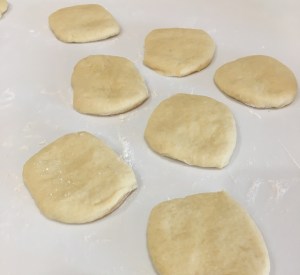
Flattened dough

INGREDIENTS

Cream Pan Dough:

  • 2 1/2 c. bread flour
  • 2 tsp. active dry yeast
  • 4 T. sugar
  • 3 T. unsalted butter
  • 1/2 tsp. salt
  • 1/2 c. tangzhong
  • 1 egg
  • 1/2 c. milk

Tangzhong:

Cream Filled unfolded dough

  • 1/3 c. bread flour
  • 1 c. water

Japanese custard cream:

  • 1 3/4 c. milk
  • 4 T. unsalted butter
  • 4 egg yolks
  • 1/2 c. sugar
  • 5 T. flour
  • 2 T. cornstarch
  • 1/2 tsp. salt
  • 2 tsp. vanilla bean paste (or vanilla extract, or seeds scraped out of 1 vanilla bean pod)

Egg Wash:

  • 1 egg yolk beaten with 2-3 T. waterCream Filled Folded dough

METHOD

  1. Make the tangzhong. In a small saucepan, gently heat the bread flour + water, while slowly whisking.  When the mixture thickens, and swirl lines appear – remove from heat and cool.  You will only end up using half of this mixture – store the other half in the refrigerator (covered) for up to 3 days.
  2. Make the cream pan dough.  Add the tangzhong, butter, sugar, salt, and egg beaten with the milk to a mixer bowl.  On top of those ingredients, add the bread flour.  Make a depression in the center of the bread flour, and add the yeast.  Turn the mixer fitted with adough hook to low until a basic dough is formed. The increase speed to medium to knead for 8 minutes, then allow the dough to rise (covered) for 1 hour in a warm place.  Punch down, and allow to rise another 30 minutes.) While the dough is rising, make the custard cream.
  3. HERE IS ONE OF THE CHANGES: I use the Martha Stewart method of making cream patisserie. Put all the ingredients into a large sauce pan and heat with constant stirring until the mixture begins to set (looks like loose scrambled eggs), strain the mixture and add the vanilla. Much easier that tempering the eggs etc.
  4. The original recipe follows here:
    1. Scald the milk and butter in a large pyrex measuring cup by microwaving for 2-3 minutes.
    2. Beat the egg yolk with a whisk, and add the flour, cornstarch, salt, and sugar. Whisk together to form a thick paste.
    3. Add about 1/3 of the warm milk mixture to the paste, and whisk constantly. (This step tempers the egg, and loosens up the paste so that you can add the remaining warm milk.)  Add the second 1/3 of the warm milk, and whisk until combined.  Then add the last 1/3 of the warm milk, and whisk until combined.
    4. Strain the egg mixture into a saucepan. (This will catch any lumps, and any bits of egg that may have “scrambled”.)
    5. Add the vanilla bean paste (or vanilla extract, or scraped vanilla bean guts), then slowly heat the saucepan over medium low heat (whisking constantly). When the mixture thickens so that swirl lines appear, remove from heat and continue whisking another 30 seconds.
  5. Refrigerate the custard cream until cold and thick in a covered container for several hours.
  6. Dust a work surface liberally with flour. Divide the dough into 16 pieces.  Using a cookie scoop, portion out 16 balls of chilled custard cream.  (I usually set the custard portions on top a sheet of Reynold’s non-stick foil.)
  7. I WAS NOT HAPPY WITH BAKING THE CREAM. Skip this and inject the cream after the pastry has cooled. Be gentle with the dough, don’t over deflate. This will keep it lighter and less bread-like.
  8. The original instructions follow here.
    1. Flatten each piece of dough with the palm of your hand and place in a small custard cup. Use a small spoon to put a portion of chilled custard into the depression.
    2. Pinch the edges upwards to seal and place seam side down on a silicone lined cookie sheet.
  9. Cover with plastic wrap and allow to rise for another 30-60 minutes. Brush the tops of the buns with the egg wash, and bake at 335 degrees for 15 minutes. Use a dilute egg wash. I increased the water from 1 Tablespoon to 3.
  10. Remove from oven and cool thoroughly.
  11. Inject cooled creampat. You should feel the pastry become heavy. That is enough filling.
  12. Refrigerate to store.

Holy Wheat! Bat Man!

Last week I noticed I still had a bag of whole wheat flour in the fridge that I have to use. As bread baking day was approaching I thought, “Why not adding some of the whole wheat flour to my regular recipe?” So I substituted one cup whole wheat for the 6-7 cups bread flour that was called for. I also increased the hydration a little. A little confession here. I don’t actually measure the amount of water I add to the recipe. I start with the recommended amount, then just add until it seems about the right hydration. i.e. the “feel of the dough is right. Usually this means it is soft, pliable and a little sticky.


IMG_0005

I also thought it might be interesting to use some molasses instead of sugar. This would make the bread healthier (more fiber with whole wheat) and “sugar free” (sort of. Close enough for me.)

I made a standard 1 lb sandwich loaf plus a 2 lb boule with a variety of seeds on top. I had some issues with the seeds sticking to the loaf Dutch Oven with Loaf(actually, not sticking.) Next time, I will add the seeds to the dough prior to the second rise. This should help the adhesion.


INGREDIENTS

  • 5 to 6 cups bread flour
  • 1 cup whole wheat flour
  • 4 tablespoons molasses
  • 1 tablespoon salt
  • 2 tablespoons shortening
  • 4 1/2 teaspoons fast acting yeast
  • 2 ¼ cups very warm water (120° to 130°F)

METHOD

  1. In large bowl, stir 3 1/2 cups of the bread flour, one cup whole wheat flour, the sugar, salt, shortening and yeast until well mixed. Add warm water. Beat with electric mixer on low speed 5 minutes, scraping bowl frequently. The whole wheat flour does not absorb the water as fast as the bread flour so the extra long mixing gives it a chance. Beat on medium speed 1 minute, scraping bowl frequently. Stir in enough remaining flour, 1 cup at a time, to make dough easy to handle.
  2. Knead with the dough hook for 8 minutes as fast as your mixer will go. My KitchenAide will let me go to 5 (our of 7). Place dough on lightly floured surface. Knead by hand until dough is smooth and springy. Grease large bowl with shortening. Place dough in bowl, turning dough to grease all sides. Cover bowl loosely with plastic wrap and let rise in warm place 40 to 60 minutes or until dough has doubled in size. Dough is ready if indentation remains when touched.
  3. Grease bottoms and sides of a 9×5-inch loaf pan with shortening or spray with cooking spray. Place dutch oven in the oven and start heating 30 minutes before the second rise is complete.
  4. Gently push fist into dough to deflate. Divide dough in one third and 2 thirds. This will be about 1 lb and 2 lb.  Flatten the smaller portion with hands or rolling pin into 16×6-inch rectangle on lightly floured surface. Roll dough up tightly, beginning at 6-inch side. Press with thumbs to seal after each turn. Pinch edge of dough into roll to seal. Pinch each end of roll to seal. Fold ends under loaf. Place seam side down in pan.
  5. Line a bowl of approximately the same dimensions as your dutch oven with parchment paper. Form the 2 lb portion of dough into a ball. I like to work it a bit on the counter, rolling back and forth between my hands to form a nice smooth ball.  (Next time, I will add the seeds to the smooth side of this ball, then turn over into the lined bowl to rise the second time.)  Cover loosely with plastic wrap and let rise in warm place 35 to 50 minutes or until dough has doubled in size.
  6. Move oven rack to low position so that tops of pans will be in center of oven. Place a small metal pan in the oven to create steam for the sandwich loaf. The dutch over shouldn’t need extra steam.
  7. When the boule has doubled carefully tip the dough from the bowl into the now very hot dutch oven. The seeds that were on the bottom of the bowl will now (hopefully) be well attached to the dough which will now be on the top.
  8. Heat oven to 425°F. Place both loaves into the over and pour a cup of water into the metal pan.
  9. Bake 25 to 30 minutes or until loaves are deep golden brown and sound hollow when tapped. Remove from pans to wire rack to cool.

Yes We’re Going to a Party Party

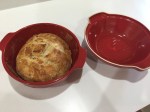
Dutch Oven with Loaf

Along with the other wonderful birthday gifts I received yesterday, (and the day before) Fran gave me my very  own Emile Henry Bread and Potato pot! Emile Henry, France, is a family owned business manufacturing ceramic cooking product since 1850. This bread pot adds a nice glaze to the surface of the loaf and by retaining the moisture which turns to steam, it also imparts a fantastic crust to the bread.

Preheating the oven with Loafthe dutch oven inside to 450o F, adding the risen dough and quickly covering with the top locks the steam into the dutch oven, making it perform like a steam injection oven used by commercial bakeries.

Use any bread recipe you like, to date I have made no knead bread and NY rye. Next up is my standard sandwich bread loaf.

Sliced Loaf

I found if the dough is a little dry, sprinkle a little water on the top of the dough after you place it in the Bread Pot. This will assure adequate water to create the steam necessary to generate the steam.

No Knead Bread – KAF

INGREDIENTS

Grams

  • 680g lukewarm water
  • 907g King Arthur Unbleached All-Purpose Flour* or Organic All-Purpose Flour
  • 1 tablespoon salt
  • 14g instant or active dry yeast

Volume

  • 3 cups lukewarm water
  • 6 1/2 to 7 1/2 cups All-Purpose Flour
  • 1 tablespoon salt
  • 1 1/2 tablespoons instant or active dry yeast

METHOD

  1. Combine all of the ingredients in a large mixing bowl, or a large (6-quart), food-safe plastic bucket. For first-timers, “lukewarm” means about 105°F, but don’t stress over getting the temperatures exact here. Comfortably warm is fine; “OUCH, that’s hot!” is not. Yeast is a living thing; treat it nicely.
  2. Mix and stir everything together to make a very sticky, rough dough. If you have a stand mixer, beat at medium speed with the beater blade for 30 to 60 seconds. If you don’t have a mixer, just stir-stir-stir with a big spoon or dough whisk until everything is combined.
  3. Next, you’re going to let the dough rise. If you’ve made the dough in a plastic bucket, you’re all set — just let it stay there, covering the bucket with a lid or plastic wrap; a shower cap actually works well here. If you’ve made the dough in a bowl that’s not at least 6-quart capacity, transfer it to a large bowl; it’s going to rise a lot. There’s no need to grease the bowl, though you can if you like; it makes it a bit easier to get the dough out when it’s time to bake bread.
  4. Cover the bowl or bucket, and let the dough rise at room temperature for 2 hours. Then refrigerate it for at least 2 hours, or for up to about 7 days. (If you’re pressed for time, skip the room-temperature rise, and stick it right into the fridge). The longer you keep it in the fridge, the tangier it’ll get; if you chill it for 7 days, it will taste like sourdough. Over the course of the first day or so, it’ll rise, then fall. That’s OK; that’s what it’s supposed to do.
  5. When you’re ready to make bread, sprinkle the top of the dough with flour; this will make it easier to grab a hunk. Grease your hands, and pull off about 1/4 to 1/3 of the dough — a 14-ounce to 19-ounce piece, if you have a scale. It’ll be about the size of a softball, or a large grapefruit.
  6. Plop the sticky dough onto a floured work surface, and round it into a ball, or a longer log. Don’t fuss around trying to make it perfect; just do the best you can.
  7. Place the loaf on a piece of parchment (if you’re going to use a baking stone); or onto a lightly greased or parchment-lined baking sheet. Sift a light coating of flour over the top; this will help keep the bread moist as it rests before baking.
  8. Let the loaf warm to room temperature and rise; this should take about 60 minutes (or longer, up to a couple of hours, if your house is cool). It won’t appear to rise upwards that much; rather, it’ll seem to settle and expand. Preheat your oven to 450°F while the loaf rests. If you’re using a baking stone, position it on a middle rack while the oven preheats. Place a shallow metal or cast-iron pan (not glass, Pyrex, or ceramic) on the lowest oven rack, and have 1 cup of hot water ready to go.
  9. When you’re ready to bake, take a sharp knife and slash the bread 2 or 3 times, making a cut about 1/2″ deep. The bread may deflate a bit; that’s OK, it’ll pick right up in the hot oven.
  10. Place the bread in the oven — onto the baking stone, if you’re using one, or simply onto a middle rack, if it’s on a pan — and carefully pour the 1 cup hot water into the shallow pan on the rack beneath. It’ll bubble and steam; close the oven door quickly.
  11. Bake the bread for 25 to 35 minutes, until it’s a deep, golden brown.
  12. Remove the bread from the oven, and cool it on a rack. Store leftover bread in a plastic bag at room temperature.

METHOD 2 – DUTCH OVEN

  1. When you’re ready to bake, measure out a two-pound ball of dough. If you don’t have a scale, it should look like it will fill the base of the Bread Pot most of the way.
  2. Shape the dough and let it rest on a floured kitchen towel or piece of parchment paper with the seam side up, covered, while it rises. (You can also use a brotform if you want to make some fancy rings on the surface of your loaf.)
  3. To ensure you get a burst of steam when the dough is put inside the pot, it should be preheated empty for about 30 minutes. Start preheating your pot roughly 30 minutes before your rising dough is ready to bake.
  4. Keep in mind the temperature of your kitchen will make a difference in how quickly the dough rises. The No-Knead Crusty White Bread dough can take anywhere from one to three hours to rise; I usually let it rise for at least one hour before preheating the pot for 30 minutes, giving the dough a total of a 1½ hours to rise.
  5. When your dough looks like it will be ready in 30 minutes, put the Bread Pot (both the bottom and the lid) into the cold oven, and set it to 450°F (or the temperature your recipe calls for).
  6. Half an hour later, the dough should be risen and the pot should be thoroughly preheated. Carefully remove the hot pot from the oven, taking care to place it on a neutral surface like a cooling rack, wooden board, or kitchen towel. (Avoid contact with anything cold, such as cold water or a cold surface; this may cause the pot to crack.)
  7. Apply a gentle coating of vegetable oil-based non-stick spray and sprinkle in some semolina flour or cornmeal. (Be careful during this step — the pot may smoke slightly when prepared.)
  8. Slide your hand under the towel or piece of parchment paper and turn the dough over into the pot, seam side down. You can gently shake the pot from side to side to help the dough settle evenly in the bottom.
  9. Don’t worry if your dough doesn’t look picture-perfect here; it will turn into a beautiful, golden loaf as it bakes.
  10. Make a few slashes in the top of your loaf (a lame works well for this), and then put the lid on. Bake for 40 minutes; remove the lid and bake for another 10 to 20 minutes, until the loaf browns fully.
  11. Remove the loaf from the oven and let it cool completely on a rack before slicing.

Challah, Challah Oxen Free!!

Actually challah bread is totally meat free, no oxen, nothing that walks or has a face, real vegetarian. I remember playing hide-and-go-seek with the neighborhood kids when growing up on “the hill.” I also remember its more violent, rambunctious cousin, kick-the-can. Good times.

I decided it was time to try to make (and braid) a challah. I found this recipe and technique at the Kitchn and it worked beautifully. I am annoyed I was so focused on making the braid, I forgot to photograph the process. Maybe next time. You can see their photo instructions at thekitchen.com.

Challah is an enriched dough bread and is the traditional bread used to welcome Shabbat with HaMotzi (blessing for bread) being recited prior to tearing or cutting the bread and distributing to all in attendance. I find it interesting that two loaves are placed on the table on Shabbat to, perhaps, commemorate the two portions of manna given to the Israelites in the desert during their 40-year wander. Also, the challah is covered with a cloth to,perhaps, represent the dew covering the manna keeping it fresh. There are many reasons why challah is braided. Google it to find the reason(s) you like. I like this rational for 6 braids. Each braid represents a “profane” day of the week (all 6 days except Shabbat) and braiding the, combines those days into a unity which is easier to place behind you to allow the peaceful contemplation and celebration of the sacredness of Shabbat. Or perhaps, two loaves, 12 braids represents the 12 tribes, or perhaps the braids are reminiscent of the structure of DNA, or perhaps it is just custom.

From thekitchn.com

INGREDIENTS

  • 2 teaspoons active dry or instant yeast
  • 1 cup (8 ounces) lukewarm water
  • 4 to 4 1/2 cups (20 to 22 ounces) all-purpose flour
  • 1/4 cup (1 3/4 ounces) white granulated sugar
  • 2 teaspoons salt
  • 2 large eggs
  • 1 large egg yolk (reserve the white for the egg wash)
  • 1/4 cup (2 ounces) neutral-flavored vegetable oil, or butter

METHOD

  1. Dissolve the yeast: Sprinkle the yeast over the water in a small bowl, and add a healthy pinch of sugar. Stir to dissolve the yeast and let stand until you see a thin frothy layer across the top.
  2. Mix the dry ingredients: Whisk together 4 cups of the flour, sugar, and salt in the bowl of a standing mixer.
  3. Add the eggs, yolk, and oil: Make a well in the center of the flour and add the eggs, egg yolk, and oil. Whisk these together to form a slurry, pulling in a little flour from the sides of the bowl.
  4. Mix to form a shaggy dough: Pour the yeast mixture over the egg slurry. Mix the yeast, eggs, and flour with the dough hook until you form a shaggy dough that is difficult to mix.
  5. Knead the dough for 6 to 8 minutes: With a dough hook attachment, knead the dough on low speed for 6 to 8 minutes. If the dough seems very sticky, add flour a teaspoon at a time until it feels tacky, but no longer like bubblegum. The dough has finished kneading when it is soft, smooth, and holds a ball-shape.
  6. Let the dough rise until doubled: Place the dough in an oiled bowl, cover with plastic wrap, and place somewhere warm. Let the dough rise until doubled in bulk, 1 1/2 to 2 hours.
  7. Separate the dough and roll into ropes: Separate the dough into three or six equal pieces, depending on the type of braid you’d like to do. Roll each piece of dough into a long rope roughly 1-inch thick and 16 inches long. If the ropes shrink as you try to roll them, let them rest for 5 minutes to relax the gluten and then try again.
  8. Braid the dough: Gather the ropes and squeeze them together at the very top. If making a 3-stranded challah, braid the ropes together like braiding hair or yarn and squeeze the ends together when complete. If making a 6-stranded challah, follow the directions at thekitchn.com.
  9. Let the challah rise: Line a baking sheet with parchment and lift the loaf on top. Sprinkle the loaf with a little flour and drape it with a clean dishcloth. Place the pan somewhere warm and away from drafts and let it rise until puffed and pillowy, about an hour.
  10. Brush the challah with egg white: About 20 minutes before baking, heat the oven to 350°F. When ready to bake, whisk the reserved egg white with a tablespoon of water and brush it all over the challah. Be sure to get in the cracks and down the sides of the loaf.
  11. Bake the challah: Slide the challah on its baking sheet into the oven and bake for 30 to 35 minutes, rotating the pan halfway through cooking. The challah is done when it is deeply browned and registers 190°F in the very middle with an instant-read thermometer.
  12. Cool the challah: Let the challah cool on a cooling rack until just barely warm. Slice and eat.
  13. For those bakers who are not visual: Making a 6-Stranded Challah Braid
    1. The name of the game here is “over two, under one, over two.” Carry the right-most rope over the two ropes beside it, slip it under the middle rope, and then carry it over the last two ropes. Lay the rope down parallel to the other ropes; it is now the furthest-left strand. Repeat this pattern until you reach the end of the loaf. Try to make your braid as tight as possible. Your braid will start listing to the left as you go; it’s ok to lift it up and recenter the loaf if you need to. Once you reach the end, squeeze the ends of the ropes together and tuck them under the loaf.
    2. At this point, your loaf is fairly long and skinny. If you’d like to make a celebration ring, stretch the loaf a little longer and pull the ends toward each other to create a circle. You can either squeeze the ends together, or if you’re feeling adventurous, braid them into a continuous circle.
  14. If you’re making a regular loaf (as pictured), you need to “plump” it a little to tighten the ropes into more of a loaf shape. Place your left palm at the end of the braid and your right palm at the top, and gently push the two ends toward each other, just like plumping a pillow in slow motion. Then slip your fingers under the dough along either side and gently lift the dough while cupping it downwards. (This isn’t a vital step, so don’t worry if you’re not sure you did it correctly.)

Olive Breadsticks, Revisited

I made a batch of these breadsticks a few months ago and yesterday I realized I was ready for a few more. These are great plain as snacks or with a nice marinara sauce for dipping or as a side with pasta. The slight tartness of the olives adds a nice balance to the sweetness of the bread. My problem is I eat too many.

These breadsticks are easy to make. The only tricky part is cutting, handling and shaping the slack dough. After rising, the dough is soft, sticky and wet. Use a LOT of flour Breadsticks2on your work table and generously dust the top of the dough before you gently form it into a rough rectangle about 16″ x 14″. Cut the rectangle in half (two 7″ smaller rectangles) then cut each of those into about 1″ strips, avoiding dissecting any olives. Use your bench knife and separate the first strip by flicking it onto the flour next to the dough rectangle. Pick it up with flour dusted fingers, place on the parchment-lined baking sheet and stretch it to about 10″ and try to straighten. I was not totally successful in straightening the breadsticks, but it doesn’t hurt the flavor.

He Said With a Rye Smile

When I retired, I realized I needed a new hobby, beyond brewing beer, (I have a batch of English Bitter about to be bottled) so I decided to start baking seriously, expanding my skills and experimenting with new recipes and techniques.  Now,  having nearly mastered the concept of retirement, I bake a lot of bread. I also bake a lot of pastries, cakes, cookies, biscuits, crackers, pizza, bagels and pretzels. (I’ve gotta get another hobby!)Hubble Deep Field Image

One of the holy grails of baking is to produce a good New York Jewish Rye Bread. This bread has a tangy rye flavor, chewy crumb and glazed, blistered crust. There are as many recipes and techniques to make this bread as there are galaxies in Hubble’s Deep Field image.

The recipe/method I chose was from Chef John V., A Good Cooking Recipe! This is not the easiest recipe, nor does it use the most common ingredients, however, his historical introduction rang with an authenticity that hooked me. His grandfather owned a dairy farm, as did mine. He was from Hudson NY, whereas mine was from Salisbury Vermont. He sold the farm and became a baker, whereas mine was a farmer to the end of his life. His other grandfather would work at the bakery whenever they needed help, whereas mine, did not. I didn’t say we had parallel experience, just that his sounded authentic.

Chef John V. uses some unusual, or at least uncommon (to me) ingredients that I found intriguing. Potato water: I have recipes that use small amounts of potato flour, but never potato “water”. First Clear Flour: milled from spring wheat and has a very high gluten and protein content which gives this rye its chewiness. White Rye Flour: milled from whole rye berries after the bran and germ are removed. I made the potato water and purchased the unusual flours from King Arthur (another Vermont connection.) He also uses a sour starter which requires 3 days of room temperature fermentation. When ready, the starter has a very yeasty, sour aroma – delicious.

The result of this first try was three small loaves of flavorful, aromatic, chewy crust and crumb rye bread, well worth the effort and will certainly be repeated. It might be fun to try an “easy” rye bread recipe to contrast the effort/reward of the two techniques. I think two medium sized loaves (think bigger sandwiches) would be appropropriate for this recipe.

New York Style Jewish Rye

Recipe by: Chef John V., A Good Cooking Recipe!

This recipe is as close to the original as can be. The only difference is they baked it in ovens that could inject steam during the first 10 minutes, which gave the crust its blistered look and chewy texture.

Note: This is a must have proper ingredient recipe! You can’t substitute medium rye flour without a change in texture. Light Rye or White Rye flour is a must is as 1st Clear Flour. Also note that flour has a different moisture content during the winter as in the summer, so in the winter you may need to add a bit more water and in the summer a little less. No more than a few tablespoons should do—this is a stiff dough! For your success please remember to measure exactly as baking is a science.

Serving size: 3 – 1½ pound oblong rye loaves (Note: next time 2 medium sized loaves)

Preparation time: Start to finish is 3 days including a sour starter

 INGREDIENTS:

  • Sour Starter—
    • 1 cup warm potato water*
    • 1 cup light rye flour—see footnote
    • 1 Tbsp. yeast, dry active or 1 fresh yeast cake
    • Stir to blend well, then cover with plastic wrap and let sit for 3 days at room temperature 65-70o F

* Potato water—Peel and quarter 2 pounds of regular potatoes, cover with water and season with salt. Cook like you would for boiled or mashed potatoes, drain—saving the water the potatoes were cooked in. This is potato water, it gives bread a moist and compact texture. Save or eat the potatoes as you like.

  • Dough for the bread—
    • 2 cups warm water, about 120o
    • 1 Tbsp. sugar
    • 1 Tbsp. yeast
    • Add—starter from above
    • 2 cups light rye flour
    • 2 Tbsp. kosher salt
    • 2 Tbsp. caraway seeds
    • 4 ¾ cups first clear flour—see footnote
  • Glaze—1 cup water
    • 3 Tbsp. cornstarch mixed with ¼ cup cold water—no lumps

 METHOD:

  1. In a mixer or by hand combine 2 cups warm water with sugar and yeast, mix and let sit for 10 minutes.
  2. Add the sour starter and the remaining ingredients. Mix on low speed for 2-3 minutes with a dough hook, then increase to medium speed and mix 6 minutes longer, be sure all the flour is absorbed into the dough by raising and lowering the bowl from time to time.
  3. Remove from the machine and cover with plastic wrap. Let rise 2 hours @ 70o or until doubled in size.
  4. Portion into 3 – 1½ pound pieces of dough and shape into oblong loaves, place on baking pans that have been sprinkled with semolina flour or fine cornmeal. Cover with a damp but not wet cloth and let rise for 40 minutes at @ 75-80o (on top of the stove is fine).
  5. Carefully remove the damp cloth, then slash the dough 3 times across the top with a very sharp knife or razor blade about ¾ of an inch deep. Immediately place in a pre-heated 375o oven, and place a pan of boiling water on the oven’s bottom. Remove the pan after 10 minutes, this will create steam and help with crust development. Continue to bake for 30 minutes or until center is 180 degrees F.
  6. For the glaze: boil 1 cup of water, mix the cornstarch with ¼ cup cold water, then combine with boiled water and stir continually until thickened. Cover with plastic wrap.
  7. Remove the bread and with a pastry brush, brush with the cooked cornstarch. A small amount of this glaze is enough, it’s used to create a shiny surface. Cool the bread on wire racks for at least 1 hour before slicing.

Footnote:

White Rye Flour is milled from whole rye berries which has the bran and germ removed and is unbleached. Medium rye is the next grade with is darker in color and if it were to be used in this bread it would make a darker loaf but not as dark as pumpernickel.

First Clear Flour is milled from spring wheat and has a very high gluten and protein content which gives this rye its chewiness.

Retirement is Loafing… NOT!

I admit it. I have a bread machine. I was consistently underwhelmed by the results from Whitebread1this device. Currently, it is in storage in the garage. I also have a KitchenAide mixer with a dough hook and am very pleased with the consistently good results from this device. It both mixes the ingredients and does 90% of the kneading. It would probably do all the kneading but there is something satisfying about having your hand on, and in the dough, feeling it develop the gluten into a soft, resilient ball.
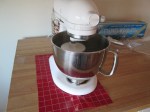
Here is a tip: if, while using your stand mixer to IMG_0029knead bread, it walks across the table, put a silicone baking liner under the mixer. I buy a Cooks Essentials 24″ x 72″ roll every year or so.
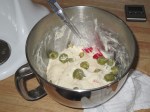
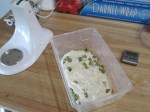
After a long search (and many test bakes) for a “go to” white sandwich bread recipe I found one on, of all places, the back of a bag of  Gold Medal flour, duh! I have changed the Method a little, but held pretty close to the Ingredients. I did try substituting butter for the shortening, no big difference, but don’t leave it out. I tried both bread and AP flour, and prefer bread. (I am making bread… why would I not use bread flour?)


INGREDIENTS

  • 6 to 7 cups Gold Medal™ all-purpose flour* or Better for Bread® bread flour
  • 3 Tbl sugar
  • 1 Tbl salt
  • 2 Tbl shortening – NOTE: 1 Tbl shortening weighs 13g, easier to weigh than spoon
  • 4 1/2 tsp quick active dry yeast (2 packages regular)
  • 2 ¼ cups very warm water (120° to 130°F)
  • 2 Tbl butter or margarine, melted, if desired

METHOD

  1. In large bowl, with the dough hook, stir 3 1/2 cups of the flour, the sugar, salt, shortening and yeast until well mixed. Add warm water. Beat  on low speed 1 minute, scraping bowl frequently. Beat on medium speed 1 minute, scraping bowl frequently. Stir in enough remaining flour, 1/2 cup at a time, to make dough easy to handle, not very sticky.
  2. Increase the speed to medium, KitchenAide (4 or 5) and knead for 7 minutes.
  3. Place dough on lightly floured surface. Knead until dough is smooth and springy.
  4. Spray large bowl (I use a dough rising bucket with snap on top) with canola, or other sprayable oil. Place dough in bowl, turning dough to grease all sides. Cover bowl loosely with plastic wrap (if using the bucket, spray the lid also) and let rise in warm place 40 to 60 minutes or until dough has doubled in size. (I use the proofing setting on my oven. This is a little higher temperature than recommended but the results justify the process.) Dough is ready if indentation remains when touched.
  5. Spray the bottoms and sides of two 8×4-inch or 9×5-inch loaf pans with cooking spray.
  6. Gently push fist into dough to deflate. Divide dough in half. (I find I end up with two 750g dough. Gently flatten each half with shaping into a 18×9-inch rectangle on lightly floured surface. (I used to use a rolling pin, but I prefer the texture by treating the dough more gently and not deflating too much.) Roll dough up, beginning at 9-inch side. Press with thumbs to seal after each turn. Pinch edge of dough into roll to seal and form a tight seal. Pinch each end of roll to seal. Fold ends under loaf. Place seam side down in pan. Here is another point of option. You can either brush loaves lightly with butter a this point, or for a crustier crust, don’t. Cover loosely with plastic wrap and let rise in warm place 35 to 50 minutes or until dough has doubled in size.
  7. Move oven rack to low position so that tops of pans will be in center of oven. Heat oven to 425°F.
  8. Bake 25 to 30 minutes or until loaves are deep golden brown and sound hollow when tapped. For the crusty crust, add a baking pan below the bread and pour a cup of water into the hot pan when you put the bread in to bake. Remove the pan and water after 10 minutes and let the bread continue to bake.
  9. Remove from pans to wire rack. For a softer, but still chewy crust brush loaves with butter, otherwise leave them dry; cool.


Sir Lawrence Olive Bread Sticks

I love olives. I love olives stuffed with pimentos, or not. I love green olives, I love black olives. I am the only one in our house who does love olives, so…. When the spouse is away, the baker can play. Several years ago when Fran was away I would treat myself to a dish of grilled turkey sausage over a bed of black beans and white rice and finished with a monolayer of sliced jalapenos.  Mmmmmm… But I digress, I was talking about olives.

Paul Hollywood made olive bread sticks on a GBBO Masterclass month. You may know, I love olives and you may also have caught the hint with Fran away I can make a variety of foods I prefer not to make. I made olive bread sticks today.

I used Paul’s recipe and technique, and it worked spot on, first time. I cut the recipe in half and ended up with about 18 bread sticks about an olive wide and 12” long. As an experiment, I added and egg wash to 4 and coated the tops of 4 with butter. It was not needed. It didn’t offer much. I wonder how they would be with turkey sausage and jalapenos?

INGREDIENTS

  • 1kg/2lb 2oz strong white bread flour, plus extra for dusting
  • 20g/¾oz salt
  • 20g/¾oz instant yeast
  • 800ml/1½ pints tepid water
  • 4 tbsp olive oil, plus extra for oiling
  • 1 x 1kg/2lb 2oz jar pitted green olives in brine, drained
  • fine semolina, for dusting (optional)

METHODmixing-dough-with-olives

  1. Oil two 2-3 liter/3½-5¼ pints square plastic container. (One for half recipe.)
  2. Put the flour into the bowl of a mixer fitted with a dough hook. Add the salt to one side of the bowl and the yeast to the other. Add three-quarters of the water and begin mixing on a slow speed. As the dough starts to come together, gradually add the remaining water.dough-with-olives-incorporated
  3. Mix for a further 5-8 minutes on a medium speed. The dough should now be wet and stretch easily when pulled. Add the olive oil and mix for a further two minutes. Add the olives and mix until well-distributed.
  4. Put the dough into the oiled containers and leave until they have at least tripled in size – for approximately an hour.mixed-dough-before-rise
  5. Line four baking trays with baking parchment or silicone paper and preheat the oven to 220C/425F/Gas
  6. Dust the work surface heavily with flour – add some semolina too, if you have some. Carefully tip the dough onto the surface. It will be very loose and flowing – but don’t worry. Rather than knocking it back, handle it gently so that you keep as much air in the dough as olive-loaf-risen-1possible.
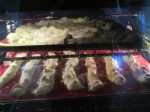
  7. Dust the top of the dough with flour and then stretch it out gently to a rough rectangle. Starting at one long edge, cut the dough into approximately 36 strips. Stretch each piece out until 20-25cm/8-10in long. Place six strips onto each of the prepared baking trays, spacing them apart.dough-cut-straightened-and-baking
  8. Bake the dough sticks for 10-15 minutes. Cool on wire rack.olive-loaf-completed-1