Recovering From a Disaster

Not often, but on rare occasion I have a baking disaster. Yesterday I wanted blueberry muffins and unfortunately used an old recipe. Apparently, there was a major error in the recipe as after two attempts I binned the results (along with the recipe) and headed to my go-to baker, Sally McKenny. (“Binned” is a term from GBBO where whatever didn’t work is tossed in the trash.)

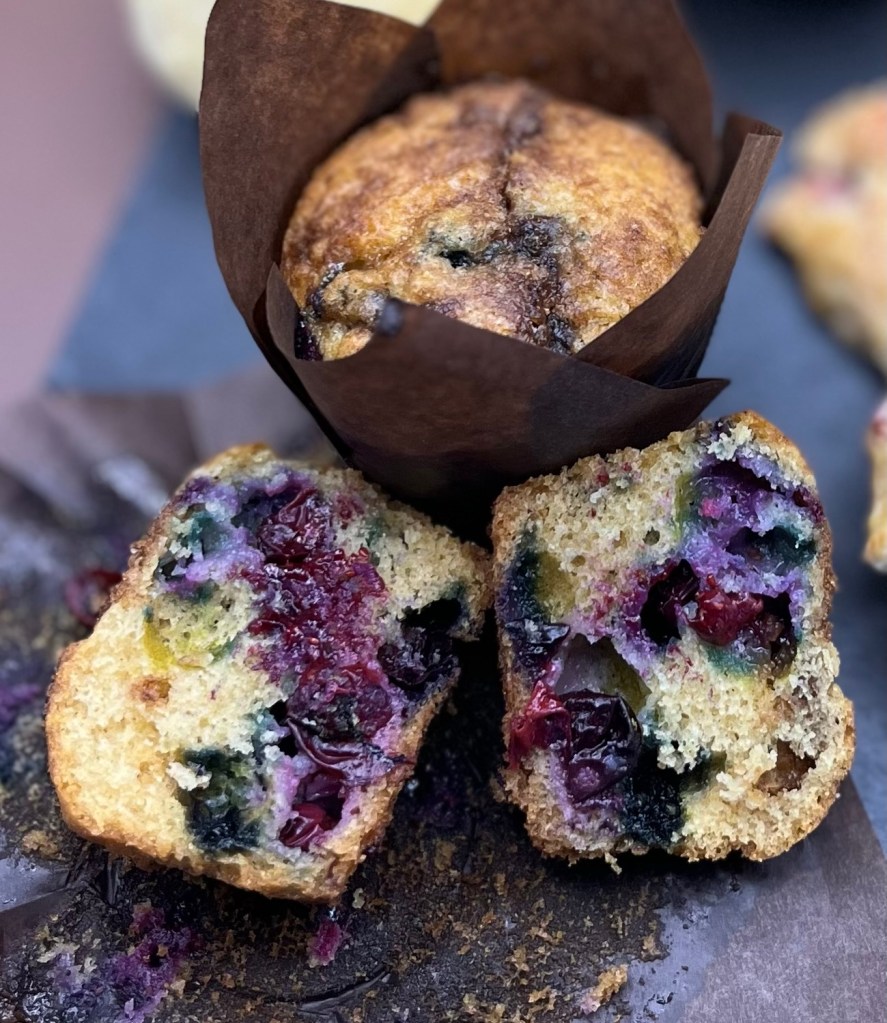
I wisely turned to Sally’s blueberry muffin recipe and they were overwhelmingly endorsed by the QC Cadre. (For any who do not know, the QC Cadre is composed of a number of my neighbors who volunteered to sample and review my bakes.)

If you can ignore the dropped berry scones and artisan no-knead rolls in the background, here are the blueberry muffins. I cannot recommend them strongly enough.

Scottish Oatcakes and Tangzong Artisan Bread

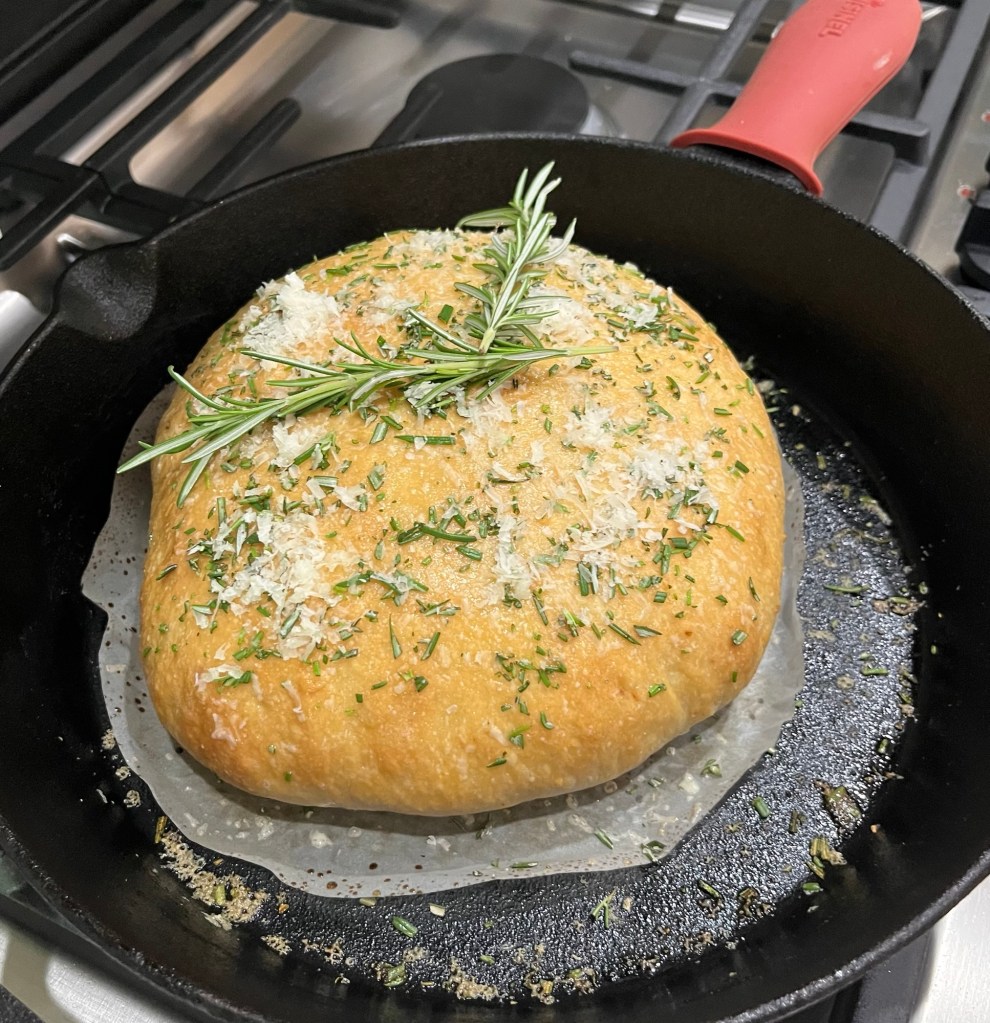
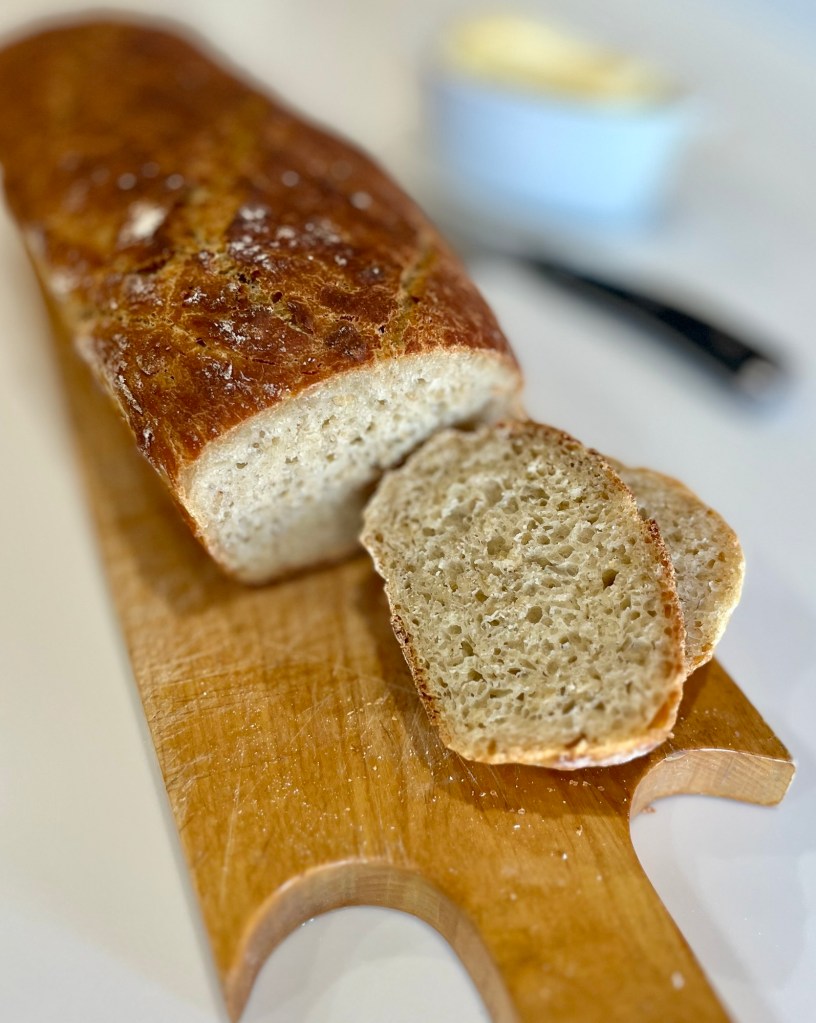
I wasn’t going to mention the artisan bread (as seen in the background) I made this morning, but I added a twist to the recipe. I use the Tangzong technique fairly often, but hadn’t used it on artisan bread. The standard method yields a bread that is 9.5 out of 10, so what is the point?

Tangzong pre-gelatinizes the starch in the flour, allowing it to absorb twice as much water than with cool water. Since there’s less free (unabsorbed) water in the dough, it’s less sticky and easier to knead plus it stays fresh longer, not that that is an issue here, over the past 2 weeks I made the artisan loaf every 2 or 3 days. For variety I did occasionally change from boule to batard.

I also made Scottish Oatcakes this morning. I read an article about them, which is all it ever takes for me. The bake resulted in 16 crisp “biscuits” (as cookies are called in the UK.) They be a nice change from all the cookies (but don’t worry, plenty of cookies coming up. I am doing another fund raiser in March and need to practice, practice, practice.)

Artisan Bread with Tangzong

INGREDIENTS

  • 450g (3 ¾ c) bread flour divided (For Italian Bread use AP flour))
  • 2 ¼ teaspoons instant yeast
  • 10g (1 ¾ tsp) kosher salt 
  • 360g (1 ½ c) warm water between 120°F and 130°F (360 grams)

METHOD

  1. In a large mixing bowl, whisk flour, yeast, and salt to combine.  Measure water into a small bowl
  2. Tangzong: Transfer 3 tablespoons of the measured flour and ½ cup of the measured milk or water into a saucepan and set over medium-high heat.
  3. Cook the mixture, whisking constantly until it thickens into a thick slurry (~1 minute.)
  4. Transfer the cooked mixture to a bowl until cool to lukewarm, then add remaining flour, milk (or water), and other dough ingredients combine with a dutch dough which until the mixture is very sticky, and no lumps of flour remain.
    1. Cover and place in a proofing oven until doubled in size, about 1 to 1 ½ hours.
  5. Preheat the oven to 450°F. Place a large dutch oven with a lid in the oven for at least 30 minutes.
  6. Using lightly floured hands, reach down one side of the dough to the bottom of the bowl, pull up, and stretch the edge of the dough over the center toward the opposite side. Turn the bowl 90 degrees and repeat the folding and turning, working in a circle around the dough until the dough starts to hold its shape, about 8 to 10 rotations. Pinch any seams together at the center of the dough ball.
  7. Turn out the dough onto a lightly floured surface, placing it seam side down. Shape into a boule or batard, depending on the intended use. Transfer the dough onto parchment paper lined banneton and sprinkle with flour. Loosely cover with plastic wrap or a tea towel for 10 minutes while the oven heats to 450°F. Place a large dutch oven with a lid in the oven while it preheats.
  8. Using a sharp knife or bread lame, cut a slit about ¼-inch deep across the top of the dough. Very carefully place the dough with the parchment paper directly into the preheated Dutch oven. Cover with the lid.
  9. Bake for 20 minutes. Remove the lid and bake until deeply golden brown and the internal temperature is about 195°F (~15 to 17 minutes more.) Carefully remove the bread from the Dutch oven using the parchment paper to help, and place on a wire rack to cool for at least 20 minutes before slicing


Tangzong

Tangzong pre-gelatinizes the starch in the flour, allowing it to absorb twice as much water than with cool water. Since there’s less free (unabsorbed) water in the dough, it’s less sticky and easier to knead

METHOD

  1. Measure out the total amount of flour and milk specified in the recipe.
  2. Transfer 3 tablespoons of the measured flour and ½ cup of the measured milk or water into a saucepan and set over medium-high heat.
  3. Cook the mixture, whisking constantly until it thickens into a thick slurry (~1 minute.)
  4. Transfer the cooked mixture to a bowl until cool to lukewarm, then add remaining flour, milk (or water), and other dough ingredients and proceed with the original recipe method.

Scottish Oatcakes

INGREDIENTS
• 226g quick-cooking oats (2 ½ c)
• 1 tsp kosher salt
• ¼ tsp baking soda
• 66g (6 Tbl) melted clarified butter
• ¾ c hot water, around 200ºF (93ºC)

METHOD

  1. In a medium bowl, stir oats, salt, and baking soda to combine. Add melted clarified butter or ghee to oat mixture and, using a flexible spatula, toss to evenly coat oats with fat. Add hot water and stir until mixture begins to thicken, 30 – 60 seconds. Let sit until oat mixture has hydrated and is slightly sticky, about 5 minutes.
  2. Using a flexible spatula, scrape oat mixture onto a 18×13” piece of parchment. Top with another 18×13” piece of parchment so oat mixture is sandwiched between and, using a rolling pin, roll oat mixture to ¼ “thick. Grab both ends of the parchment, set onto a 18×13” rimmed baking sheet, and freeze until mixture is firm but pliable, about 30 minutes. Line two 18×13” rimmed baking sheet with parchment; set aside.
  3. While the mixture is chilling adjust oven racks to second-from-top and second-from bottom positions and preheat to 350ºF (175ºC). 350ºF or 325ºF convection
  4. Set a clean piece of parchment on your kitchen counter. Remove oatcake mixture from freezer. Peel off top layer of parchment, then invert oatcake mixture onto prepared sheet of parchment. Using a 3-inch round cookie cutter, cut out 16 oatcakes. (Scraps can be rerolled, frozen, and punched out into additional oatcakes.) Transfer oatcakes to prepared baking sheets, spacing them about 1 inch apart, and bake until crispy and lightly browned, 30 to 35 minutes. Remove from oven and let cool completely before serving or storing.

Clarified Butter

INGREDIENTS
• 230g (2 sticks) unsalted butter, cubed

METHOD

  1. In a small saucepan, melt butter over medium-high heat.
  2. Continue to cook over medium-high heat; an even layer of white milk proteins will float to the surface.
  3. Bring to a boil; the milk proteins will become foamy.
  4. Lower heat to medium and continue to gently boil; the milk proteins will break apart.
  5. As butter gently boils, milk proteins will eventually sink to the bottom of the pot, and the boiling will begin to calm and then cease. Adjust heat as needed to continue boiling off water without scorching milk solids.
  6. Once boiling has stopped, pour butter through a cheesecloth-lined strainer or through a coffee filter into a heatproof container to remove browned milk solids.
  7. Let cool, then transfer to a sealed container and refrigerate until ready to use. Clarified butter should keep at least 6 months in the refrigerator.


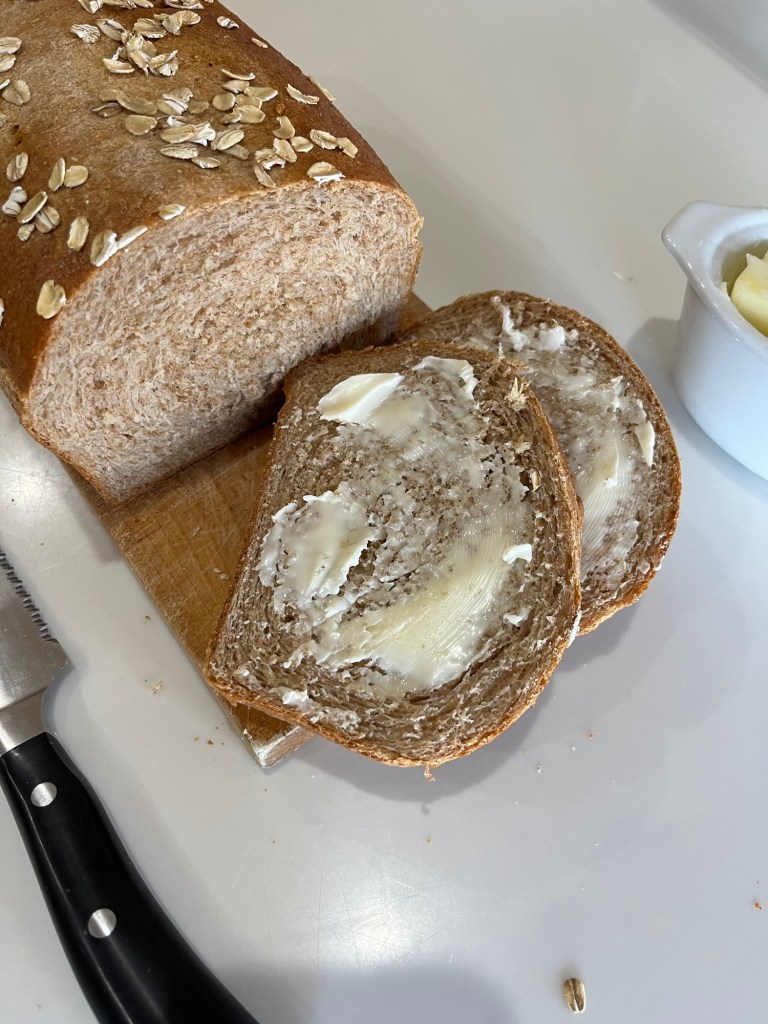
No-Knead Honey Oat Bread

Well, Sally did it again. I subscribe to the sallysbakingaddiction.com mailing list. Along with its featured content it contains links to other enticing bakes and I found one yesterday. First of all “no-knead” always catches my attention. It requires much less hands on action. “Oat” is a second tick in the box as I bought oats at Costco a couple of weeks ago and have lots and lots and lots to use. And finally, “honey” is my go-to sweetener. Plus, the smallest amount Costco sells is three jars!

This is a 92% hydration bread (360g water::390g flour) so do not expect it to behave like the way a 65% hydration bread will. The dough is so soft the lame (or knife) tears it, rather than cuts. You cannot tension the surface as you can with lower hydration bread, but I found freezing it for 30 minutes before baking then slashing helped.

All that being said, this is a delicious honey oat bread. (I am eating a QC test slice right now.) The hint-o-cinnamon sets it off perfectly. (To confirm the evaluation, I had to have a second slice.)

No-Knead Honey Oat Bread

https://sallysbakingaddiction.com/no-knead-homemade-honey-oat-bread/print/76423/
(Modified for my use.)

INGREDIENTS
• 390g (3 c) bread flour
• 85g (1 c) old-fashioned whole oats
• 1½ tsp Platinum Yeast from Red Star or any instant or active dry yeast
• 1½ tsp salt
• ½ tsp ground cinnamon
• 360g (1 ½ c water, close to room temperature at about 70°F (21°C)
• 128g (6 Tbl) honey
• 25g (30ml or 2 Tbl) vegetable oil (or other neutral tasting oil)

METHOD

  1. The evening before baking: In a large ungreased bowl, whisk 3 cups (390g) bread flour, the oats, yeast, salt, and cinnamon together. Set aside. In a medium bowl or large liquid measuring cup, whisk the water, honey, and oil together. Pour water mixture into flour mixture and gently stir together with a dutch dough whisk, silicone spatula or wooden spoon to combine. Dough will be heavy and very wet/sticky. Do not overwork dough.
  2. 1st rise: Cover the dough tightly with plastic wrap or aluminum foil and set on the counter at room temperature for 12-18 hours. (See note if you need to extend this time.) You want it to almost double in size during this time.
  3. Gently shape: Turn the dough out onto a lightly floured work surface and, using lightly floured hands, shape into a ball as best you can. Transfer dough to a large piece of parchment paper. Lift the parchment paper and dough up and place it all into a banneton (oval or round depending on the shape of your dutch oven.) Using a very sharp knife or bread lame, gently score an X into the top. Cover dough lightly with plastic wrap and leave alone for 30 minutes. (The dough is very slack, typical of a 90+% hydration bread. To firm the surface of the dough I put it, still in the banneton, into the freezer for 30 minutes, then slashed it.
  4. Bake: Heat the oven, with dutch oven and lid inside, to 425°F (218°C) for 30 minutes. After 30 minutes place the dough inside the dutch oven by lifting it up with the parchment paper and sticking it all–the parchment paper included–inside the pot.
  5. Cover with the lid. Bake for 30 minutes with the lid on. Carefully remove the lid and continue baking for 10-12 more minutes or until the bread is golden brown. The bread is done when an instant read thermometer reads the center of the loaf as 195°F (90°C).
  6. Remove dutch oven from the oven, carefully remove the bread, and allow to cool on the counter for 30 minutes before breaking/slicing/serving.
  7. Cover leftover bread and store at room temperature for up to 3 days or in the refrigerator for up to 10 days.

NOTES

  1. Make Ahead Instructions: This recipe is wonderful for making ahead because the 1st rise time (step 2) is so long. If needed, you can extend the 1st rise time by letting the dough rest in the refrigerator instead of at room temperature for up to 18 hours. Then, after refrigerating, let the dough sit at room temperature to warm and rise, about 4-6 hours. You want it to mostly double in size during this time. Do not extend these times further because the dough may begin to deflate.
  2. Freezing Instructions: Prepare recipe through step 4 and feel free to use a disposable loaf pan since it will be going into the freezer. Cover loaf tightly and freeze for up to 3 months. On the day you serve it, let the loaf thaw and rise for about 5 hours at room temperature. Bake as directed. You can also freeze the baked bread loaf. Allow the bread to cool completely and then freeze for up to 3 months. Thaw in the refrigerator or at room temperature and reheat if/as desired.
  3. If You Want to Top with Oats or Cinnamon-Sugar: If you want to top the dough with oats prior to baking, carefully brush the dough after the 2nd rise (step 5) with 1 egg white beaten with 1 Tbsp water, and then sprinkle 2 Tbsp of oats on top. (The oats do not stick without the egg white and the bread will no longer be egg-free by doing this.) You can skip the egg white/oats and sprinkle cinnamon-sugar on top instead. Combine 1 Tablespoon granulated sugar and 1/8 teaspoon cinnamon. Sprinkle on top of the loaf right before baking.

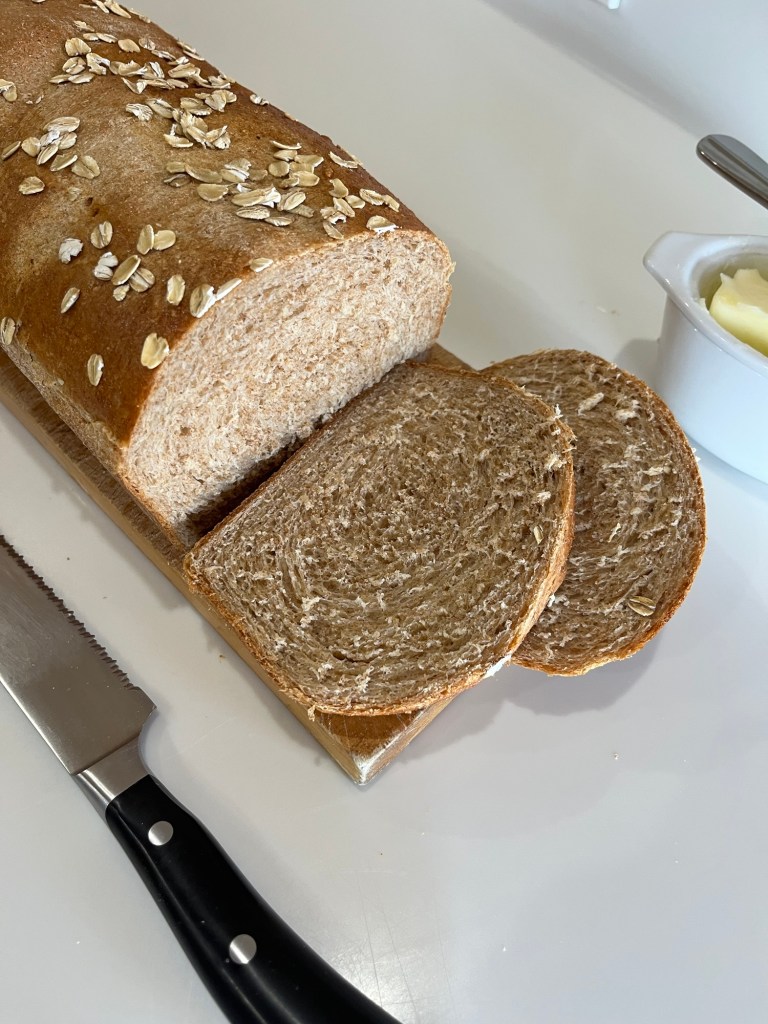
Whole Wheat Bread – Sally

Sally, owner and author of Sallysbakingaddiction.com, writes her blog to teach newbies and help oldies with their baking. I usually modify her recipes for my own personal, selfish use. For more details and tips and tricks refer to Sally and not me.

This is a beautiful bread with chewy crust and soft tender interior. I did use 50:50 whole wheat and bread flours in the sponge.

Whole Wheat Bread – Sally

INGREDIENTS
Sponge
• 1 cup (240ml) water, warmed to about 110°F (43°C)
• ⅓ cup (80ml) whole milk, warmed to about 110°F (43°C)
• 2 ¼ teaspoons (7g) active dry or instant yeast
• 2 cups (260g) whole wheat flour
• Optional: 130g (1 c) whole wheat flour and 130g (1 c) bread flour
Dough
• 3 Tablespoons (63g) honey
• 3 Tablespoons (43g) RT unsalted butter,
• 1 teaspoon fresh lemon juice (or apple cider vinegar)
• 1 ⅓ cups (173g) whole wheat flour (plus more as needed
• 1 and 1/4 teaspoons salt
• optional oat topping: 1 beaten egg white + 1 Tablespoon whole oats

METHOD

  1. Prepare the sponge: In a large bowl or the bowl of your stand mixer, whisk the water, whole milk, and yeast together. Add the 2 cups (260g) flour and stir with a spatula or wooden spoon until a thick batter forms. Cover lightly and allow to double in size at room temperature, about 60–90 minutes. Sometimes this can take up to 2 hours.
  2. Add the remaining dough ingredients including the honey, butter, lemon juice, remaining flour, and the salt. With a dough hook attachment or using a spatula or wooden spoon (and some arm muscle!), beat on medium speed/mix until the dough comes together and pulls away from the sides of the bowl, about 3 minutes. If the dough seems too wet to a point where kneading (next step) would be impossible, beat in more flour 1 Tablespoon at a time until you have a workable dough. Dough should be soft and a little sticky, but still manageable to knead with lightly floured hands. It took 4 Tbl added a minute or so apart for the dough to clear the sides of the mixer bowl and knead properly.
  3. Knead the dough: Keep the dough in the mixer and beat for an additional 8–10 full minutes or knead by hand on a lightly floured surface for 8–10 full minutes. If the dough becomes too sticky during the kneading process, add 1 more Tablespoon of flour at a time to make a soft, slightly tacky dough. Do not add more flour than you need; you do not want a dry dough. After kneading, the dough should still feel a little soft. Poke it with your finger—if it slowly bounces back, your dough is ready to rise and/or do a “windowpane test” to see if your dough was adequately kneaded.
  4. 1st rise: Lightly grease a large bowl with oil or nonstick spray. Place the dough in the bowl, turning it to coat all sides in the oil. Cover the bowl and allow the dough to rise in a proofing oven or other warm environment for 1.5–2 hours or until about double in size.
  5. Grease a 9×5-inch loaf pan.
  6. Shape the dough: When the dough is ready, punch it down to release the air. Lightly flour a work surface, your hands, and a rolling pin. Roll the dough out into a large rectangle, about 8×15 inches. It does not have to be perfect—in fact, it will probably be rounded on the edges. That’s ok! Roll it into an 8-inch log and place in the prepared loaf pan, seam side down.
  7. 2nd rise: Cover shaped loaf. Allow to rise until it’s about 1 inch above the top of the loaf pan, about 45–60 minutes.
  8. Adjust oven rack to a lower position and preheat oven to 350°F (177°C). It’s best to bake the bread towards the bottom of the oven so the top doesn’t burn.
  9. Optional oat topping: If you want to add the optional oat topping, add it right before baking the bread. With a pastry brush, brush the risen loaf with egg white, then sprinkle the oats on top.
  10. Bake the bread: Bake for 36–40 minutes, or until golden brown on top. If you notice the top browning too quickly, loosely tent the pan with aluminum foil. (I usually add it around the 20-minute mark.) To test for doneness, if you gently tap on the loaf, it should sound hollow and the center of the loaf is 195–200°F (90–93°C). Remove from the oven and allow bread to cool for a few minutes in the pan on a cooling rack before removing the bread from the pan and slicing. Feel free to let it cool completely before slicing, too.
  11. Cover leftover bread tightly and store at room temperature for up to 1 week.

Notes

  1. Freezing Instructions: Prepare recipe through step 6. Place shaped loaf in a greased 9×5-inch loaf pan or disposable loaf pan, cover tightly, and freeze for up to 3 months. On the day you serve it, let the loaf thaw and rise for about 4–5 hours at room temperature. Bake as directed. You can also freeze the baked bread loaf. Allow the bread to cool completely, then freeze for up to 3 months. Thaw in the refrigerator or at room temperature, then reheat as desired.
  2. Overnight Instructions: Prepare the recipe through step 6. Cover the shaped loaf tightly and refrigerate for up to about 15 hours. At least 3 hours before you need the bread the next day, remove from the refrigerator, keep covered, and allow to rise on the counter for about 1–2 hours before baking. Alternatively, you can let the dough have its 1st rise in the refrigerator overnight. Prepare the dough through step 3, then cover the dough tightly and place in the refrigerator for up to 12 hours. Remove from the refrigerator and allow the dough to fully rise for 2 more hours. Continue with step

    Sally’s Baking Addiction – Ciabatta – Jan 2025

    I just typed the year for the first time and got it right!

    Sally set this month’s challenge as ciabatta bread. Her recipe is based on KAB’s, but with a few minor changes that makes the method easier but remains fantastic. In the past I used KAB’s recipe and method but I am now a Sally convert. (As I am with so many other fantastic bakes.)

    There are a lot of steps in this bake, making it intermediate level difficulty . Follow Sally’s directions (which I modified very, very slightly) and you too can enjoy this amazing bread.

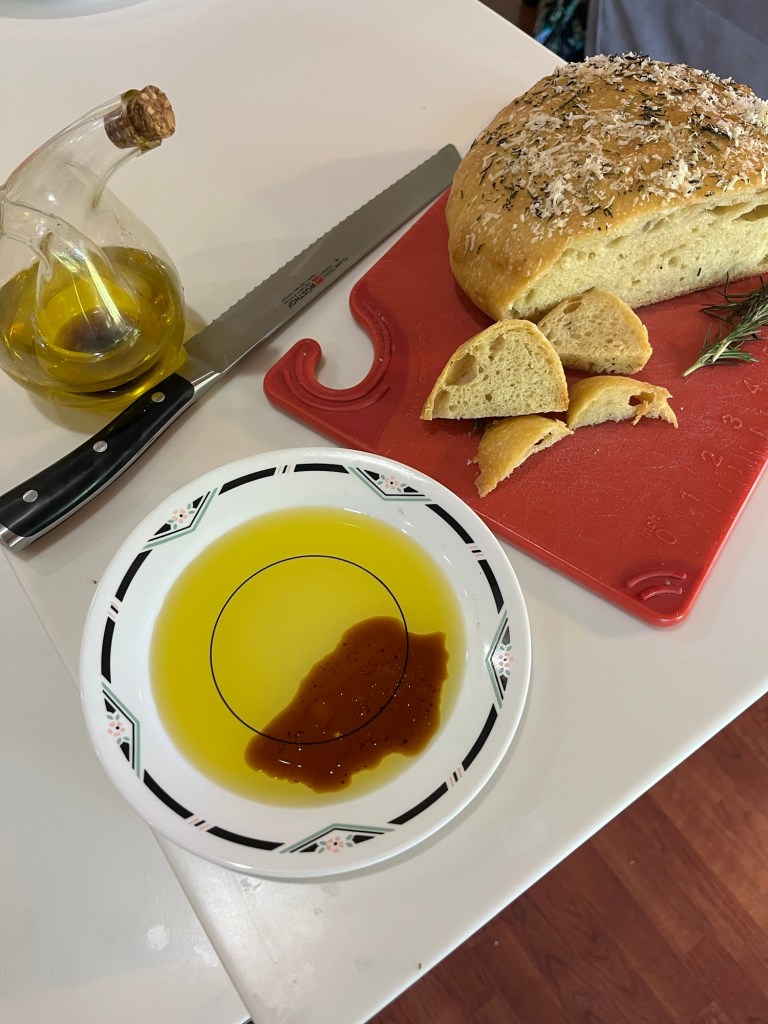
    Good with or without butter, with or without oil and vinegar. I know, I tried it both ways.

    Homemade Ciabatta Bread -Sally


    INGREDIENTS
    Biga/Preferment
    • 130g (1 c) bread flour
    • 1/8 tsp active-dry or instant yeast
    • 120g/ml (½ c) room-temperature water (about 70°F)
    Ciabatta Rolls
    • 3g (1 tsp) active-dry or instant yeast
    • 240g (1 c) warm water (about 100–110°F)
    • 325 (2 ½ c) bread flour, plus more as needed
    • 8g (1 ½ tsp) table salt
    • olive oil, as needed for coating hands and spatula

    METHOD
    Day 1: Make the biga/preferment:

    1. In a large mixing bowl, whisk together the bread flour and yeast.
    2. Add the water and mix with a silicone spatula until combined.
    3. Cover the bowl tightly with plastic wrap and let rest at room temperature for 8–24 hours.
      Day 2: Make the dough:
    4. Uncover the bowl with the biga. In a separate large mixing bowl whisk together the yeast and warm water.
    5. Cover and let sit for 5 to 10 minutes until the yeast has dissolved.
    6. Add the biga, flour, and salt. Gently mix together with a silicone spatula or Dutch bread whisk. The dough will seem dry and shaggy at first but keep working it until all the flour is moistened and the dough is uniform in texture (no dry pockets). If needed, lightly grease your hands with olive oil and gently knead the ingredients together in the bowl. The dough will be wet and sticky; that’s normal, expected, and encouraged.
    7. 1st rest: Cover the bowl and let the dough rest for 30 minutes at room temperature.
    8. 1st stretch-and-fold: Visualize a clock on top of your dough. You’ll be folding it at the 12 o’clock mark. With an olive oil-greased spatula or lightly oiled hands, lift up the dough at 12 o’clock and gently stretch it up and pull it toward the opposite side of the bowl (6 o’clock), folding it down over the dough. Turn the bowl 90 degrees and repeat. Do this until you’ve gone around the bowl twice, for a total of 8 folds. Cover the bowl and let rest for 30 minutes at room temperature.
    9. Remaining stretch-and-folds: Repeat step 8 three more times, allowing the dough to rest for 30 minutes between each. Use a coil fold for the 4th stretch-and-fold then cover the bowl and place it in the refrigerator for at least 1 hour and up to 24 hours.
    10. Shape the rolls/bread: Very generously flour your counter or work surface. Using lightly oiled hands or a lightly oiled spatula, gently scrape the dough out of the bowl and onto the floured surface. Generously sprinkle flour on top of the dough. Using floured hands, gently stretch and shape the dough into a rough rectangle shape, about 10×7 inches in size.
      a. For 8 rolls: With a floured bench scraper, cut the dough into 8 pieces each around 2.5×3.5 inches.
      b. For 2 loaves: With a floured bench scraper, cut the dough in half to make two 5×7-inch (or 10×3.5-inch) rectangles.
    11. Lightly flour a piece of parchment paper. With floured hands, and using the floured bench scraper to help, lift the sticky dough pieces up and transfer them to the floured parchment, arranging them at least 2 inches apart to make room for expanding. Take care to be extra gentle because you don’t want to deflate the dough. If the pieces of dough lost shape during the transfer, gently reshape into rectangles.
    12. Proof Before Baking: Lightly sprinkle flour over the rolls, and then gently cover them with a clean kitchen towel or piece of parchment paper. Let rest at room temperature for 1 hour.
    13. Meanwhile, position one oven rack in the very bottom position and another rack in the center/middle position. Place a flat cookie sheet or a rimmed baking sheet on the center rack. Preheat the oven to 450°F (232°C). You want your oven and baking surface to be heating for about an hour before the bread goes in.
    14. When ready to bake, scatter several cups of ice cubes in a large shallow metal roasting pan, cast-iron skillet, or rimmed baking sheet (do not use glass). Uncover the rolls and lightly spray or flick them with a little water. (This is optional, but it helps create even more steam, which promises a crispier crust.) Working quickly, carefully remove the preheated baking sheet from the oven and slide the parchment paper and proofed bread onto it. Place back in the oven. Slide the pan with the ice cubes onto the bottom oven rack and quickly close the oven door, trapping the steam from the melting ice inside.
    15. Bake for 20–22 minutes, or until the bread/rolls are golden brown. I usually extend this time to 25 minutes, for a deeper golden color. Gently tap the bread—if they sound hollow, they’re done. For a more accurate test of doneness, the bread is done when an instant-read thermometer inserted in the bread reads 205°F (96°C) to 210°F (99°C).
    16. Remove the rolls from the oven and allow to cool for at least 45 minutes before slicing and serving. If you cut into the bread too early, it will likely have a gummy texture.
    17. Store leftovers loosely covered at room temperature for up to 5 days or in the refrigerator for up to 1 week.

      Notes
    18. Make Ahead & Freezing Instructions: There are many ways to make this dough ahead of time. First, in step 1, the biga can sit for up to 24 hours. Second, in step 5, after you have completed all of the stretch-and-folds, the dough can sit in the refrigerator for up to 24 hours. You can also bake the bread, allow it to cool, and freeze for up to 3 months. Thaw at room temperature before serving.
    19. Flour: For absolute best flavor and chewy texture, I strongly recommend using bread flour. You can use a 1:1 substitution of all-purpose flour in a pinch with no other changes to the recipe, however the dough may not be as strong, and may not hold shape very well. Do not use whole-wheat flour in this dough.
    20. Yeast: You can use instant or active dry yeast, but I highly recommend an instant (aka “rapid rise” or “quick rise” yeast). If using active dry yeast, there are no changes needed to the recipe.
    21. Adding Herbs/Flavors: Fresh or dried herbs are best for flavoring this dough. My favorite is fresh or dried rosemary with a little garlic. When adding the salt in step 2, add 2 and 1/2 teaspoons fresh chopped rosemary or 1 teaspoon dried, plus 2 minced garlic cloves. Feel free to replace the rosemary with another herb, and/or leave out the garlic.
    22. Can I Bake on a Pizza Stone? Yes. If you want to bake your bread/rolls on a pizza stone, place the pizza stone in the preheating oven for 1 hour. In step 10, place the shaped and scored dough on your preheated pizza stone. Bake as directed.
    23. Can I Use This Dough for Focaccia? Yes. Generously grease a 9×13-inch baking pan with olive oil. After completing step 5, pour the dough into the greased pan. Flip to coat all sides in the oil. Stretch and flatten the dough to fit the pan, being careful to avoid tearing the dough. If it’s shrinking back as you try to stretch it out, cover with a clean towel and let it rest for 5–10 minutes before continuing. This lets the gluten settle and it’s much easier to shape after that. Continue with step 7 in my focaccia recipe.

    Azerbaijan Based Enriched “Simit-like” Bread

    After Friday’s QC Cadre Fete I took this past Saturday and Sunday off. So back in the bakery this morning I made a new bread. It’s based on a blend of Azerbaijani and Turkish breads. My friend Maggie sent me a video of a rural Azerbaijani woman making bread that looks like this but only showed ingredients but no amounts or temperatures etc. I am sure the woman knows the amounts by looking at and feeling the dough. I do not.

    Turkish “simit” was the closest bread I could find, but the ingredients and method were totally different from the bread in the video. I figured out the method based on the video and calculated the amounts, times and temperatures myself. Basically, it is not a “simit” but it’s a good a name as any until some Azerbaijani corrects me.

    I also add a Tangzhong to increase the bread’s shelf life and make it softer.

    The QC Cadre feels this may be the best bread ever (although my Pain de Cristal is very good, different but very, very good!)

    Azerbaijan Enriched “Simit” Bread

    INGREDIENTS
    Tangzhong
    • 60g (½ c) bread flour
    • 320g (1 ⅓ c) whole milk (I use 2% milk plus ¼ c whole cream)
    Dough
    • 720g (6 c) bread flour plus 60g reserved to add to the dough as it kneads in case its too sticky
    • 240g (1 c) warm water (~115F)
    • 56g (4 Tbl) olive oil
    • 2 large eggs
    • 100g (½ c) sugar
    • 18g (4 tsp) yeast
    • 2 tsp kosher salt
    • 104g (8 Tbl) softened unsalted butter
    Egg Wash
    • 3 large eggs, divided
    • 2 Tbl water

    METHOD

    1. In a small saucepan mix the tangzhong ingredients and heat while constantly whisking until the mixture looks like smooth mashed potatoes. (~2-3 minutes)
    2. Add tangzhong to the bowl of a stand mixer and sift remaining 720g of flour into the bowl
    3. Add warm water and oil into the flour
    4. Add egg, sugar, yeast, salt (not on top of yeast) and softened (but not melted butter)
    5. Mix well with Dutch whisk to combine and make a shaggy dough being sure all the butter is incorporated.
    6. Knead the soft, pliable dough (KitchenAid mixer speed 4 for 10 minutes.) If necessary, add more flour 20g at a time to help kneading.
    7. Remove dough from the mixer bowl (it will be very sticky) then oil the bowl and return the dough, flip it over to coat both sides of the dough with oil then cover and let rise until doubled. (~45- 60 min. I use an oiled proofing bucket)
    8. Dump from bowl onto lightly floured work surface. My dough weighed 1687g,
    9. Punch it down to de-gas then divide the dough into 9 pieces ~180-190g. (9 pieces 187g each)
    10. Reserve 2 balls for the roses and 7 for the coils.
    11. Let the 2 balls rest at room temperature and 7 balls rise, covered in a warm place.
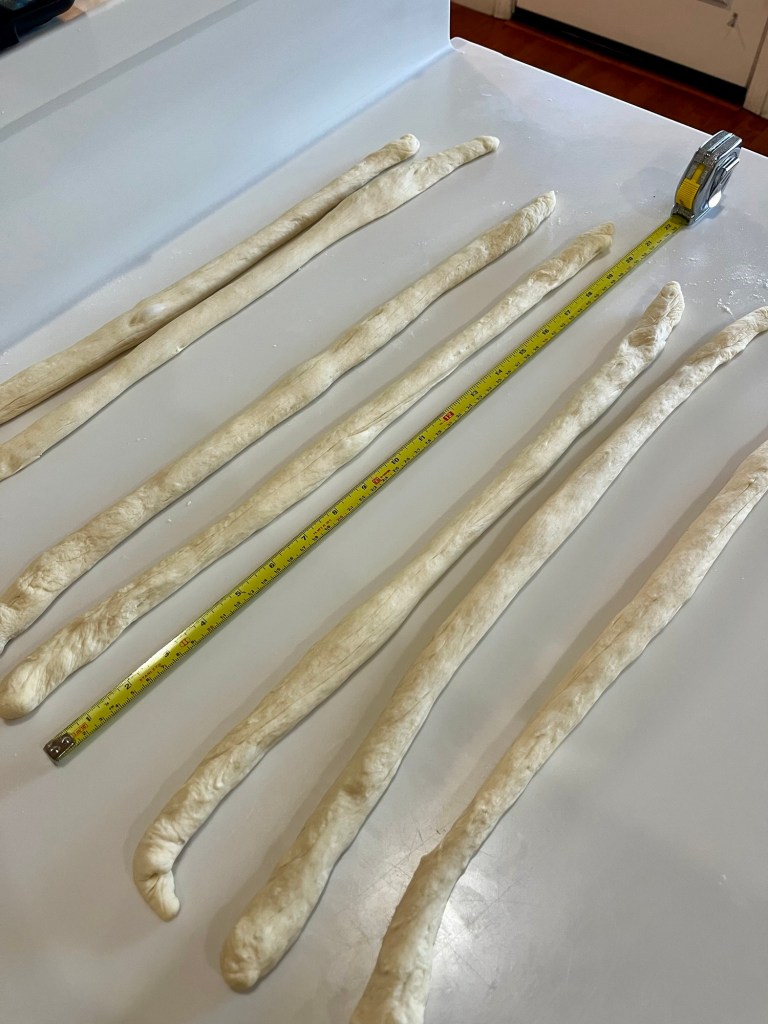
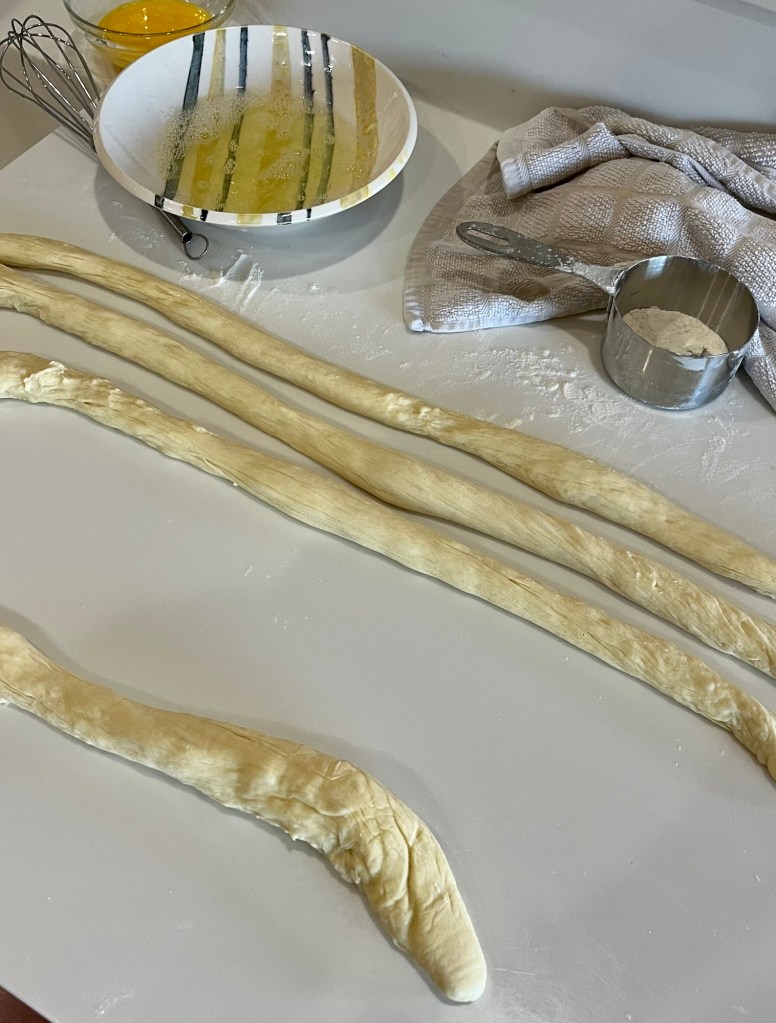
    12. Working with 1 at a time (leave the rest covered,) roll each ball into a rope ~12” long, then let the rope rest as you shape the rest of the rolls. Repeat the roll/rest until you can roll the rope to ~36” long. (48” would be better.) The rope thickness should be ½-3/4” thick
    13. Form a ~5” diameter loop with one end and coil the end under and around a couple of times.
    14. Coil the other end around the rest of the loop and tuck the end under
    15. Cover and let rest
    16. Roll each of the two reserved balls into a large circle ~2mm thick on a lightly floured surface, like a thin pie crust. ~12” diameter yields ~12 three-inch circles. Let the dough rest once or twice to reduce shrinkage during rolling.
    17. Cut 4” long ovals (they may be circles, distorted by the angle of the camera) and stack 6 over-lapping leaving ½ to ⅓ uncovered
    18. Roll up, then cut in half, placing cut end on the table and spreading the loose end to resemble a rose. Don’t let the roses rise.
    19. Use scraps if necessary to make extra roses.
    20. Preheat oven to 375. degrees
    21. Separate ~3 eggs, first whisk the whites then whisk in ~2 tbl water
    22. Whisk the yolks and 1Tbl water to make an egg wash
    23. Dip one side of each coil into the egg-white wash, then dredge that side in the sesame seeds and set on a parchment paper lined baking pan sesame side up
    24. Place a dough rose inside each coil and egg wash the rose with egg yolk wash
    25. Bake until done. (~20-25min) They should be a golden brown with the egg washed roses darker. (~190F)

    QC Cadre Fete

    Yesterday we held our first ever QC Cadre Fete at our house. For those not in the know the Quality Control Manager (QC) is my wife, Fran. The QC Cadre incudes all our immediate neighbors, and significant others. To thank everyone for their reviews over the past year I made a selection of heretofore untried pastries and bread.

    From front to back are” Snowflake Bread, fig newtons and raspberry filled profiteroles, chocolate glazed chocolate filled chocolate tarts with a croustillant layer and finally gingerbread millionaires bars.

    Sadly, I pulled the gingerbread millionaires bars before the fete began. I over cooked the caramel and while it tasted good, it was a very hard crack and once you started to chew it, your mouth could be glued shut. As I said, this was the first attempt at each bake so accidents will happen, but not again!

    Chocolate Orange Snowflake Bread

    INGREDIENTS
    For the Dough:
    • 1c milk, plus 1 tbsp extra
    • 30g (2 Tbl) cubed butter
    • 2 Tbl olive oil
    • 2 Tbl sugar
    • 7g (2 ¼ tsp) instant yeast
    • 175g AP white
    • 175g bread flour, plus extra for dusting
    • 1 tsp cinnamon
    • A pinch of salt
    • 1 orange, zested?
    For the Filling:
    • 100g cream cheese
    • 2 Tbl sugar
    • 2 Tbl cacao powder
    • 1 Tbl cinnamon
    • 1 Tbl cornstarch
    • 1 orange, zested
    For Decoration
    • Candy orange peel

    METHOD

    1. Combine the milk and butter and warm until just melted and lukewarm. Stir in the olive oil, sugar, and yeast. Let rest for 5 minutes.
    2. In a large bowl whisk flour, cinnamon, and salt. Pour in the yeast-milk and bring to a shaggy dough with a spoon. Tip onto a lightly floured work surface and knead for 1 minute to make a smooth ball of dough. Place in a lightly greased bowl, cover and leave somewhere warm for 30 minutes, to rise. Meanwhile, pre-heat the oven to 350ºF.
    3. Whisk together all the filling ingredients until smooth (you can microwave the mix for 10 seconds, if needed, to make it smoother to combine).
    4. Punch down the dough and form into 2 balls. (I like to weigh the dough and divide the total weight by 2 to make equal sized balls. My dough weighed 1630 g therefore, each ball should be ~815g.)
    5. Divide each ball into two smaller balls, each ~400g and form each into a rough circle ~6” diameter, then roll out into circles ~10”
    6. Place one circle down and coat with 1/3rd of the filling, leaving the outer 1” un-coated. Repeat for the next two layers and leave the top layer uncoated.
    7. Center a 10” cake pan and trim the circles to an even circle.
    8. Set a 3” bowl in the center of the stack of circles and press down making an impression
    9. Cut the dough from the perimeter to the outside of the 3” circle into 16 equal portions
    10. Twist adjacent portions away from each other and pinch the ends into a point
    11. Snip each dendrite is several places to form fronds, or feathers.
    12. Cover and let rise 20-30 min.
    13. Beat the egg with 1 Tbl water to use as the egg wash
    14. Brush the pastry evenly with the 1 tbsp egg wash and place in the middle of the oven for 22-25 minutes, until well-risen, golden and springy.
    15. Remove from the oven sprinkle with candied orange peel and cool for 20 minutes.

    Homemade Fig Newtons

    INGREDIENTS
    • 1 pint fresh or preserved figs or 12 ounces dried figs 2 Pints
    • 1 ½ cups AP flour 3 cups
    • ¼ teaspoon baking powder ½ tsp
    • ¼ teaspoon salt ½ tsp
    • ¼ tsp ground cinnamon ½ tsp
    • 1 stick butter 2 sticks
    • 1/3 cup sugar 2/3 cup
    • 1 egg 2
    • 1 teaspoon vanilla extract 2 tsp
    • 2 tablespoons orange juice 4 Tbl
    If you are using:
    • Fresh figs: Remove stems and boil figs with 2 cups of sugar in 1 cup of water for 45 minutes. Drain and cool. This seemed to be too much sugar and water. Try cutting in half. If too thin, cook down until temp reaches about 210.
    • Dried figs: In a bowl, pour boiling water over figs (stems removed) and let rest 10 minutes. Drain all but 2 tablespoons water and stir in 2 tablespoons corn syrup + ¼ teaspoon cinnamon.
    • Preserved figs: Drain syrup.

    METHOD

    1. Puree figs in food processor into a thick paste (if too thick or thin to spread evenly, add a little water or flour until spreadable consistency is reached).
    2. Combine flour, baking powder, cinnamon, and salt together and set aside.
    3. Cream butter and sugar in a mixing bowl.
    4. Add egg and vanilla, mix until smooth
    5. Add orange juice and combined dry ingredients to bowl and mix until dough forms.
    6. Optional: form dough into a flat thick disk and chill to set butter and make it easier to roll and fold.
    7. Roll dough out on a floured surface into an 8”x14” rectangle about ¼” thick.
    8. Cut rectangle in half lengthwise.
    9. Spread fig paste onto half of each rectangle, lengthwise.
    10. Cut the rectangle in half crosswise, or even thirds to facilitate folding.
    11. Fold dough in half lengthwise to cover fig paste and pinch edges to seal.
    12. Slide each newton log onto a parchment lined baking sheet.
    13. Bake 25 minutes at 350 degrees until crust begins to brown.
    14. Slice into cookie-sized segments and cool. Slice while warm to reducing flaking.

    Raspberry Italian Meringue Profiteroles

    INGREDIENTS
    Choux Pastry:

    • ½ c (65 grams) AP flour
    • ½ tsp granulated white sugar
    • ¼ tsp salt
    • 4 tbsp (55 grams) unsalted butter, cut into pieces
    • ½ c (120 ml) water
    • 2 large eggs, lightly beaten
    Raspberry Italian Meringue
    • egg whites room temperature
    • 2/3 cup caster sugar
    • 1/4 cup water
    • 1/4 teaspoon cream of tartar
    • 2 drops raspberry flavor
    • 1-2 drops red food coloring
    • Optional: 1 tsp freeze dried raspberry powder
    Chocolate Glaze:
    • 2 ounces (55 grams) semisweet chocolate, finely chopped
    • ¼ c (60 ml) heavy “whipping” cream (cream with 35% butterfat content)
    • ¼ tsp pure vanilla extract
    • ½ tbsp light corn syrup (or golden syrup or glucose)

    METHOD

    1. Preheat oven to 375o F (190o C) and place rack in center of oven.
    2. In a bowl whisk the flour with the sugar and salt.
    3. Place the butter and water in a saucepan over medium high heat and bring to a boil.
    4. Remove from heat and, with a wooden spoon, add the flour mixture, all at once, and stir until combined. It will look like mashed potatoes. Return saucepan to the heat and stir constantly until the dough comes away from the sides of the pan and forms a thick smooth ball (about 1-2 minutes). The dough will film the bottom and sides of the saucepan and make cleaning a pain.
    5. Transfer the dough to an electric mixer and beat on low speed to release the steam from the dough (about 1 minute).
    6. Once the dough is lukewarm start adding the lightly beaten eggs (dough will separate and then come together) and continue to mix until you have a smooth thick paste (dough will fall from a spoon in a thick ribbon).
    7. Place the dough in a pastry bag fitted with a large plain tip and pipe round mounds of dough (about 1 ½ inch) onto the parchment lined baking sheet. (When piping, hold the bag at a 90-degree angle, ie straight up.)
    8. Bake for 15 minutes and then reduce the oven temperature to 350o F (180o C).
    9. Remove from oven, pierce the bottom of each profiterole with a small skewer to release the interior steam.
    10. Continue to bake for a further 25 minutes or until the shells are a nice amber color and when split, are almost dry inside. Remove from oven and place on a wire rack to cool.
      Raspberry Italian Meringue
    11. Wipe down all tools with white vinegar or lemon juice to remove any trace of fat.
    12. Place sugar and water mixture over medium heat for 5 minutes. Do not stir it at all during this time. The mixture will look cloudy.
    13. Gently stir the mixture for 1 minute. There should be little to no granules of sugar left at this point.
    14. Once the mixture begins to bubble from the bottom, 3 to 5 minutes, place the digital thermometer in the pot and increase to medium-high heat. Do not stir it at all after this.
    15. In the bowl of an electric mixer, whip the eggs whites on low speed until foamy. Add the cream of tartar, increase the speed to medium and beat until soft peaks form.
    16. Allow the sugar mixture to come to a boil and watch carefully. Once it reaches 230 °F turn stand mixer on highest speed to whip egg whites to peaks.
    17. Once the sugar syrup reaches 240 °F, remove from heat and remove the probe. This takes about 4- 6 minutes.
    18. Allow the boiling to come to a slow bubble before moving on.
    19. Slowly pour sugar syrup (steady stream) into whisked egg whites. Avoid the whisk attachment or it will fling your mixture all over the bowl.
    20. Allow mixture to whisk for another 3-5 minutes until the mixer bowl is cool/room temperature to the touch.
    21. Add raspberry flavoring and if desired, the freeze-dried raspberry powder. (In my first attempt at adding the powder I added it prior to adding the sugar syrup and it ruined the soft peaks. I think adding at the end should work.)
      Chocolate Glaze:
    22. Place the chocolate in a heatproof bowl.
    23. Heat the cream just until boiling and immediately pour it over the chocolate.
    24. Gently stir until the chocolate has melted.
    25. Stir in the vanilla extract and corn syrup, mixing to ensure incorporation.To complete:
    26. Fill a piping bag equipped with a filling tip (such as Wilton 230). Inject crème pat into the hole you made to allow the steam to escape. When you feel the side of the profiterole begin to bulge, the éclair is full.
    27. Dip the top of each profiterole into the warm, thin ganache and set on a piece of waxed or parchment paper to dry. (I use the parchment paper previously used to line the baking sheet.)

    Gingerbread Millionaire Bars

    INGREDIENTS
    FOR THE GINGER SHORTBREAD BOTTOM:
    • 1 c butter
    • ½ c packed dark brown sugar
    • ¼ c (85g) un-sulfured molasses
    • 1 large egg
    • 1 tsp cinnamon
    • 1 tsp powdered ginger
    • ¼ tsp cloves
    • ½ tsp salt
    • 2 ½ c all-purpose flour
    FOR THE CHEWY CARAMEL:
    • ¾ cup packed light brown sugar
    • ⅓ cup sweetened condensed milk
    • ⅓ cup butter
    • 3 tbsp. golden cane syrup (or honey as a substitute)
    • 1 tsp. flaky sea salt
    FOR THE CHOCOLATE TOP:
    • 7 oz dark chocolate, chopped

    METHOD

    1. Preheat oven to 350°F. Grease and line a 9×9 baking pan with parchment paper.
    2. In a standing mixer fitted with a paddle attachment, cream the butter, brown sugar, and molasses together until light and fluffy, about 2 minutes.
    3. Add in the egg, spices, fresh ginger, and salt, whipping an additional minute. Fold in flour, mixing only until combined.
    4. Transfer dough to prepared baking pan, patting down evenly. Bake for 15-18 minutes, until a knife inserted in the center of the shortbread comes out clean. Allow to cool while you make your caramel.
    5. In a small saucepan over medium low heat, combine the sweetened condensed milk, sugar, and honey. Use a rubber spatula to mix slowly but continuously for about ten minutes. The mixture will slowly turn a light golden color and begin to pull away from the sides of ithe pan. Heat until mixture reaches a nice golden caramel color then add the butter and mix until incorporated, then remove from heat and mix in salt.
    6. Pour mixture over ginger shortbread and use spatula to spread evenly. Place in the fridge to harden completely, about 2 hours.
    7. Once the bars have cooled, put the chocolate into a large glass measuring cup and heat in 30 second intervals. (My 1000W microwave requires 90 second total heating, but the chocolate should be stirred after each 30 second interval.
    8. Pour over chilled bars, then place back in fridge to harden.
    9. Cut into 1″x1″ cubes and serve! Will last up to 1 week when sealed tightly in a container in the fridge.

    Lunch Anyone?

    This noon we are co-hosting a soup and bread lunch for a group of friends. I decided to make some of my favorite breads to share. They are all documented in this blog, so I am not including any recipes here.

    Pan de Cristal, or ice bread, is one of my favorites. It’s an open structure and crisp crust bread, and so good.

    Artisan bread rolls are easy to make and are always delicious. I simply formed my normal artisan bread into small rolls and baked for a shorter time.

    The bi-colored star loaf is based on my dinner roll recipe that everyone loves.

    Baguettes are always a favorite and don’t forget the breadsticks. I made both rosemary and caper and olive breadsticks (my favorite.)

    On The Head of a Pin – Angel Hair Bread

    I saw a picture of Angel Hair Bread and of course, searched for a recipe. The one I found included a number of flaws, which I fixed, except one. The recipe didn’t call for any salt, and while I thought that was odd, I decided to give the bread a bake anyways. Note to self: If you think it is wrong, fix it.

    The author also neglected to add the baking powder although it was listed in the ingredients, (I added it with the first portion of flour.) They also didn’t specify a pan size, but I calculated a 9 x 12” would work, also, I added oiling or spraying the pan, Parchment paper would have helped also, next time.

    They also didn’t bother to give approximate times for resting, proving or baking. I watched, timed and noted everything.

    The flavor is good, (although salt would have made it very good), and the crumb is excellent.

    Angel Hair Bread

    INGREDIENTS
    • 1 ¼ c warm milk
    • 2 eggs (1 for egg wash)
    • 3 Tbl sugar
    • 1/3 c oil
    • 10 g yeast
    • 10 g salt
    • 10 g baking powder
    • 700 g AP flour

    METHOD

    1. Add warm milk, 1 egg, sugar, oil, salt, and yeast and mix well.
    2. Add 100 g of wheat flour and baking powder in 2-3 portions mixing well after each addition.
    3. Let rest 10 – 30 minutes until mixture is a little firm and full of bubbles
    4. Add the remaining flour and mix well
    5. Dump onto the table and knead it until it becomes smooth, ~8 minutes
    6. Let it rest 45 – 60 minutes (until doubled in size.)
    7. De-gas the dough then knead again
    8. Roll into a circle and divide into 8 pieces.
    9. Form into balls, then roll out to ~6” x 8” ovals
    10. Pinch one long edge of oval to stick to work surface. I stretched the stuck edge to form a rectangle, then cut slits ~ ½” into the thin edge and roll up so that the fingers are exposed.
    11. Lay into an oiled or sprayed 9”x12” baking pan
    12. Leave to rest 10-30 minutes, preheat oven while resting.
    13. Wash with the egg yolk mixed with a Tbl water.
    14. Bake at 350⁰F for 20-30 minutes, until golden brown.

    Bi-color Pull Apart Bread

    I made this trial loaf for a luncheon I am co-hosting next week. I made this type of bread before but my co-host is making soups and I wanted a bread that wouldn’t fight with the flavors of the soups. Rather than use cinnamon or chocolate to make the color, I used some gel food coloring.

    I used my dinner roll recipe as the soft texture would pair well with the various soups. The resultant bread is soft, tender and if you closed your eyes and thought “dinner rolls” that is what you would think you are eating.

    Bi-Color Pull Apart Rolls

    INGREDIENTS
    • 488g (2 cups) warm milk
    • 2 Tbl instant dry yeast
    • 50g white granulated sugar
    • 2 tsp salt
    • 6 Tbl salted butter softened
    • 2 large eggs
    • 750-850g all-purpose flour
    • 1 egg and 1 Tbl water

    METHOD

    1. In a stand mixer bowl, combine and mix all ingredients except the flour.
    2. Add in 5 ½ cups of flour. Using a dough hook, turn the mixer on and increase speed slowly to keep the flour from flying all over. Slowly add the remaining flour until the dough pulls away from the sides of the bowl. (I watch the bottom of the bowl and add flour until the dough just comes clean from the bottom.) Once the dough clears, knead for 8 minutes. The dough mixture should be sticky and soft.
    3. Transfer the dough to a lightly greased bowl. Cover and let rise 35-45 minutes (until doubled) in a proofing drawer,
    4. Punch down the dough and form into 2 balls. (I like to weigh the dough and divide the total weight by 2 to make equal sized balls. My dough weighed 1630 g therefore, each ball should be ~815g.)
    5. Add 2-3 drops of brown gel food coloring to one ball and knead until well mixed. (Wear gloves)
    6. Divide each ball into two smaller balls, each ~400g and form each into a rough circle ~6” diameter, then roll out into circles ~10”
    7. Stack the circles interleaving the light and dark colored ones.
    8. Center a 10” cake pan and trim the circles with a pizza cutter to an even circle.
    9. Set a 3” bowl in the center of the stack of circles and press down making an impression
    10. Use a pizza cutter to cut the dough from the perimeter to the outside of the 3” circle into 12 equal portions
    11. Twist adjacent portions away from each other and pinch the ends into a point.
    12. Combine the scraps and roll into an oval, fold and form into a boule.
    13. Cover and let rise 20-30 min. Re-pinch the ends as you stretch them out, then tuck the thin ends under the bread.
    14. Whisk the egg and water and use to egg wash the breads
    15. Preheat oven to 375⁰F. Bake for 20 to 30 minutes, until lightly browned. (Tent the bread with foil after 15 -18 minutes to prevent over browning.) Internal temperature should be ~190⁰ F
    16. Best when served warm. To cool, let rest in the pan for 15 minutes then transfer to a wire rack. Once cooled completely, store in a plastic bag.