Soft Sweet Potato Rolls

https://sallysbakingaddiction.com/sweet-potato-dinner-rolls/

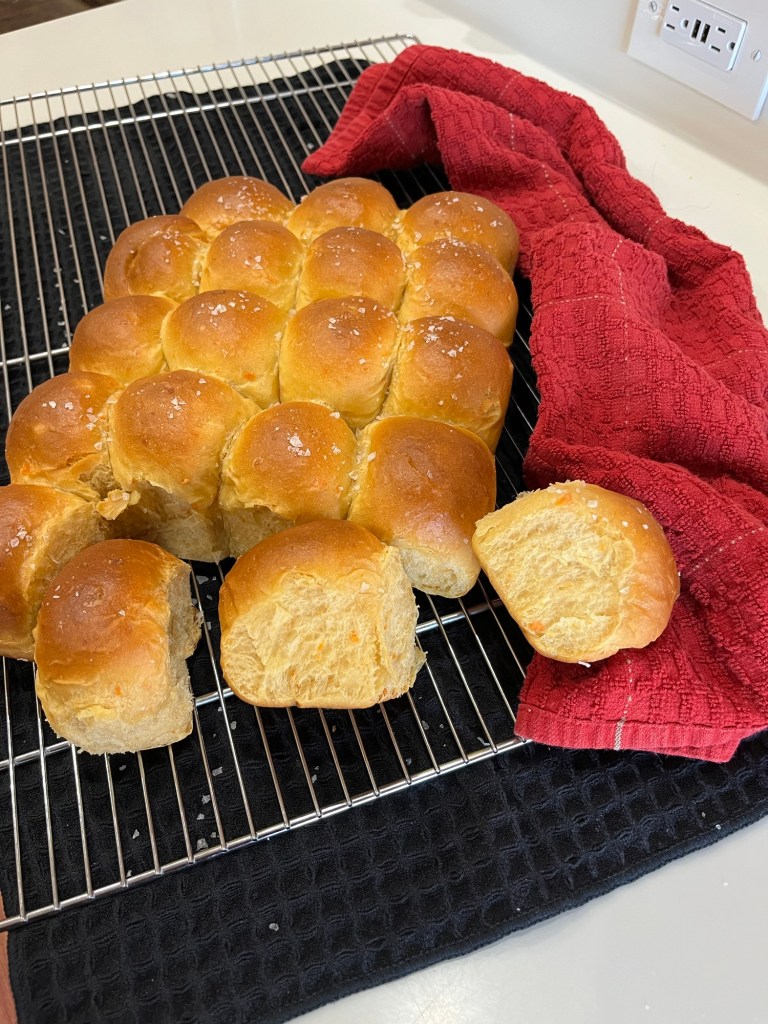
Sally’s Baking Addiction contest this week is the above mentioned Soft Sweet Potato Rolls. My usual dinner rolls are a tremendous hit, but I am willing to chance one for the contest.

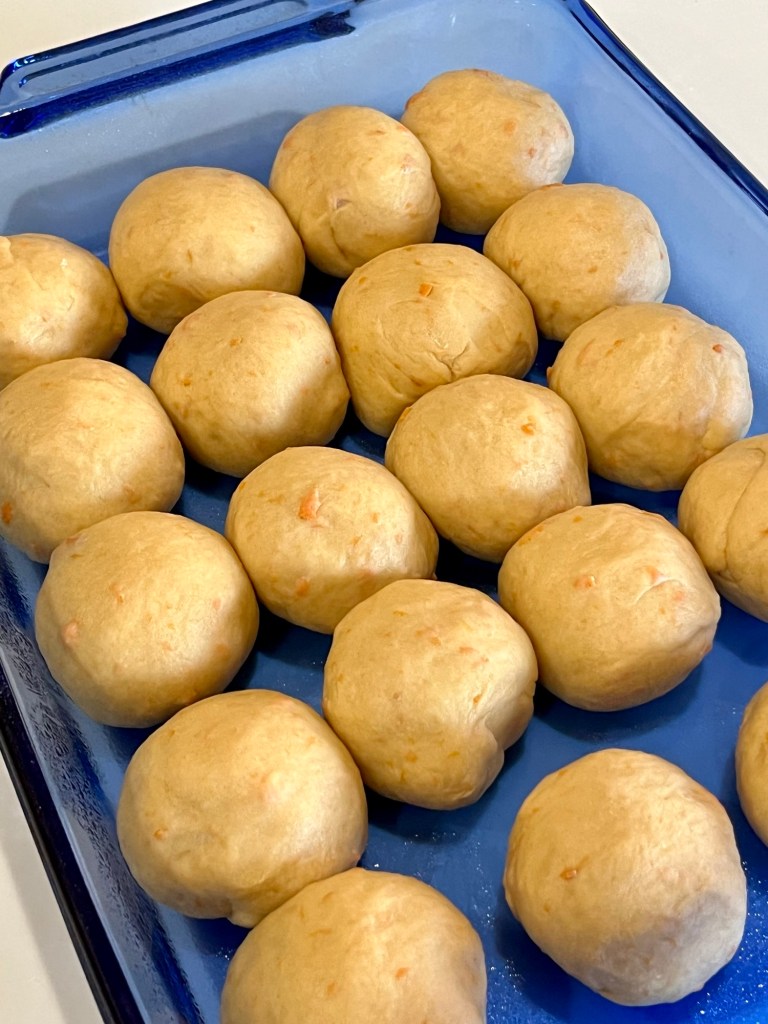
I followed the instructions exactly as shown below.

After QC and I sampled a roll each we agreed these are as exceptional and my standard rolls and they have the advantage of being sweet potato based and Thanksgiving is in a couple of week. LiG.

Soft Sweet Potato Rolls


https://sallysbakingaddiction.com/sweet-potato-dinner-rolls/

INGREDIENTS
• 1 medium sweet potato, about 250–290g, peeled and chopped (to yield 1 cup mashed)
• ¾ cup (180ml) whole milk, warmed to about 110°F (43°C)
• 2 ¼ tsp instant dry yeast
• 1/3 cup (113g) honey, divided
• 2 large eggs, at room temperature
• 5 Tbl (71g) unsalted butter, softened
• 1 ¾ tsp salt
• 5 ½ c (715g) bread flour* (spooned & leveled), plus more as needed
• optional: 2 Tbl (28g) melted butter and flaky sea salt, for finishing

METHOD

  1. Prepare the sweet potato: Place the chopped sweet potato in a medium saucepan and add enough water to cover. Bring to a boil over high heat, then reduce the heat to medium-high and boil until the sweet potato is very soft and tender, about 10–12 minutes. Drain off the water, then mash the sweet potato as well as you can—a few small lumps are okay. Measure 1 cup (230g) of mashed sweet potato to use in the dough, and set aside to slightly cool. (Do not use more than 1 cup in your dough. Discard or eat any leftover.)
  2. Proof the yeast: Whisk the warm milk, yeast, and 2 Tablespoons of honey together in the bowl of your stand mixer. Cover and allow to sit for 5 minutes.
  3. Make the dough: Add the remaining honey, eggs, butter, mashed sweet potato, salt, and 1 cup (125g) flour. With a dough hook or paddle attachment, mix/beat on low speed for 1 minute. Stop and scrape down the sides of the bowl with a silicone spatula, then add the remaining flour. Beat on medium speed until the dough comes together and pulls away from the sides of the bowl, about 3 minutes. If the dough seems too wet to a point where kneading (next step) would be impossible, beat in more flour 1 Tablespoon at a time until you have a workable dough. Don’t be nervous if you’re adding a lot more flour; there are a lot of variables such as moisture in the sweet potato, humidity, weather, etc. Dough should be soft and a little sticky, but still manageable to knead with lightly floured hands.
  4. Knead the dough: Keep the dough in the mixer fitted with a dough hook and beat on low speed for an additional 5 full minutes, or knead by hand on a lightly floured surface for 5 full minutes. If the dough becomes too sticky during the kneading process, sprinkle 1 teaspoon of flour at a time on the dough or on the work surface/in the bowl to make a soft, slightly tacky dough. After kneading, the dough should feel soft and smooth. Poke it with your finger—if it slowly bounces back, your dough is ready to rise.
  5. 1st Rise: Lightly grease a large bowl with oil or nonstick spray. Place the dough in the bowl, turning it to coat all sides in the oil. Cover the bowl and allow the dough to rise in a relatively warm environment for 1–2 hours or until double in size. (I always let it rise on the counter. Takes about 1 and 1/2 hours.
  6. Grease a 9×13-inch baking pan.
  7. Shape the rolls: When the dough is ready, punch it down to release the air. Weigh the dough (~1370g) then divide the dough into 20 equal pieces (about ~68g each.) Shape each piece into a smooth ball. Arrange in prepared baking pan.
  8. 2nd Rise: Cover shaped rolls and allow to rise until puffy, about 30 to 45 minutes.
  9. Adjust oven rack to a lower position and preheat oven to 350°F (177°C). (It’s best to bake the rolls towards the bottom of the oven so the tops don’t burn.)
  10. Bake the rolls: Bake for 25 minutes or until golden brown on top (internal temperature if taken with an instant-read thermometer should be 190°F), rotating the pan halfway through. If you notice the tops browning too quickly, loosely tent the pan with aluminum foil (I usually add it after 20 minutes).
  11. Remove from the oven, brush with melted butter and sprinkle with flaky sea salt. Allow rolls to cool for 15 minutes before serving. We’ve learned that the longer they cool, the better their flavor.
  12. Cover leftover rolls tightly and store at room temperature for up to 3 days, or in the refrigerator for up to 1 week.
    Notes
  13. Freezing Instructions: You can freeze the baked dinner rolls. Allow them to cool completely, then place them in a freezer-safe container or bag and freeze for up to 3 months. Thaw in the refrigerator or at room temperature, then reheat as desired. If reheating the whole pan, lightly cover and reheat in a 300°F (150°C) oven for about 10 minutes or until warm. If you are planning to freeze the baked rolls, omit the melted butter and flaky sea salt finishing step after baking, and instead do that after thawing and reheating.
  14. Overnight Instructions: Prepare the recipe through step 7. Cover the shaped rolls tightly and refrigerate for up to about 15 hours. At least 3 hours before you need them the next day, remove the rolls from the refrigerator, keep covered, and allow to rise on the counter for about 1-2 hours before baking. Alternatively, you can let the dough have its 1st rise in the refrigerator overnight. Cover the dough tightly and place in the refrigerator for up to about 15 hours. Remove from the refrigerator and allow the dough to fully rise for 2 more hours. Continue with step 6.
  15. Baking Pan: I prefer baking the rolls in a glass 9×13-inch baking pan because I find they brown a little too quickly in a metal pan. But as long as you bake the rolls on a lower oven rack and keep your eye on them, any pan is great. You can also bake these rolls in a large cast iron skillet, in two 9-inch round or square baking pans, or on a lined baking sheet. Bake time remains the same.
  16. Can I Use Regular Potato? Yes. No other changes necessary.
  17. Milk: Whole milk is ideal for the best, richest flavor and texture. Keeping that in mind, feel free to substitute with a lower-fat or nondairy milk.
  18. Yeast: I always use instant yeast, but if you use active dry yeast, there are no changes to the recipe. Rise times will be slightly longer using active dry yeast. Reference my Baking with Yeast Guide for answers to common yeast FAQs.
  19. Flour: If you don’t have bread flour, you can use all-purpose flour. All-purpose flour is convenient for most, but bread flour produces chewier dinner rolls. The rolls are still soft and fluffy no matter which you use. Either flour is fine and there are no other changes to the recipe if you use one or the other.

Christmas ‘23 – Like No Other

Covid sucks. No sense in beating around the bush, Covid just plain sucks. It totally disrupted our holiday today, and tomorrow and…

We were invited to a family dinner tonight and I was asked if I could bring my dinner rolls and one of my desserts, to which I said “Of course!” I decided to make rolls in the shape of a Christmas tree and eclairs suitable for a Christmas dinner.

When I contacted our relative and begged off due to possible Covid exposure she said I shouldn’t bring the rolls and dessert. I told her how I was looking forward to baking and making them and would be very disappointed to not be able to. (I dropped them off this afternoon.)

I know her husband loves the my eclairs so I modified my usual ones to be “Christmasy.” I glazed a few with my normal dark chocolate and made colored white chocolate for the rest, I reserved some of the white chocolate glaze and colored it using oil based food coloring. I “painted” the faces etc and realized in the future I need to make the eclairs larger to have a larger “canvas” to paint on. I call this “Tim Burton’s Eclairs for Christmas” eclairs.

Christmas Tree Dinner Rolls

INGREDIENTS
• 488 g (2 cups) warm milk
• 2 tablespoons instant dry yeast
• 50 g white granulated sugar
• 2 teaspoons salt
• 6 tablespoons salted butter softened
• 2 large eggs
• 750-850 g (6-7c) all-purpose flour
• 1 tablespoon melted butter
• 1 egg and 1 Tbl water for an egg wash
• ½ c fresh cranberries – choose the most uniform
• Several sprigs fresh rosemary.
• ½ c water
• 1 ½ c sugar, divided 1:½

METHOD

  1. In the Pro600 stand mixer bowl, combine and mix all ingredients except the flour. (This is to remind me to use my larger mixer.)
  2. Add in 5 ½ cups of flour. Using a dough hook, turn the mixer on and increase speed slowly to keep the flour from flying all over. Slowly add the remaining flour until the dough pulls away from the sides of the bowl. (I watch the bottom of the bowl and add flour until the dough just comes clean from the bottom.) Once the dough clears, knead for 8 minutes. The dough mixture should be sticky and soft.
  3. Transfer the dough to a lightly greased bowl. (I dump the dough on the counter, spray the stand mixer bowl with some olive oil and return the dough, cover and let rise 45 – 60 minutes, until doubled.)
  4. Form the the dough into into 45g balls.
  5. Arrange the balls into 8 rows, 3 for the base of the tree, then 7, 6, 5, 4, 3, 2, 1.
  6. Reserved one ball to shape the star. (I used a star cookie cutter.)
  7. Cover and let rise 45 – 60 min.
  8. Preheat oven to 375⁰F 15 minutes before the end of the final proof.
  9. Mix egg and water to make an egg wash and lightly brush the rolls.
  10. Bake the rolls for 12 to 14 minutes, until lightly browned.
  11. Remove rolls from oven and brush with melted butter. Best when served warm. To cool, let rest in the pan for 15 minutes then transfer to a wire rack. Once cooled completely, store in a plastic bag.

Sparkling sugar cranberries and Rosemary

  1. Wash cranberries and put in a heat proof bowl
  2. Bring the water and 1 c sugar to a simmer
  3. Let the mixture cool for 5 minutes then pour over the cranberries
  4. Cool for 1-2 hours in the fridge.
  5. Strain the berries and let dry
  6. Roll in granulated sugar, spread on parchment paper and let dry
  7. Repeat with the rosemary

Hot Dog! Hamburger Rolls

I like to keep a dozen or so hamburger rolls in the freezer for ‘impulse’ dinner nights. (You know what I mean: “What do you want for dinner?” “I don’t know, what do you want?” The one constant through all the years, Ray, has been… hamburgers. We always agree on hamburgers. My supply was down to three, meaning there was plenty of room in the freezer for more.

Since I found (and made) a new recipe for dinner rolls with one of my granddaughters yesterday, I decided to make some hamburger rolls today. Also, I wanted some homemade hotdog rolls and this was a perfect opportunity to fulfill that wish. This bread is very briochey. The addition of milk, butter and eggs enriches the normal bread dough resulting in a soft, moist, delicious bread.

A question I am often asked is: “how do I know when I have the right amount of flour in the dough?” I am not sure mine’s the ‘correct’ method, but once the dough starts to clean the sides of the stand mixer bowl, I add flour by the tablespoon until the bottom is clean as well. The two short videos following show the dough cleaning the side of the bowl, and, after adding a few more tablespoons, the bottom.

You probably already know this but the difference between dinner rolls as posted yesterday and the hamburger rolls in todays post is how far apart each ball of dough is positioned when baked. The dinner rolls were allowed to grow together in a baking pan and the hamburger rolls were more widely separated on a baking sheet.

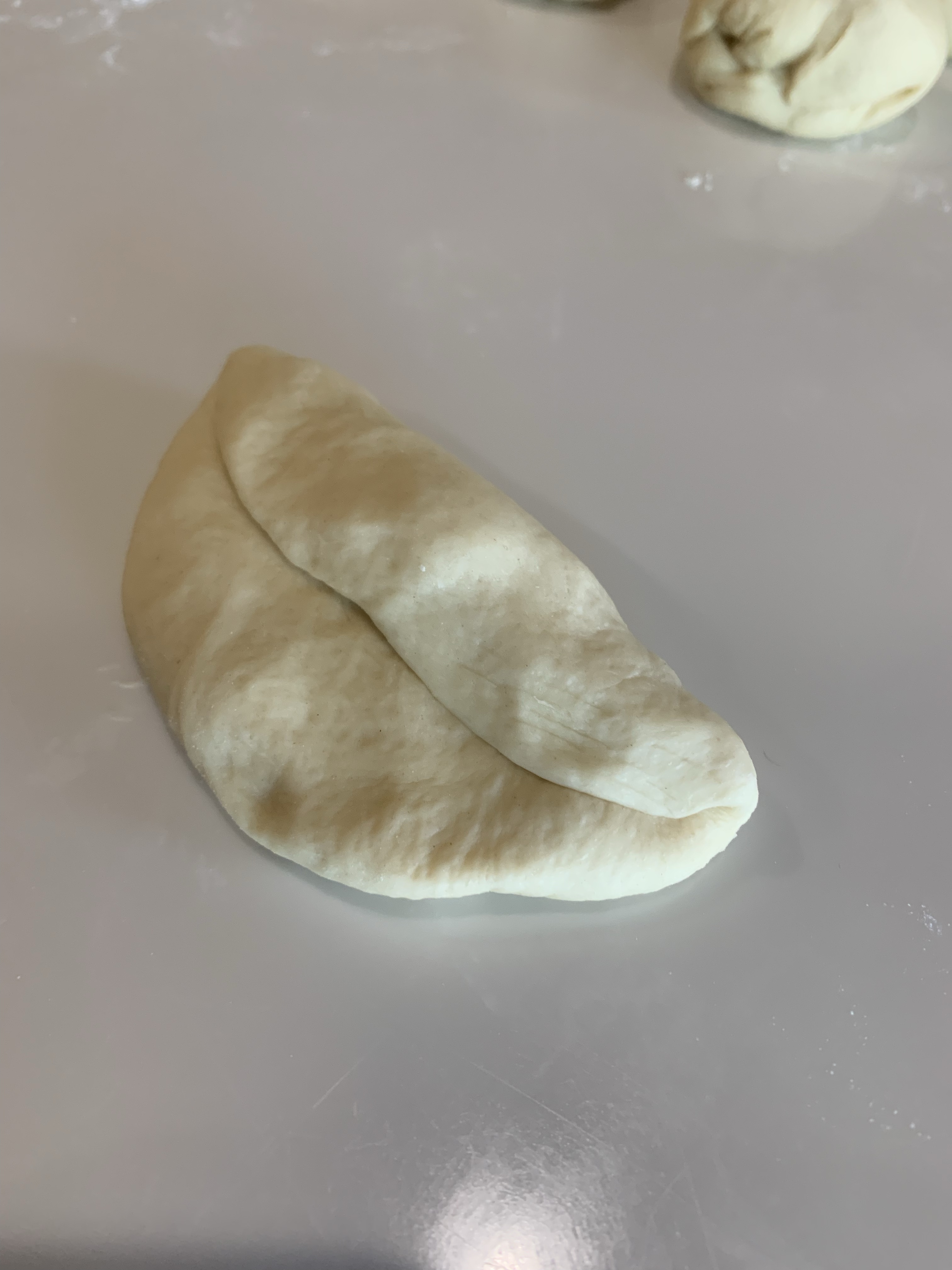
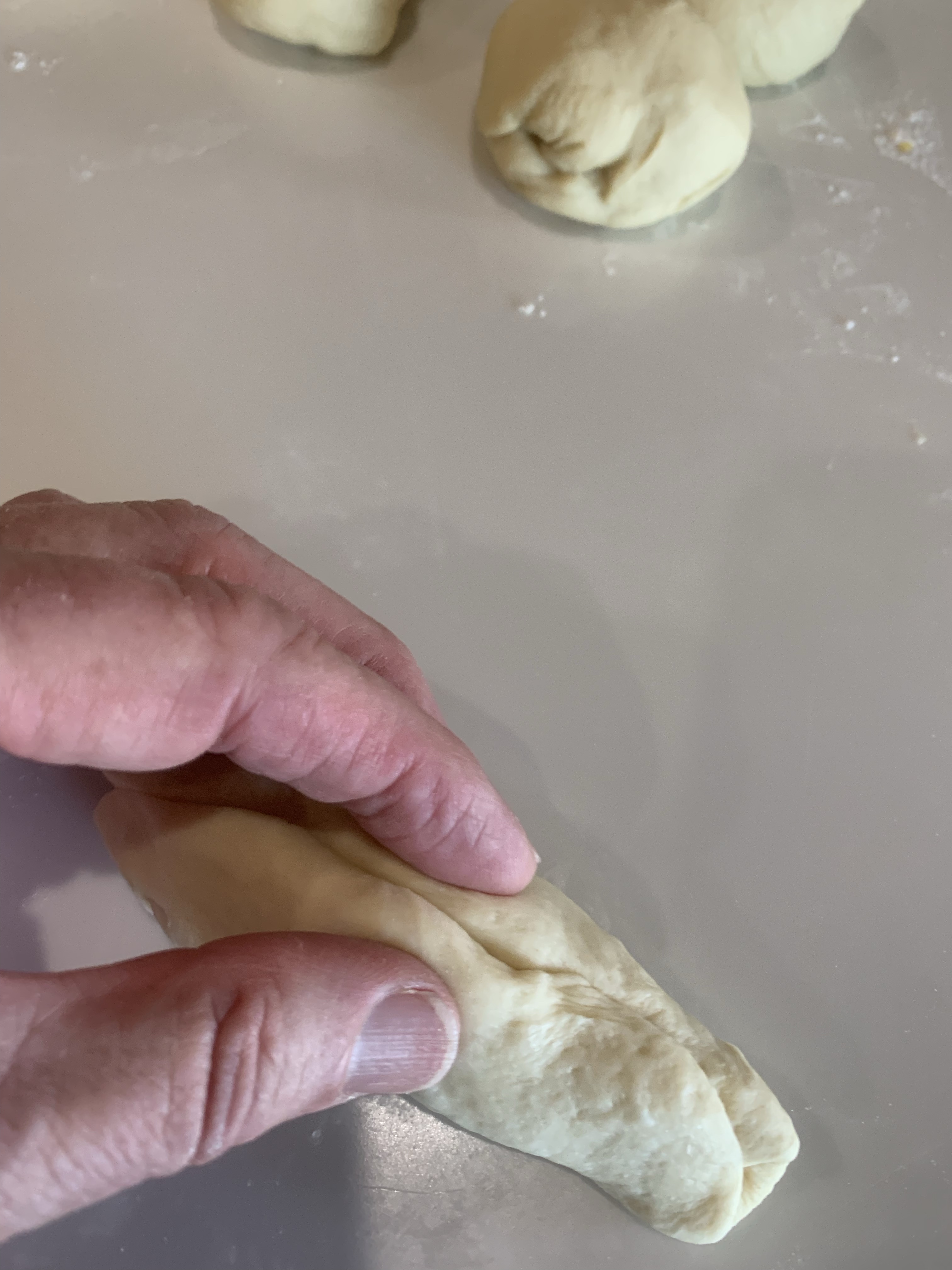
I found a few methods of forming the dough logs to make the hotdog rolls. One is to press or roll a portion of dough into a 3”x3” square, perform an envelope fold, pinch the joins together then roll out into the cylindrical shape, about 6” long and 1” diameter.

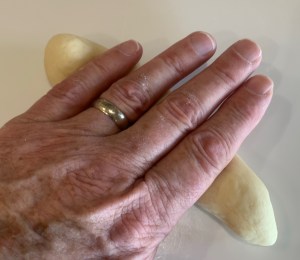
The other method (and the one I used for hotdog rolls #2 – 12) is to stretch and tension each portion of dough into a ball then roll out into a log 6” long. It seemed easier and faster than the fold and roll method.

Roll to make the center thinner than the ends. The rise and oven spring tends to enlarged the center more than the ends.

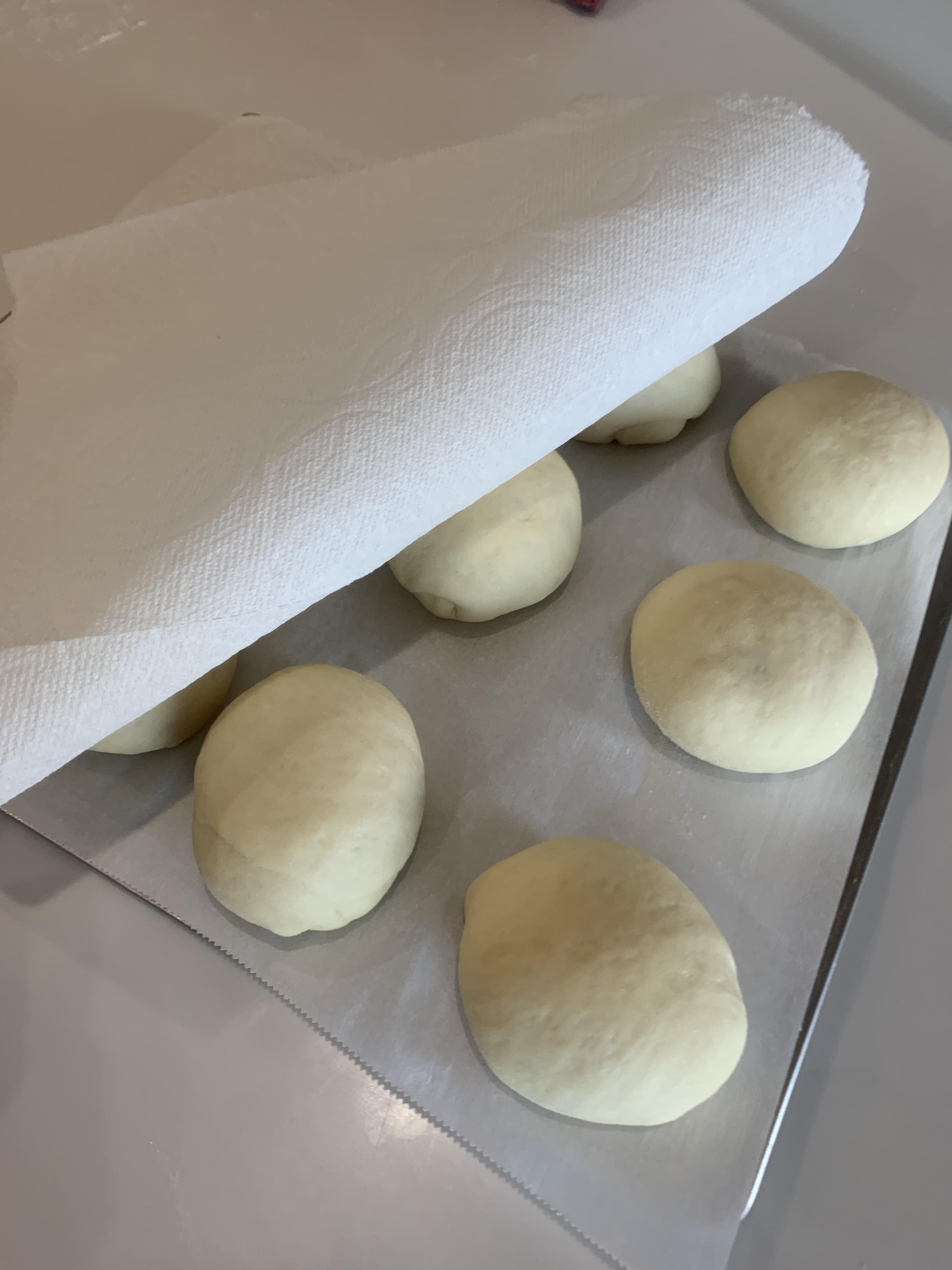
I like to cover the dough with a paper towel, then plastic wrap before putting them into the proofing drawer. I read this time somewhere that the paper towel reduces sticking. It works for me.

After proofing, the rolls are egg washed and baked for 12 – 14 minutes or when the tops are a nice brown and the internal temperature is about 180F.

Enriched Dinner, Hamburger and Hotdog Rolls

INGREDIENTS
• 488 g (2 cups) warm milk
• 2 tablespoons instant dry yeast
• 50 g white granulated sugar
• 2 teaspoons salt
• 6 tablespoons butter softened
• 2 large eggs
• 750 g all-purpose flour
• 1 tablespoon melted butter

METHOD

  1. In a stand mixer bowl, combine and mix all ingredients except the flour.
  2. Add in 5 ½ cups of flour. Using a dough hook, turn the mixer on and increase speed slowly to keep the flour from flying all over. Slowly add the remaining flour until the dough pulls away from the sides of the bowl. (I watch the bottom of the bowl and add flour until the dough just comes clean from the bottom.) The dough mixture should be sticky and soft.
  3. Transfer the dough to a lightly greased bowl. Cover and let rise 60 minutes, (until doubled.)
  4. Punch down the dough and form into 24 rolls. (My dough weighed 1630 g therefore, each roll should be 68g.) Place in an 11×15” greased baking pan. Cover and let rise 45 – 60 min.
  5. Preheat oven to 375 F. Bake the rolls for 12 to 14 minutes, until lightly browned.
  6. Remove rolls from oven and brush with melted butter. Best when served warm. To cool, let rest in the pan for 15 minutes then transfer to a wire rack. Once cooled completely, store in a plastic bag.

To Make Hamburger and Hot Dog Rolls

Use the same recipe as above. There will be enough dough to make twelve 70 g hamburger rolls and 12 hotdog rolls.

Hamburger

  1. Cut 70g portions of dough and stretch into a ball. Pinch the bottom together and tension each ball with the rolling “cupped hand” technique.
  2. Place on a parchment paper lined baking sheet. If you want the rolls to touch, during baking space the rolls about 1” apart. If you want to keep them separate, increase the spacing to 2”.
  3. Cover the rolls with a paper towel to keep them from sticking to the plastic wrap on top.
  4. Let the rolls rise for 45 min, until doubled.
  5. Coat each roll with an egg wash (1 whole egg::1 Tbl water)
  6. Bake at 375F for 12 minutes, until nicely browned and the internal temperature is 180F

Hot Dogs

  1. Cut 68g portions of dough. There are two options (that I tried) to form the hot dog dough into logs.
    a. Fold and roll method
    i. Form the portion into a 3”x3” square
    ii. Envelope fold the dough into an approximately 1”x3” log, then roll as you would a breadstick, or pretzel etc until the log is about 6” long and 1” thick.
    b. Roll Method
    i. Stretch the portion into a ball and tension as will the dinner rolls above
    ii. Roll the ball into a 6” log. (Why take the extra step to fold?)
  2. In either case try to make the center 3-4” of the log a little thinner as when the dough proofs and oven rises the centers tend to rise more than the ends.
  3. Bake the hamburger and hot dog buns as described in the hamburger roll section above.

Enriched Dinner Rolls

I have a recipe and method for making dinner rolls that receive great reviews and are in constant demand. With such a success why wouldn’t I try and new recipe, enriched this time?

I forgot to photograph the final rolls, so took this on the way to Grace’s house. Due to time restraints I had to remove the rolls from the pan early which led to their distortion. Believe me, they were perfect coming out of the oven.

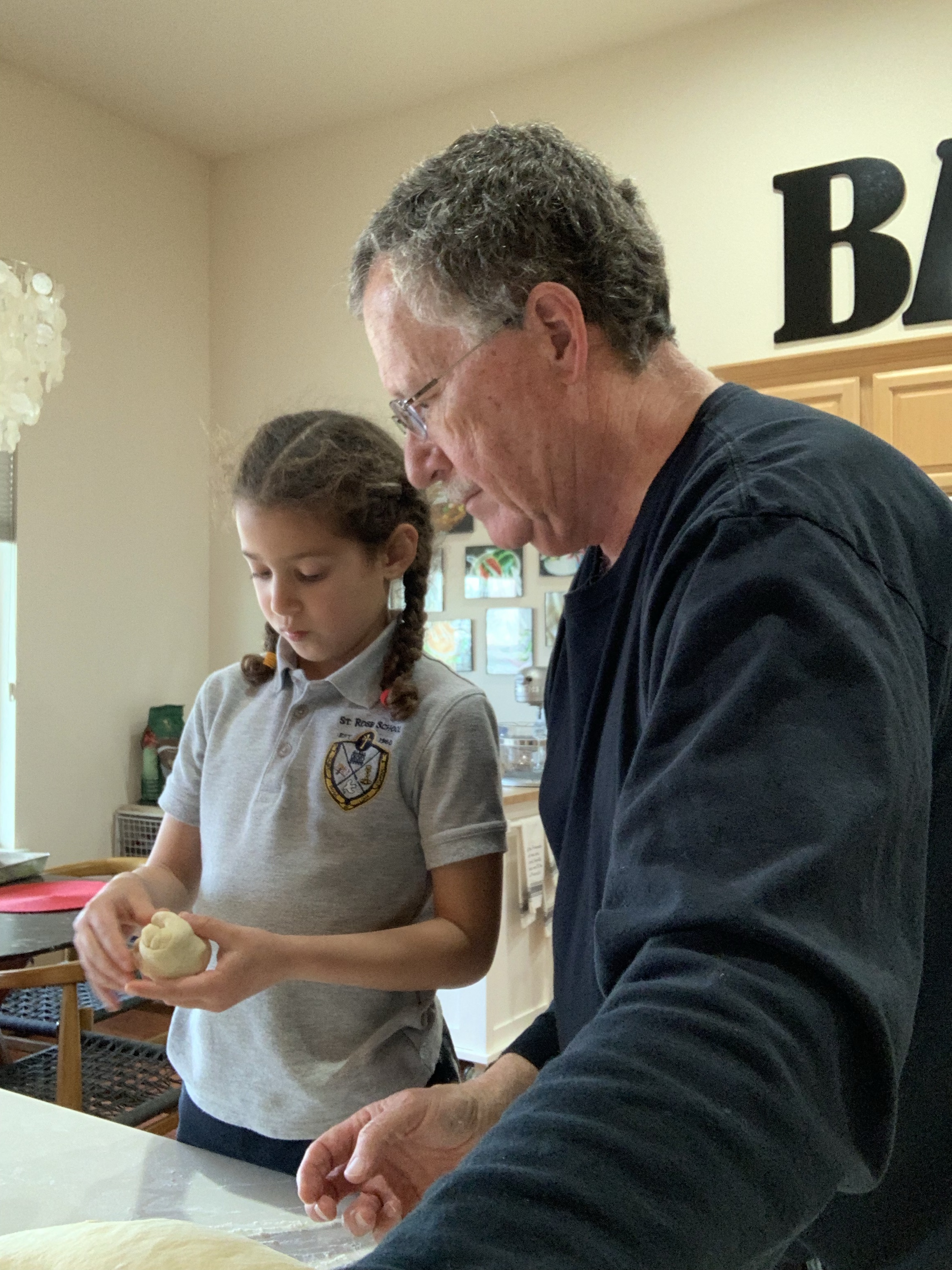
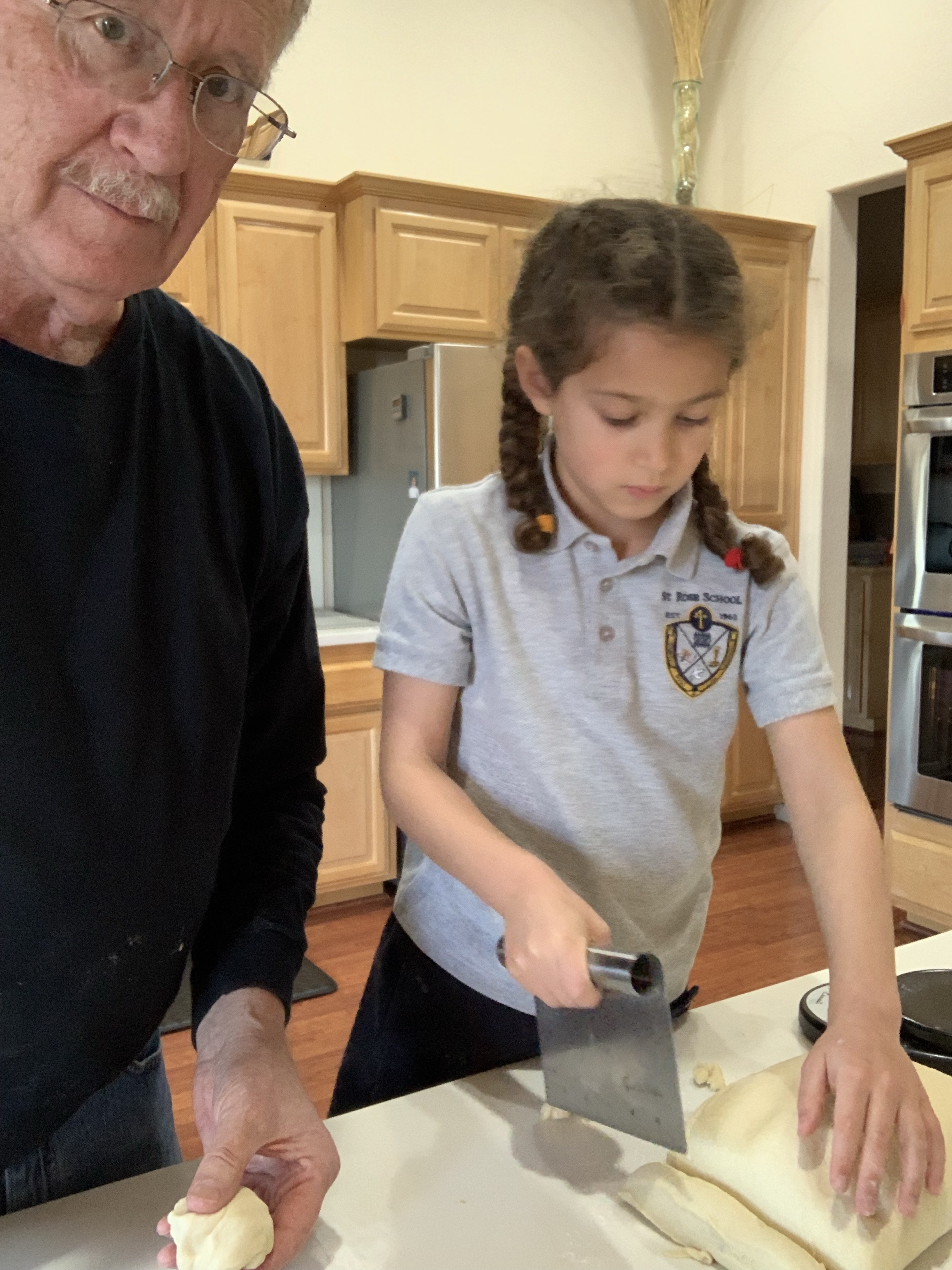
I showed Grace how to cut the dough into small portions (68 g for this recipe) using a bench chopper. It took her a few try’s to figure out when to add or subtract dough from what was on the scale. When I say a few, I mean very few. Three or four tries and she could cut 68 g portions in seconds.

She tried to form dough balls with her hands, but alas, at 5 years old this size dough ball was too large for her to handle. We ended up with her cutting and weighing, and me forming the balls. I like to stretch the dough by pulling the it from front to back with my thumbs, rotating and repeating. Pinch the rough backside together, place on a dry counter, cup your fingers over the ball and quickly roll around the counter top. This will smooth and tension the dough providing a great shaped roll.

Enriched Dinner Rolls

INGREDIENTS

• 488 g (2 cups) warm milk
• 2 tablespoons instant dry yeast
• 50 g white granulated sugar
• 2 teaspoons salt
• 6 tablespoons salted butter softened
• 2 large eggs
• 750 g all-purpose flour
• 1 tablespoon melted butter

METHOD

  1. In a stand mixer bowl, combine and mix all ingredients except the flour.
  2. Add in 5 ½ cups of flour. Using a dough hook, turn the mixer on and increase speed slowly to keep the flour from flying all over. Slowly add the remaining flour until the dough pulls away from the sides of the bowl. (I watch the bottom of the bowl and add flour until the dough just comes clean from the bottom.) The dough mixture should be sticky and soft.
  3. Transfer the dough to a lightly greased bowl. Cover and let rise 60 minutes, (until doubled.)
  4. Punch down the dough and form into 24 rolls. (My dough weighed 1630 g therefore, each roll should be 68g.) Place in an 11×15” greased baking pan. Cover and let rise 45 – 60 min.
  5. Preheat oven to 375 F. Bake the rolls for 12 to 14 minutes, until lightly browned. (The internal temperature reached 180 F.)
  6. Remove rolls from oven and brush with melted butter. Best when served warm. To cool, let rest in the pan for 15 minutes then transfer to a wire rack. Once cooled completely, store in a plastic bag.

Killing Time Making Rolls

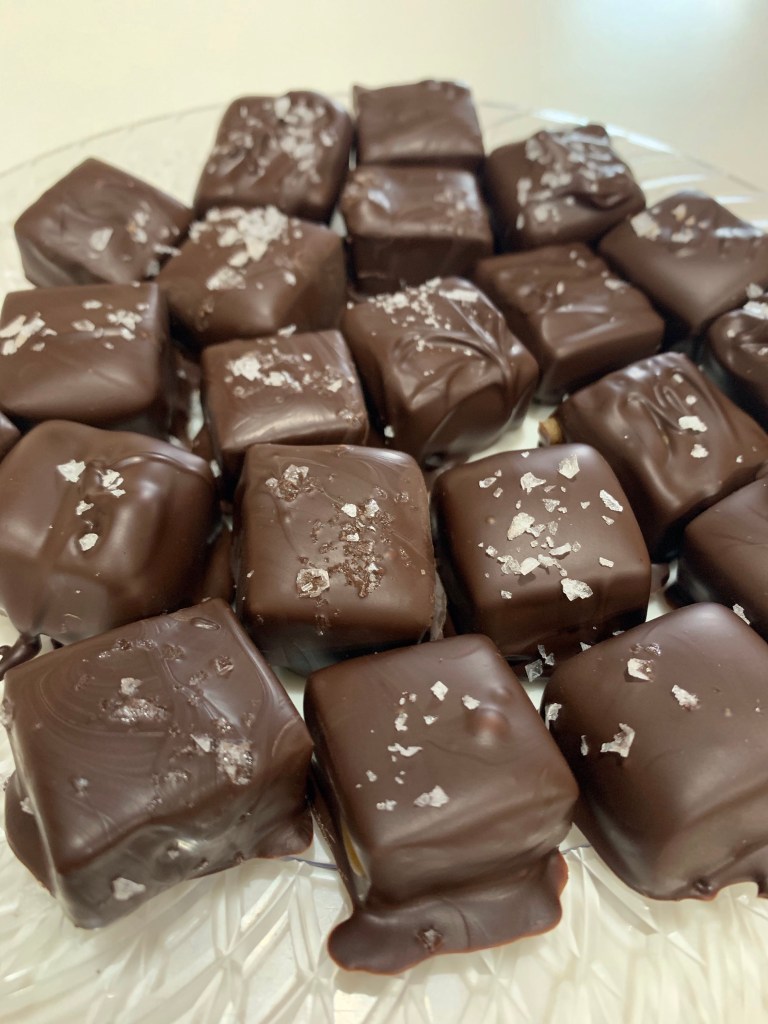
So, what do you do as you are waiting for your dinner rolls to proof? Well, If you have an 11 pound bag of chocolate, 60 pieces of 1”x1” caramel, making salted chocolate covered caramels is a good way to pass the time.

I cut the caramels a day ago, tempered the chocolate, dipped and drained the coated caramel and sprinkled some Maldon flaked sea salt on each.

The chocolates were setting as the first proof of the rolls completed. The proofed dough weighed 1,553 grams, so to make 24 rolls, each had to weigh about 63 g. I weighed each, formed them into a small ball and rolled them on the counter to tension the surface of the roll.

I arranged them 4×6 in a glass baking tray and baked at 375 deg until the internal temperature was 180 deg. (about 20 min.) Once out of the oven, a light brush with melted butter and boom. Excellent dinner rolls! The recipient and methods for both the dinner rolls and chocolates are found elsewhere in this blog.