Whole Wheat Bread – Sally

Sally, owner and author of Sallysbakingaddiction.com, writes her blog to teach newbies and help oldies with their baking. I usually modify her recipes for my own personal, selfish use. For more details and tips and tricks refer to Sally and not me.

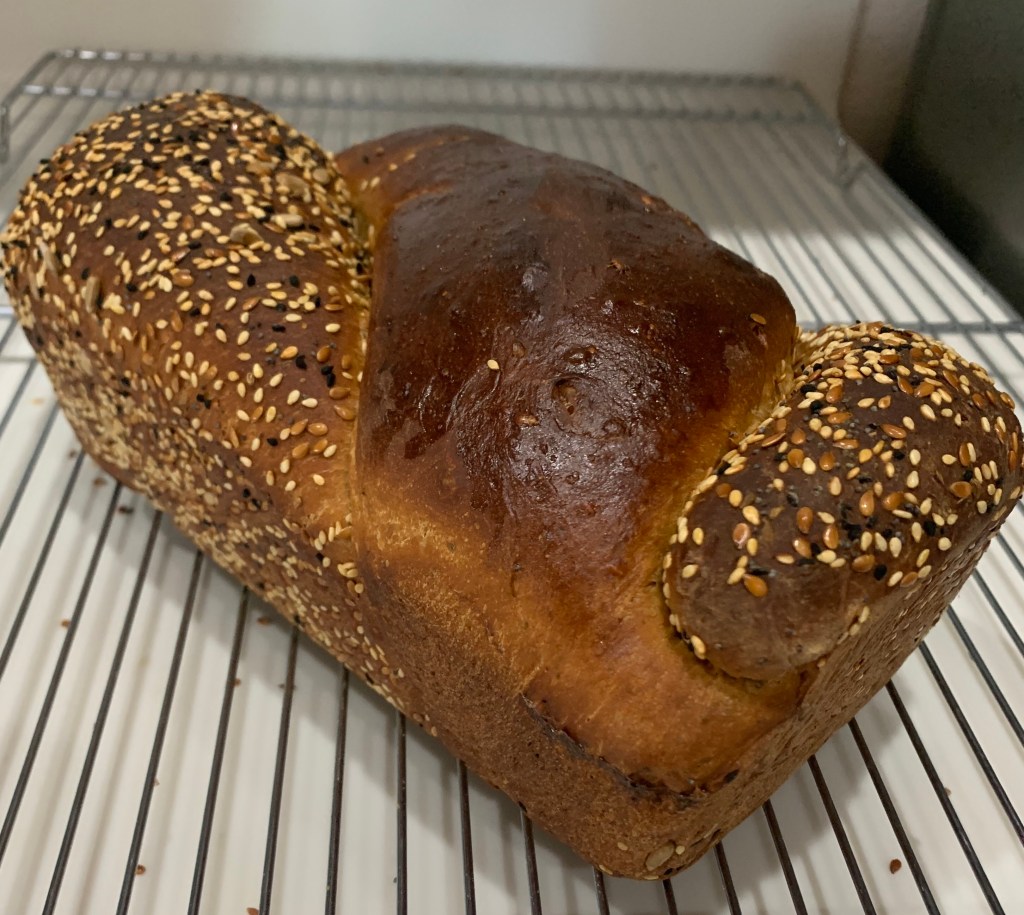
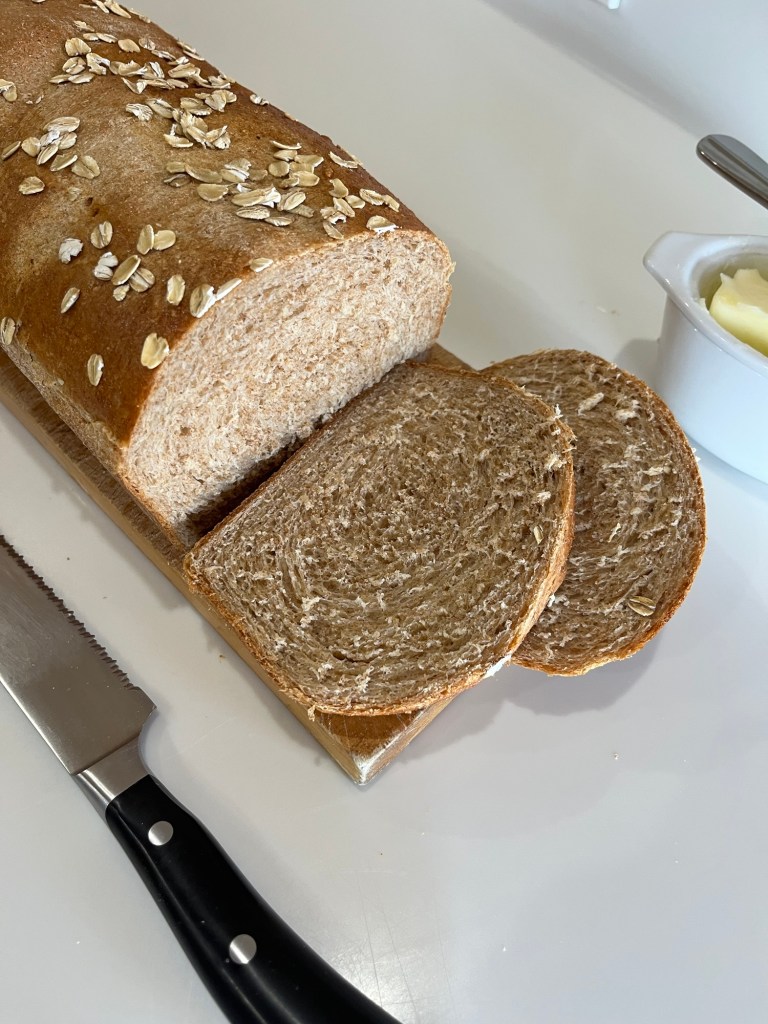
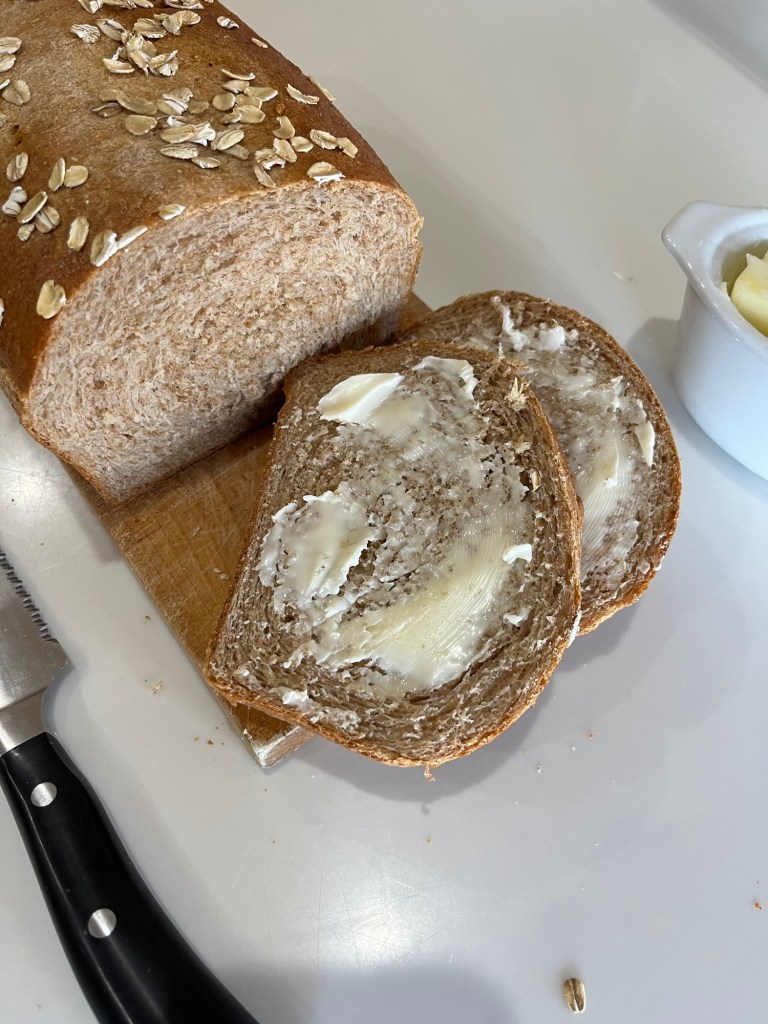
This is a beautiful bread with chewy crust and soft tender interior. I did use 50:50 whole wheat and bread flours in the sponge.
Whole Wheat Bread – Sally

INGREDIENTS
Sponge
• 1 cup (240ml) water, warmed to about 110°F (43°C)
• ⅓ cup (80ml) whole milk, warmed to about 110°F (43°C)
• 2 ¼ teaspoons (7g) active dry or instant yeast
• 2 cups (260g) whole wheat flour
• Optional: 130g (1 c) whole wheat flour and 130g (1 c) bread flour
Dough
• 3 Tablespoons (63g) honey
• 3 Tablespoons (43g) RT unsalted butter,
• 1 teaspoon fresh lemon juice (or apple cider vinegar)
• 1 ⅓ cups (173g) whole wheat flour (plus more as needed
• 1 and 1/4 teaspoons salt
• optional oat topping: 1 beaten egg white + 1 Tablespoon whole oats

METHOD

  1. Prepare the sponge: In a large bowl or the bowl of your stand mixer, whisk the water, whole milk, and yeast together. Add the 2 cups (260g) flour and stir with a spatula or wooden spoon until a thick batter forms. Cover lightly and allow to double in size at room temperature, about 60–90 minutes. Sometimes this can take up to 2 hours.
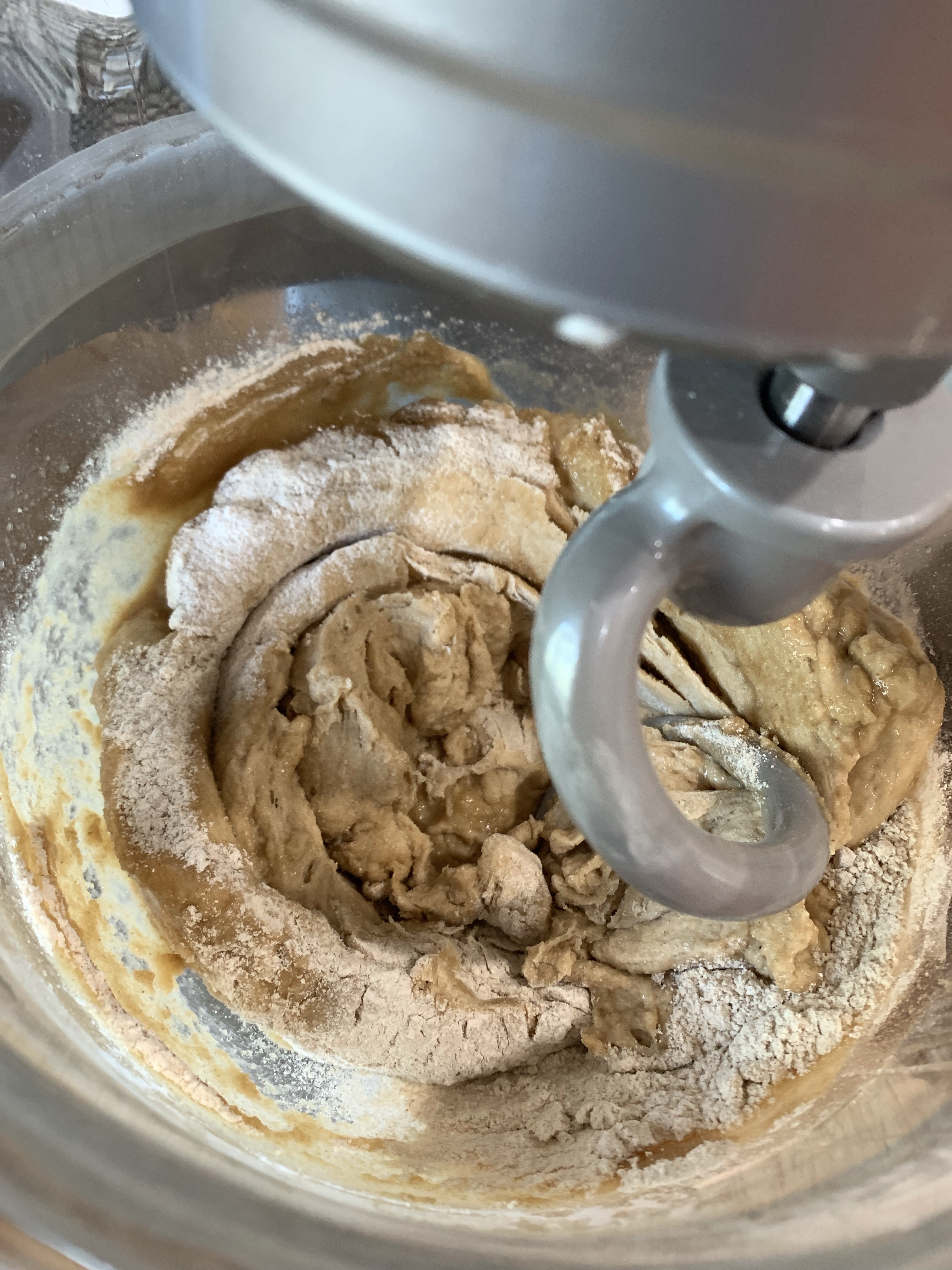
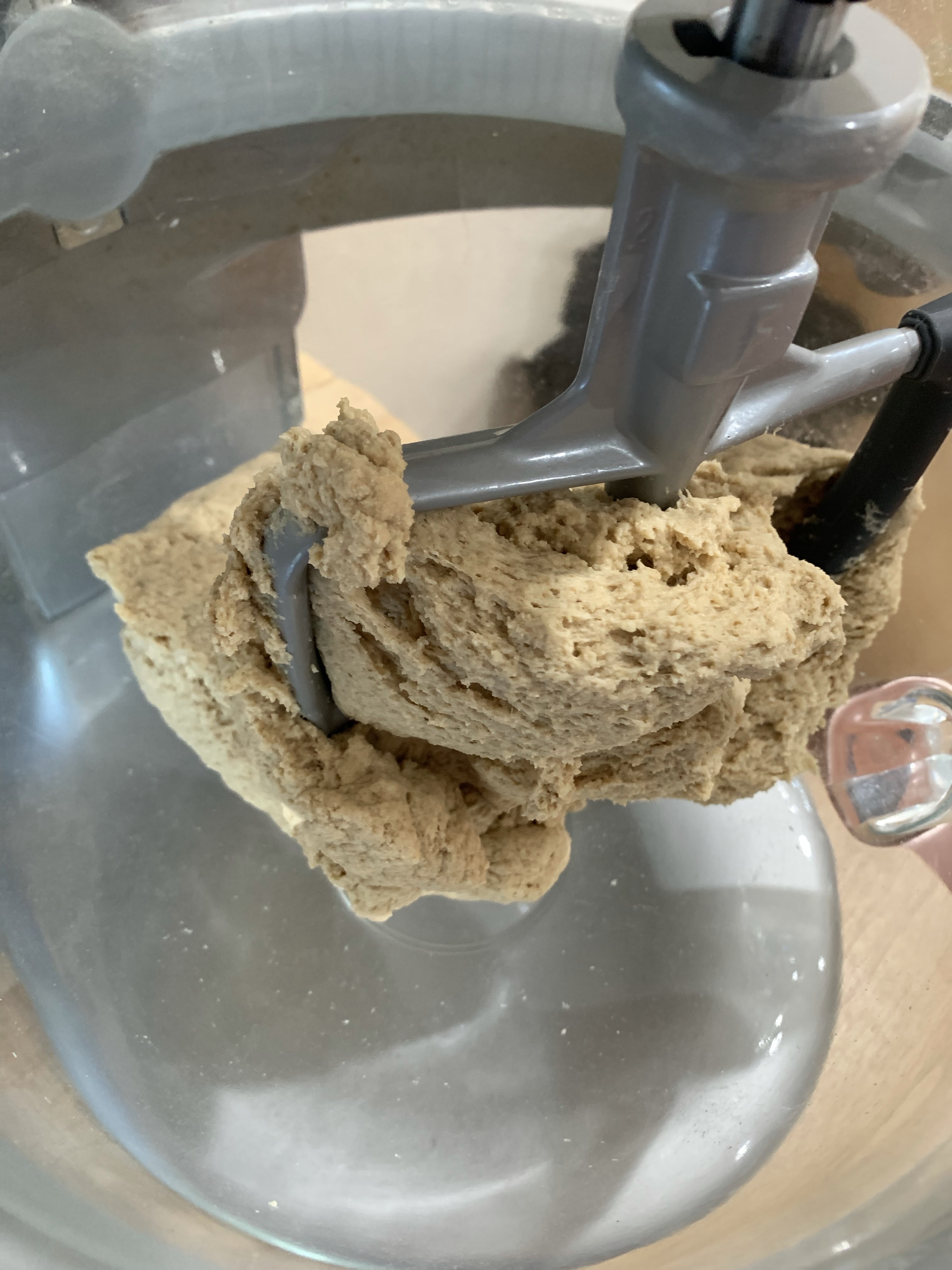
  2. Add the remaining dough ingredients including the honey, butter, lemon juice, remaining flour, and the salt. With a dough hook attachment or using a spatula or wooden spoon (and some arm muscle!), beat on medium speed/mix until the dough comes together and pulls away from the sides of the bowl, about 3 minutes. If the dough seems too wet to a point where kneading (next step) would be impossible, beat in more flour 1 Tablespoon at a time until you have a workable dough. Dough should be soft and a little sticky, but still manageable to knead with lightly floured hands. It took 4 Tbl added a minute or so apart for the dough to clear the sides of the mixer bowl and knead properly.
  3. Knead the dough: Keep the dough in the mixer and beat for an additional 8–10 full minutes or knead by hand on a lightly floured surface for 8–10 full minutes. If the dough becomes too sticky during the kneading process, add 1 more Tablespoon of flour at a time to make a soft, slightly tacky dough. Do not add more flour than you need; you do not want a dry dough. After kneading, the dough should still feel a little soft. Poke it with your finger—if it slowly bounces back, your dough is ready to rise and/or do a “windowpane test” to see if your dough was adequately kneaded.
  4. 1st rise: Lightly grease a large bowl with oil or nonstick spray. Place the dough in the bowl, turning it to coat all sides in the oil. Cover the bowl and allow the dough to rise in a proofing oven or other warm environment for 1.5–2 hours or until about double in size.
  5. Grease a 9×5-inch loaf pan.
  6. Shape the dough: When the dough is ready, punch it down to release the air. Lightly flour a work surface, your hands, and a rolling pin. Roll the dough out into a large rectangle, about 8×15 inches. It does not have to be perfect—in fact, it will probably be rounded on the edges. That’s ok! Roll it into an 8-inch log and place in the prepared loaf pan, seam side down.
  7. 2nd rise: Cover shaped loaf. Allow to rise until it’s about 1 inch above the top of the loaf pan, about 45–60 minutes.
  8. Adjust oven rack to a lower position and preheat oven to 350°F (177°C). It’s best to bake the bread towards the bottom of the oven so the top doesn’t burn.
  9. Optional oat topping: If you want to add the optional oat topping, add it right before baking the bread. With a pastry brush, brush the risen loaf with egg white, then sprinkle the oats on top.
  10. Bake the bread: Bake for 36–40 minutes, or until golden brown on top. If you notice the top browning too quickly, loosely tent the pan with aluminum foil. (I usually add it around the 20-minute mark.) To test for doneness, if you gently tap on the loaf, it should sound hollow and the center of the loaf is 195–200°F (90–93°C). Remove from the oven and allow bread to cool for a few minutes in the pan on a cooling rack before removing the bread from the pan and slicing. Feel free to let it cool completely before slicing, too.
  11. Cover leftover bread tightly and store at room temperature for up to 1 week.

Notes

  1. Freezing Instructions: Prepare recipe through step 6. Place shaped loaf in a greased 9×5-inch loaf pan or disposable loaf pan, cover tightly, and freeze for up to 3 months. On the day you serve it, let the loaf thaw and rise for about 4–5 hours at room temperature. Bake as directed. You can also freeze the baked bread loaf. Allow the bread to cool completely, then freeze for up to 3 months. Thaw in the refrigerator or at room temperature, then reheat as desired.
  2. Overnight Instructions: Prepare the recipe through step 6. Cover the shaped loaf tightly and refrigerate for up to about 15 hours. At least 3 hours before you need the bread the next day, remove from the refrigerator, keep covered, and allow to rise on the counter for about 1–2 hours before baking. Alternatively, you can let the dough have its 1st rise in the refrigerator overnight. Prepare the dough through step 3, then cover the dough tightly and place in the refrigerator for up to 12 hours. Remove from the refrigerator and allow the dough to fully rise for 2 more hours. Continue with step

    New KAF Mini-Loaf Pan and RASPBERRY/PLUM Preserves

    While on vacation I stopped by King Arthurs store in Norwich, Vermont. They had lots of real cool stuff that I didn’t need, so only bought a shopping cart full. One pan that I didn’t need and bought was their mini-loaf pan. There will be more cool stuff to come.

    I have a new recipe for soft, light, fluffy whole wheat bread. I rarely have any luck in making whole wheat bread light and fluffy, but keep trying.

    This pan was excellent and the recipe even better. I believe one ingredient and two method instructions make the difference. The ingredient is Vital Wheat Gluten. I use this with any flour that doesn’t have high gluten content such as wheat, pumpernickel, etc. I needed to replenish my supply and luckily the KAF store had it in stock. (OK, this was one thing I needed.) The two method steps that helped were to let the dough rest for 15 minutes before adding the balance of the flour and second, after the mixer finishes kneading the dough, give it a 5-10 minute hand kneading.

    Whatever was responsible for making this the best whole wheat bread I ever made, I am glad I tried this new recipe

    MINI WHOLE WHEAT BREAD

    https://www.melskitchencafe.com/small-batch-whole-wheat-bread/

    INGREDIENTS
    • 5-6 cups whole wheat flour
    • 1 1/2 tablespoons instant yeast
    • 1/4 cup vital wheat gluten (see note)
    • 2 3/4 cups warm water
    • 1 tablespoon lemon juice (bottled or fresh)
    • 1/3 cup oil
    • 1/3 cup honey
    • 1 tablespoon salt


    METHOD

    1. In the bowl of a stand mixer fitted with the dough hook, mix together 3 cups of the whole wheat flour, yeast, and gluten. Add the warm water and mix well. Cover the bowl and let the mixture rest for 10-12 minutes.
    2. Add the lemon juice, oil, honey, and salt. Mix on low speed.
    3. With the mixer running on low speed, continue adding flour 1/2 cup at a time until the dough pulls away from the sides of the bowl (don’t over-flour! A little stickiness is ok as long as the dough forms a ball and doesn’t leave a lot of residue on your fingers).
    4. Let the mixer knead the dough for 5-6 minutes until the dough is soft and smooth.
    5. Turn the dough onto a lightly greased counter and divide in eights. (I found each loaf to be 159 g.) Shape each half into a taut loaf and place in a lightly greased mini-loaf pan (8 loaves per pan.)
    6. Cover the loaf pan and let the loaves rise until they are 1-2 inches above the edge of the loaf pan.
    7. Preheat the oven to 350 degrees F. Make sure an oven rack is in the middle/center position. Bake the loaves for 28-32 minutes until golden and baked through (an instant-read thermometer should register 180-190 degrees in the center of the loaf).
    8. Turn the bread onto a wire rack. Brush the tops with butter, if desired. Let cool completely.

    NOTES
    Letting the Dough Rise: this bread recipe does not require the dough to rise before being shaped into loaves and letting the loaves rise in the bread pans. However, if you find your bread is a little dense after baking and cooling, letting the dough rise after kneading may help with that, as well as making sure the dough isn’t over floured.

    Vital Wheat Gluten: is often found in the baking aisle at the grocery store (near the flour). Many brands of vital wheat gluten have Vitamin C added; those are ok to use in this recipe. I buy mine at KAF.

    RASPBERRY/PLUM JAM

    INGREDIENTS
    • 1 lb raspberries (454 grams)
    • 3 lbs plums , sliced and pits removed (leave skins on) (1360 grams) (picked from our tree)
    • 5 cups granulated sugar (1000 grams)
    • ½ cup bottled lemon juice (120 ml)
    • Zest of 1 orange (picked from neighbors tree)

    METHOD

    1. Combine the raspberries, sliced plums, sugar, lemon juice, and orange zest in a large heavy-bottomed pot. Place over medium high heat and stir frequently as the sugar dissolves and the fruit begins to release its juices.
    2. Continue to cook, stirring frequently as the jam simmers and thickens. Skim any foam off of the surface with a spoon.
    3. While the jam is simmering, remove plum skins with a spider strainer. Clean the strainer often to reduce the amount of jam removed.
    4. Place a plate in the freezer and when the jam thickens wipe a little on the plate and return to the freezer for 2 minutes. Repeat until the jam stops running and has the consistency you want. Mine heated to 220 deg F.
    5. Once the jam is reduced and thickened, remove from heat and ladle jam into sterilized jars. Top with a lid and screw on with a ring. This recipe made 7 half pints.
    6. Process jars in a water bath for 10 minutes (15 minutes for 5,000+ ft elevation). Remove from water bath and let cool. Check that lids have sealed by pressing down into the center of each one. It should not move.
    7. Store jam in a cool dry place like a pantry and consume within 1 year.

    Like Molasses in October

    Whole Wheat / Molasses Seeded Bread

    I receive King Arthur Baking Company’s magazine and always peruse the products and recipes. This month there was a beautiful picture of their Molasses Multi-Seed Bread and decided to give it a try.

    I discovered two things. More seeds are better and try different time/temperature combinations. I made it as directed and the final loaf was overdone, although the internal temp was just 195°F. Next time I will either drop the temp a little, maybe to 350°F or 325°F. I will also tent it with foil earlier. This time, my first attempt, I tented it for the final 10 minutes, but it was too late.

    I may also need to buy a tea loaf pan. The standard 4” x 9” was really to small for the bread to be shaped correctly. The 12” x 4” tea loaf, as specified by KAB would be better. Maybe… let it rise (second rise) on a French bread pan. I may try that before investing in a tea loaf pan that I would use infrequently.

    Molasses Multi Seed Bread

    INGREDIENTS
    • 3/4 cup (170g) warm milk, 105° to 110°F
    • 1/2 cup (113g) warm water, 105° to 110°F
    • 2 tablespoons (28g) butter, melted and slightly cooled
    • 1 cup (113g) King Arthur White Whole Wheat Flour
    • 2 1/2 cups (300g) King Arthur Unbleached Bread Flour
    • 1/8 teaspoon ascorbic acid, optional
    • 2 teaspoons instant yeast or active dry yeast
    • 1 1/2 teaspoons salt
    • 1/4 cup (85g) molasses
    • 3/4 cup (129g) Artisan Bread Topping, divided

    METHOD

    1. To make the dough: In the bowl of your stand mixer, combine all the ingredients except the bread topping. Mix and knead with a dough hook for about 8 minutes until a smooth, slightly sticky dough forms, adding a tablespoon of flour if needed. With a minute or so left, knead in 1/4 cup of the topping.
    2. Place the dough in a lightly greased bowl, cover, and let it rise until puffy, 1 to 1 1/2 hours.
    3. To shape the bread: Deflate the dough and divide it in half; roll each half into a 12” rope. Roll one of the ropes in the remaining topping. Be sure the rope is VERY well covered with seeds. When it rises the seeds will separate.
    4. Pinch the ends of the ropes together and twist one over the other, pinching them together at the opposite end.
    5. Transfer the dough to a lightly greased tea loaf pan or similar long loaf pan (12″ x 4″). Cover and let rise until the bread domes 1” above the edge of the pan, about 1 hour. Toward the end of the rising time, preheat your oven to 375°F.
    6. Uncover the loaf and egg wash the un-seeded rope.
    7. Bake for 32 to 36 minutes, or until a digital thermometer inserted into the center registers 190°F. The bread was too dark with this time/temp setting. (Drop temp to 350°F and tent the bread with foil after 20 min or so, before it turns dark.)
    8. Remove the bread from the oven and place the pan on a rack for 5 minutes. Tilt the bread out of the pan and return it to the rack to finish cooling completely.
    9. Store bread, well wrapped, at room temperature for several days; freeze for longer storage.

    Whole (Wheat) Lotta Love

    Great Led Zeppelin song – Whole Lotta Love

    You may have noticed that I’ve been on a no-knead bread kick lately. Kneading dough isn’t a problem. My Kitchen-aide stand mixer and dough hook are very happy to knead the dough for me. What’s nice about this bread, aside from flavor, crumb, crust and appearance, is that it takes less that 10 minutes to mix the dough in the evening. It then ferments overnight, building all that great texture-generating gluten. In the morning simply form the dough into a ball and let it rest for an hour as the oven and Dutch Oven are heating, then bake for 30-45 minutes.

    I found this recipe for a whole wheat no-knead bread a week ago and have made several loaves, giving most to friends, neighbors and family. I made two loaves today, one without seeds for my granddaughters, and one with for Fran and me. I use King Arthur’s Artisan Bread Topping which is a mixture of many seed varieties.

    Made in a Dutch Oven, this bread has a great crust and excellent crumb and flavor. I find comments from each loaf, delivered while still warm, typically are, “You really outdid yourself with this loaf. It’s the best ever!” There is a feeling of satisfaction when, in these times, you are able to provide a simple, sensory respite for someone.

    No-Knead Whole Wheat Bread

    INGREDIENTS

    • 300 grams (2 1/4 cups) bread flour, plus more for the work surface
    • 100 grams (3/4 cup) whole-wheat flour
    • 1 1/4 teaspoons salt (table)
    • 1/2 teaspoon dried instant yeast
    • 300 grams (1 1/3 cups) cool water (55 to 65 degrees)
    • Wheat bran or cornmeal, for dusting (may use additional flour)

    METHOD

    1. Stir together the flours, salt and yeast in a medium bowl. Add the water; use a wooden spoon or your hands to mix until you have a wet, sticky dough, about 30 seconds. Cover the bowl and let the mixture sit at room temperature until its surface is dotted with bubbles and the dough has more than doubled in size, 12 to 18 hours.
    2. Generously dust a sheet of parchment paper with flour. Use a rubber spatula or lightly floured hands to scrape the dough onto the parchment paper in one piece. Use your lightly floured hands to lift the edges of the dough up and in toward the center. Gently pinch the pulled-up dough together, cupping the edges in your hands as needed to nudge it into a round (don’t worry about making it a perfect circle.)
    3. If the dough feels sticky, dust the top lightly with more wheat bran, cornmeal or flour. Place the plastic wrap used to cover the bowl of dough loosely over the dough. Place the dough in a warm, draft-free spot to rise for 1 to 2 hours. The dough is ready when it has almost doubled in size. When you gently poke the dough with your finger, it should hold the impression. If it springs back, let it rise for an additional 15 minutes.
    4. About half an hour before you think the second rise is complete, position a rack in the lower third of the oven and place a 4 1/2- to 5 1/2-quart heavy Dutch oven or pot with a lid in the center of the rack. Preheat to 475 degrees.
    5. Use pot holders to carefully remove the preheated pot from the oven, then lift off the lid.
    6. Uncover the dough. Quickly, but gently slit the top with a lame or sharp knife. If you are going to add seeds, spray the loaf with a light coating of water and sprinkle the seeds over the top. Pick up the four corners of the parchment paper and place into the pot. (Use caution — the pot and lid will be very hot.) Cover with the lid; bake (lower rack) for 30 minutes.
    7. Remove the lid; continue baking until the loaf is a deep chestnut color but not burned, 15 to 30 minutes more. (If you are like me and want a more precise measure, the bread is done when an instant-read thermometer inserted into the center of the bread registers 200 to 210 degrees. I use the thermometer on every loaf.) Use the parchment paper to carefully lift the bread out of the pot and place it on a rack to cool thoroughly before serving or storing. Note: The oven temp is 475 degrees and if you remember Ray Bradbury’s book, you will never forget paper burns at Fahrenheit 451. It will be brown, black and crispy. Be gentle.