Happy Confection Valentines Day!

I have been remiss in posting bakes recently. There are TMI reasons, but I am back now.

I haven’t made filled chocolate confections in a while and Valentines Day is one of my reasons for making them again.

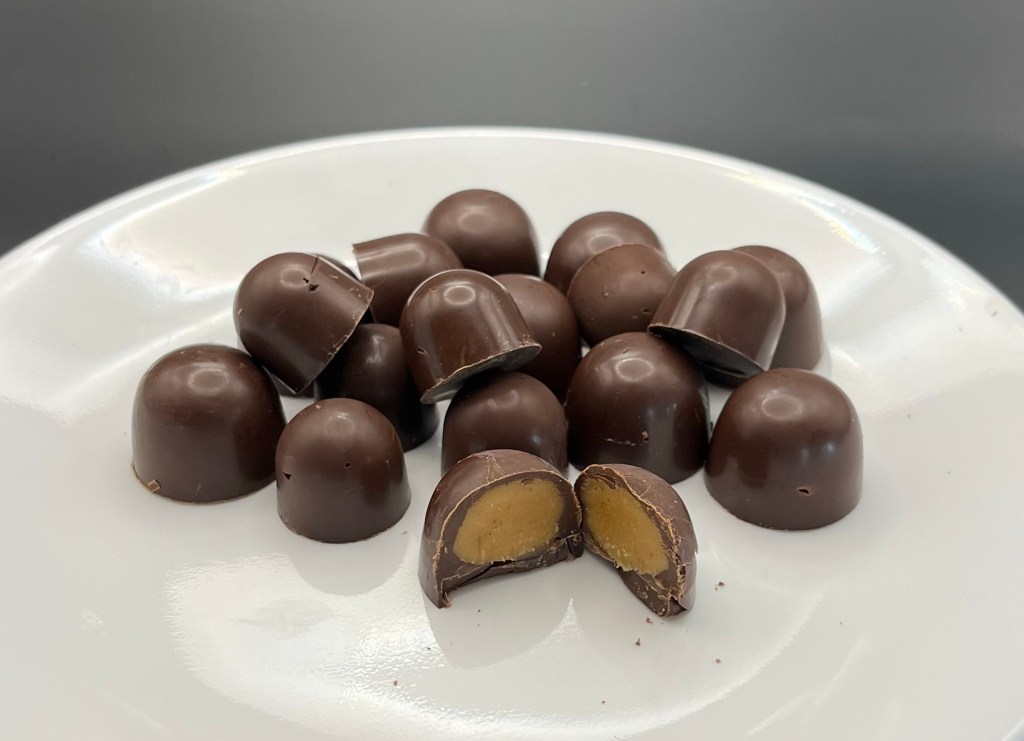
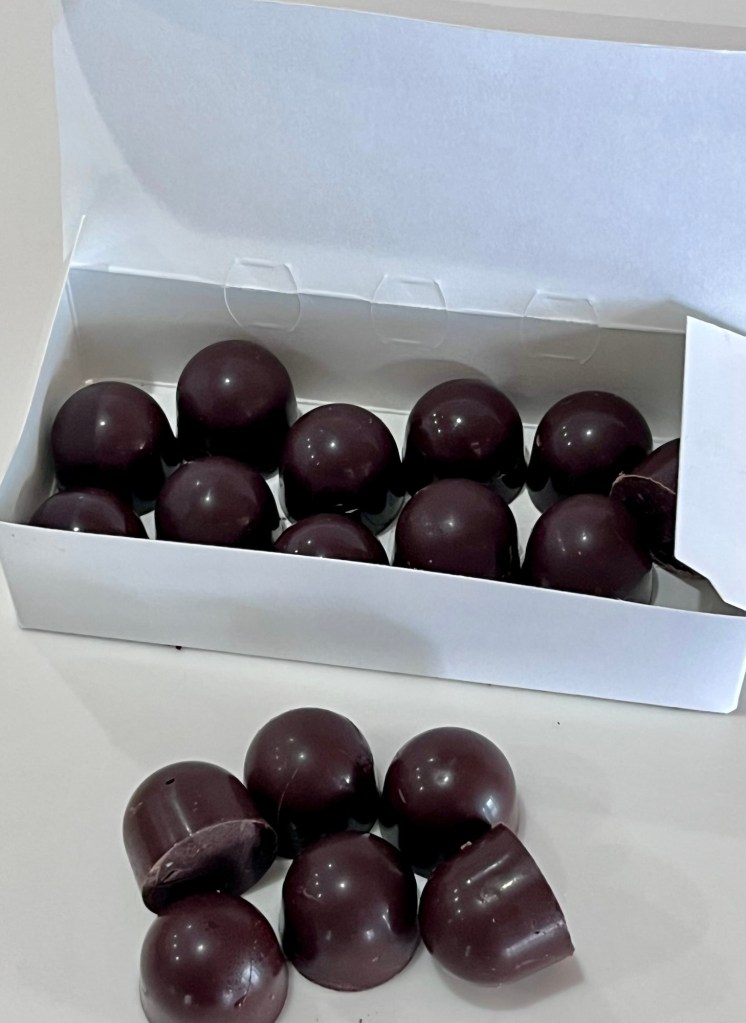
These are all 54% dark chocolate and clockwise from top we have, raspberry jelly, orange jelly, orange creme and caramel creme confections. Not shown are dipped caramel cubes.

The oranges were poached (with permission) from our neighbors trees. It took a few attempts to achieve the correct tartness and consistency of the jelly and creme, but they have LOTS of oranges. Basically, the same with the raspberry, but this time of year I bought them.
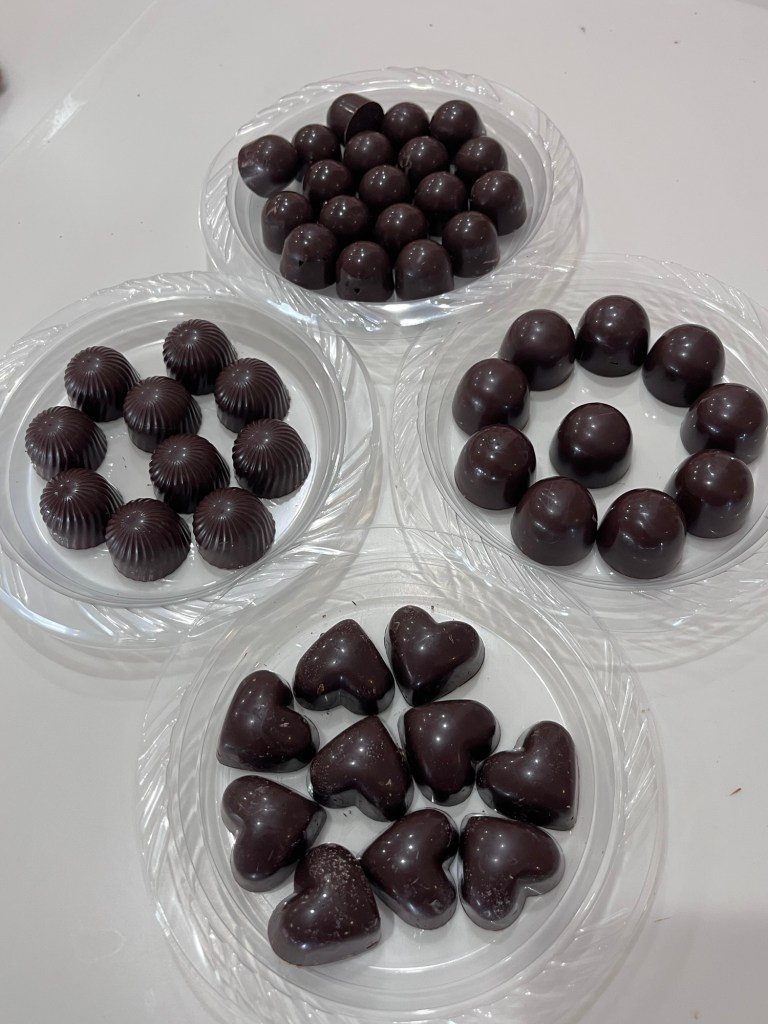
It was fun going back and making these, most rewarding was when tapped upside down 100% released from the mold with a beautiful tempered chocolate shine.

Orange Jelly

Makes ~ 1 ½ cup of jelly

INGREDIENTS
• 2 c orange juice (3-4 oranges)
• 1 ½ Tbl pectin
• ½ tsp butter or margarine
• 300g (1 ½ c) sugar
• 2 Tbl lemon juice

METHOD

  1. Add the juice to a clean pot. Stir in the lemon juice, butter and pectin.
  2. Bring the mixture to a full rolling boil (a boil that doesn’t stop bubbling when stirred) over high heat.
  3. Stir in the sugar (175g) all at once. Return the mixture to a full rolling boil and boil hard for exactly 1 minute, stirring constantly.
  4. Remove from heat and skim off any foam. Ladle the hot jelly into sterilized jars, leaving ¼ inch of headspace.
  5. Wipe the rims, apply lids, and process in a boiling water bath for 10 minutes. Let sit undisturbed for 24 hours to set

Notes:

  1. Optionally add zest from one orange to the orange juice
  2. To soften firm jelly: Heat small amount of water in a bowl, then place a portion of jelly in a smaller bowl such that the water from the larger does not flood the jelly. Stir for about a minute until the jelly softens and becomes pipeable.

Raspberry Creme

INGREDIENTS

• 265g (2 ½ c) frozen raspberries
• zest of 2 lemons
• 60g (¼ c) freshly squeezed lemon juice
• 190g ( ¾ c plus 2 Tbl) granulated sugar
• 3 large eggs
• 85g (6 Tbl) softened butter
• 1 tablespoon cornstarch for a thicker curd (use when baking into a pie or bars)

METHOD

  1. Set out two bowls, one with the butter in it and one with a fine mesh sieve over it.
  2. Place the frozen raspberries, the zest and the lemon juice in a small pot. Cook on medium to low heat until the raspberries soften and burst and it’s mostly liquid.
  3. Press the raspberry mix through the fine mesh sieve to remove the seeds and zest, scraping the bottom of the sieve. You should have ¾ cup raspberry lemon juice. Discard the seeds and rinse the sieve and pat dry, and set it over the bowl with the butter in it.
  4. Return the raspberry juice to the pot and add the sugar and stir. The mix should have cooled quite a bit by now, if it’s hot, wait a bit. Whisk in the eggs (and starch if using) then return the pot to the stove, cooking at medium heat and whisking until the curd is thick at the bottom and covers the back of a wooden spoon or rubber spatula.
  5. Pour the curd through the sieve and press to get as much curd out as possible, scraping the bottom of the sieve. Stir the curd and the butter until the butter is fully melted and you have a shiny, smooth curd. Transfer to a mason jar and chill, then store in the fridge. The curd will become more tart-tasting and stronger in flavor as it chills.

Orange Creme

INGREDIENTS
• 65g (⅓ c) granulated sugar
• Zest of 2 large oranges
• 3 large eggs
• 120g (½ c) freshly squeezed orange juice
• 2 Tbl freshly squeezed lemon juice
• 58g (4 Tbl) butter cold and sliced
• Pinch fine sea salt
• 1 Tbl cornstarch

METHOD

  1. Slice the butter and place it into a bowl and set a fine mesh sieve over it. Set aside.
  2. Pour the sugar in a pot, and zest the oranges over the sugar. Use your fingers to rub the zest into the sugar until you feel it begin to release its oils and become like wet sand. Add the orange juice and lemon juice.
  3. Add the eggs and starch to the pot and whisk well to combine. Do your best to break up the egg bits. Set over medium low heat and begin cooking.
  4. Use a rubber spatula or wooden spoon to stir the creme as it cooks. You’ll keep stirring as it warms and thickens. It will thicken on the bottom first, keep stirring until it reaches about 165⁰ F (it should cover the back of a spoon).
  5. Pour the thickened creme into the bowl through the sieve. Scrape it to get as much curd out as possible, and scrape the bottom of the sieve too.
  6. Stir until the butter fully melts and you have a runny, silky creme. Transfer to a heatproof jar and let come to room temperature. Then set it in the fridge to store.
  7. Creme will keep for about 2 weeks in the fridge.
Chocolate Confections Revisited

I have the occasion to make some quality, filled, chocolate confections and used today as an excuse… rather I mean to practice.

Most of the technique returned after 3 or 4 years of hibernation. I made firm orange and raspberry curds to fill the chocolates. Firm so they wouldn’t drip if someone decided to bite then instead of simple tossing them into their mouth.

Glad say, “I still got it.” Beautiful and delicious.

Fudge – Not Like What Mom Made

I made a recipe for chocolate fudge that was totally different from my Mom’s. (To be fair it did use chocolate.)

It wasn’t bad, but it wasn’t Mom’s either. This new recipe was smooth, silky, and not too sweet, like what you buy in a good chocolate shop.

Mom’s, or to be more accurate, Better Housekeeping’s, is sweet, a bit grainy and significantly more work. (Beating at the end to achieve the correct viscosity for it to still pour, but harden properly is always a challenge.)

It was a good exercise and it’s always a fun to try new recipes, but Mom always liked her’s best, (an homage to Tommy Smothers) and so do QC and me.

Chocolate Fudge –
with Sweetened Condensed Milk

INGREDIENTS
• 350 g (12 oz) 54% dark chocolate chips
• 397 g (14 oz) sweetened condensed milk
• 20 g (1 tbsp) unsalted butter
• ½ tsp vanilla extract
• 1 pinch of sea salt

METHOD

  1. Line an 8” square cake pan with parchment paper.
  2. Place all the ingredients in a saucepan chopped chocolate, sweetened condensed milk, softened butter, vanilla extract, and sea salt.
  3. On low heat, let the preparation melt completely while stirring from time to time with a spatula.
  4. Immediately pour the preparation into the prepared pan.
  5. Cover with plastic wrap and let cool completely in the refrigerator for at least 2-3 hours.
  6. When the chocolate fudge has completely cooled, remove it from the cake pan and cut into 1” squares.

Chocolate Fudge –
Good Housekeeping’s and Mom’s

INGREDIENTS

• 4 c sugar
• 1 1/3 c milk
• ¼ c corn syrup
• ¼ tsp salt
• 4 oz unsweetened baking chocolate
• ¼ c butter
• 2 tsp vanilla

METHOD

  1. Grease bottom and sides of 8-inch square pan with butter.
  2. In 3-quart saucepan, cook sugar, milk, corn syrup, salt and chocolate over medium heat, stirring constantly, until chocolate is melted and sugar is dissolved. Cook, stirring occasionally, to 234°F on candy thermometer or until small amount of mixture dropped into cup of very cold water forms a soft ball that flattens when removed from water; remove from heat. Stir in butter.
  3. Cool mixture without stirring to 120°F, about 1 hour. (Bottom of saucepan will be lukewarm.) Add vanilla. Beat vigorously and continuously 5 to 10 minutes, using wooden spoon, until mixture is thick and no longer glossy. (Mixture will hold its shape when dropped from a spoon.)
  4. Spread in pan. Let stand about 1 hour or until firm. Cut into 1-inch squares.

Dede’s Bakery and Confectionery- Estd 2016

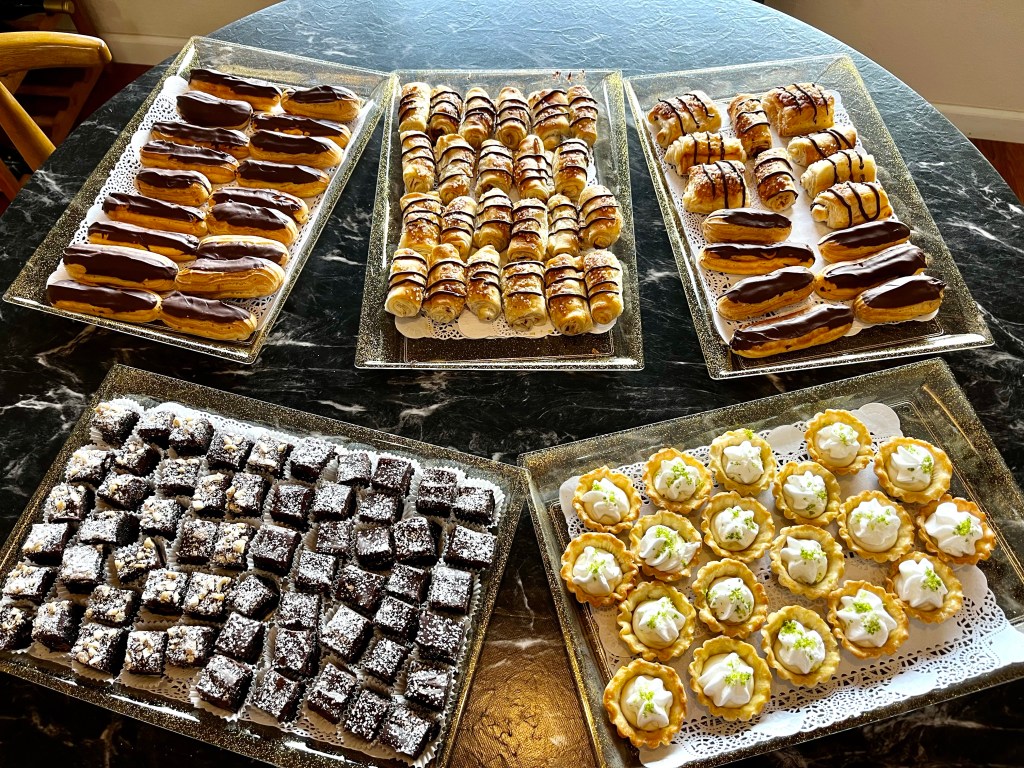
Our synagogue’s fundraiser is tonight and the administrator asked me to provide some of the deserts and something for the auction. To identify my goods I asked Dan to create a logo for me. For those who do not know, DeDe is my granddaughters name for me because they couldn’t pronounce Zayde (Yiddish for grandfather) when they were younger and it just stuck.

Over the last week or so I made and froze choux pastry for the eclairs and shells for the tarts. I made all the fillings yesterday and assembled everything this morning except the pain au chocolat which I made in its entirety this morning. (They don’t take very long.)

I made the chocolate covered caramels a few days ago, wrapped them and set them aside, (after sampling several.)

Happy Valentine’s Day 2023

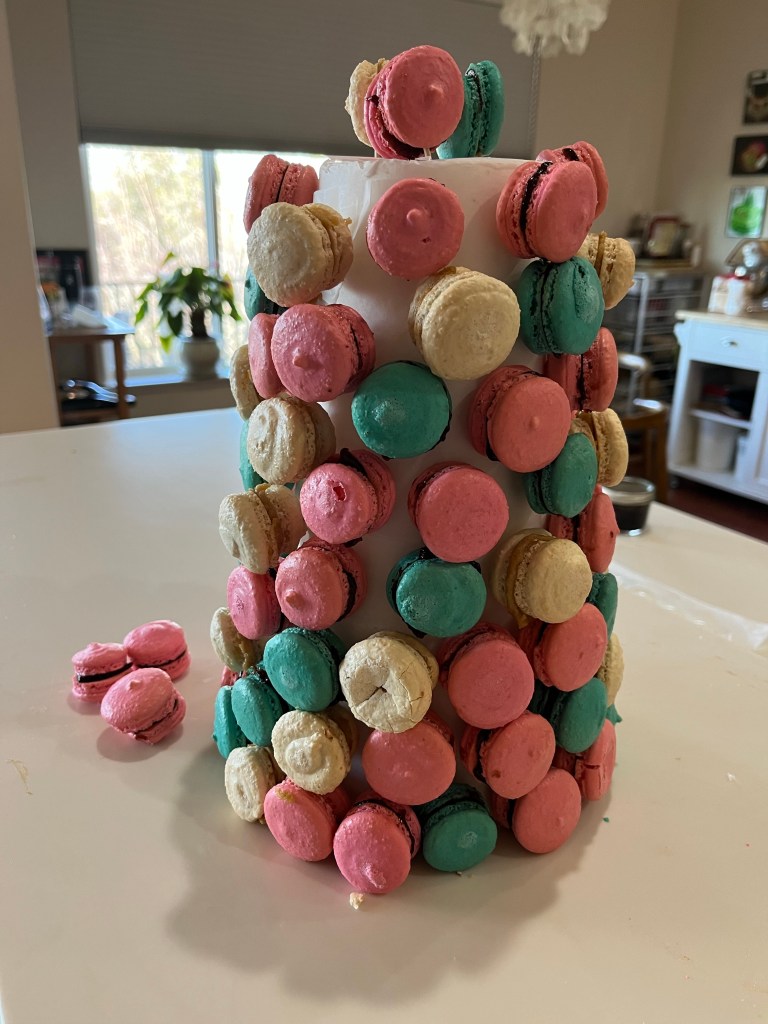
For your (meaning our) indulgence I prepared filled chocolates and a tri-colored macaron tower for this years Valentine’s Day.

Macaron Tower

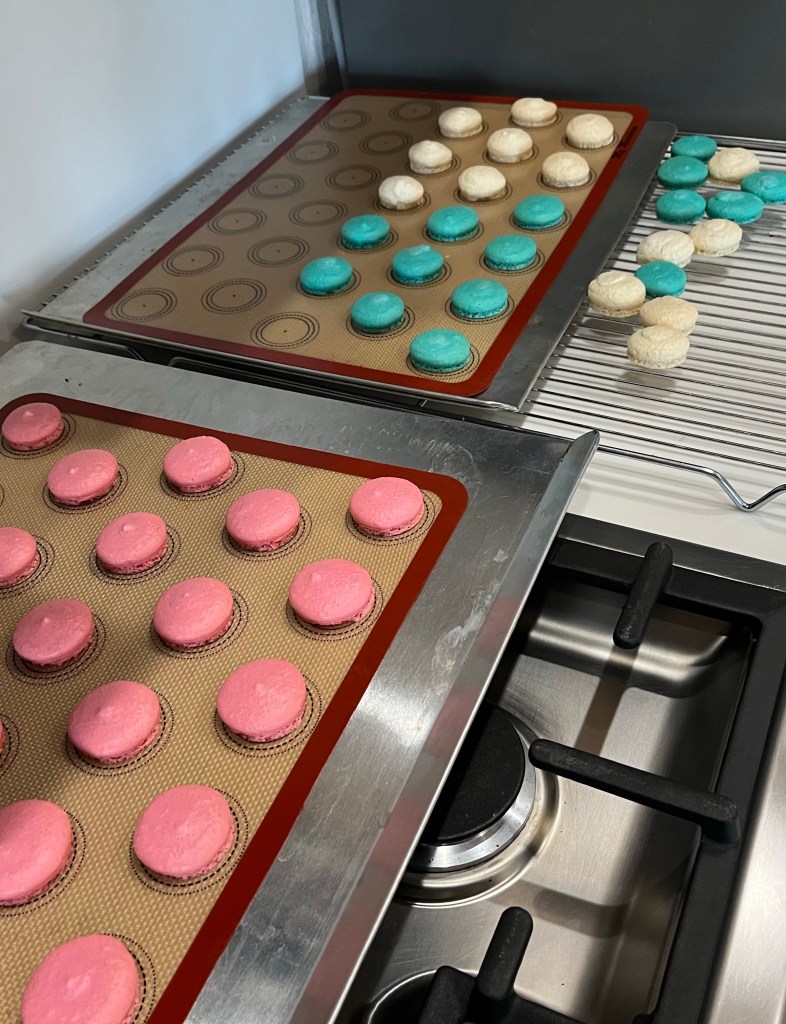
I had problems with the macaron tower. Being frugal, I used left over almond flour. Mistake! The flour was too coarse, even after running through a fine mesh sieve. The resultant batter was grainy and too thick to pipe properly. However, the taste was fine and they were crisp on the outside, had good legs, and were chewy on the inside.

I thought building the tower on my parchment-lined-styrofoam-cone would be easy if I started with a nice even base, then add macarons in a logical sequence row by row. Let’s just say it failed, not due to any ineptitude on my part but rather from geometrical issues with the cone. (It becomes smaller as you go up. Who knew?) I deconstructed the tower (breaking several macarons in the process) and re-built it by placing a single color in a spiral from bottom to top. (The nice teal one.) This method was better, but next time (and there will be a next time) I need to compensate the spiral with basic Euclidean geometric principles.

The teal macarons are filled with homemade plum jam, the pink with plum/raspberry jam and the white with hazelnut butter. They all taste good, but the hazelnut butter didn’t adhere well and the cookies tended to separate. QC suggests using a tart filling like lime or lemon curd to balance the sweetness of the macaron.

Filled Chocolates

I made three trays of chocolates, each with a different shape. To make them a bit special I piped lines of tempered white chocolate in two of the molds and let it cool before filling with tempered 64% chocolate. For the third, I piped some white chocolate into the bottom of each well and used a toothpick to made a star pattern. It worked reasonably well but led to my major mistake with this treat.

I attended a seminar on working with chocolate in Hawaii last year. The most important takeaway was the use of Mycryo to temper chocolate. I changed how to heat the chocolate and now use the microwave. 200g of dark chocolate requires 90 – 120 seconds with a 1000w microwave. After 60 seconds use small bursts and check the temperature between each one. If the temperature exceeds 104F it’s ok, just don’t go too high.

I failed to allow enough time between my golf round in the morning and our traditional happy hour dinner/drinks at our favorite pizza/bar. I tried to un-mold the chocolates too soon and broke many. In fact only six of the orange jelly confections survived. I should have allowed time to put the in the freezer for a few minutes to help them release. Oh well.

Notice the lack of shine on the macarons, and the points. Plus they were too thick, but had good feet. You can see a chip in the chocolate in the center candy, but also see how the white chocolate lines came out.

The confection with the faint stripes (left) are filled with fresh orange juice jelly, the hearts with soft caramel and the dome shaped ones (right) with coconut cream (think the inside of a Mounds bar. )

Overall, everything tasted good and that’s the most important!

Pavlova’s Dog?

Pavlovas are a meringue type confection with a crisp exterior and marshmallow like interior. They were named for ballerina Anna Pavlova and are quick and easy to make. They will keep at room temperature for 3-5 days if sealed in an airtight container in low humidity.

I made them for Independence Day and topped them with red (fresh raspberry or strawberry sauce) and blue (fresh blueberries) for the red, white and blue theme, and chocolate because, well….it’s chocolate!

The tartness of the sauces compliments and tempers the sweetness of the pavlova. These are a delicious, light, refreshing dessert.

Mini Pavlova

INGREDIENTS

• 6 (180 g) large egg whites, room temperature
• 1 ½ cups granulated sugar
• 2 tsp corn starch
• ½ tsp cream of tartar
• ½ Tbsp lemon juice
• ½ Tbsp vanilla extract

METHOD

  1. Preheat the Oven to (I used 215˚ F as my oven runs hot. Many recipes call for 250˚ F. But my pavlovas were over baked and light brown at this temperature. Because this contains eggs, it should be heated to more than 160˚ F. at a minimum.)
  2. Line a large baking sheet with parchment (or Silpat) paper. Using your stand mixer, beat 6 egg whites on high speed until soft peaks form. With the mixer on high, gradually add 1 ½ cups sugar and cream of tartar and beat 10 min on high speed, or until soft peaks form. It will be smooth and glossy.
  3. Add the cornstarch, lemon juice and vanilla extract. The mini pavlovas can be formed by piping, or for a more irregular look I used a spoon.
  4. Bake for 30-45 min. If the temperature is too high, or you leave them in the oven to long they will begin to brown. After 30 minutes add 15 additional minutes if necessary for the surface to no longer tacky.
  5. Slide the pavlova with the parchment paper onto the counter or a cooling rack and allow it to come to room temperature.
  6. Once cool, you can top them with your choice of topping or store in an airtight container for 3-5 days at room temperature (in a low humidity place).

Berry Sauce

INGREDIENTS

• ½ cup water
• 1 tsp corn starch
• 1 cup blueberries, raspberries or strawberries
• ½ cup granulated sugar
• 1 Tbl lemon juice
• ½ tsp vanilla extract

METHOD

  1. Combine water and cornstarch in a small saucepan and bring to a boil, stirring until the cornstarch dissolves
  2. Add the berries, sugar and lemon juice. Crush the berries with a potato masher.
  3. Place over medium-high heat. Bring to a boil, then reduce heat to a simmer. Simmer for 15 minutes, stirring occasionally.
  4. Remove from heat and using an immersion blender blend the sauce for 30 to 60 seconds
  5. Strain the sauce through a fine-mesh sieve, pushing the berries to extract as much juice as possible. Stir in vanilla extract.
  6. Cover with plastic wrap directly on the sauce to prevent skimming
  7. Serve warm or at room temperature

Lavaloha Chocolate Farm

Chocolate bars do NOT grow on trees. Growing chocolate is labor intensive as most of the harvesting and processing of cocoa and production of chocolate is done by hand. We toured the Lavahola Cocoa farm yesterday (Monday, May 17,) in the rain.

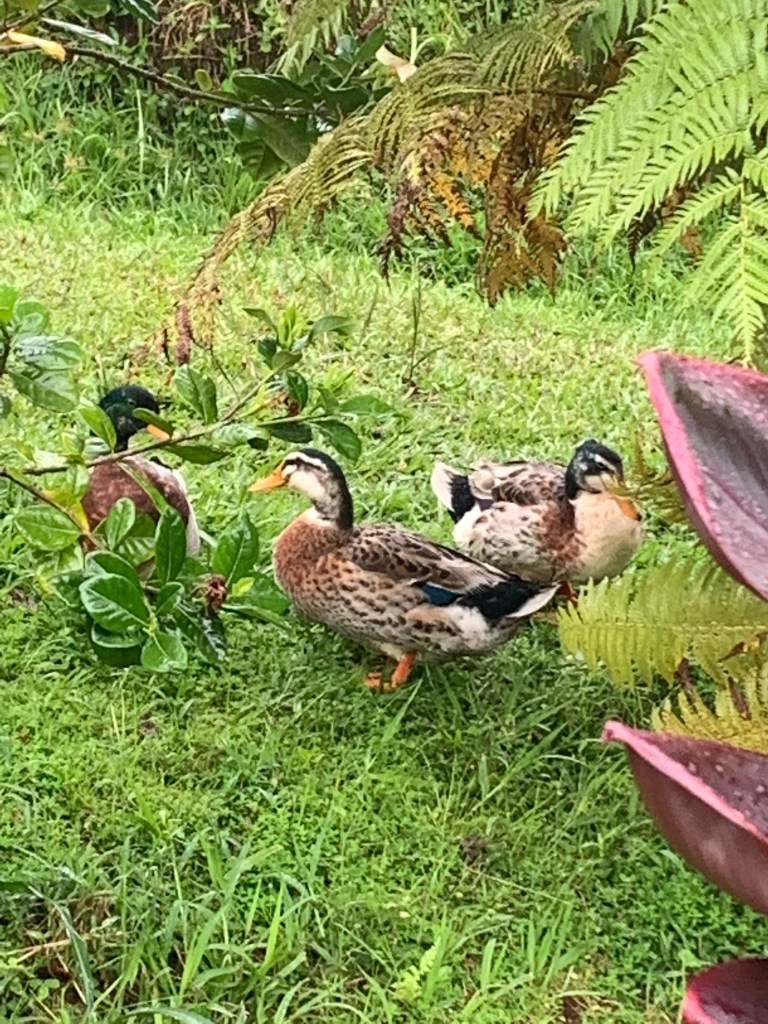
The Lavahola Chocolate Farm maintains a small garden near the visitor center. It contains a variety of native plants, and houses a few ducks.

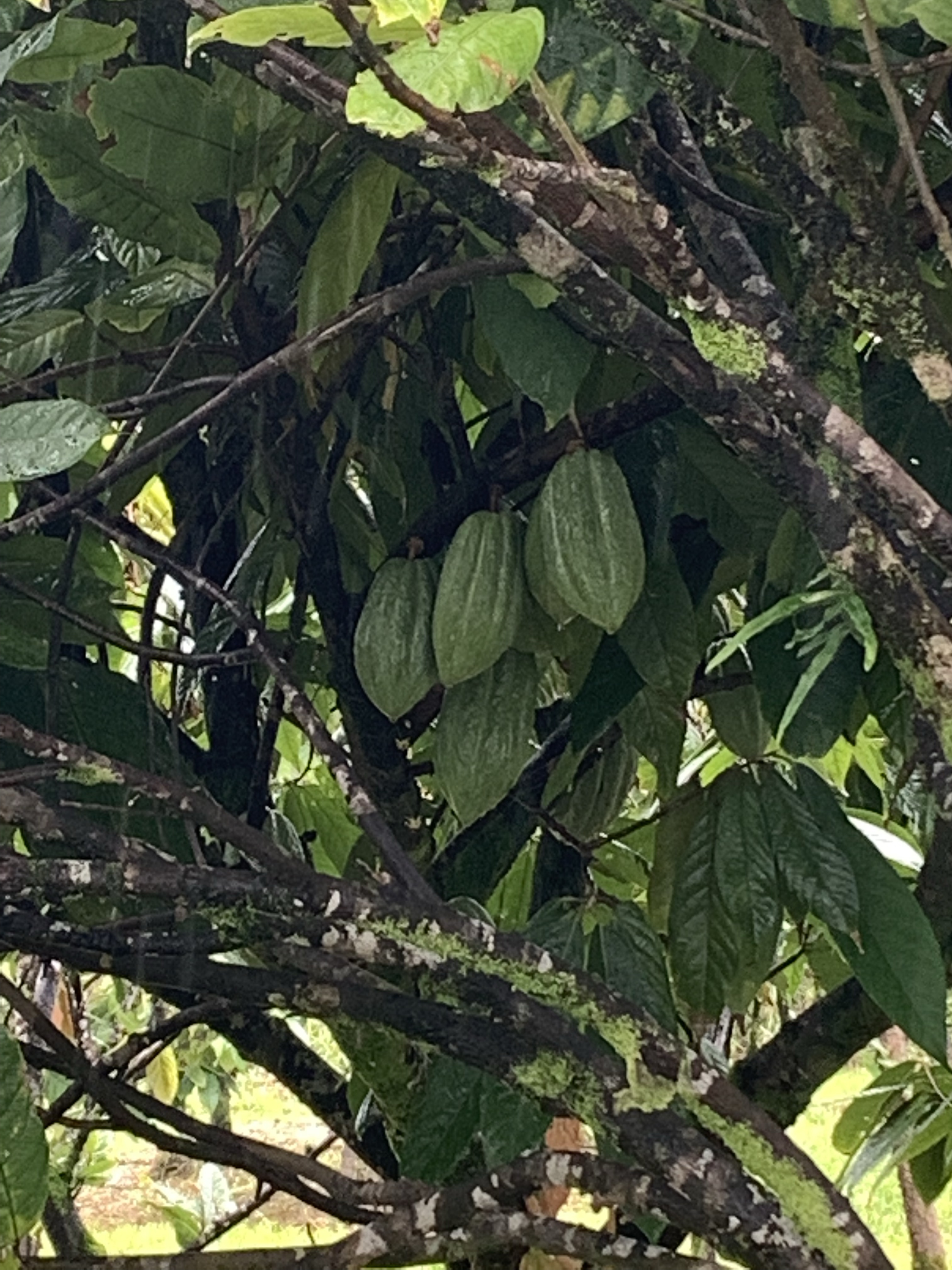
There are three types of cacao, Criollo, Forastero and Trinitario, all of which are grown at Lavahola.

Forastero is the hardiest, higher yield and most reliable strain. It is therefore the least expensive and most profitable. Unfortunately, it is bland and bitter and requires more additives to make it into a salable product.

Criolo is the connoisseurs go-to chocolate. It is quite rare and accounts for about 3% of the worlds supply, and therefore quite expensive.

The Trinitario bean was the happy result of a disaster in Trinidad. The Criollo plantations were destroyed by a hurricane (or disease) so the farmers replanted with the high yield Forastero to rebuild their industry. The new trees were planted on/near the roots of the Criollo trees and the resultant hybrid, Trinitario, is hardier than Criollo and tastier than Forastero.

Cacao grows on small trees and start producing after about 4 years. It is climate sensitive and this latitude is as far north as cacao will grow. In fact the higher elevation (200’) on one end of the farm is too cool to grow cacao.

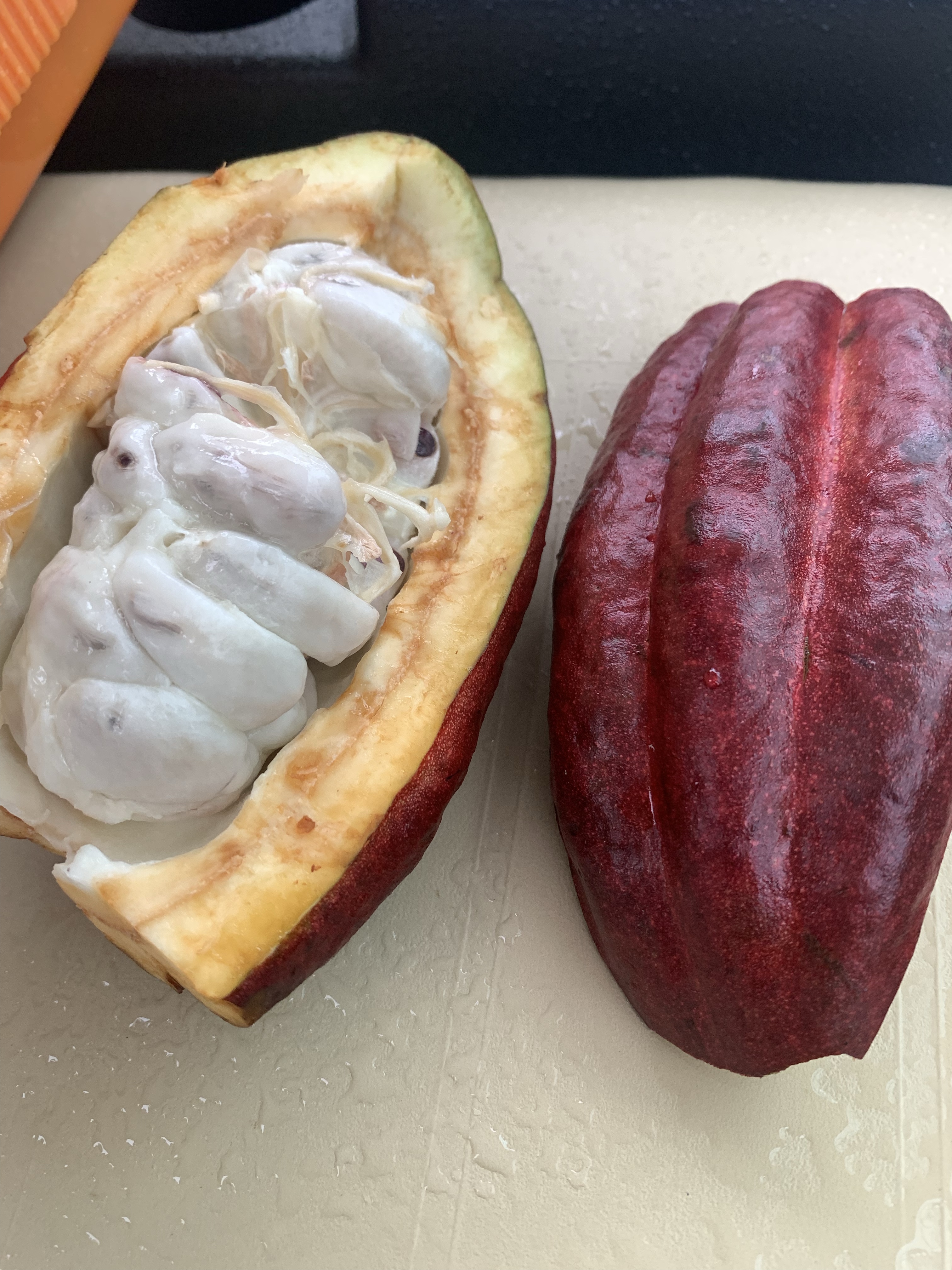
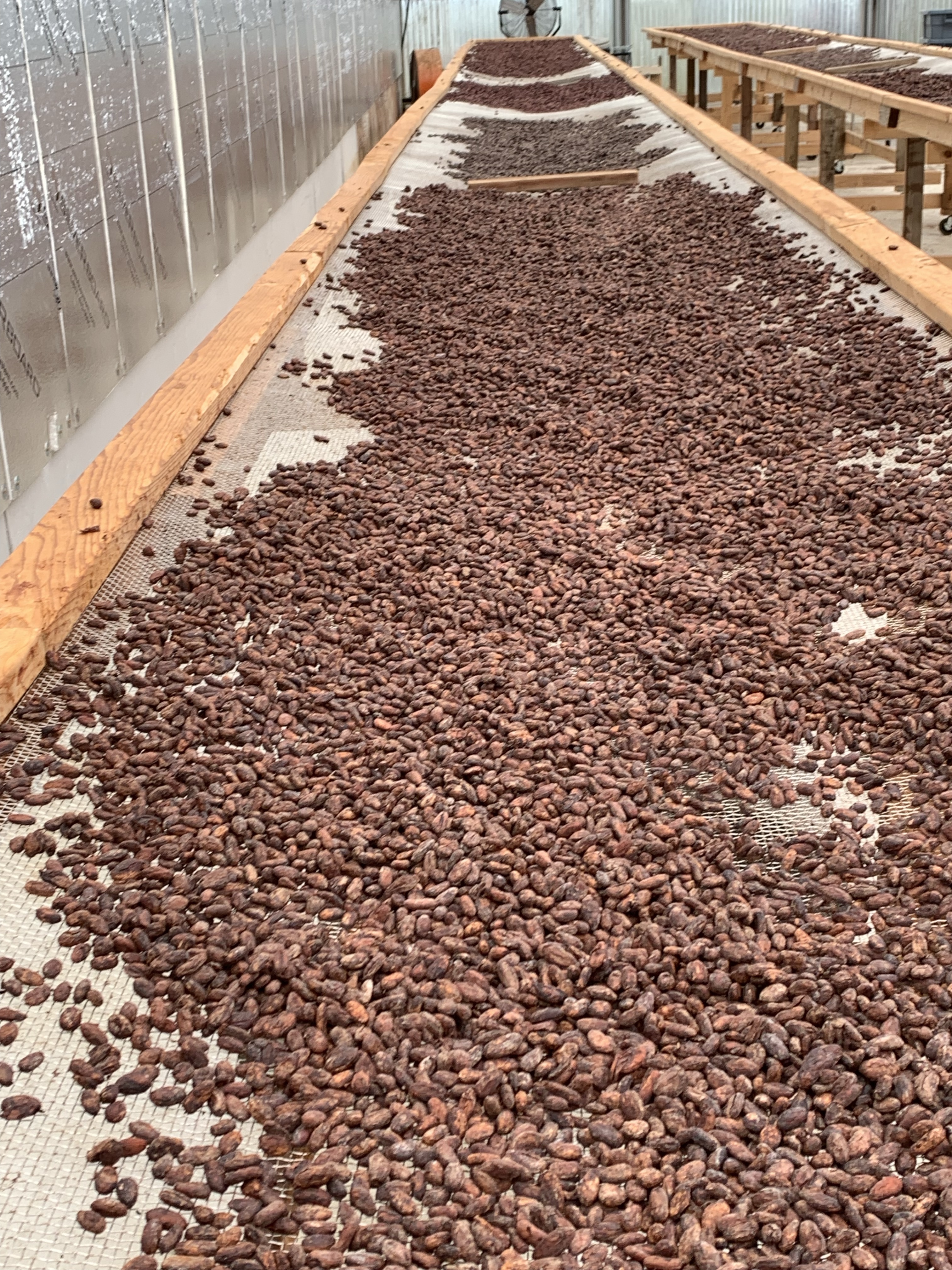
The pods are harvested after they turn red and when scraping the outside exposes a yellow interior. They are cut open and the beans are dried for several months before being examined and selected by the chocolatier. The highest quality beans are roasted and puréed in what looks like a peanut butter mill.

If you happen to be in Hilo on the Big Island take a trip up the mountain and visit Lavahola Chocolate Farm. It’s well worth investing the hour. The staff was knowledgeable, friendly and fun.

Tempering Chocolate Seminar

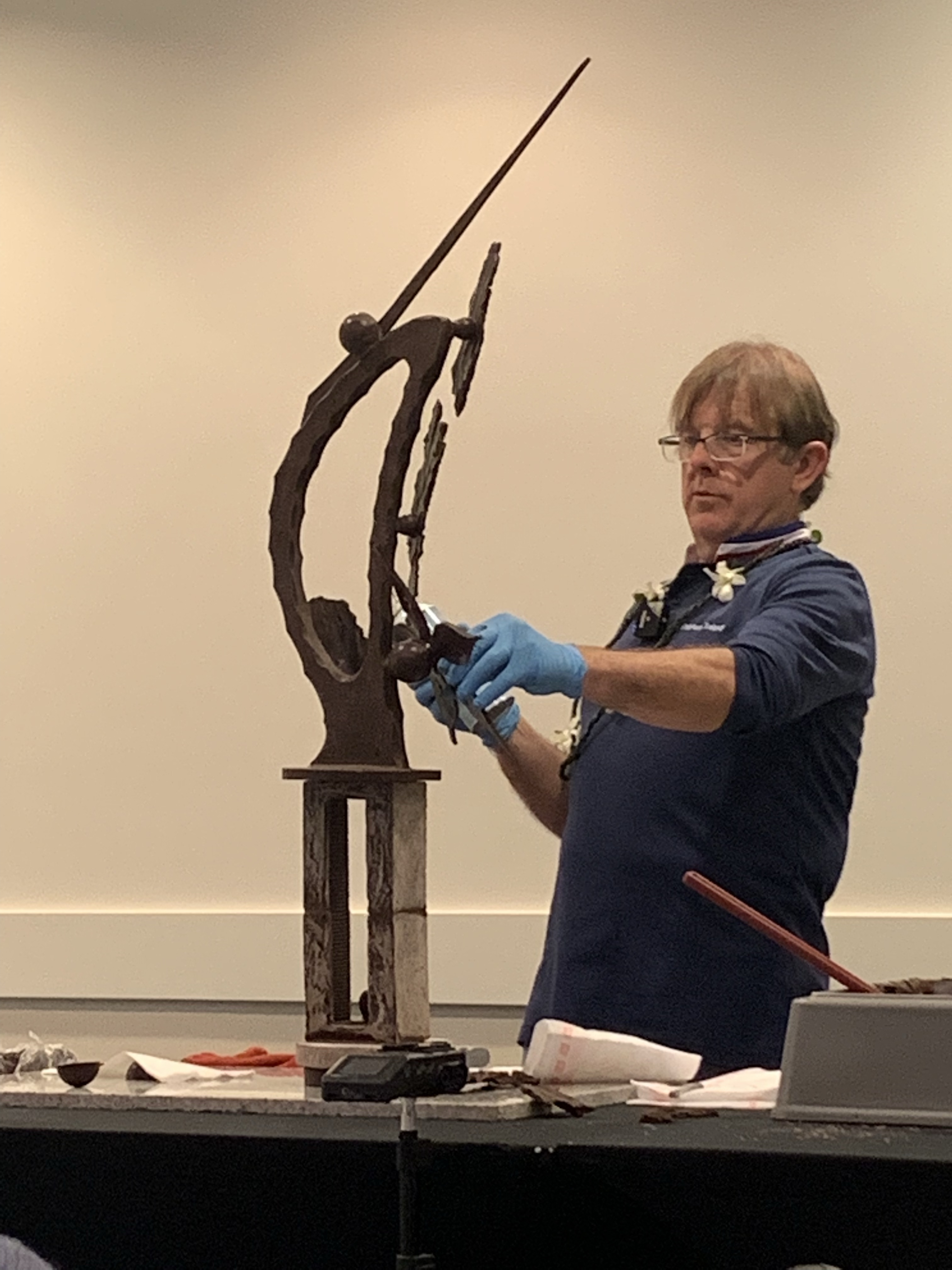
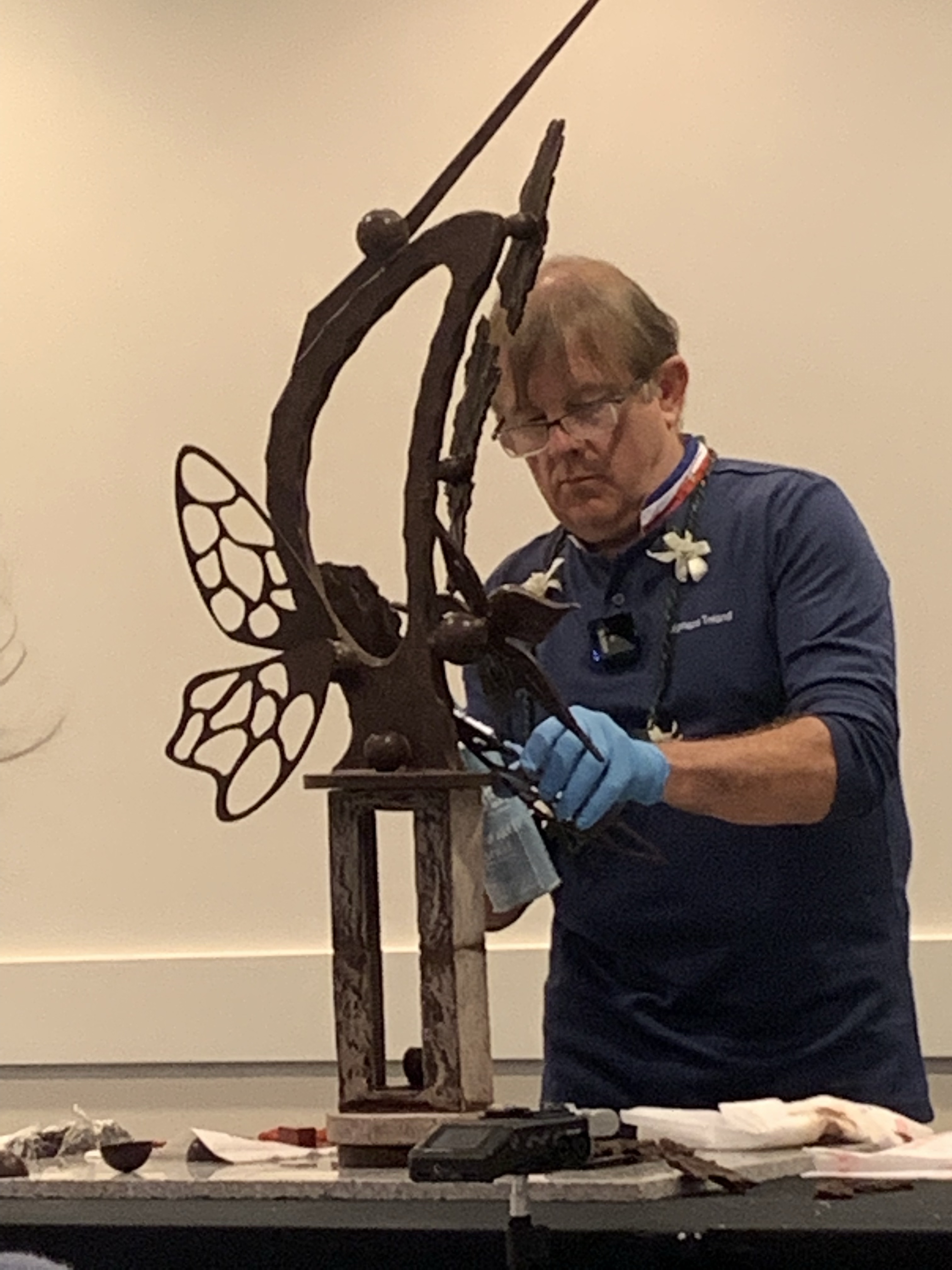
I attended a fascinating seminar by MOF Chef Stephan Tréand. Chef Tréand earned the prestigious Meilleur Ouvrier de France, or “best craftsman in France,” award in 2004. The seminar was described as “Tempering Chocolate.” Chef Tréand dispensed with that discussion in the first two minutes, then spend the next ninety minutes demonstrating how to make a pure chocolate showpiece.

UNBELIEVABLE !

Rather than try to explain the process here are a few photos from start to finish. He brought some of the pieces with him, but made most of them during the seminar.

I will say I did learn new concepts and methods about tempering and using tempered chocolate.

True Lies and False Confections

This morning some radio commentator mentioned St. Valentines Day is Monday. After reviewing my calendar I said to myself, myself I said, “Yikes! Time is running out to make my chocolate candies for friends and family.”

Last year I began using my sous vide to temper chocolate. It is easier to control the temperature of the chocolate than in a double boiler.

Sous Vide Chocolate Tempering Set-up

Here is the setup I use. A pot of water chosen to fit both the sous vide and small pan holding the chocolate. The pan with the chocolate fits snugly so it wouldn’t fall into the water. The dishcloth is used to wipe and water from the bottom of the pan, if necessary, like when removing hot water from the water bath and adding ice to cool the water. There are two acrylic molds in the background to make the candies and the blue silicone mold to hold any excess chocolate. The excess made some nice solid chocolate hearts. Barely visible at the top of the photo is my morning coffee, an essential part of any kitchen adventure.

TEMPERING CHOCOLATE

Weigh desired amount of chocolate remembering it is easier to control the temperature of larger amounts of chocolate.

  1. For dark chocolate, set the sous vide to 126 deg and let the chocolate heat to 122 deg F and hold until it is all at temperature. That’s the beauty of using the sous vide to temper. It will hold indefinitely at any temperature you select.
  2. Remove the sauce pan containing the melted chocolate, wipe the pan dry and set it aside
  3. Replace 6-8 cups of water with 8-10 cups of ice. (Ice takes up more room than water. Add more cold water to the water bath if required.)
  4. Set the sous vide to 75 deg.
  5. When the chocolate cools to 82 deg, set the temperature to 95 to hold the chocolate in temper at 90 deg for over an hour.

NOTE FOR ACRYLIC MOLDS

  1. Paint the inside of each mold with a silicone brush allowing the chocolate to dry before repainting. Leave the brush in the tempered chocolate
  2. Paint three coats of chocolate being sure to examine the sides and corners closely to assure the entire inside of each mold is covered. Hold the coated mold up to the light and see if there are any holes in the coating.

I used different molds, the heart shaped one for the caramel filling and the domed one for the marshmallow. It required about 100 g of caramel to fill the 18 cells of hearts and 50 g of marshmallow to fill each of the domes.

FILLING CHOCOLATES

I warmed the caramel to piping consistency, filled a piping bag with the slightly warm caramel. When filling the chocolate shells be sure to leave adequate room to seal the bottoms of the chocolates. Repeat with about the marshmallow.

Cutting the chocolates for photos is always difficult. The tempering makes them hard and brittle. I used a very thin serrated knife.
Any suggestions would be welcome.

Pour enough chocolate across the filled molds and spread to assure each cell is covered with chocolate. (NOTE: the chocolate was kept at 90 deg and remained tempered throughout all the steps. Yay sous vide!)

Once the bottom coat of chocolate is fairly cool scrape off the excess with a bench knife. Save the excess for you next adventure.

Sugar Snow-Globe Cake

I saw a technique for making sugar domes on Netflix’s School of Chocolate. Initially, I thought that looked like a fun and easy skill to learn. I soon discovered it was fun. Plus I had the added incentive of wanting to make a snow-globe cake for my granddaughters. I envisioned an evergreen tree and snowman under the dome.

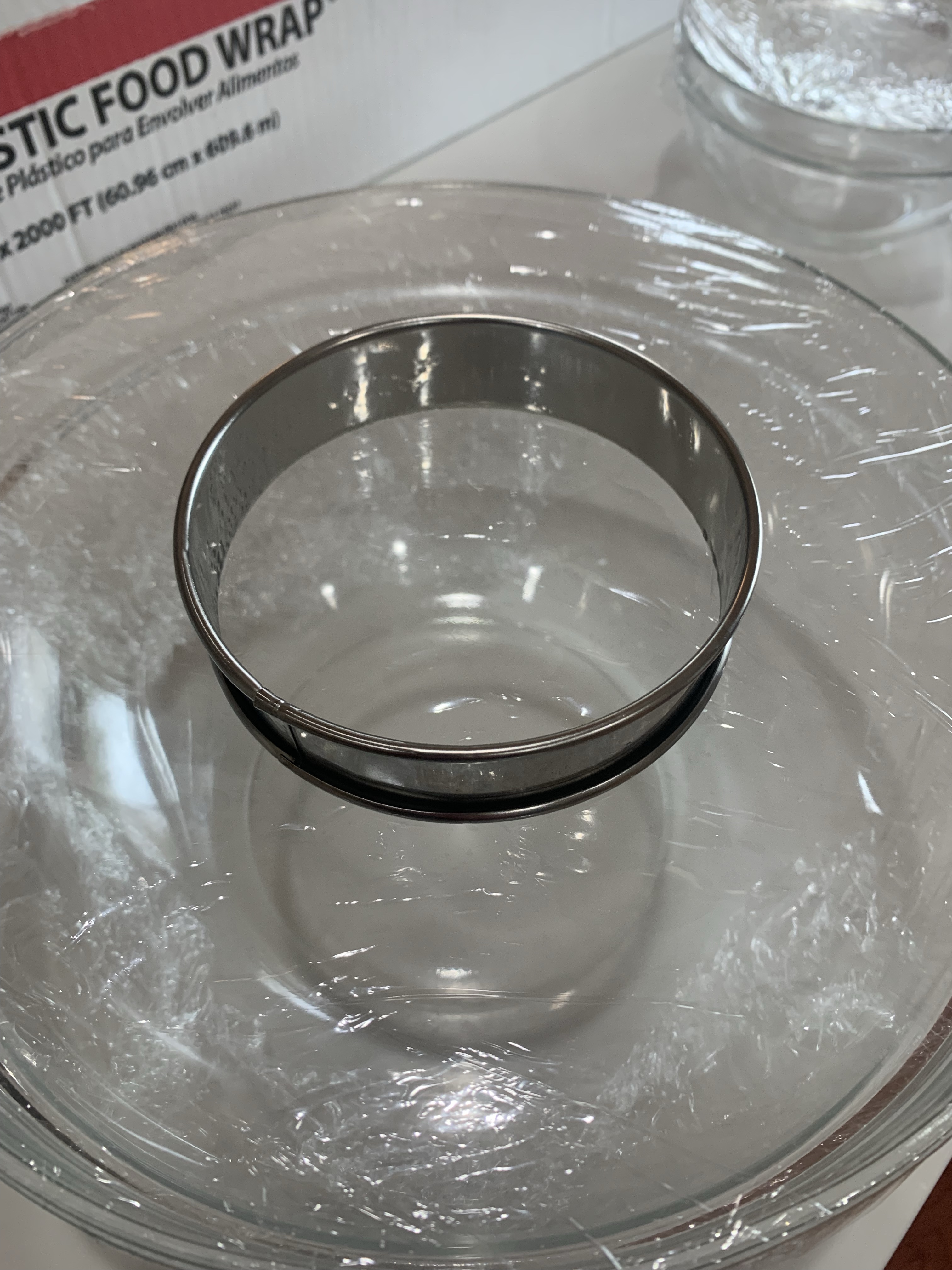
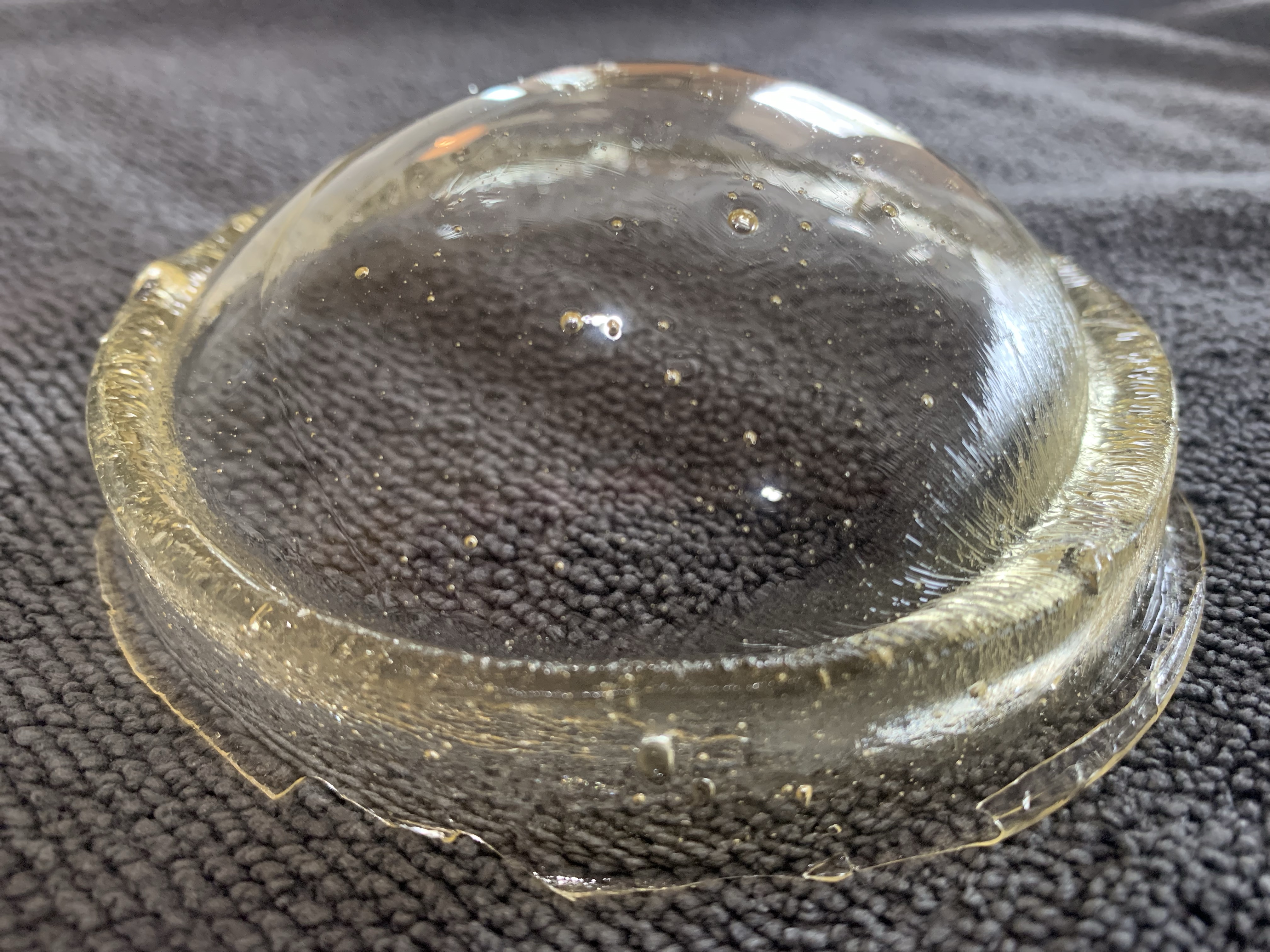
‘Simply’ pour a little (1-2 Tbl depending on ring size) molten (hard crack) sugar/glucose mixture inside a ring mold, resting on 3 layers of plastic wrap stretched (not too tightly) and sealed across a large bowl.

Press down on the outside of the ring and keep increasing the pressure until the sugar reaches the side of the mold and starts to dome up. If the sugar is too hot it can melt the plastic wrap, too cold it won’t spread to the edges of the ring mold. No matter what you do, your fingers will burn. (After this I purchased some heat resistant silicone gloves.)

It was about now that I decided to make the cake an actual snow-globe. There is no way to pick it up and shake it, but a life time of skiing around snow makers gave me an idea. If I could blow the ‘snow’ (or powdered sugar) from inside the dome it would look like it was snowing.

I changed my plan from a small dome on shell tart to a 5” fondant covered cake. Now I had to make the domes bigger and higher.

I saw a method for making the globes (the author was actually making sugar bowls, but inverted would be perfect.) Ann Reardon – How To Cook That has a great tutorial.

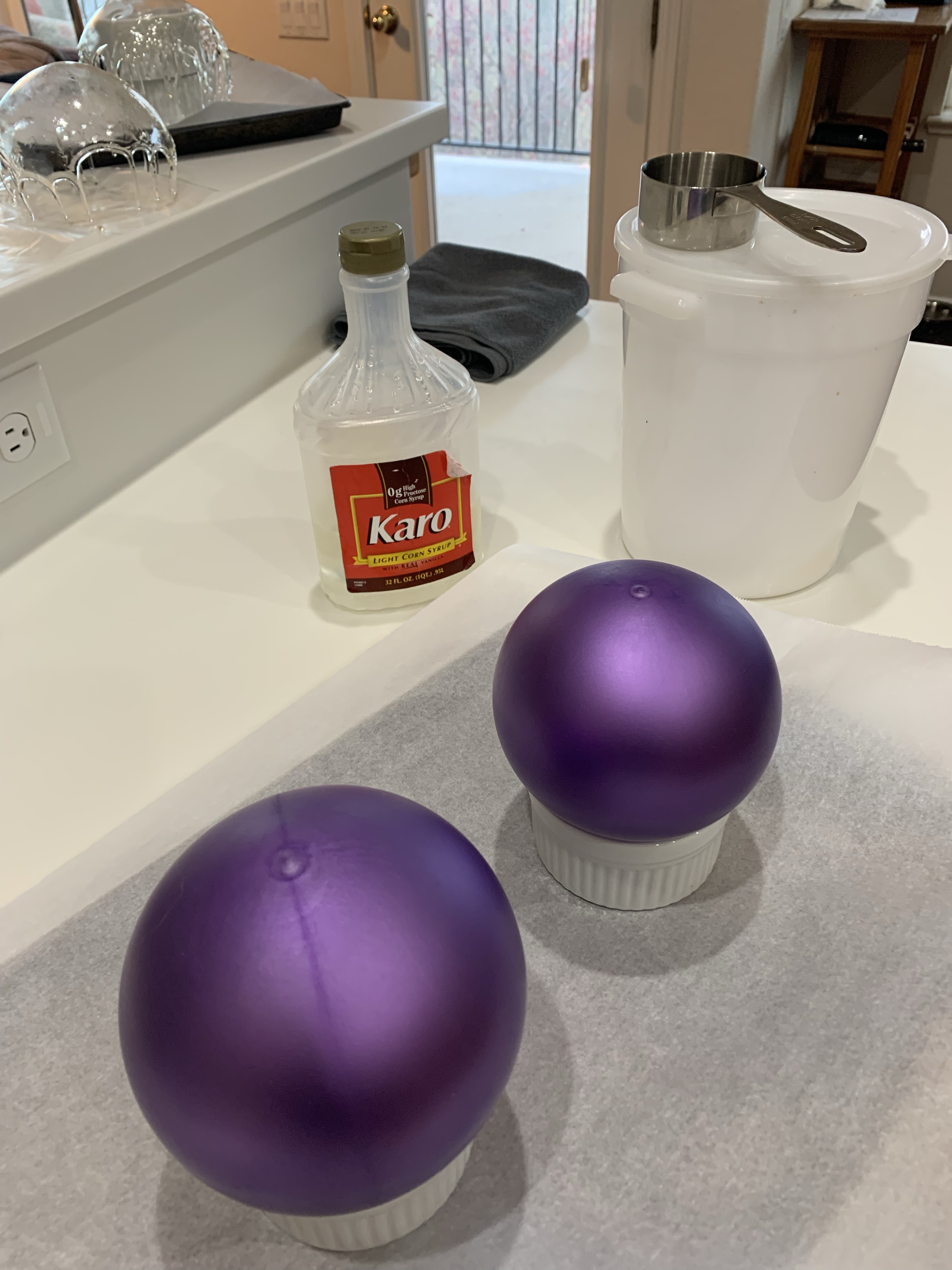
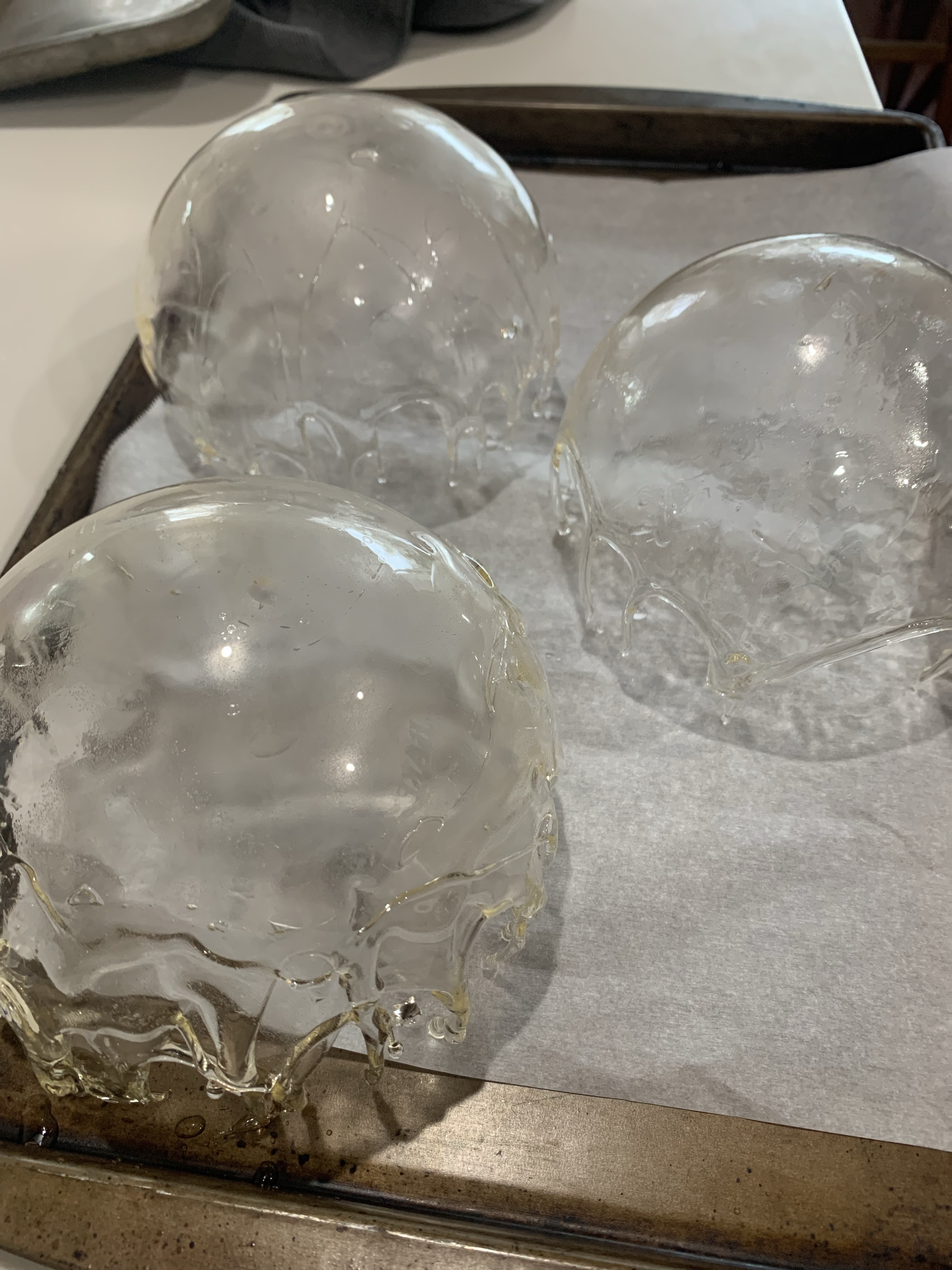
Use helium quality balloons so the molten sugar doesn’t melt them. Ann explains using water filled balloons to disperse the heat and keep them from bursting when covering with the sugar.

This technique also required some practice. You need to be sure to use enough molten sugar or the balloon won’t be fully covered. I found covering the balloon in one smooth pour was more successful than trying to go back and filling in places that weren’t covered.

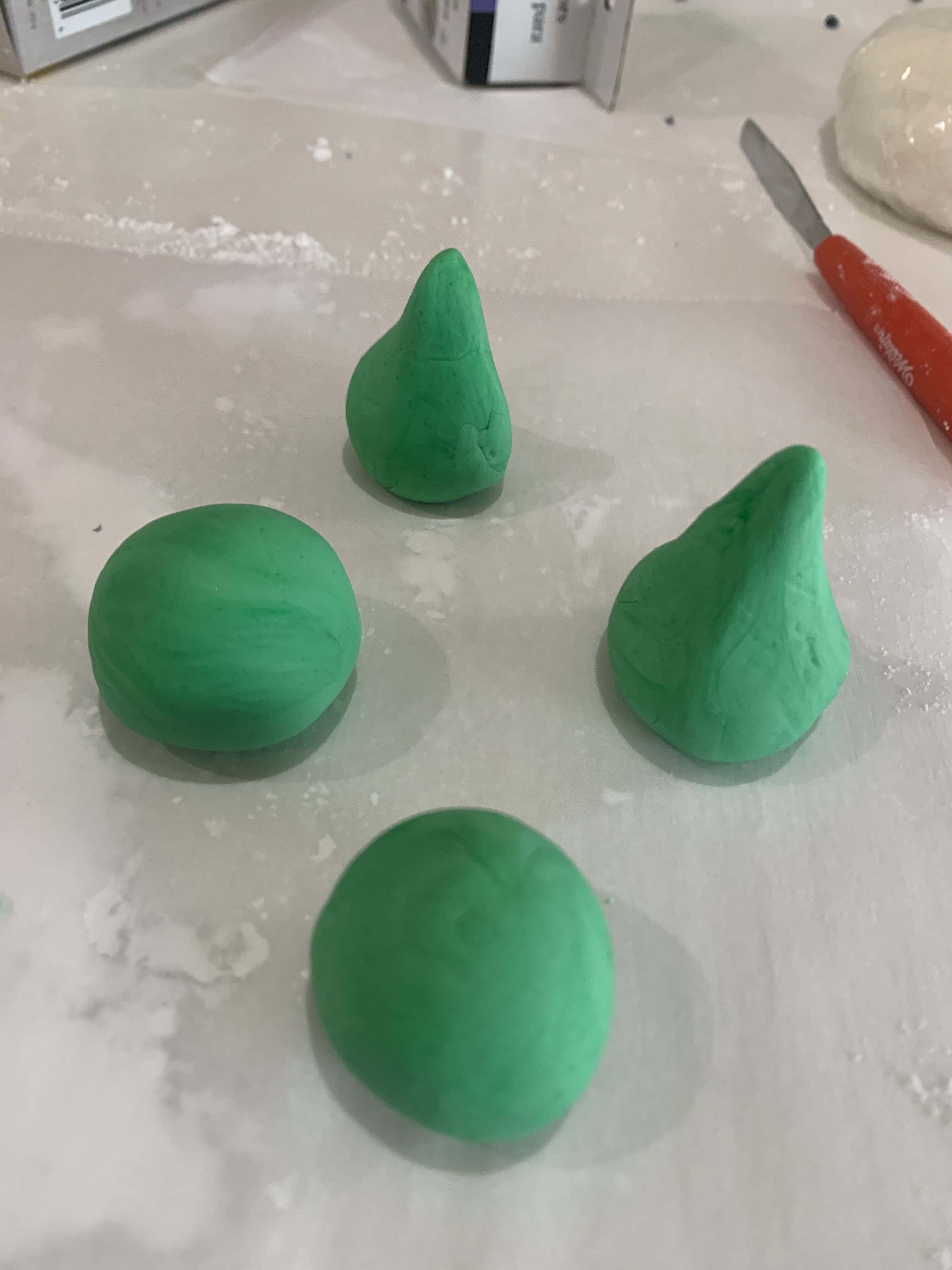
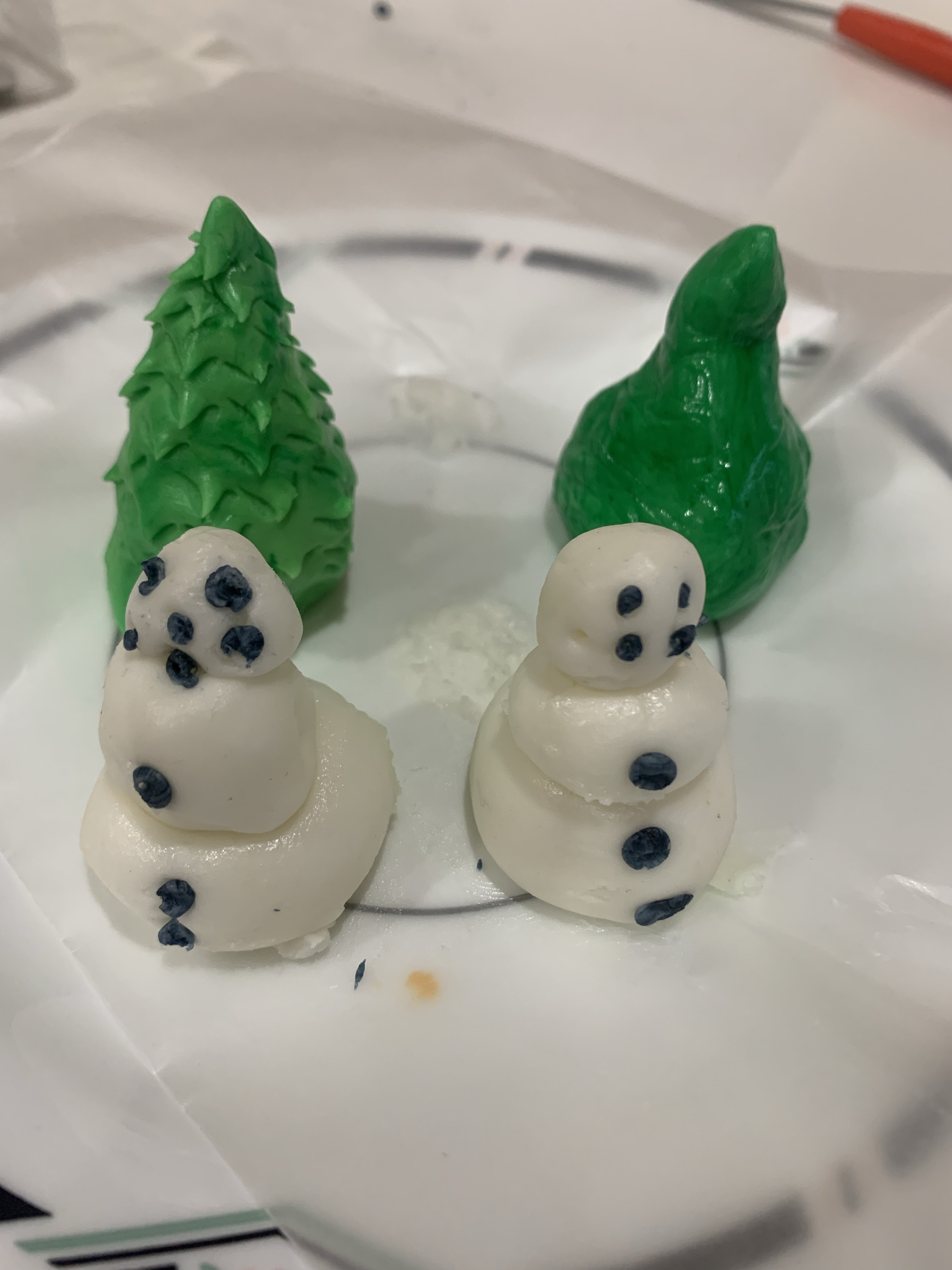
I made some white gum paste and rolled a little into balls for the snowmen. I colored some black to make buttons, eyes etc. I dyed some green and shaped it into cones. Another YouTube video demonstrated how to use cuticle scissors to snip bits to make the boughs of the trees.

Now to the engineering ‘genius’ of the cakes. To make the snow blower I procured some mini funnels (1.5” across at the top.) I connected a piece of flexible tubing (I happened to have the exact correct size and length from my beer making equipment.)

A squeeze bottle served as the air pump and a small sugar pearl blocked the sugar from pouring down the tubing. A firm squeeze on the bottle and voilà, a mini snowstorm. This is my test set up.

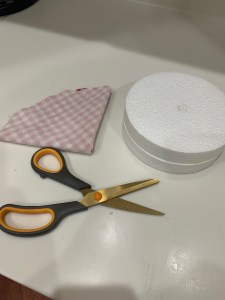
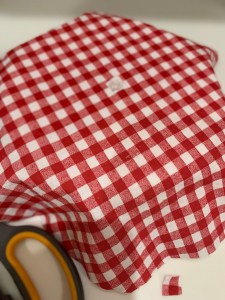
The cake was put on a 5” cake board which I had cut in its center, then it was crumb coated and covered in fondant. The flexible tubing was fed up through the cake board, cake and fondant and the funnel attached. The other end was fed through the checkerboard ‘tablecloth’ and two 5.25” styrofoam disks with holes cut in the center. The bottom disk had a channel cut from the bottom center to the edge to have a place for the tubing to run to the outside.

Everything was stacked, filled and covered with the sugar dome. Imagine my surprise when the girls and I tried it all together the first time, and it worked!

Slow Motion – IMHO Awesome!

Now, back to those braided fruit tarts.