Light Rye Bread – KAB

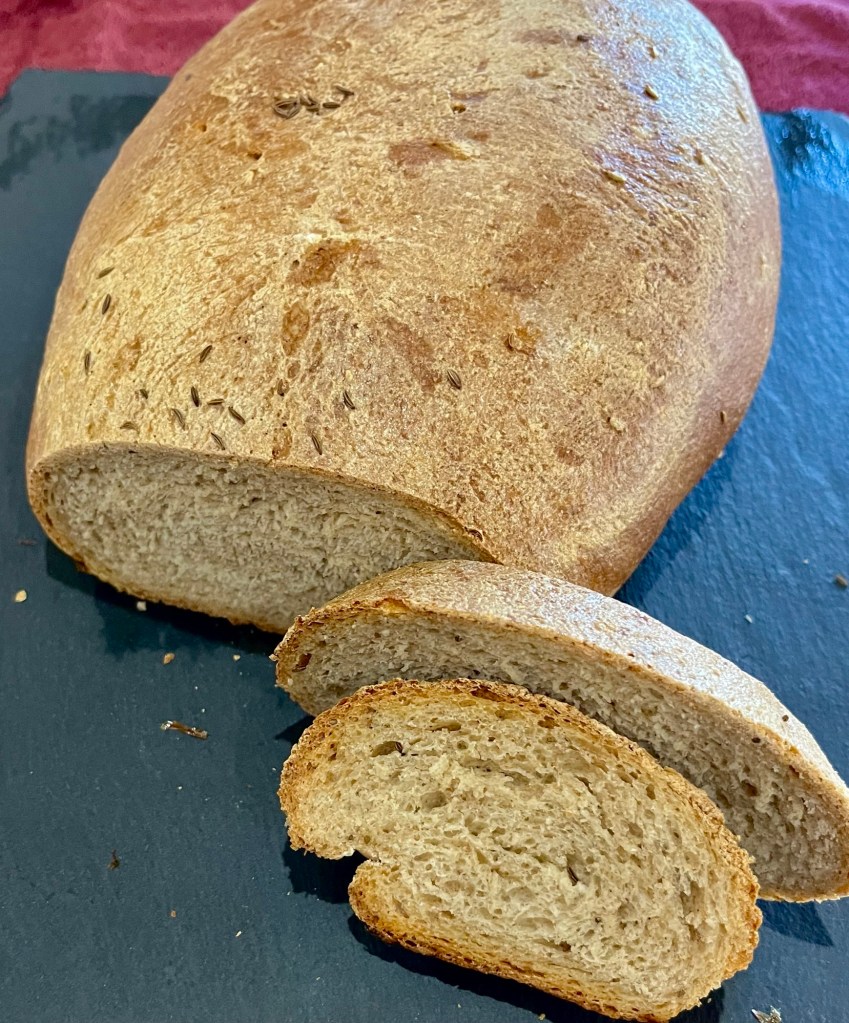
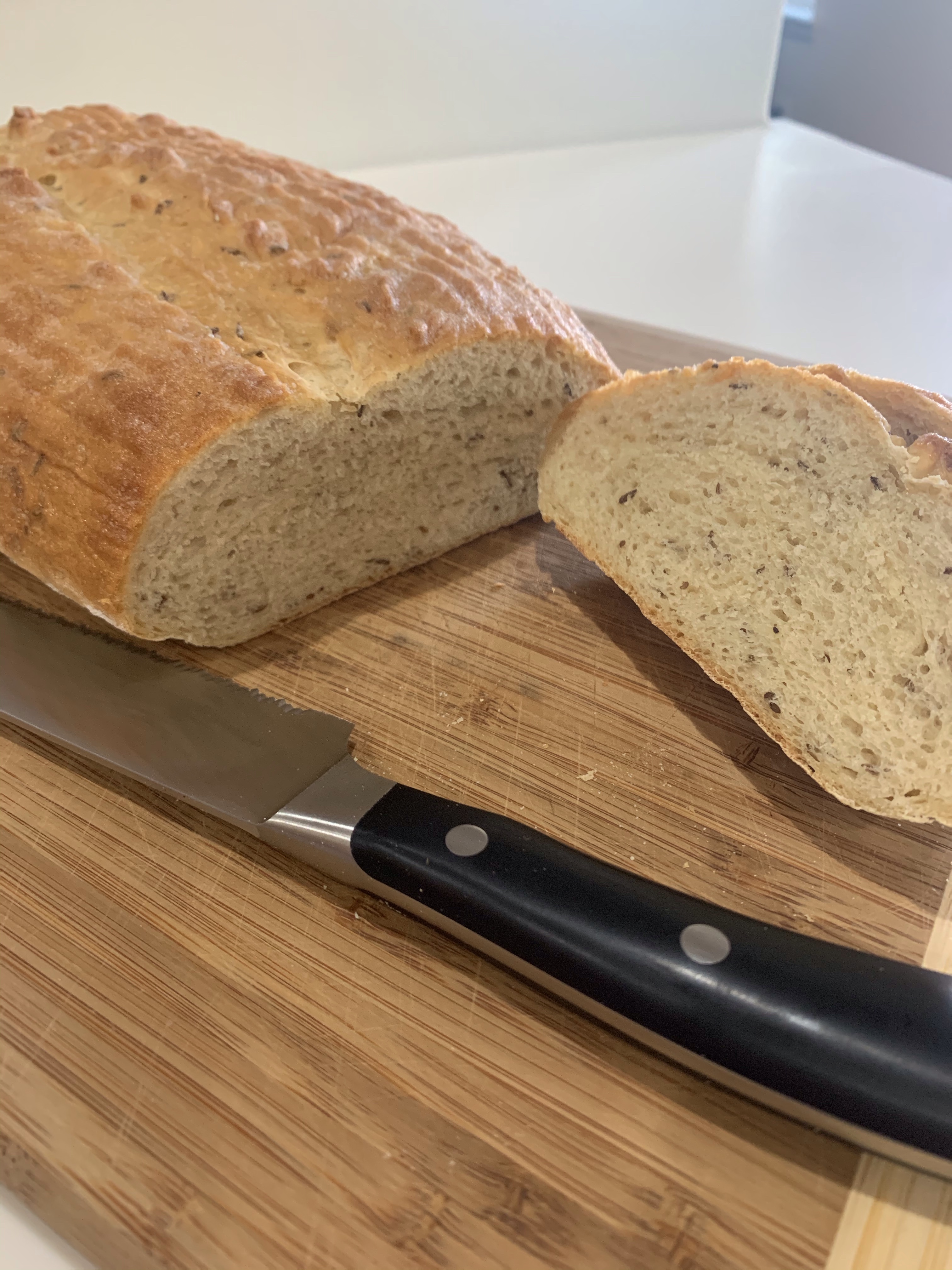
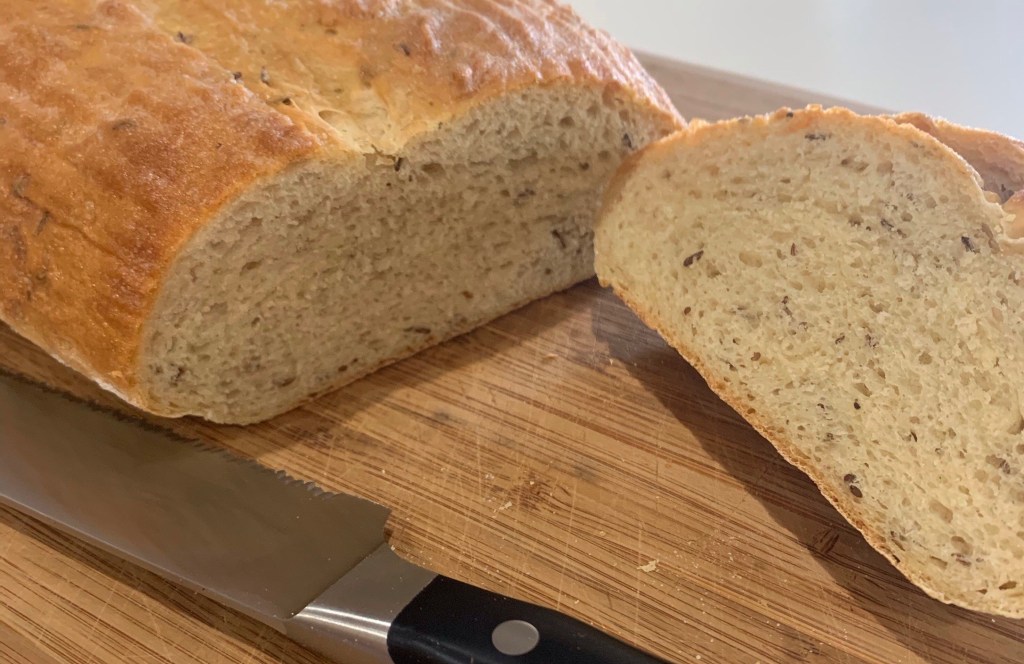
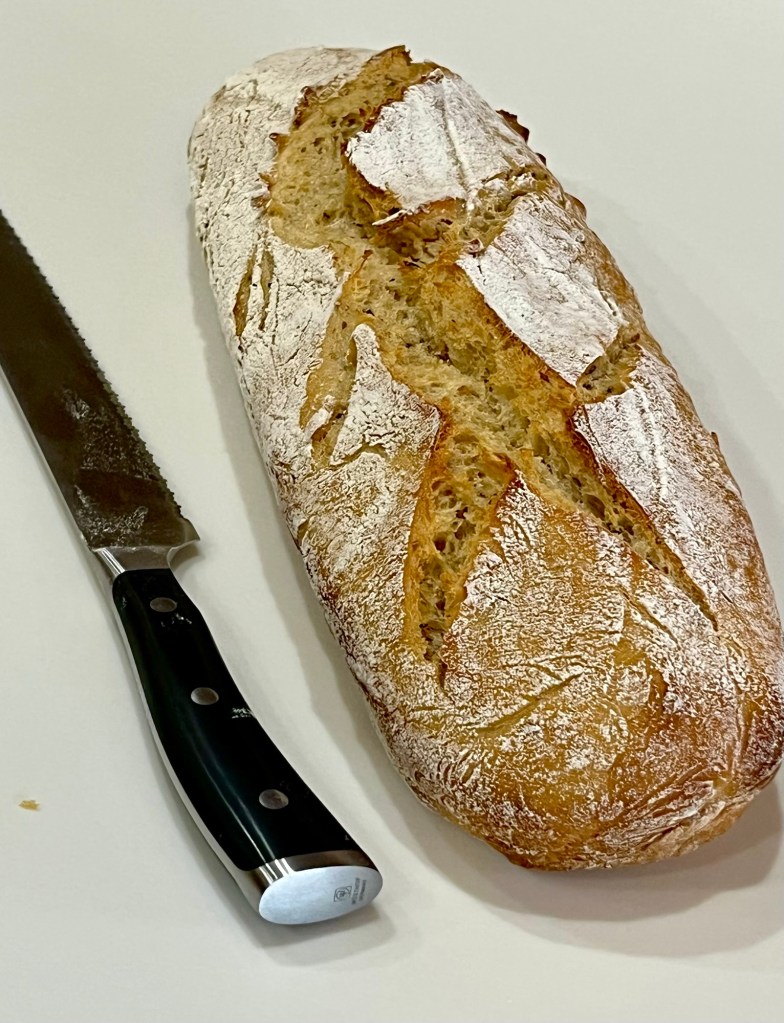
We love a good rye bread with soft, chewy interior and crisp, crunchy crust. If you do also, this breads for you.

It’s simple to make, it’s the first overnight rise that takes time. Combining the ingredients takes 15-20 minutes, then rise for 2 hours. Refrigerate overnight and the next day let it rise at room temperature for 2-3 hours, then bake for ~30 minutes.
Light Rye Bread – KAB

INGREDIENTS

• 340g (1 ½ c) lukewarm water
• 280g (2 ⅓ c) bread flour
• 163g (1 ½ c) light rye flour
• 28g ( ¼ c) nonfat dry milk
• 1 ½ tsp table salt
• 1 ½ tsp instant yeast
• 1 ½ tsp Deli Rye Flavor, optional
• 25g (2 Tbl) vegetable oil
• 1Tbl caraway seeds

METHOD

  1. Place the water in the bowl of a stand mixer.
  2. Combine the flours with the remaining ingredients with the warm water. Mix until there are no dry spots and all of the flour is moistened. The texture of the dough will be soft and sticky due to the pumpernickel flour.
  3. Cover the bowl and let the dough rise at room temperature for 2 hours. Then refrigerate overnight, or for up to 48 hours.
  4. Grease your hands, and scoop the dough out onto a lightly greased or floured work surface. Shape it into a ball or boule and place it, smooth side down, in a floured brotform. Let the dough rise, covered, for 2 to 3 hours.
  5. About 45 minutes before the end of the rising time, preheat the oven to 450°F with an appropriate Dutch oven.
  6. When the loaf is fully risen, remove the hot Dutch oven bottom from the oven, carefully grease it, and tip the risen ball of dough into it. Make several slashes in the dough. Cover with the lid, and place it on a middle rack in the oven.
  7. Bake the bread for 25 minutes. Check the interior temperature with a digital thermometer. When fully baked it should register at least 195°F. If not, remove the lid and bake for an additional 5 to 10 minutes until the loaf should be lightly browned.
  8. Remove the bread from the oven and turn it out of the crock onto a rack. Cool for several hours before slicing.

“To crooked eyes truth may wear a wry face”

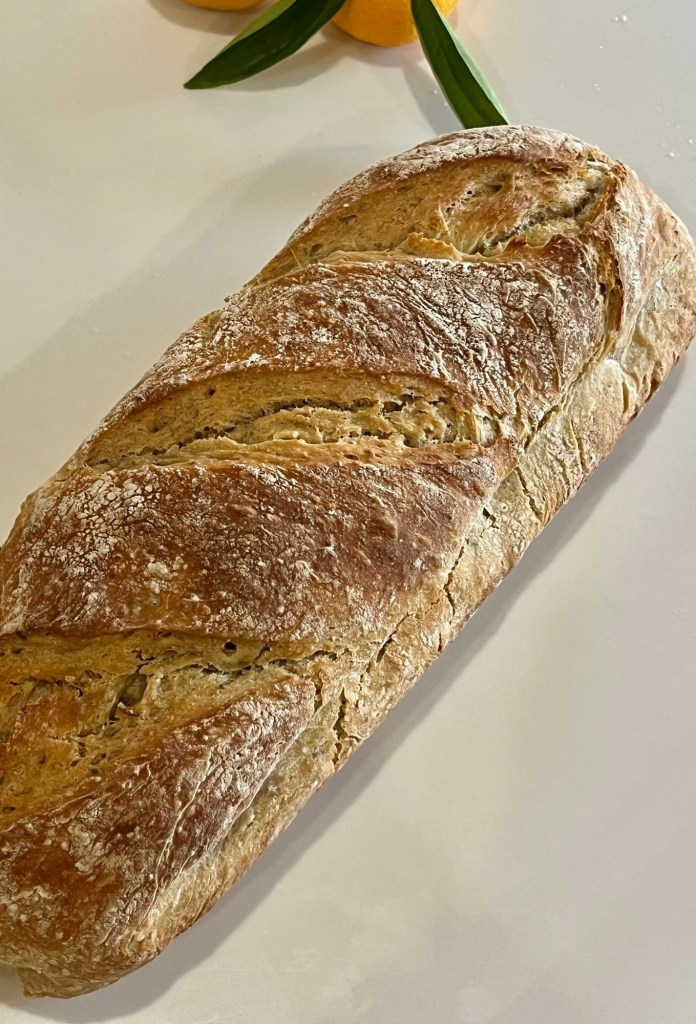
J. R. R. Tolkien used that phrase in The Two Towers and I modifyied it to a “rye face”. I decided to continue my rye bread recipe experiment and made a dark rye bread this morning using my new rustic rye “breadboard” recipe.

In the first experiment I used White Rye Flour and used Dark Rye Flour for the second round. I baked a loaf using Medium Organic Rye this morning and still and Organic Pumpernickel to go. (I am not endorsing any particular brand of flour, it’s simply what is my cupboard.)

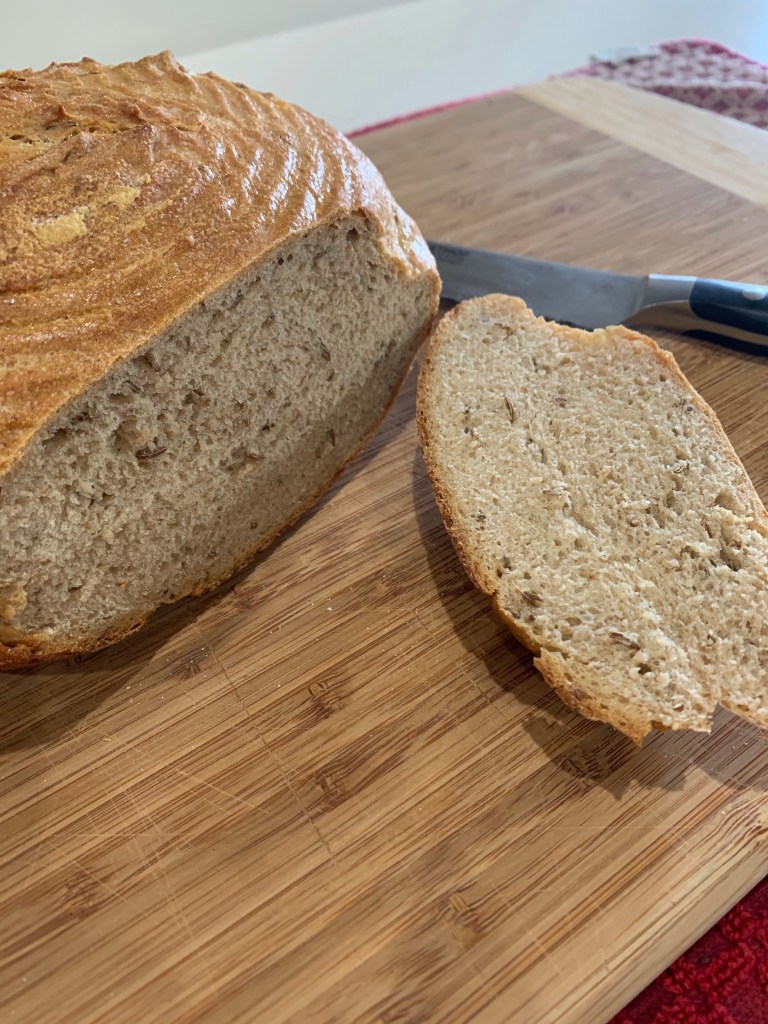
The dark rye bread had a stronger rye flavor than the white rye (no surprise,) but was just as delicious with a similar soft interior. The medium rye (today’s loaf) has a great interior and crunchy crust and surprise, surprise, the flavors is between the white and dark ryes.

Next up will probably be the pumpernickel. Stay tuned.

NY Rye Bread

Surprise! I didn’t see this recipe first this time. I decided to make a rye bread and since we went to New York this spring for both baseball and friends, I said to myself, “Self, why not make a NY rye bread, even though we didn’t go to Rye, New York?” Ta da!

I made good rye breads before but this time I search for alternative recipes. (As my golf friends know, I am one of those who is never satisfied. My baking QC squad would agree, but since they receive bakes from me, they don’t bring it up.)

The PreppyKitchen is one of my go to baking recipe sites. John Kanell explains his techniques beautifully and they are great to watch.

However, my first change was to add the rye bread improver from King Arthur. This add a boost of great rye flavor, stronger rise and improved texture, and it works!

I also formed the loaf as a boule. I would never make a rye bread in a standard bread pan and would only reluctantly use my unglazed stoneware baking pan. By tensioning the boule before the second rise it allows the loaf to rise up instead of flatten out. Again, it works.

This may be my best rye bread ever.

Yup, that’s what I am talking about!

Rye Bread (Modified) PreppyKitchen Recipe

Author John Kanell
My modifications in italics

INGREDIENTS
• 1½ c warm water 105 to 110°F (360mL)
• 2 Tbl honey (or molasses for a deeper color)
• 2 tsp active dry yeast
• 2¾ c bread flour 330g
• 1½ c rye flour 160g
4 Tbl Rye Bread Improver
• 1 tablespoon vegetable oil
• 1 tablespoon caraway seeds
• 1¾ teaspoons salt

METHOD

  1. In the bowl of a stand mixer fitted with the dough hook attachment, whisk together the warm water, honey and yeast until combined. Let it stand for 5 minutes, until very foamy.
  2. To the bowl with the yeast mixture, add both flours, rye bread improver, oil, caraway seeds and salt. Using a wooden spoon or rubber spatula, mix the ingredients together until no dry flour from the bottom and sides of the bowl remains and a shaggy dough forms.
  3. With the stand mixer, mix on medium-low speed for 6 to 8 minutes until most of the dough balls up around the dough hook and it is smooth and slightly sticky.
  4. Transfer the dough to a lightly floured surface and gently shape into a ball.
  5. Place the ball of dough in a clean, lightly oiled bowl. Flip the dough over once so that the top also has a coating of oil. Scrape down the sides of the bowl to shape the dough into a ball. Cover the bowl with plastic wrap and let it rise in a warm, draft-free spot (75°F) for 30 to 45 min, until doubled in size.
  6. Turn the dough out onto a very lightly floured surface. With moist hands, stretch and shape it into a 9-inch square. Fold the dough using an envelope fold, sealing each fold with the side of your hand. Pinch the seams on the sides and ends together tightly to seal.
  7. With a gentle motion and an open hand, roll the log to tension the surface.
  8. Place the dough on a lightly sprayed piece of parchment paper seam side down. Spray a piece of plastic wrap with nonstick spray, cover the loaf and let it rise in a warm, draft-free spot (75°F) for 35 to 45 minutes. Use the finger poke test to check the rise is complete.
  9. After 15 minutes of the second rise, preheat the oven and baking stone to 350°F.
  10. Bake the bread for 35 to 40 minutes, until the top of the loaf is golden brown, and it sounds hollow when tapped. The internal temperature should be 195°F to 200°F.
  11. Let it cool in the pan for a couple of minutes, then turn it onto a wire rack to cool completely before slicing.
  12. Allow the no-knead rye bread to cool completely before slicing. Waiting to slice freshly baked bread is really difficult, but the cooling time is important for the crumb to set.

He Said With a “Rye” Smile

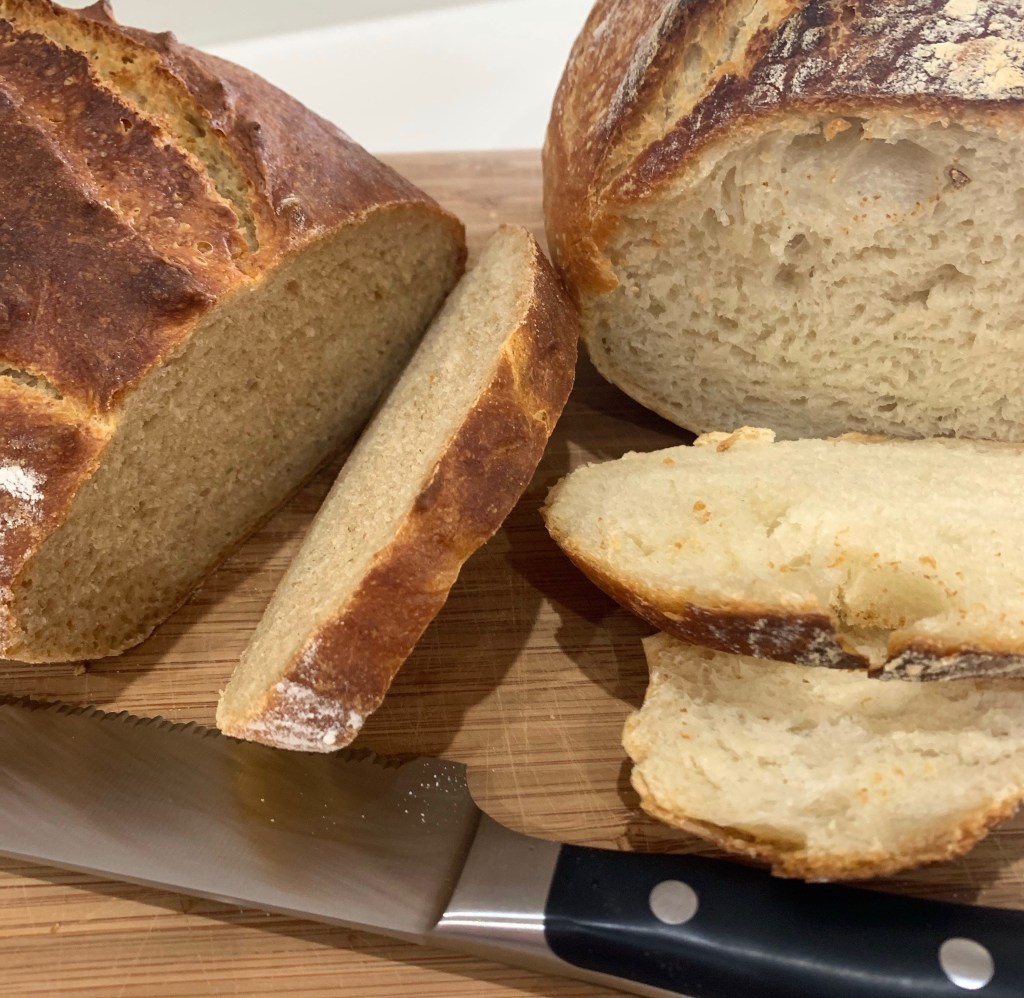
I made this dark rye loaf 4 years ago. A lot of water and experience passed under the bridge since 2020. I decided to make this bread after lunch, when we finished the oat bread I made a few days ago. In 4 hours, most of which was proofing and baking, this was the result.

I made two loaves from the recipe below. The longer one was in a covered, unglazed, stoneware baking pan, the other was a free standing boule baked on a baking stone.

The crumb was perfect, the crust wonderful and the flavor exceptional. Although that is only my opinion, however, QC totally agrees with me. It was impossible to resist slicing and sampling the bread before it cooled adequately.

DON’T OVER MIX, OVER-KNEAD, OVER PROOF DON’T OVER BAKE.

Homemade Rye Bread


Makes 2 loaves

INGREDIENTS
16 g (4½ tsp) packages active dry yeast
592 g (2 ½ c) warm water (just barely warm to the touch)
2/3 (225 g) cup molasses
2 Tbl caraway seeds (optional)
1 Tbl salt
50 g (¼ c) vegetable oil
20 g (¼ c) cocoa powder
1 Tbl Rye Bread Improver
3 Tbl Bread and Cake Enhancer
240 g (2 c) rye flour
700 g (5 c) bread flour
Egg wash (optional)

METHOD

  1. Dissolve the yeast in the warm water with the molasses. Put yeast mixture into a stand mixer bowl.
  2. Add the caraway seeds, salt, vegetable oil, cocoa powder, 2 cups of rye flour and then 2 cups of bread flour, mixing into the yeast mixture after each addition with a silicone spoon.
  3. Add Rye Bread Improver and Bread and Cake Enhancer
  4. Add more bread flour, a cup at a time, until the dough is not so sticky and is too hard to mix it with the silicone spoon.
  5. Knead the dough with a Kitchen-aide bench mixer using the dough hook. Add more bread flour in small amounts until the dough begins to pull away from the sides of the bowl. Once the sides of the bowl are mostly clean then knead 8 minutes.
  6. Transfer dough to a lightly floured surface and knead by hand until the dough is soft and springs back when poked.
  7. Let the dough rise: Spread some vegetable oil around a large bowl and place the dough in it, turning it to coat it with oil.
  8. Cover the bowl with plastic wrap or a damp cloth. Let rise at room temperature until it has doubled in size, 1 to 1 ½ hours.
  9. Gently press down on the risen dough to release some of its air. Turn the dough out onto a lightly floured piece of parchment paper, knead the dough a few turns and then divide it in half with a sharp knife. The full loaf should weigh ~1910 g.
  10. Shape each half into loaf. Place dough loafs into either oiled 8×4-inch bread loaf pans, or onto a flat baking sheet or peel that was sprinkled with corn meal, depending if you want to cook the loaves in pans or directly on a baking stone. Cover with plastic or a damp cloth.
  11. Let the loaves rise: Let the bread rise again, this time not doubling in volume, but rising by about half of its volume, about 30 to 45 minutes, half as long as the first rising. The dough should be peeking over the top of the loaf pan if using a loaf pan. (Over-proofing the bread may cause it to collapse as the yeast will be exhausted and not have any more energy when placed in the oven.)
  12. If you are using a Dutch Oven or baking stone, place it in the oven and preheat oven to 350°F for at least half an hour before baking.
  13. If baking in a Dutch Oven lift the dough by the corners of the parchment paper and place the dough and parchment paper into the Dutch Oven or directly on the baking stone. (Brush with optional egg wash. Whole eggs and water for a crisp shiny crust, egg whites and water for a crisp crust only.) Score the loaves a few times on the top of the dough right before putting it in the oven. Be careful, the Dutch Oven or baking stone will be hot!
  14. Put loaves in the oven. If you have a mister, mist the dough with a little water the first 10 minutes of baking. Bake for 40-50 minutes, or until done. The internal temperature should be ~200F. The bread should sound hollow when tapped.

Becoming the Scarlet Pumpernickel

Last week I made a light right sandwich rye. Good crumb, great taste, nice crust. Today I kicked up the percent pumpernickel flour and reduced the light rye flour. I added an egg wash to increase the color of the crust. Better taste, similar crumb and great crust!

Along with the rye experiment, I made another loaf of Honey White bread which has become our staple. I also made some raspberry scones and blackberry hand pies. Busy morning!

Light Rye Bread – KAF (with additional Pumpernickel)


INGREDIENTS
• 1 ½ cups (340g) lukewarm water
• 2 1/3 cups (280g) Bread Flour
• 1 cups (108g) light rye flour
• ½ cups (54g) pumpernickel flour
• 1/4 cup (28g) nonfat dry milk
• 1 ½ teaspoons table salt
• 1 ½ teaspoons instant yeast
• 1 ½ teaspoons Deli Rye Flavor, optional
• 2 tablespoons (25g) vegetable oil
METHOD

  1. Place the water in a large mixing bowl.
  2. Combine the flours with the remaining ingredients in a large mixing bowl, or the bowl of your stand mixer. Mix until there are no dry spots. Using a stand mixer, mix at low speed until all of
    the flour is moistened. The texture of the dough will be soft and sticky due to the pumpernickel flour.
  3. Cover the bowl and let the dough rise at room temperature for 2 hours. Then refrigerate overnight, or for up to 48 hours.
  4. To bake bread: Grease your hands, and scoop the dough out onto a lightly greased or floured work surface. Shape it into a ball and place it, smooth side down, in a floured brotform; or in a bowl lined with a floured smooth cotton dish towel. Let the dough rise, covered, for 2 to 3 hours.
  5. About 45 minutes before the end of the rising time, start preheating the oven to 450°F with a 4 to 4 ½ -quart baking pot or casserole with a lid inside.
  6. When the loaf is fully risen, remove the hot casserole from the oven, carefully grease it, and tip the risen ball of dough into it. Make several slashes in the dough. Cover the pot with the lid, and place it on a middle rack in the oven.
  7. Bake the bread for 25 minutes. Remove the lid and bake for an additional 5 to 10 minutes; the loaf should be lightly browned, and the interior should register at least 195°F on a digital thermometer.
  8. Remove the bread from the oven and turn it out of the crock onto a rack. Cool for several hours before slicing

The Rye Experiment – Part 3 – The Final

Back to the experiment and on to Part – 3 the Final. This Part was supposed to be completed last week, but due to an unfortunate brain freeze I used the wrong flour. This time I used the First Clear Flour instead of the AP flour used by mistake in Part 2a. (Ahhh, to be 65 again!)

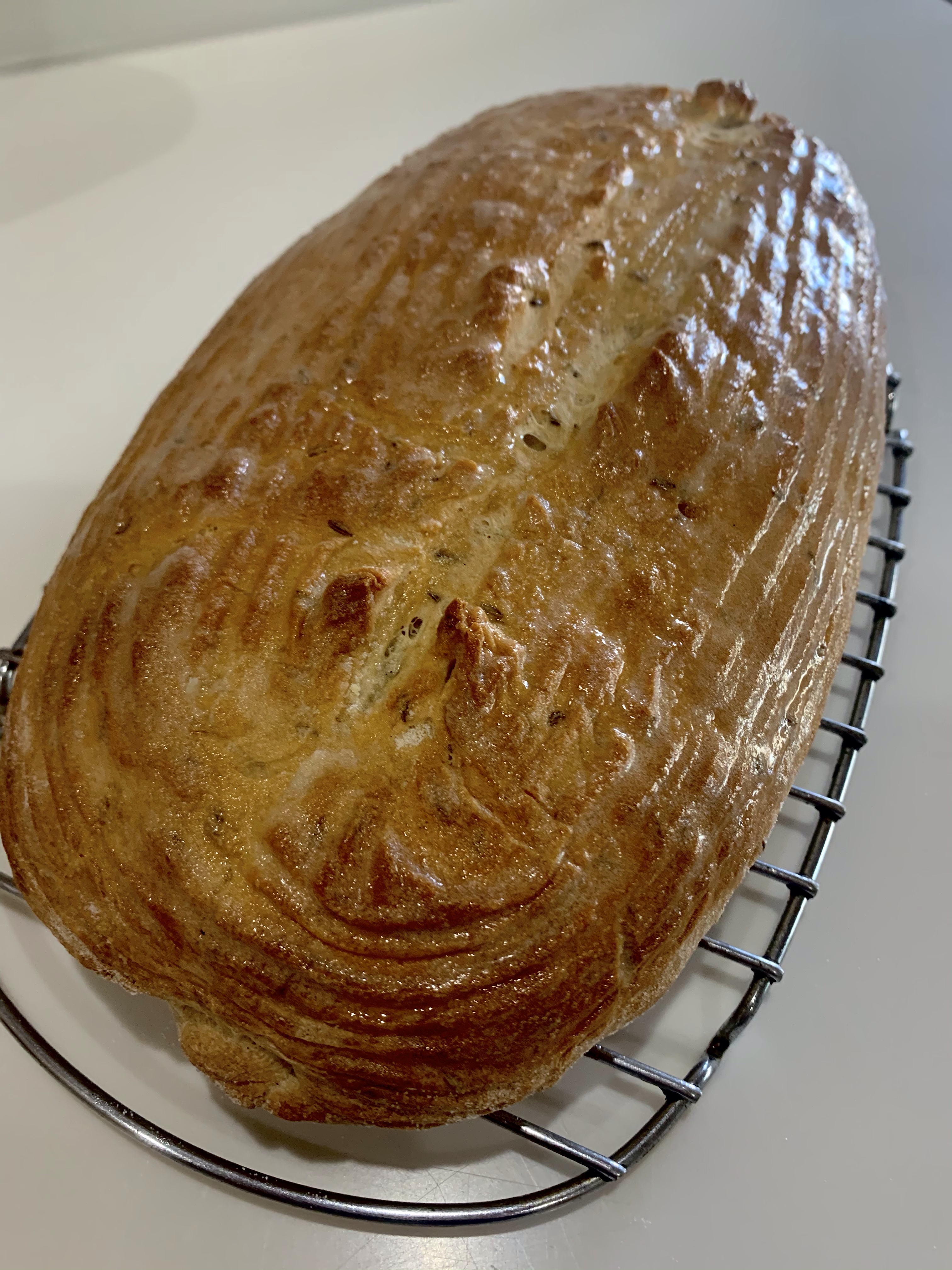
However, this time I also used a Dutch Oven instead of baking uncovered. The rationale is I want the best combination of crumb, crust and flavor. The Dutch Oven provided the traditional chewy ‘Deli Rye’ crust. This recipe and method is a winner!!

So the recipe remains the same as Part 2, except I used a Dutch Oven. I used First Clear and Pumpernickel flours. I used an egg wash when there were about 15 minutes left in the bake. In my case I added it when the internal bread temperature was 195 deg. F.

Caraway Rye Bread KAB – Final

https://www.kingarthurbaking.com/recipes/caraway-rye-bread-recipe

INGREDIENTS

• 1 cup (227g) lukewarm water
• 1 cup (106g) white rye, medium rye, or pumpernickel flour
• 4 teaspoons (14g) sugar
• 2 1/4 teaspoons instant yeast
• 1/2 cup (113g) sour cream (low-fat is fine; please don’t use nonfat)
• 1 to 2 tablespoons (10g) caraway seeds, to taste
• 1 1/2 teaspoons salt
• 2 1/3 cups (280g) First Clear Flour
• 3 tablespoons (25g) vital wheat gluten

METHOD

  1. In a medium-sized mixing bowl or the bowl of your stand mixer, combine the water, sugar, rye flour and yeast, mixing to form a soft batter. Let the mixture rest for 20 minutes; this allows the rye flour to absorb some of the liquid, making the dough easier to knead.
  2. Add the remaining ingredients, and mix and knead the dough together — by hand, mixer or bread machine — until it’s fairly smooth. The nature of rye dough is to be sticky, so don’t be tempted to add too much flour.
  3. Place the dough in an oiled bowl or large (8-cup) measure, cover, and let it rise until noticeably puffy, 60 to 90 minutes.
  4. Gently deflate the dough, knead it briefly, and shape it into two smooth oval or round loaves; or one long oval loaf. Place them on a lightly greased or parchment-lined baking sheet.
  5. Cover the loaves, and let them rise until they’re noticeably puffy, about 90 minutes. Towards the end of the rise, preheat the oven to 350°F.
  6. Just before they go into the oven, spritz the loaves with water, and slash them about 1/2″ deep. The oval loaves look good with one long, vertical slash; the rounds, with two or three shorter slashes across the top.
  7. Bake the loaves for 35 to 40 minutes, or until an instant-read thermometer inserted into the center reads 205°F to 210°F. The single, larger loaf will bake for 45 to 50 minutes. If the bread appears to be browning too quickly, tent it lightly with foil after 25 minutes of baking.
  8. Remove the loaves from the oven, and transfer them to a rack. While still warm, brush them with melted butter, if desired; this will keep their crust soft.

Sandwich Rye – New Recipe

I was going to continue the experiment with Part 3, but wanted to try this new recipe I found at ayearinbread.blogspot.com. It’s interesting as it uses bread flour, molasses and citric acid. It had a good flavor, crumb and a great crust. Oh, I also needed to make a few (3) loaves of white sandwich bread for PB&J lunches. The oddest thing happened with the white bread. Two of the loaf rose nice and round, but one fell. No idea.

Sandwich Rye
http://ayearinbread.blogspot.com/2007/09/kevin-sandwich-rye.html

• INGREDIENTS
• rye flour 1 c 146 g
• bread flour 2 1/4 c 330g
• instant yeast 1 tsp
• wheat gluten 1 1/2 tbsp
• citric acid (sour salt) 1/4 tsp
• caraway seeds 2 tbsp 20g
• molasses 1 1/2 tbsp
• butter melted 1 tbsp
• table salt 3/4 tsp
• water 1 c + 2 tbsp 256 g

Egg Wash
• egg 1
• water 1 tbsp

METHOD

  1. In the bowl of a stand mixer using the paddle attachment, mix together the yeast, gluten, citric acid, caraway seeds, rye flour, and 2 cups (280g) of bread flour. Add salt and mix in. (Note, the salt is added after mixing the original ingredients to minimize it’s direct contact with the yeast, which it can kill).
  2. In a measuring cup, mix together water, molasses, and butter using a small whisk. With the motor running at low speed, pour liquid into dry ingredients. Once moistened, switch to the dough hook and finish blending. The dough should be moist and sticky, add just enough additional flour, a tablespoon at a time, to have dough clear the sides of the bowl. Increase speed to medium and knead for eight minutes. (Note, dough will clear sides but stick to bottom, scrape it up with a rubber spatula every couple of minutes.)
  3. Scoop dough onto a lightly floured surface and knead lightly a few times then form into a ball. Place the dough in a bowl sprayed with cooking oil, spritz top with oil, and cover tightly with plastic wrap. Allow to rise until doubled in bulk — about 1 1/2 hours.
  4. Gently deflate dough, scoop onto a lightly floured surface, fold a few times, and allow to relax for about five minutes. Shape dough into a loaf and place on a piece of parchment on your peel or on a baking sheet. Lightly spritz tops with oil and cover with plastic. Allow to rise until doubled in size, about 1 hour. In the meantime, heat oven to 400F (200C) and place rack in center position. (Note: it’s important to give the oven a long preheat before baking, particularly if you’re using a baking stone.)
  5. Whisk together egg and 1 tablespoon of water in a small bowl. Brush loaf with egg wash and bake for 15 minutes. Rotate rack front to back and continue baking 15 to 20 minutes until golden brown. The interior should read 190F on an instant read thermometer.

The Rye Experiment- Part 2a

Oops! I used the pumpernickel flour but forgot to use First Clear instead of AP flour. The plan was to use the best combination of ingredients to make the best loaf of rye bread.

I made two small free form boules. They held their shape really well.

Maybe tomorrow I will read my own instructions all the way through before baking. The results were pretty darn good today, though!

The Rye Experiment, Part 2

As I said in Part 1, this variation will simply substitute First Clear Flour for the White Rye in Part 1. I added an egg/water wash to this loaf to increase the color of the bread. I did not coat the finished warm bread with butter, which darkened the Part 1 loaf. I also baked it in the bottom of a Dutch Oven to help keep its shape. (No real difference.) I won’t publish the recipe again, just go to Part 1 and make the change noted above.

Manufacturing reports the crumb may be a little better. The holes are slightly larger and more evenly distributed. The crust is a little chewier and darkened just about right. The rise was higher. QC has yet to report.

Part 3 will substitute Rye Bread Improver for the Vital Wheat Gluten. I am thinking Part 4 will be the winner of Parts 1-3 and substituting pumpernickel flour for the other rye flour. Stay tuned.

The Rye Experiment, Part 1

Fran and I are self quarantining so we can join Daniel and Frances’s “pod” for Christmas and New Years. To pass the days I decided to experiment with variations of rye bread recipes. KAB has a good, basic caraway seed rye bread recipe, which I used as a starting place. (Recipe below.)

Following the recipe as written resulted in a well risen, soft rye bread with a good crumb. Today’s roast beef sandwich with lettuce, jalapeños and lettuce was excellent.

The first variation is to replace the white rye flour with first clear flour. In case you were wondering first clear flour is what remains after milling patent flour. It compensates for the low gluten content of rye flour. It is the traditional flour used in Jewish bakeries and adds loftier rise and better chew. This variation will be in the next post, The Rye Experiment, Part 2.

No, I didn’t have to buy anything for this experiment. Here is a picture of my specialty flour cupboard. Standard flours (AP, bread, whole wheat, pumpernickel,) are kept in a separate storage unit.

Caraway Rye Bread KAB

https://www.kingarthurbaking.com/recipes/caraway-rye-bread-recipe
INGREDIENTS
• 1 cup (227g) lukewarm water
• 1 cup (106g) white rye, medium rye, or pumpernickel flour
• 4 teaspoons (14g) sugar
• 2 1/4 teaspoons instant yeast
• 1/2 cup (113g) sour cream (low-fat is fine; please don’t use nonfat)
• 1 to 2 tablespoons (7g to 14g) caraway seeds, to taste
• 1 1/2 teaspoons salt
• 2 1/3 cups (280g) King Arthur Unbleached All-Purpose Flour or First Clear Flour
• 3 tablespoons (25g) vital wheat gluten or rye bread improver, optional, for best rise

METHOD

  1. In a medium-sized mixing bowl or the bowl of your stand mixer, combine the water, sugar, rye flour and yeast, mixing to form a soft batter. Let the mixture rest for 20 minutes; this allows the rye flour to absorb some of the liquid, making the dough easier to knead.
  2. Add the remaining ingredients, and mix and knead the dough together — by hand, mixer or bread machine — until it’s fairly smooth. The nature of rye dough is to be sticky, so don’t be tempted to add too much flour.
  3. Place the dough in an oiled bowl or large (8-cup) measure, cover, and let it rise until noticeably puffy, 60 to 90 minutes.
  4. Gently deflate the dough, knead it briefly, and shape it into two smooth oval or round loaves; or one long oval loaf. Place them on a lightly greased or parchment-lined baking sheet.
  5. Cover the loaves, and let them rise until they’re noticeably puffy, about 90 minutes. Towards the end of the rise, preheat the oven to 350°F.
  6. Just before they go into the oven, spritz the loaves with water, and slash them about 1/2″ deep. The oval loaves look good with one long, vertical slash; the rounds, with two or three shorter slashes across the top.
  7. Bake the loaves for 35 to 40 minutes, or until an instant-read thermometer inserted into the center reads 205°F to 210°F. The single, larger loaf will bake for 45 to 50 minutes. If the bread appears to be browning too quickly, tent it lightly with foil after 25 minutes of baking.
  8. Remove the loaves from the oven, and transfer them to a rack. While still warm, brush them with melted butter, if desired; this will keep their crust soft.