Unknown's avatar

About Dave Oney

Dave Oney was born mid last century in Middlebury, Vermont. He received his BS in Chemistry and worked as a polymer chemist in Massachusetts and New Jersey. He became a microscopist (someone who studies little bitty things using a microscope) and photomicrographer (someone who photographs little bitty things) before settling into a 35-year career in technical sales of scientific imaging equipment (the science of digitally recording itty bitty things, sending the image to a computer for analysis.) He designed and created a number of products contributing to this field. He is (was) proficient in several computer languages and is currently working on mastering English. After making a few more paradigm shift career changes Dave and his wife, Fran, retired and moved closer to their children and granddaughters and now live in the foothills of the Sierra Nevadas.

Grace’s Baptism Cake

Saturday October 28, 2016 was our granddaughter Grace’s baptism. completed-cakeAround 60 family members and friends attended at a Catholic church in Roseville for a short but meaningful service, then gathered at Frances and Daniel’s for brunch. I was asked to provide a cake for 60 people. (This may be the largest cake I have made.) The specific request was for a layer cake with chocolate mousse filling and a quilted finish.

For 60 servings the cake needed to be about 4″ high and 11″ x 15″. Knowing I would lose a little from the edges to square the sides I assumed there would be at least a few sheetcakepeople who do not eat cake (friends of Marie Antionette, no doubt) and I could get away with this size. Therefore I needed two sheet cakes. (Note: about 10 slices were left at the end of the event.)

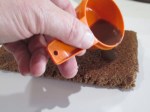
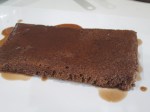
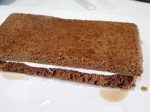
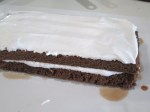
To have a decent thickness of mousse separatinbuttercream-dam-4g the cake layers I built a dam of crusting buttercream around the edges of the top crumb coated cake. Crusting buttercream has a little more body and will keep the mousse in place. Add a tablespoon of meringue powder to the confectioners sugar to make regular buttercream into crusting buttercream. After the second sheet cake is cool, add the buttercream-dam-2mousse to the damned 🙂 bottom cake. Top with the second layer, crumb coat the entire cake and refrigerate. stacked-layersA cold cake is easier to trim to make nice square edges and setting the mousse will retard the effects the moisture will have on the fondant coating.

I used an electric knife to trim the edges of the cake prior to covering with fondant. After trimming crumb coat the nice, straight smooth edges of the cake. stacked-and-cut-layers

I rolled out a 17″ x 22″ piece of fondant to have enough to cover the cake. Once it was covered and smoothed, 45 degree crisscrossed lines were embossed into the sides of the cake. Then it was dusted with pearl luster to add a little sparkle to the fondant and little pink rosettes were piped into each intersection of the quilt pattern.

Egraces-cake-quiltingarlier in the week I made the pink orchid, cross and text backing from gumpaste.graces-orchid I purchased the text from a company that makes sugar images and pasted it onto the backing gumpaste.

YELLOW SHEET CAKE – SERVES 60

INGREDIENTS:

  • 4 1/2 cups (570g) all-purpose flour
  • 2 teaspoon baking soda
  • 1 teaspoon salt
  • 2 cup (460g) unsalted butter, softened
  • 3 3/4 cups (700g) granulated sugar
  • 4 large eggs, at room temperature
  • 4 teaspoons pure vanilla extract
  • 1 cup (240g) sour cream, at room temperature
  • 2 cup (480ml) whole milk, at room temperature

DIRECTIONS:

  1. Preheat oven to 350°F (177°C). Generously grease and lightly flour a 12×17 inch half sheet/jelly roll pan. The pan should be at least 2″ deep. Set aside.
  2. Whisk the flour, baking soda, and salt together in a large bowl. Set aside. Using a handheld or stand mixer fitted with a paddle attachment, beat the butter on high speed until smooth and creamy – about 1 minute. Add the sugar and beat on high speed for 3 full minutes until creamed together. The mixture should be a light yellow color. Scrape down the sides and up the bottom of the bowl with a rubber spatula as needed. On medium-high speed, add 1 egg at a time, beating well after each addition until both are mixed in. On high speed, beat in the vanilla extract and sour cream. Scrape down the sides and up the bottom of the bowl with a rubber spatula as needed.
  3. With the mixer running on low speed, add the dry ingredients to the wet ingredients alternating with the milk. Start and end with the dry ingredients. Mix each addition just until incorporated. Do not overmix this batter. The batter will be smooth, velvety, and slightly thick.
  4. Spread the cake batter into the prepared pan. Smooth it out into a thin, even layer. Bake for 20-22 minutes (less for a half recipe or 35-40 minutes for a double. Actual times depend on pan used, less time for shallow pan, more for deeper, or until the top is lightly browned and a toothpick inserted in the center comes out clean. Make sure you rotate the cake pan once or twice during bake time if your oven has hot spots. Remove from the oven and allow the cake to cool in the pan placed on a wire rack. As the cake is cooling, make the frosting.
  5. Make ahead tip: Cake can be made 1 -2 days in advance, covered tightly at room temperature.

BUTTERCREAM FROSTING – I made several batches of this frosting

INGREDIENTS

  • 4 cups of powdered sugar (or 1 box)
  • 1 Cup (2 sticks) of softened butter
  • 2-3 teaspoons of vanilla
  • 1-2 tablespoons of milk
  • Violet food coloring

INSTRUCTIONS

  1. Add powdered sugar to mixing bowl.
  2. Add softened sticks of butter
  3. Add vanilla. If you want white buttercream use clear imitation vanilla.
  4. Add 1 tbsp of milk.
  5. Beat on low until powdered sugar is incorporated. Then move mixer up to medium-high speed. Scrape sides and bottom of bowl often. When completely mixed the frosting may appear dry.
  6. Add more milk, a little bit at a time until frosting is the proper consistency.
  7. Again, for white frosting now add a little violet food coloring. I use the end of a toothpick and add just a little at a time. Mix thoroughly.

CHOCOLATE MOUSSE

INGREDIENTS

  • 4 egg yolks
  • ¼ cup sugar
  • 1 cup whipping (heavy) cream
  • 1 package (6 ounces) semisweet chocolate chips
  • 1 ½ cups whipping (heavy) cream

DIRECTIONS

  1. Beat egg yolks in small bowl with electric mixer on high speed about 3 minutes or until thick and lemon colored, then gradually beat in sugar.
  2. Heat 1 cup whipping cream in 2-quart saucepan over medium heat until hot. Temper the eggs by gradually (i.e. slowly, a little at a time) stirring (rapidly) at least half of the hot whipping cream into egg yolk mixture; stir back into hot cream in saucepan. Cook over low heat about 5 minutes, stirring constantly, until mixture thickens (do not boil). Stir in chocolate chips until melted. Cover and refrigerate about 2 hours, stirring occasionally, just until chilled.
  3. Beat 1 ½ cups whipping cream in chilled medium bowl with electric mixer on high speed until stiff. By hand fold chocolate mixture into whipped cream to not collapse the whipped cream. Pipe or spoon mixture into serving bowls. Immediately refrigerate any remaining dessert after serving.

Small Batch Berry Jam

Confession here: I like seeds in my berry jam. I don’t know why, either some trauma forced on me by my older brother, or perhaps faded memories of my mother making jams or even some totally unrelated reason. The point is my berry jam must have seeds. Do you have any idea how difficult it is to find blackberry jam with seeds? Raspberry? No Blackberry Jamproblem, but find a jar of blackberry without that insidious word “seedless” on the label? Good luck. Either you spend an inordinate amount of time searching your supermarket, or go to a farm or specialty market and shell out twice the cash. I look for BOGO’s on berries. It’s like getting jam free, almost.
Or….
Google (the worlds 42) “small batch jam” and find 461,000 results in 0.44 seconds.
I read a lot of them and boiled it down (bad pun) to this:

  • Measure equal weights (not volumes) washed berries and granulated sugar. Obviously for sweeter jam add more sugar, tarter, less. Duh.
  • Mash berries in a saucepan, heat then add sugar in small aliquots. Use a large enough saucepan or you will end up washing two of them. Been there, done that, no t-shirt.
  • Cook at a moderate boil until the temperature reaches 220 deg. and it begins to thicken. Cook less for thinner (think dessert topping) or more for thicker.
  • Skim the light colored foam off the top as it boils.
  • While it is cooking put a canning jar (about a pint size for a pint of berries, go figure) filled to about an inch from of the top with water into the microwave and cook until boiling vigorously.
  • Pour the boiling water out into a small bowl containing your canning lid and funnel.
  • Wait a minute. You aren’t really sterilizing because you will just keep this in the fridge for quick use.
  • Pour the still very hot jam into the jar using the funnel, put on the lids, screw on the top and you are done, except for the clean up. One pan, one spoon and a funnel.
  • Total time, less than 30 min.

Pate a Choux #1

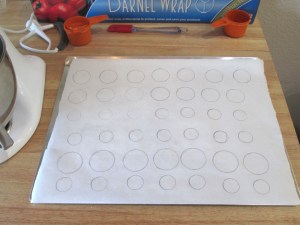
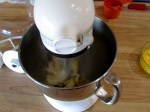
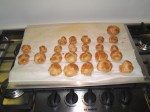
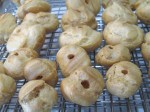
Rising from the depths of a cold caught in Seattle a week ago, I decided to try my luck at baking pate a choux, the basis for pastries such as creme puffs or eclairs. I found several recipes and decided on one from The Kitchn (thekitchn.com). I made small profiteroles with pastry cream (recipe also from The Kitchn) instead of ice cream. My execution of this recipe produced a nice flaky, although not fully risen pastries which were easily filled with pastry cream and dipped in a hardening ganache. The mini eclairs I piped on the same sheet did not rise at all and were discarded.First Pate a Choux 2

I tried a second recipe which used one baking temperature for baking, finishing and drying. These did not rise nearly as well as The Kitchn recipe.

While the shape was less than ideal, the flavor was excellent. Trying again next weekend. The shape as to be the result of having too much or too little water in the batter prior to baking. The water turns to steam which “inflates” the dough.

Chicken Milano-ish

Chicken MilanoWe had a “Use What’s in the Pantry” dinner last night. We bought some thin chicken cutlets during our weekend grocery shopping and wanted to use it soon. Last week I saw a recipe for Chicken Milano and decided to substitute what was in our pantry for what was listed. Not much of a stretch, if you note the recipe below. It resulted in a very flavorful, light cream sauce paired nicely with a glass of 2012 Ridge Lytton Springs Zinfandel. Sorry, there is no photo. It looked remarkably like chicken over fettuccine covered with a light cream sauce.

Chicken Milano

4 Servings, Prep Time: 10 Minutes, Cook Time: 20 Minutes
Description
This is a delicious pasta and chicken dish with garlic, sun-dried tomatoes and fresh basil. The original recipe called for dry packaged sun-dried tomatoes instead of the tomatoes packed in olive oil. I had neither so used fresh tomato. The sauce can be kept, covered, for one day in the refrigerator; heat again over low heat. Try it with some crusty bread if desired.
Ingredients
• 1 tablespoon butter
• 2 cloves garlic, minced
• 1/2 cup sun-dried tomatoes, chopped (I used a diced fresh tomato)
• 1 cup chicken broth, divided
• 1 cup heavy cream (I used 2% milk, warmed and mixed with 2 tsp cornstarch)
• 1 pound skinless, boneless chicken breast halves
• salt and pepper to taste
• 2 tablespoons vegetable oil
• 2 tablespoons chopped fresh basil
• 8 ounces dry fettuccine pasta
Directions
1. In a large saucepan over low heat, melt butter; add garlic and cook for 30 seconds. Add the tomatoes and 3/4 cup of the chicken broth; increase to medium heat and bring to a boil. Reduce heat and simmer, uncovered, for about 10 minutes or until the tomatoes are tender. Add the cream (milk/cornstarch mixture) and bring to a boil; stirring. Simmer over medium heat until the sauce is thick enough to coat the back of a spoon.
2. Sprinkle the chicken with salt and pepper on both sides. In a large skillet over medium heat, warm oil and saute chicken. Press on chicken occasionally with a slotted spatula. Cook for about 4 minutes per side or until the meat feels springy and is no longer pink inside. Transfer to a board; cover and keep warm. Discard the fat from the skillet.
3. In the same skillet, over medium heat, bring 1/4 cup chicken broth to a boil; stirring the pan juices. Reduce slightly and add to the cream sauce; stir in basil and adjust seasonings to taste.
4. Meanwhile, bring a large pot of lightly salted water to a boil. Add fettuccine and cook for 8 to 10 minutes or until al dente; drain, transfer to a bowl and toss with 3 to 4 tablespoons of the sauce.
5. Cut each chicken breast into 2 to 3 diagonal slices. Reheat the sauce gently if needed. Transfer the pasta to serving plates; top with chicken and coat with the cream sauce; serve.

Summertime, And The Livin’ is Easy

It’s summertime again. Actually, it is the end of May and summer is still 3 weeks away but if you live in South Florida summer began months ago. I needed a cake for a dinner party this weekend and said to myself, “Self, what springs to mind when you think about summer?” After a moment, I replied, “Well, after a long hot winter I want to fall into a cool, refreshing cake that shrieks summer.” I decided on a Watermelon Cake. It doesn’t taste like watermelon (it is actually a white cake dyed reddy/pink) but sure looks like one. IMG_1421[1]

Bake the cake in a greased and flowered Wilton Egg Pan (because I own one.) Fill the pan to within an inch of the top and be sure to put a cookie sheet under it while baking as it will overflow the pan. My oven is slow so I baked it for an hour at 350 F. Remove from the oven and let cool completely. Trying to remove the cake while warm will destroy it.

After the cake is completely cool, (I know, the cake is very cool, but in this case I mean the temperature) cut the excess cake along the edge of the Egg Pan to make a perfectly flat side then turn it out onto a wire rack. If necessary loosen the edges of the cake from the pan with a flexible spatula.

Frost the cake with a heavy IMG_1422[1]layer of white crusting butter cream frosting (I made a double recipe of the below) and place in the freezer. When the frosting is set, about an hour, coat with another layer of white frosting making it as smooth as possible, returning to the freezer. This makes the thicker white watermelon rind. While the twice white frosted cake is again setting add some green food coloring to the remaining frosting. This green should be the background green of the watermelon, not the dark green lines. Add a little additional milk to reduce the viscosity, or to the non-scientists among us, reduce the “thickness.” After the frosting on the cake is set, smooth a layer of the light, thinner green frosting over the entire cake and return to the freezer. After the now light green cake is set, remove from the freezer and smooth the surface. I like to use a latex gloved hand wetted by holding it under the faucet. A bowl of water would also work but then you have to clean another bowl. You will have to clean and re-wet your hand a few times to smooth the entire cake. Once the light green frosted cake is smooth, guess what? Return it to the freezer to set.
IMG_1427[1]Remove the smooth light green frosted cake from the freezer and paint the dark green stripes. I used Duff green airbrush dye and a 3/8″ brush (because I own them.) If you are the artistic type with a good eye and imagination this is no biggie. If you are the more analytical, fallen chemist type, set your iPad with a picture of a watermelon next to your cake and copy to the best of your limited artistic ability.

BTW, here is a tip I found online: to disperse the chocolate chips and not have them settle to the bottom of the cake batter mix them into the flour mixture being sure the are well coated with flour. This seems to help them “float” in the cake batter as it bakes.

Here is another tip: don’t let the cake with the thick frosting warm up in the car ride to your party. Soften or melted rind signficantly affects the overall impression of the cake.

Recipe: Heavenly White (Watermelon Colored) Cake

Ingredients

  • 2 3/4 cups sifted cake flour
  • 4 teaspoons baking powder
  • 3/4 teaspoon salt
  • 4 egg whites ( or substitute)
  • 1 1/2 cups white sugar
  • 3/4 cup butter
  • 1 cup milk
  • 1 teaspoon vanilla extract
  • 1/2 cup of chocolate chips
  • Red dye

Directions

  1. Measure sifted flour, baking powder, and salt; sift together three times.
  2. Add chocolate chips and mix being sure the chips are well coated with the flour mixture
  3. In a mixing bowl, beat egg whites until foamy. Add 1/2 cup sugar gradually, and continue beating only until meringue will hold up in soft peaks. Add red dye to approximate a watermelon color.
  4. Cream butter or margarine. Gradually add remaining 1 cup sugar, and cream together until light and fluffy. Add sifted ingredients alternately with milk a small amount at a time, beating after each addition until smooth. Add red food dye until the same watermelon pinky/red is achieved. Mix in flavorings. Add colored meringue, and beat thoroughly into batter.  Pour into well greased and floured Egg Pan.
  5. Bake at 350 degrees F (175 degrees C) for about 60 minutes. Check the springiness of the cake after about 45 min. Guess when it is done (when the depression caused by your finger is anti-depressed, or springs back up.) Leave the cake in pans until completely cool, then trim the bumpy puffed up cake above the rim of the Egg Pan and remove and transfer to a wire rack.

Basic Crusting Butter Cream

Ingredients:

  • 1/2 cup solid high ratio shortening
  • 1/2 cup butter softened
  • 1 tablespoon of meringue powder
  • 1 teaspoon Clear Vanilla Extract (or extract of choice)
  • 4 cups sifted confectioners’ sugar (approx. 1 lb.)
  • 2 tablespoons milk
  • Green food color (add after cake is frosted with the white frosting)

In large bowl, cream shortening and butter with electric mixer. Add vanilla and milk. Gradually add sugar, one cup at a time, beating on a slow speed. Scrape sides and bottom of bowl often. Keep bowl or covered with a damp cloth until ready to use. Refrigerated in an airtight container, this icing can be stored 2 weeks. Don’t overwhip or it will bring air to the icing and is impossible to smooth. If you have a kitchen Aid use white attachment, not whip attachment.


Pao de Queijo (Brazilian Cheese Bread)

A friend posted a website displaying this “Brazilian cheese bread” indicating they are kosher for Passover. My problem is the website, from Brazil, is in Portuguese. Sleuthlike, I found the recipe for Pao de Queijo (cheese bread) in several of my usual suspect sources.723deb77-6193-4bd9-a5d6-2fd75ffa1f04
The first recipe used a combination of sweet manioc (Polvilho Doce) and sour manioc (Polvilho Azeri) flour, found at your local Brazilian market (Seabra Market, Military Rd and Sample.) This flour is made from tapioca or yucca which is used in place of wheat flour in Northern Brazil where wheat is almost impossible to grow. The sour manioc is made by fermenting the plain manioc. The recipe also called for minas cheese, freshly grated. Minas cheese is sorta a softer Parmesian, maybe mixed with a little 15f394c4-d35b-424a-be73-f4ac51835c9bProvolone. Amazingly, Seabra had this cheese, also amazingly, when baked, these rolls puffed up as if they were a yeast based bread.

The second recipe only used tapioca flour (found at Fresh Market) or Polvilho Doce, and butter instead of vegetable oil. Both versions are good but the second was definitely sweeter, perhaps more “American.”

AMERICANIZED BRAZILIAN CHEESE ROLLS

INGREDIENTS

  • 1/2 cup butter
  • 1/3 cup water
  • 1/3 cup milk
  • 1 teaspoon salt
  • 2 cups tapioca or povilho doce flour
  • 2 teaspoons minced garlic
  • 2/3 cup freshly grated Minas or Parmesan cheese
  • 2 beaten eggs

DIRECTIONS

  1. Preheat oven to 375 degrees F (190 degrees C).
  2. Pour butter, water, milk, and salt into a large saucepan, and place over high heat. When the mixture comes to a boil, remove from heat immediately, and stir in flour and garlic until smooth. Set aside to rest for 10 to 15 minutes.
  3. Stir the cheese and egg into the tapioca mixture until well combined, the mixture will be chunky like cottage cheese. Drop rounded, 1/4 cup-sized (I used an ice cream scoop) balls of the mixture onto a parchment paper lined baking sheet.
  4. Bake in preheated oven until the tops are lightly browned, 15 to 20 minutes.

TRADITIONAL BRAZILIAN CHEESE ROLL RECIPE

INGREDIENTS

  • 2cups finely grated fresh Parmesan (or Pecorino Romano)
  • 2large eggs
  • 2large egg yolks
  • 1 1/4cups sour manioc starch (povilho azedo; see source in headnote)
  • 3/4cup manioc starch or sweet manioc starch (povilho doce; see source in headnote)
  • 2teaspoons kosher salt
  • 1/2cup whole milk
  • 1/2cup water
  • 1/4cup plus 3 tablespoons extra-virgin olive oil
  • Pinch of ground nutmeg
  • Pinch of cayenne pepper
  • Pinch of black pepper

DIRECTIONS

  • Place the Parmesan in the bowl of a food processor. Add the eggs and yolks and blend until you have a smooth paste, about 1 minute.
  • Place the two types of manioc starch and salt in the bowl of a stand mixer fitted with the paddle attachment.
  • Place the milk, water, and oil in a small saucepan, and bring to a boil. Immediately pour the milk mixture into the starch mixture, all at once, and turn the machine on at low speed. Mix until the dough is smooth and the starch is completely incorporated, about 2 minutes.
  • Pause the machine and add the cheese-egg paste, scraping it directly into the manioc starch mixture. Add the nutmeg, cayenne, and black pepper, and mix the dough at low speed until it turns a pale yellow, about 10 minutes. You are trying to develop the structure of the dough by kneading it slowly. The dough should feel a bit sticky and moist.
  • Transfer the dough to a bowl, cover it with plastic wrap, and refrigerate for at least 2 hours, or overnight.
  • Preheat the oven to 350°F (175°C). Line a baking sheet with parchment paper.
  • Lightly coat your hands with olive oil (or flour them with manioc starch), pinch off walnut-size pieces of dough, and roll them between your palms. Alternately, you can use an ice-cream scooper to make 1-inch balls. Place them on the parchment, leaving 1 1/2 to 2 inches between the rolls.
  • Bake the cheese rolls in the oven until they puff up and are lightly golden brown, 12 to 14 minutes. To ensure even cooking, rotate the pan once during baking time.
  • Remove the baking sheet from the oven and place the rolls in a basket lined with a napkin. Serve immediately, while they are still at their warmest and chewiest.

Read more at http://leitesculinaria.com/32757/recipes-brazilian-cheese-rolls.html#2KPPv5drEZfamtKo.99


Meringue Cups, Not Hwy 66 – Revisited

I had the occasion to make a batch of meringue cups today and thought I would try a variation to the ganache filling I typically use. While researching another recipe on Allrecipies I saw that if, after the unsweetened, grated chocolate (4 oz) is melted in the just barely boiling heavy cream (1/2 cup) the mixture is allowed to cool to room temperature, then whipped soundly (about the head and shoulders), it will become a lighter whipped ganache which is easy to pipe into designs, or as in my case bitter kisses. The sweetness of the meringue cup paired with the bitter chocolate results in a well balanced treat.image image

(After taking the picture i decided to add some blue sugar crystals to sweeten the meringue cups up a bit. Obviously, it’s up to you)

Once, I Bared My Soul

Once upon a midnight dreary, while I pondered, weak and weary,
Over many a quaint and curious volume of forgotten lore,
While I nodded, nearly napping, suddenly there came a tapping,
As of some one gently rapping, rapping at my chamber door.

E.A. Poe

Once, though not at midnight, nowhere near midnight,
Perhaps while reading, certainly while napping and
My chamber door is almost never closed…
I bared my soul and to my everlasting surprise
There, hidden deep inside, at the core, was a
Crypt Keeper Stout waiting to be poured.

Stout and Bottle

Cool, not cold and impenetrably midnight dark, smooth and sweet with hints of coffee and roasted barley. Gently carbonated with a velvet texture where a sip will fill your mouth with sweet softness. Curiously, were you to reverse the metaphor and put velvet into your mouth it would unlikely bring memories of Crypt Keeper Stout to mind.

As I pondered late one dreary morning on this delight of nature and chemistry, I wondered what would happen if I replaced some of the Weyermann Carafa II malt with chocolate grain and added 4.5 oz of chocolate nibs which were soaked for 48 hours in vodka to the secondary fermenter.

Time will tell. Time will tell.

Caramelized Pineapple/Mango Salsa Blackened Choose Your Fish

Let’s start with the elephant in the room. Let’s put it right out front. Fran and I are not huge fans of fish. Living in South Florida the occasional fish dinner is inevitable and recently we have weakened to the level where we make a point of having fish for dinner once per week, and, believe it or not, actually order it out when we dine at a restaurant. In an effort to unfishy the fish I like to season it with a blackening spice and often grill it on the BBQ. Tonight, however , was blackened pan seared Chilean Sea Bass on a bed of romaine lettuce covered with a carmelized pineapple and mango salsa.  All gone!

Put a couple tablespoons of EVO in a medium sized frying pan. Add brown sugar and melt together. Once the sugar is almost melted (be very careful, its easy to burn whenCarmelized Mango Salsa Sea Bass
it’s just EVO and sugar and you might have to start over… start over… crap!) add the drained pineapple and stir a lot.  When warm, add diced fresh mango, a glass of red wine, and simmer until just bubbling then transfer to a small saucepan and set on a warm burner. Technically, there should have been onion added to the brown sugar EVO mixture to produce caramelized onion, but a) we didn’t have any onion and b) we don’t like onion much, so I opted for caramelized pineapple.

Liberally coat both sides the fish with your spice of choice, transfer to the now empty, but still medium hot fry pan, adding a little EVO. Tent the fish with some aluminum foil, cook for 4 min on the first side (thank you Daniel for your expert advice) then flip as the flesh turns white. Add a tablespoon, or so, of water with a couple of minutes left and re-tent immediately. When you think it is done, cook for an extra 30-45 seconds. (I do not like rawish fish. It is almost as bad as rawish chicken.)

Here are the ingredients. (Note I didn’t use any measuring devices. Measurements are all approximate)

  • 2 tablespoons olive oil
  • 1/4 cup diced onion (if you have one and like onion)
  • 3 tablespoons brown sugar
  • 1 mango, diced
  • 1/2 (15 ounce) can pineapple chunks, drained
  • 1/4 cup red wine
  • 2 tablespoons olive oil
  • 4 (4 ounce) fish steaks (Mine was Sea Bass, about an inch thick)
  • salt and ground black pepper to taste
  • 1/4 cup blackening seasoning

TBE Logo Cake

Robin asked for anyone planning to attend her and Andi’s Open House last night to let her know in advance so they could plan on what and how many desserts to expect. I immediately told her I would bring a cake. As this open house was in part to celebrate their new home (which was wonderful by the way.) I decided to celebrate the new 5f2349a5-ad83-4fd7-ac6d-47f32f3bbd8abranding of TBE by making a chocolate cake with the new TBE logo on top.  The cake and chocolate fudge frosting use the standard recipe found elsewhere in this blog.

The new TBE logo was designed with careful attention to both geometric design and color. I am not good with colors and only approximated the CMYK color of the actual image. The logo is made with cut out, rolled sugar cookies. I made a 3709785b-9975-4bc7-ae2d-fb2e189b5ce3template by printing the logo scaled to size. In this case the overall height was about 10″.  I then cut out the colored parts of the logo and placed the template on the rolled out cookie dough and trace the outline with a knife. Next, remove the template and carefully cut out the dough along the tracings and transfer it to a 4bc8d4aa-341f-4088-8d3a-edd0d5227ef9parchment covered cookie sheet., being careful not to distort the shapes. Check them against the template and correct any distortions. Bake the cookies as per the directions below and allow to cool. I actually made the cookies 2 weeks ago and froze them between layers of waxed paper.

The color was added by “float frosting” the shapes with colored royal icing. I made small recipes of royal icing (3 tbl meringue power, 1 cup powered sugar and 4–6 tablespoons warm water or enough to make the icing just barely pipeable. I am not sure pipeable is a word, but it is now.) Pipe the thick icing around the edges of the appropriate shape. In my case the star and the long curvy thing were blue (I used Wiltons Royal Blue gel icing.) The base and ASL sideways “L”, or if you are left handed its a backwards ASL sideways “L”,  was mostly yellow with a little orange. Once the edges are coated (don’t worry if it runs a little you can trim it later) pipe a bead around the top edge of the piece letting it just run into the sides to make a seamless seam (hmmmm.)  Once that is completed, dilute the royal icing with a couple more tbls of warm water to the point is just barely drips out of the piping bag. Flood the top of the cookie letting the icing run together into a solid smooth coating. Let it dry, or refrigerate if you are the annoying, impatient, Type A person. After refrigerating, I trimmed runny frosting from the edges of the cookies.

Arrange the cookie shapes on the chocolate cake. A bit of advice – make sure the top of the cake carrier will not squish the cookies into the cake and stick to the top of the carrier causing them to rip out of the cake when setting out for display. Just sayin.

Basic Sugar Cookie Recipe for Cut out Cookies

Incredients

  1. 3 cups all-purpose flour
  2. 1 teaspoon baking powder
  3. 1/4 tsp kosher salt
  4. 2 sticks (1cup) butter, unsalted, softened to room temperature
  5. 1 cup granulated sugar
  6. 1 large egg, room temperature
  7. 1 tbl vanilla extract, vanilla bean past or almond extract
  • Sift together flour, baking powder, add salt, set aside.
  • In a small dish whisk together egg and vanilla extract, set aside.
  • In a mixing bowl cream together room temperature butter and sugar, about 5 minutes, scrape the bowl twice. Butter and should be light and fluffy.
  • Gradually add vanilla egg mixture, beating anywhere from 30 seconds to minute until well mixed in.
  • Now gradually in 3 additions add flour. Lower the speed of your mixer to low. Scrape the bowl well after the last addition and beat just until flour is combined.
  • Scrape the cookie dough into a large bowl, and using your hand knead it for about 30 to 60 seconds, until dough comes together.
  • Wrap the dough in a plastic wrap and refrigerate overnight (8 hours) or minimum 4 hours.
  • Preheat oven to 375F
  • Divide cookie dough in half. Roll one half of the cookie dough into about 1/4 inch thick, between 2 pieces of parchment paper using rolling guides. (2 painter’s sticks glued together on each side, or 2 pieces of 1/4 inch molding.
  • Cut out the shapes. Place the cookies on a light colored baking sheet lined with parchment paper. (I use a double walled insulated baking sheet.)  You can re-knead and re-roll the dough to cut additional shapes. Chill the cut outs in the fridge for about 15 minutes or in the freezer 8 minutes. This will help them hold their shape during baking.
  • Bake for 9 min, depending on the oven, turn the sheet once half way through the baking.
  • Let the cooking cool on the baking sheet for 5-7 minutes, transfer to cooling rack.
  • Store in the airtight container for up to 2 weeks or freeze un-decorated cookies between pieces of wax paper in a large freeze safe container, for up to 2 months.