Unknown's avatar

About Dave Oney

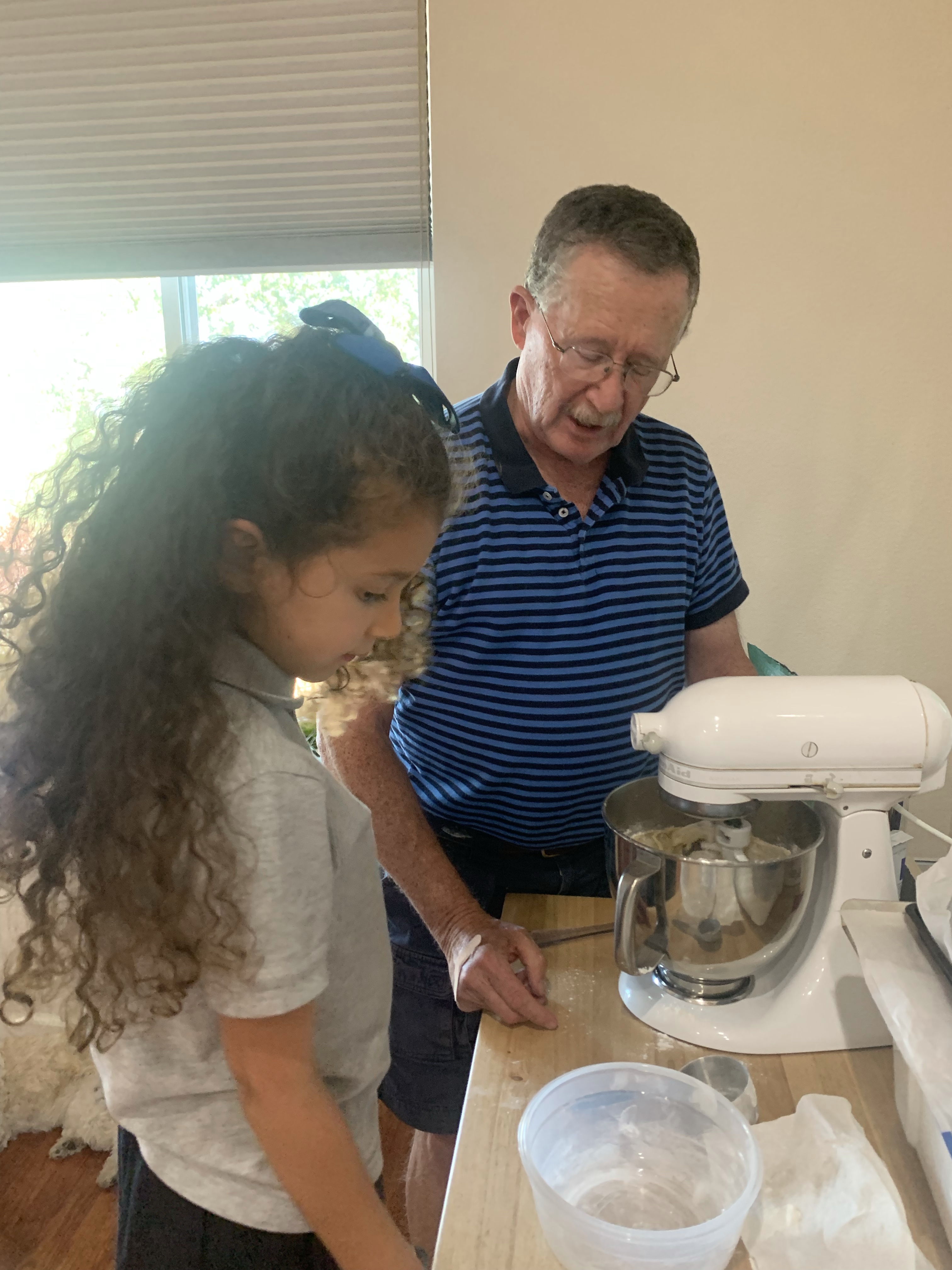
Dave Oney was born mid last century in Middlebury, Vermont. He received his BS in Chemistry and worked as a polymer chemist in Massachusetts and New Jersey. He became a microscopist (someone who studies little bitty things using a microscope) and photomicrographer (someone who photographs little bitty things) before settling into a 35-year career in technical sales of scientific imaging equipment (the science of digitally recording itty bitty things, sending the image to a computer for analysis.) He designed and created a number of products contributing to this field. He is (was) proficient in several computer languages and is currently working on mastering English. After making a few more paradigm shift career changes Dave and his wife, Fran, retired and moved closer to their children and granddaughters and now live in the foothills of the Sierra Nevadas.

Where We Stop, Nobody…

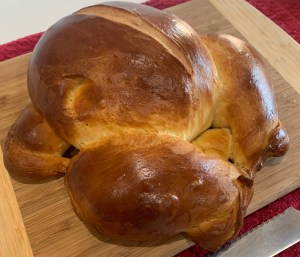
I saw this video on FB last week. A baker from Turkey demonstrated making these small, round, enriched bread loaves. The method was so simple and the final product so beautiful I couldn’t resist trying my hand.

The video was in the baker’s language, but it was captioned either with automatically created captions (I hope) or by someone who was very obviously neither a baker or a native English speaker. In honesty, the computer’s, or human translator’s, mastery of English is far better than my translation to any language other than igpay -atinlay.

Luckily, and oddly, the recipe ingredients were listed below the video. Oddly in that they were listed in US and Metric units. The method was pretty standard and required little adjustment. I made a few modifications to the original recipe. I mixed and kneaded the down in my stand mixer, rather than my hand. I divided the dough into 7 pieces of 150g each. Next time, I will make each 175g and make 6 loaves as reflected below. This batch of loaves were 5” diameter and 2/5” high. I would like them a little bigger, maybe 6×3”.

The cutting board in this photo was made by my father, or me, I cannot remember, but it is still our day to day cutting board ‘lo these 40+ years.

Enriched Bread – Small Round Loaves

INGREDIENTS
• 200 ml warm milk
• 200 ml warm water
• 10 g (1 Tbl) sugar
• 10g (1 Tbl) instant yeast
• 30 g (2 Tbl) melted butter
• 600g (5 cups) flour
• 8 g (1 tsp) salt
• 25g butter cut in strips to lay on cut rolls before baking

METHOD

  1. Add milk, water, sugar and yeast to the bowl of a stand mixer and mix until combined
  2. Add 300 g flour,butter, salt and mix
  3. Add remaining 300 g of flour and knead until a smooth dough forms, about 8 minutes.
  4. Form the dough into a ball and place in an oiled bowl. (I spray olive oil into the stand mixer bowl.)
  5. Cover and let rise for 45 min
  6. Gently deflate the dough and divide into six 175g pieces
  7. Roll each piece into a ball, tensioning the surface by rolling with a cupped hand on a clean surface. Each ball should be approx 3” diameter
  8. Pat each ball down to flatten and place, well spaced, on a parchment paper lined baking tray. Oven spring will double the size of the loaves
  9. Cover and let rise for 15 – 20 minutes until it passes the poke test
  10. Dust lightly with four, cut a deep slash all the way across the ball with a lame or razor blade or very sharp knife.
  11. Lay a strip of butter, about 0.5”x0.5”x3” long in each slash. (Cut a stick of butter lengthwise into ninths.
  12. Bake in a preheated over at 400F for 25 min.

Cheese and Jalapeño Bread Twists

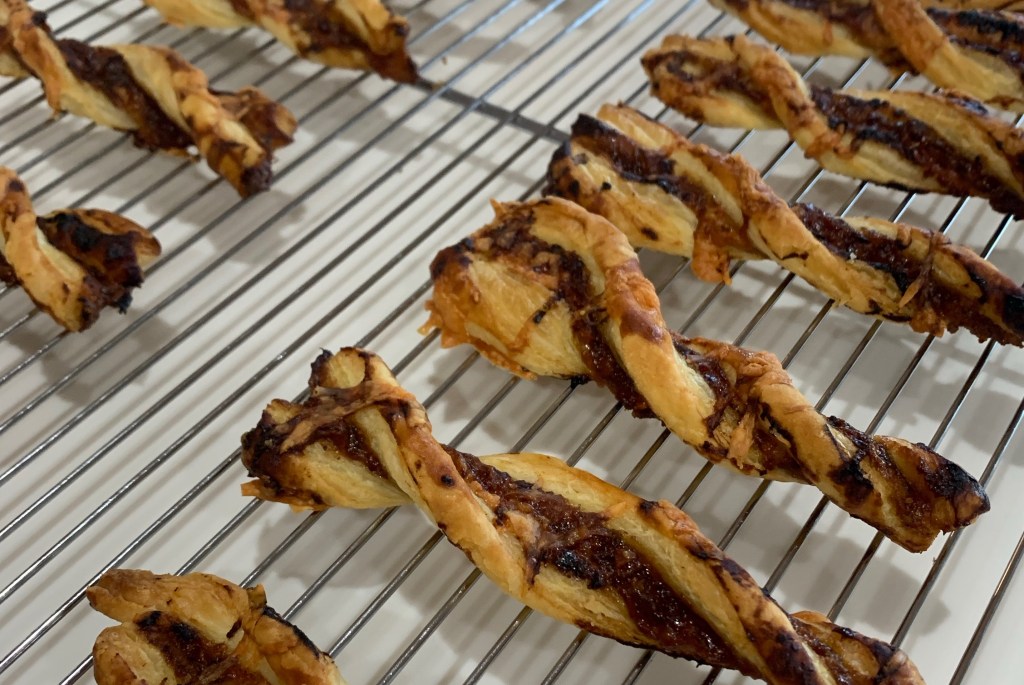
I made some Olive Bread Sticks a few days ago which quickly disappeared. To follow up, I decided to design a recipe for Cheese and Jalapeño Bread Twists. I used a basic 80% hydration dough and Frances’s home made pickled jalapeños.

At the request of the QC Department, Manufacturing was tasked with making a few minus the jalapeños, which I, err… I mean they, did. Let me give you a bit of advice. If you make these bread twists, I strongly suggest having a glass of milk next to you after your second or third bite. If your peppers are anywhere near as hot as Frances’s (although she won’t think these are all that hot) you will be grateful for the advice. These are delicious. (Hot, but delicious.)

If you would like them for an appetizer or hors d’oeuvres cut them into little one inch pieces. Best if served warm.

Cheddar Jalapeños Cheese Twists

INGREDIENTS
• 354g (1½ cups) warm water
• 2 Tbsp. sugar
• 1 Tbsp. yeast
• 437g (3½ cups) AP flour
• 1 tsp Salt
• 3 Tbl butter
• 1 cup grated cheddar cheese
• 1 cup finely diced pickled jalapeños
• 1 egg for wash
• Sea Salt

METHOD

  1. Mix warm water, sugar and yeast together. Let that sit for 5 minutes.
  2. Add flour and salt to the water. Mix this until smooth and ferment for 10 min.
  3. Roll out the dough in a ~ 15 x 15” square on a floured surface.
  4. Brush the dough with the melted butter and sprinkle with cheddar cheese and diced jalapeños.
  5. Fold the dough in half. Cut the dough into one inch strips.
  6. Twist the one inch strips of dough and place on a cookie sheet.
  7. Cover with oil sprayed plastic wrap and proof for 30 min.
  8. Coat with egg wash and sprinkle with Sea Salt.
  9. Bake at 400 degrees for 20 min or until golden brown.

Feeling My Oats This Morning

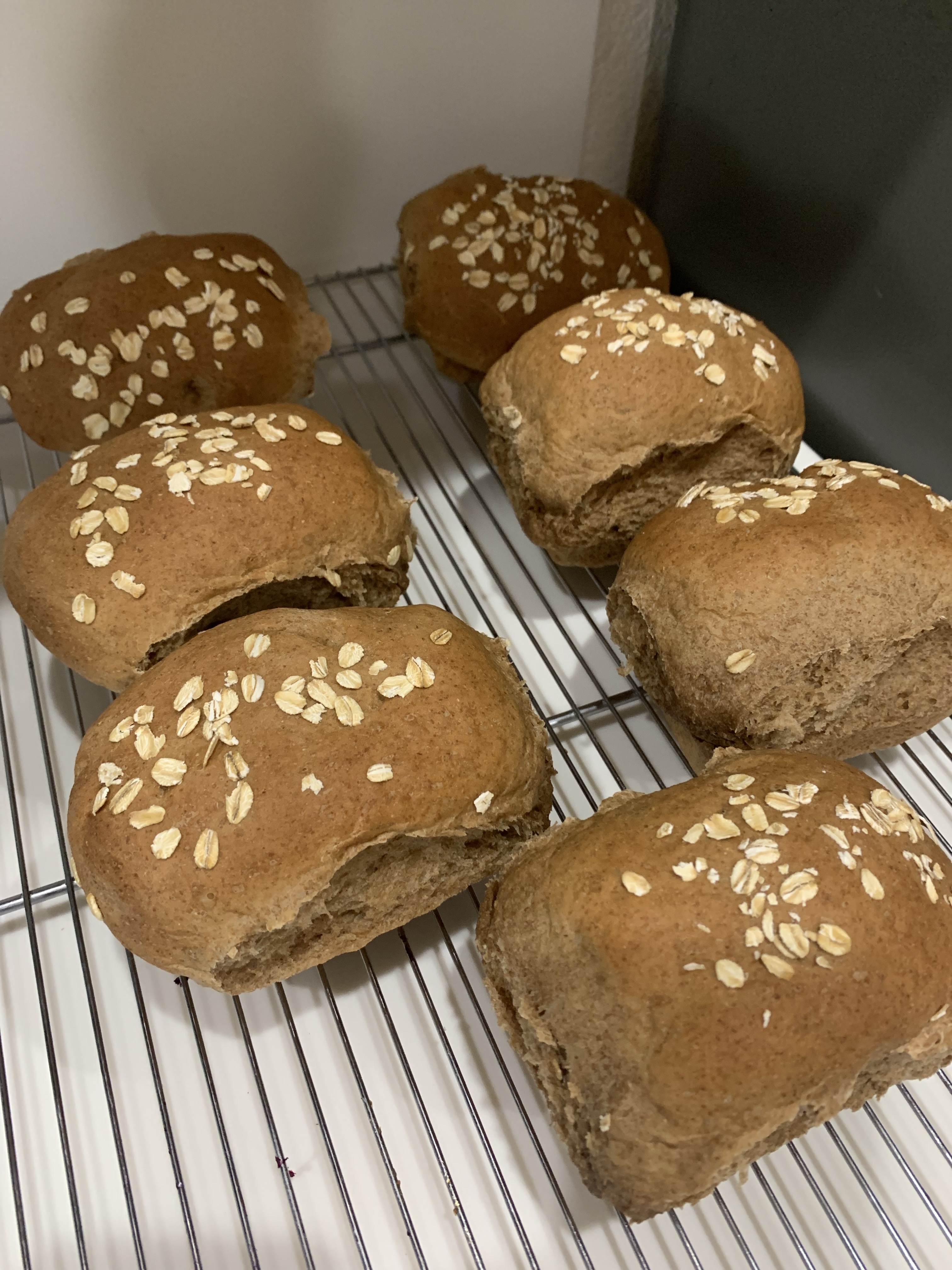
A couple of days ago we were discussing variations of the breads I bake. While not a fan of nut breads, different grains, such as todays selection of oats, are great.

This recipe creates a very slack dough. Rather than shape it, you basically pour it between containers. (I whine about that and explained how I handled this problem in the body of the recipe below. ) I need to devise a ‘sling’ to move it from the second rise to the Dutch Oven.

Despite the challenges in the method of this bread, it is among the best I made during this challenging year. Great crumb, crust and flavor. Next time, I am going to use more flour and fold and shape as I do with the high hydration honey bread. Stay tuned.

Honey Oat No Knead Artisan Bread

https://thebusybaker.ca/no-knead-honey-oat-artisan-bread/

INGREDIENTS
• 469g (3 ¾) cups all purpose flour
• 81g (1 cup) oats
• 2¼ teaspoons active dry yeast instant or rapid rise yeast also works
• 1½ teaspoons salt
• 85g ( ¼ cup) honey
• 474g (2 cups) warm water just above room temperature
• more flour for shaping the loaf

METHOD

  1. Stir together the flour and oats in the bowl.
  2. Add the yeast to one side of the bowl and the salt to the other side.
  3. Stir the yeast into the flour on its side of the bowl first and then stir the salt into the flour on its side of the bowl, then give the whole mixture a few good stirs to make sure everything is combined.
  4. In a small bowl, add the honey to the water and stir to combine.
  5. Pour the honey/water mixture in and stir. The dough will be rough and a bit sticky, but that’s normal.
  6. Stir until all the flour is moistened. This is not normal bread dough (there’s no kneading involved in this recipe.) Make sure the ingredients are combined well.
  7. Cover the bowl with plastic wrap. It’s a good idea to ensure there’s adequate space left in the bowl for the dough to at least double in size. Place the bowl in a warm, draft-free place and let it rise for about 1½ hours.
  8. After the dough has risen, preheat your oven to 425 deg F. (If your Dutch Oven is light colored heat to 450 degrees Fahrenheit.) Place your Dutch oven with the lid on in the cold oven and let it heat up with the oven.
  9. Place a piece of parchment paper on the counter and dust it with flour. I put two long narrow pieces in an X and a larger square piece in the center of the X. Even with this, the dough was so slack it ran onto the counter. I also liberally floured the counter anticipating this, making it easier to fold those portions back into the main loaf.
  10. Rub flour on your hands and scrape the dough away from the sides of the bowl. The dough is very slack and will not hold a shape. Shape and fold it into a circular loaf on the parchment paper. Don’t worry if it still looks a little rough in places. This lends to the rustic look of this loaf.
  11. Once shaped, the dough needs to undergo a short (30 min) second rise. Handle the dough as little as possible at this stage because any amount of tugging can cause it to deflate after its second rise.
  12. Sprinkle a little bit of flour over the top, along with some oats, and loosely cover it with a clean kitchen towel. The flour you sprinkle on top also prevents the towel from sticking to the dough so when you take it off at the end of the rise, it doesn’t disturb the dough and wreck the rustic shape you’ve created. Try to gently fold and shape the risen dough without deflating any more than necessary.
  13. Remove the preheated pot from the oven and transfer the dough into the pot as carefully as possible by handling only the parchment paper. Place the lid on the pot and return it to the oven for 30 minutes. Don’t open the oven during this time, and certainly don’t take the lid off the pot; the crispness of the crust develops because of the steam that builds up in the pot during this 30 minutes.
  14. After 30 minutes have passed, remove the lid from the pot and continue baking for another 10 minutes. After the 10 minutes have passed, remove the pot with bread from the oven and place the bread on a wire rack to cool. You’ll probably hear the loaf crackling as it cools – this is normal.
  15. If you can, resist the urge to cut into the bread until it has pretty much cooled completely. The bread continues to bake on the inside even after it has been removed from the oven and cutting it too early could result in the inside becoming gummy or rubbery.

Artisan Raisin Bread

With few exceptions I followed thebusybaker.com’s recipe for this raisin bread. I did use the “quick rise’ option of more yeast and only a 2 hour proof. I needed to add 5-6 extra tablespoons of AP flour while mixing to be able to form the dough into a ball.

Often baking using a Dutch Oven at 450 deg F will burn or at least excessively darken the bottom of the loaf. Putting a piece of silicone mat on the bottom coupled with a doubled sheet of parchment paper seemed to help. I will try removing the bread from the Dutch Oven after 30 minutes (when you should remove the cover) and let it rest on the oven rack for the last 15 – 20 minutes.

https://thebusybaker.ca/easy-no-knead-cinnamon-raisin-artisan-bread/

Raisin Bread – No Knead


INGREDIENTS

• 250g (2 cups) all purpose flour (plus 1-2 tablespoons if necessary)
• 120g (1 cup) whole wheat flour
• 110g (3/4 cup) raisins
• 2½ teaspoon active dry yeast
• 1½ teaspoons sea salt
• 2 teaspoons ground cinnamon
• 3 tablespoons brown sugar
• 355g) (1½ cup room temperature water (plus 1-2 tablespoons if necessary)
• a few tablespoons extra flour for shaping the loaf

METHOD

  1. Add the flours, raisins, yeast, salt, cinnamon, and brown sugar to a large bowl. Be sure to add the yeast and the salt to separate sides of the bowl.
  2. Stir the dry ingredients together well.
  3. Add the water and stir until a thick, rough dough forms. Add 1-2 more tablespoons of water or flour if needed.
  4. Flour your hands and shape the dough into a ball, placing it into the bottom of the bowl and covering the bowl with plastic wrap.
  5. Place in a warm spot (my proofing oven) in your kitchen and let rise for 2 hours.
  6. After the rising time, preheat your oven to 450 degrees Fahrenheit.
  7. Place an oven-safe Dutch Oven pot in the cold oven and let it preheat with the oven. I like to add a small sheet of silicone to insulate the bottom of the bread from the excessive heat of the Dutch Oven. It seems to help.
  8. Flour your hands well and shape the dough into a round ball and set it on a piece of parchment paper on the counter dusted with flour.
  9. Dust the top of the dough ball with flour and cover with a clean kitchen towel, letting it rise for 25 minutes.
  10. After the dough has risen remove the Dutch Oven pot from the oven and using the parchment paper, pick up the dough and place it carefully in the bottom of the Dutch Oven. Make two very shallow slices in the top of the risen loaf in the shape of an X.
  11. Replace the lid of the Dutch Oven, place it back into the hot oven, and bake for 30 minutes.
  12. After 30 minutes of baking time, remove the lid from the Dutch Oven and continue baking for an additional 10 minutes uncovered.
  13. After the baking time, remove the pot from the oven and transfer the loaf to a cooling rack using the parchment paper.
  14. Cool completely before slicing.

The Rye Experiment – Part 3 – The Final

Back to the experiment and on to Part – 3 the Final. This Part was supposed to be completed last week, but due to an unfortunate brain freeze I used the wrong flour. This time I used the First Clear Flour instead of the AP flour used by mistake in Part 2a. (Ahhh, to be 65 again!)

However, this time I also used a Dutch Oven instead of baking uncovered. The rationale is I want the best combination of crumb, crust and flavor. The Dutch Oven provided the traditional chewy ‘Deli Rye’ crust. This recipe and method is a winner!!

So the recipe remains the same as Part 2, except I used a Dutch Oven. I used First Clear and Pumpernickel flours. I used an egg wash when there were about 15 minutes left in the bake. In my case I added it when the internal bread temperature was 195 deg. F.

Caraway Rye Bread KAB – Final

https://www.kingarthurbaking.com/recipes/caraway-rye-bread-recipe

INGREDIENTS

• 1 cup (227g) lukewarm water
• 1 cup (106g) white rye, medium rye, or pumpernickel flour
• 4 teaspoons (14g) sugar
• 2 1/4 teaspoons instant yeast
• 1/2 cup (113g) sour cream (low-fat is fine; please don’t use nonfat)
• 1 to 2 tablespoons (10g) caraway seeds, to taste
• 1 1/2 teaspoons salt
• 2 1/3 cups (280g) First Clear Flour
• 3 tablespoons (25g) vital wheat gluten

METHOD

  1. In a medium-sized mixing bowl or the bowl of your stand mixer, combine the water, sugar, rye flour and yeast, mixing to form a soft batter. Let the mixture rest for 20 minutes; this allows the rye flour to absorb some of the liquid, making the dough easier to knead.
  2. Add the remaining ingredients, and mix and knead the dough together — by hand, mixer or bread machine — until it’s fairly smooth. The nature of rye dough is to be sticky, so don’t be tempted to add too much flour.
  3. Place the dough in an oiled bowl or large (8-cup) measure, cover, and let it rise until noticeably puffy, 60 to 90 minutes.
  4. Gently deflate the dough, knead it briefly, and shape it into two smooth oval or round loaves; or one long oval loaf. Place them on a lightly greased or parchment-lined baking sheet.
  5. Cover the loaves, and let them rise until they’re noticeably puffy, about 90 minutes. Towards the end of the rise, preheat the oven to 350°F.
  6. Just before they go into the oven, spritz the loaves with water, and slash them about 1/2″ deep. The oval loaves look good with one long, vertical slash; the rounds, with two or three shorter slashes across the top.
  7. Bake the loaves for 35 to 40 minutes, or until an instant-read thermometer inserted into the center reads 205°F to 210°F. The single, larger loaf will bake for 45 to 50 minutes. If the bread appears to be browning too quickly, tent it lightly with foil after 25 minutes of baking.
  8. Remove the loaves from the oven, and transfer them to a rack. While still warm, brush them with melted butter, if desired; this will keep their crust soft.

Killing Time Making Rolls

So, what do you do as you are waiting for your dinner rolls to proof? Well, If you have an 11 pound bag of chocolate, 60 pieces of 1”x1” caramel, making salted chocolate covered caramels is a good way to pass the time.

I cut the caramels a day ago, tempered the chocolate, dipped and drained the coated caramel and sprinkled some Maldon flaked sea salt on each.

The chocolates were setting as the first proof of the rolls completed. The proofed dough weighed 1,553 grams, so to make 24 rolls, each had to weigh about 63 g. I weighed each, formed them into a small ball and rolled them on the counter to tension the surface of the roll.

I arranged them 4×6 in a glass baking tray and baked at 375 deg until the internal temperature was 180 deg. (about 20 min.) Once out of the oven, a light brush with melted butter and boom. Excellent dinner rolls! The recipient and methods for both the dinner rolls and chocolates are found elsewhere in this blog.

Sandwich Rye – New Recipe

I was going to continue the experiment with Part 3, but wanted to try this new recipe I found at ayearinbread.blogspot.com. It’s interesting as it uses bread flour, molasses and citric acid. It had a good flavor, crumb and a great crust. Oh, I also needed to make a few (3) loaves of white sandwich bread for PB&J lunches. The oddest thing happened with the white bread. Two of the loaf rose nice and round, but one fell. No idea.

Sandwich Rye
http://ayearinbread.blogspot.com/2007/09/kevin-sandwich-rye.html

• INGREDIENTS
• rye flour 1 c 146 g
• bread flour 2 1/4 c 330g
• instant yeast 1 tsp
• wheat gluten 1 1/2 tbsp
• citric acid (sour salt) 1/4 tsp
• caraway seeds 2 tbsp 20g
• molasses 1 1/2 tbsp
• butter melted 1 tbsp
• table salt 3/4 tsp
• water 1 c + 2 tbsp 256 g

Egg Wash
• egg 1
• water 1 tbsp

METHOD

  1. In the bowl of a stand mixer using the paddle attachment, mix together the yeast, gluten, citric acid, caraway seeds, rye flour, and 2 cups (280g) of bread flour. Add salt and mix in. (Note, the salt is added after mixing the original ingredients to minimize it’s direct contact with the yeast, which it can kill).
  2. In a measuring cup, mix together water, molasses, and butter using a small whisk. With the motor running at low speed, pour liquid into dry ingredients. Once moistened, switch to the dough hook and finish blending. The dough should be moist and sticky, add just enough additional flour, a tablespoon at a time, to have dough clear the sides of the bowl. Increase speed to medium and knead for eight minutes. (Note, dough will clear sides but stick to bottom, scrape it up with a rubber spatula every couple of minutes.)
  3. Scoop dough onto a lightly floured surface and knead lightly a few times then form into a ball. Place the dough in a bowl sprayed with cooking oil, spritz top with oil, and cover tightly with plastic wrap. Allow to rise until doubled in bulk — about 1 1/2 hours.
  4. Gently deflate dough, scoop onto a lightly floured surface, fold a few times, and allow to relax for about five minutes. Shape dough into a loaf and place on a piece of parchment on your peel or on a baking sheet. Lightly spritz tops with oil and cover with plastic. Allow to rise until doubled in size, about 1 hour. In the meantime, heat oven to 400F (200C) and place rack in center position. (Note: it’s important to give the oven a long preheat before baking, particularly if you’re using a baking stone.)
  5. Whisk together egg and 1 tablespoon of water in a small bowl. Brush loaf with egg wash and bake for 15 minutes. Rotate rack front to back and continue baking 15 to 20 minutes until golden brown. The interior should read 190F on an instant read thermometer.

Raspberry Fondant Filled Bonbons

I figured there must be something I could do while my Rye Bread Part 2a a loaves were proofing. I also figured there must be something I could do with the 4 Tbl of seedless raspberry coulis I had in the fridge. Also, if you remember I want to use more of the 11 lbs of bittersweet chocolate I have, so I decided some nice raspberry fondant filled bonbons would be a good way to kill a couple of hours this morning.

I tempered a cup of chocolate and poured it into one of my molds before draining the extra back into the bowl of liquid chocolate.

While the tempered chocolate was setting I mixed the raspberry fondant. I only made a half recipe but doubled the amount of raspberry coulis and halved the amount of sugar. I wanted the filling to be very soft. The recipe below does NOT reflect my modifications.

Once complete, I piped each chocolate coated well about 2/3rds full and let it set. Once set, I re-tempered the chocolate, poured it over the filled chocolate and let it almost set before scraping the bottom clean. It’s always a challenge to bang the finished chocolates out of the mold, but just keep banging them and eventually they will release.

Raspberry (or any) fondant center

INGREDIENTS
• 2½ tablespoons butter, softened
• 2½ tablespoons light corn syrup
• 1 teaspoon pure vanilla extract
• ¼ teaspoon salt
• ¼ cup seedless raspberry coulis, (but you can use your favorite.)
• 3 cups powdered sugar

METHOD

  1. In the bowl of a stand mixer fitted with the paddle attachment beat the butter, corn syrup, jam, vanilla extract and salt until smooth.
  2. Add the powdered sugar and mix on slow until completely combined. Turn the mixer up to medium and beat the mixture until smooth.
  3. Use the filling right away, or store in the fridge in an airtight container for up to a month. (I have it in a piping bag, sealed on both ends.)

The Rye Experiment- Part 2a

Oops! I used the pumpernickel flour but forgot to use First Clear instead of AP flour. The plan was to use the best combination of ingredients to make the best loaf of rye bread.

I made two small free form boules. They held their shape really well.

Maybe tomorrow I will read my own instructions all the way through before baking. The results were pretty darn good today, though!

Chocolate Swiss Roll Yule Log Cake

That title is a mouthful, but not as good a mouthful as the cake!

Roll the cake as soon as it finishes baking. The cake will be HOT. I ended up using the parchment paper and rolling the ends like a small Tootsie Roll. It worked pretty good and saved my fingers.

The cake broke as I unrolled it. Apparently this is not uncommon. I believe I unrolled it too soon after it came out of the refrigerator. It wasn’t much of a problem as the frosting covered the breaks. I was going to make some marshmallow fluff to add to the filling, but forgot to make any this morning. Maybe next time.

I used grapes instead of cranberries for the decorations. (I am not a fan of cranberries.) I wish the long section of log were even longer. The jelly roll pan was a good size, and I think rolling a longer sheet of cake would be much more difficult, but it would have been nice for it to be bigger.

Most of the cake will be given away to family and neighbors, but we will be sure Manufacturing and QC have enough for proper assessment.

I ended up using half the suggested confectioner’s sugar for the frosting (topping.) QC and Manufacturing I checked it often during mixing, until we decided it was sweet enough, but not too sweet.

Chocolate Swiss Roll Cake

INGREDIENTS
Cake
• 4 large eggs, separated
• 1/3 cup (65g) granulated sugar
• 1/3 cup (65g) packed light or dark brown sugar
• 1 Tablespoon (15ml) strong brewed coffee
• 1/4 cup (60g) unsalted butter, melted (see note)
• 1 teaspoon pure vanilla extract
• 1/2 cup (62g) all-purpose flour
• 3 Tbl natural unsweetened cocoa powder, plus 2 Tbl (10g) for rolling*
• 1 teaspoon baking powder
• 1/4 teaspoon salt
Vanilla Whipped Cream
• 1 cup (240ml) cold heavy cream or heavy whipping cream
• 3 Tablespoons (38g) granulated sugar or confectioners’ sugar
• 1 teaspoon pure vanilla extract
• optional: 2 Tablespoons marshmallow creme (“Fluff”)
Chocolate Topping
• 3/4 cup butter
• 1 1/2 cups (125g) unsweetened cocoa powder
• 5 1/3 cups confectioners’ sugar 624g (1c confectioners sugar = 117g)
• 2/3 cup milk
• 1 teaspoon vanilla extract

METHOD

  1. Preheat oven to 350°F (177°C). Spray a 12×17 inch baking pan with nonstick spray or grease with butter, so the parchment paper sticks. Then line it with parchment paper so the cake seamlessly releases. Spray or grease the parchment paper too. We want an extremely nonstick surface for this cake roll.
  2. Make the cake: Using a hand mixer or a stand mixer fitted with whisk attachment, beat the egg whites and granulated sugar together in a medium bowl on high speed for 5 minutes or until stiff peaks form. Set aside. In another bowl, beat the egg yolks, brown sugar, and vanilla extract together until pale and creamy, about 2 minutes.
  3. Sift the flour, 3 Tablespoons cocoa powder, baking powder, and salt together into a large bowl bowl. Pour the melted butter, coffee, and egg yolk mixture over the dry ingredients. Beat everything together on medium speed until completely combined. Using a rubber spatula or wooden spoon, gently fold in the egg whites until completely combined. Avoid over-mixing and deflating those whites. Batter will be very light.
  4. Spread batter evenly into prepared pan. It will be a very thin layer. Shimmy the pan on the counter to smooth out the top. Bake for 10 minutes or until the top of the cake gently springs back when touched with your finger. Do NOT over-bake.
  5. Roll the cake: As the cake bakes, place a piece of parchment paper (larger than the cake) or a thin kitchen towel flat on the counter. Sprinkle with a light coating of cocoa powder. Once the cake comes out of the oven, immediately invert it onto the parchment/towel. Peel off the parchment paper that was on the bottom of the cake as it baked. Starting with the narrow end, slowly and gently roll the cake up with the parchment/towel. The cake will be warm. Allow the cake to cool completely rolled up in the parchment/towel. Place in the refrigerator to speed it up, about 2-3 hours.
  6. Remove the cake roll from the refrigerator and allow to sit on the counter for a few minutes to warm up as you prepare the whipped cream.
  7. Make the whipped cream: Using a hand mixer or a stand mixer fitted with a whisk attachment, whip the heavy cream, sugar, and vanilla extract on medium-high speed until medium to stiff peaks form, about 2-3 minutes. Then beat in the marshmallow creme, if using.
  8. Slowly and gently unroll the cake. Spread whipped cream evenly on top, leaving about a 1/2 inch border around the cake. Gently roll the cake back up, without the parchment/towel this time. Place on a wire rack set on a baking sheet (to catch the extra ganache). Set aside on the counter or in the refrigerator as you prepare the ganache.
  9. Make the topping: Cream butter until light and fluffy. Stir in the cocoa and confectioners’ sugar alternately with the milk and vanilla. Beat to a spreading consistency.
  10. Pipe in horizontal strips to resemble bark. Use an M1 star tip.
  11. Refrigerate for at least 30-60 minutes before slicing and serving.
  12. Cover leftover cake and store in the refrigerator for up to 3 days.
    NOTE:
    To make sugared cranberries and rosemary, add 1/2 cup of sugar and 1/2 cup of water to a boil over medium-high heat. Reduce heat and simmer for 5 minutes, until sugar has melted. Remove from heat and let cool for about 10 minutes. Spread 1/2 cup of sugar evenly on a shallow dish. Dip cranberries and rosemary springs to the sugar water, then roll in the sugar. Let dry before adding to the cake. I also used some of the clumps of sugar left behind to add “snow” to the cake.